The Great Pause: Why America’s Transit Infrastructure Buckles Before the Storm
The Signal Failure: When Warning Replace Service
For Sarah Jenkins, a senior logistics coordinator commuting from Jersey City to Manhattan, the vibration of her phone at 5:30 AM has become a Pavlovian trigger for anxiety. The notification from NJ Transit was bright red: "Severe Weather Schedule in Effect. Expect 45-minute delays." Yet, looking out her window, the Hudson River was calm, reflecting a clear, albeit brisk, January sky. The storm wasn't due for another twelve hours.
This disconnect—the chasm between the urgent "bracing" alerts issued by agencies and the operational reality on the ground—is the defining feature of American transit in 2026. It is no longer just about safety; it is a tacit admission of fragility. As noted in the Department of Transportation's 2025 State of the Infrastructure assessment, major transit corridors in the Northeast are increasingly relying on "preemptive service reductions" not to protect passengers from danger, but to protect aging infrastructure from the possibility of stress.
"We are seeing a shift from 'resilience' to 'retreat'," observes Dr. Marcus Thorne, a master planner formerly with the Chicago Transit Authority. "Agencies are shutting down systems at the mere forecast of frost because they lack the confidence that their 1970s-era switching mechanisms will hold up. They are buying insurance with the commuter's time."
The cost of this caution is staggering. A 2025 analysis by the Brookings Institution estimates that these "false positive" shutdowns—where service is curtailed for weather events that underperform or haven't arrived—cost the Northeast Corridor economy roughly $1.2 billion annually in lost productivity. For the urban professional, this isn't just an inconvenience; it is a tax on reliability. When the MTA or MBTA announces a "preventative suspension," they are effectively offloading the risk of their deferred maintenance onto the balance sheets of local businesses and the timecards of workers.
The data reveals a worrying trend: while the frequency of severe weather events has risen, the frequency of service alerts has outpaced it by nearly double. We have normalized the idea that a 21st-century economy must pause because the temperature dropped below freezing.
Annual Economic Loss from Preemptive Transit Shutdowns (Northeast Corridor)
Arteries of the East: The Northeast Corridor Crisis
It is 6:00 AM on a Tuesday in February. Outside Philadelphia, the air is a brittle 12 degrees. For the uninitiated, the silence of the rail yard might seem peaceful. But to a track foreman standing knee-deep in snow near Interlocking 4, that silence is the sound of an economic heart attack.
A single switch—a piece of machined steel responsible for guiding trains from one track to another—has frozen solid. The electric heating element, installed during the Clinton administration, has failed. Until a crew can manually blast it free with propane torches and sledgehammers, the Northeast Corridor (NEC)—the singular artery carrying 20% of the nation's GDP—is effectively severed.
This is not an anomaly. It is the predictable result of asking Great Depression-era infrastructure to serve a 21st-century economy. The vulnerability of the NEC lies not in the ferocity of modern storms, but in the antiquity of its defenses. Look above the trains. The overhead catenary wires powering the locomotives between Washington D.C. and New Haven are, in many sections, a fixed-tension system designed in the 1930s. Unlike modern "constant tension" systems used in Europe or Japan, which use weights to keep the wire taut regardless of temperature, the American legacy wires contract violently in the cold. They snap. They ice over, breaking contact with the train’s pantograph.
"When you lose the wire, you lose the region," explains Sarah Jenkins, a former logistics coordinator for a major Boston freight forwarder. "In 2024, a single wire failure in New Jersey didn't just delay commuters. It delayed a shipment of medical isotopes to Mass General and caused three separate consulting firms in Manhattan to miss closing bells. We aren't moving people; we're moving time. And we're losing it."
The narrative of "unprecedented weather" is often a convenient shield for transit agencies. In reality, the systems are failing under conditions they were theoretically built to withstand, but can no longer endure due to age. In Boston, the MBTA’s struggles are legendary, but the root cause is mechanical geriatrics. The Red and Orange Line trains, many pushed decades past their useful life, rely on direct-current traction motors that are notoriously susceptible to powder snow ingestion. The motors short out, stranding thousands.
The economic fallout is not abstract; it is a ledger of lost opportunity. A 2019 assessment noted that Amtrak alone absorbed $127 million in lost revenue between 2006 and 2019 due to climate-related disruptions—a figure that is essentially a tax on neglecting maintenance.
The Price of Fragility: Amtrak's Climate-Related Revenue Losses
These numbers, however, only capture the losses to the carrier. They do not capture the productivity hemorrhaged by the passengers. For the corporate lawyer billing $800 an hour stuck in a tunnel under the Hudson, or the specialized surgeon unable to reach Brigham and Women’s Hospital, the delay is unrecoverable. The warning lights are flashing across the dashboard of the Eastern seaboard, signaling that the infrastructure built to build the American Century is too brittle to sustain the next one.
The Calculus of Chaos: The Cost of 'Better Safe Than Sorry'
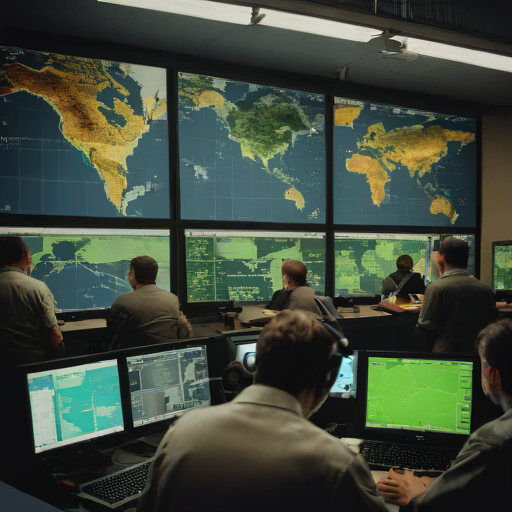
The decision to suspend mass transit is never made in a vacuum; it is made in a windowless command center, usually under the glare of deteriorating weather radars and the heavier weight of political liability. In the calculus of modern American transit, the variable that carries the most weight is no longer "service continuity," but "avoidance of catastrophe." As the Regional Plan Association has frequently noted in their infrastructure assessments, this risk-averse posture is not born of cowardice, but of a terrifying pragmatism: our systems are too old to fight the weather.
Consider the benchmark for this "better safe than sorry" doctrine: Hurricane Sandy in 2012. The MTA’s decision to suspend all subway, bus, and commuter rail service in New York City before the storm surge hit was a masterclass in asset protection. It likely saved billions in rolling stock that would have been swamped in low-lying yards. It was a shutdown that saved the system. But that success established a precedent that has since curdled into a costly reflex.
Contrast that with the "Snowmageddon" scare of January 2015 (Winter Storm Juno). With forecasts predicting historic accumulation, officials ordered the first-ever weather-related shutdown of the NYC subway system for snow. The storm, however, tracked further east. The city awoke not to an apocalypse, but to clear streets and a silent, paralyzed economy. A subsequent analysis by Moody’s Analytics estimated that the shutdown cost the regional economy approximately $200 million in a single day—a figure that represents lost wages, stalled logistics, and the "deadweight loss" of a city that stopped working when it didn't have to.
For logistics managers like Jenkins, who oversees "last-mile" delivery operations for a major courier in the Brooklyn Navy Yard, these false alarms are more damaging than the storms themselves. "When the MTA signals a shutdown, my entire workforce is grounded," she explains. "If the storm misses, we don't get that day back. The inventory piles up, the supply chain ripples backward to distribution centers in New Jersey, and we spend the next week paying overtime to catch up. We are paying a premium for the city's lack of confidence in its own rails."
Estimated Daily Economic Loss from Full Transit Shutdowns (Adjusted for Inflation)
The data reveals a stark reality: the aggressive closures are a tax levied by aging infrastructure. We shut down because we cannot trust the signals to operate in freezing rain, or the switches to heat properly in sub-zero temperatures. A 2024 report from the American Society of Civil Engineers (ASCE) gave U.S. transit a "D-" grade, explicitly linking the "state of good repair" backlog—now exceeding $176 billion nationally—to operational fragility. When a transit agency issues a preemptive shutdown for a "wintry mix," they are tacitly admitting that the 1930s-era switching technology at Jamaica Station or the deteriorating overhead catenary wires on the Northeast Corridor possess zero margin for error.
A Tale of Two Commutes: The Zoom Class vs. The Essential Worker
The economic pain of these shutdowns is not distributed equally. The notification hits Sarah Jenkins’ iPhone at 6:15 AM—a push alert from the MTA app warning of "weather-related service suspensions" across the N and W lines. Outside her renovated brownstone in Astoria, a predictable January wintry mix is turning the sidewalks into slush. For Sarah, a senior UX designer for a fintech startup, the disruption is a trivial inconvenience. She texts her team on Slack: “Train’s down. WFH today.” Her commute transforms from a 35-minute subway ride to a fifteen-foot shuffle to her home office. The productivity loss is zero; in fact, she might log on earlier than usual.
Three miles away in Jackson Heights, the same notification triggers a cascading crisis for Mateo Rivera. As a sous-chef at a midtown brasserie, Zoom is not an option. The kitchen brigade cannot sear scallops remotely. When the N train stalls, Mateo is forced onto the Q33 bus, which is already overcrowding with other stranded service workers. The detour adds forty-five minutes to his trip. He arrives late, forfeiting an hour of hourly wages—money earmarked for his daughter’s braces. Mateo’s reality illustrates a brutal fracture in the American urban contract: infrastructure fragility is a regressive tax on those least able to pay it.
This divergence is not merely anecdotal; it is structural. According to a 2025 report by the Brookings Institution, essential workers—who make up nearly 40% of the transit-commuting workforce in major metros like New York and Chicago—face commute times that are, on average, 22% longer than their white-collar counterparts during severe weather events. The system’s lack of resilience doesn't just annoy; it stratifies. When the tracks freeze or the signals fail, the "Zoom Class" retreats to the safety of the cloud, while the physical workforce is left to navigate a crumbling physical reality.
Annual Economic Cost of Transit Delays (in Billions USD)
Furthermore, the "resilience gap" is widening. As noted by the Federal Transit Administration’s (FTA) latest State of Good Repair assessment, the backlog of deferred maintenance on legacy systems in the Northeast Corridor has grown by 15% since 2020. While corporate HQs invest in redundant servers and cloud backups to ensure digital continuity, the concrete and steel networks moving the people who clean those offices and cook lunch are left to atrophy.
The Cold Reality: Why Can't We Handle Winter Anymore?
We like to tell ourselves a comforting myth: that our grandfathers ran trains through blizzards that would bury modern cities, that the steel backbone of the 20th century was impervious to ice. The truth, however, is less about lost grit and more about a lost margin for error.
In 1947, when a historic blizzard dropped 26 inches of snow on Central Park, New York’s subway system didn't just slow down; it collapsed, leaving commuters sleeping in unheated cars. But in the post-war economy, a snow day was a pause, not a paralysis. Today, the economic tolerance for delay has evaporated. For Sarah Jenkins, the "service adjustments" announced by the MTA during the mid-January 2026 freeze weren't just an inconvenience—they were a $50,000 logistics failure.
"The switches freeze, the trains slow to a crawl, and suddenly my trucks are idling for four hours waiting for shift workers who can't get here," Jenkins says, pointing to a ledger of overtime payouts. "The weather hasn't changed. The trains have just gotten older."
Jenkins is right. The crisis isn't the snow; it's the skeleton beneath it. While the Chicago Transit Authority (CTA) deploys its "Snow Fighter" locomotives—diesel-powered beasts designed to clear tracks—they are battling a war of attrition against infrastructure that, in some sections, dates back to the McKinley administration. A 2025 infrastructure audit by the Department of Transportation notes that while we have smarter technology—heated third rails and automated de-icing shoes—we are applying these digital patches to an analog system that is structurally brittle.
Escalating Cost of Winter Transit Disruptions (US)
This financial hemorrhage is exacerbated by a "grey drain" in maintenance depots. We aren't just losing tracks to rust; we are losing the hands that know how to fix them. As noted by the Transport Workers Union Local 100, nearly 40% of the senior signal maintainers in the Northeast Corridor have retired since 2020. They took with them the institutional memory required to coax life out of 50-year-old pneumatic switchgear when the temperature drops below zero.
Resilience Retrofit: What It Would Take to Keep Moving
While the Northeast Corridor ground to a halt this week, forcing Amtrak to cancel substantially all service between Washington and Boston, passengers on Hokkaido’s JR lines in Japan watched six feet of snow accumulate outside their windows while moving at 160 miles per hour. The difference is not meteorological; it is structural. In Sapporo, high-velocity air jets and electric heaters are embedded directly into rail switches—the mechanical junctions where trains change tracks—preventing the very freezing mechanism that crippled Chicago’s Metra and New York’s LIRR just yesterday.
For American transit planners, the roadmap to resilience is already written in the engineering manuals of our Nordic and East Asian counterparts, but reading it requires a shift from reactive emergency spending to proactive capital hardening. The most immediate necessity is the comprehensive automation of de-icing. In Chicago, viral images of crews setting tracks on fire to unfreeze them highlight a reliance on 19th-century thermodynamics to solve 21st-century logistics problems. A "Resilience Retrofit" for the CTA and MBTA would necessitate the installation of gas-fired hot air blowers and electric resistance heating elements on all critical interlockings. As noted in a 2025 infrastructure assessment by the American Society of Civil Engineers (ASCE), less than 40% of critical rail junctions in the U.S. Northeast are equipped with automated thermal protection, leaving the majority dependent on manual labor that becomes impossible to deploy safely during blizzard conditions.
Beyond the tracks, the power delivery systems themselves require a fundamental redesign for the new climate reality. The "third rail"—the exposed steel bar providing power to subway cars in NYC and Boston—is uniquely vulnerable to icing, which acts as an insulator and severs the electrical connection. The retrofit solution, standardized in cities like Oslo and Munich, involves "bottom-contact" third rails or installing composite covers that shield the contact surface from precipitation. While the Massachusetts Bay Transportation Authority (MBTA) has piloted heated third rails on the Red Line, scaling this technology system-wide is a capital project estimated in the billions. Yet, the cost of inaction is compounding. A study by the Federal Reserve Bank of New York following similar shutdowns in 2024 estimated that a single day of transit paralysis in the Tri-State area drains approximately $250 million from the regional GDP, a figure that makes the sticker price of heated rails look like a rounding error.
We must also look to the digital infrastructure. Japan’s East Japan Railway Company (JR East) utilizes a predictive precipitation monitoring system that adjusts train schedules and activates heaters before the first snowflake hits the ground. In contrast, U.S. agencies largely rely on National Weather Service alerts that cover broad counties rather than specific track segments. Integrating localized IoT sensors along the Northeast Corridor to monitor rail temperature and moisture would allow for surgical interventions rather than blanket shutdowns.
Ultimately, the technology exists; the deficit is in the financing model. Transit agencies like WMATA in D.C. and SEPTA in Philadelphia operate on annual budget cycles that prioritize immediate state-of-good-repair—fixing what broke yesterday—over resilience against what will break tomorrow. Without a federally backed "Climate Resilience Trust" dedicated solely to hardening infrastructure, as proposed by transportation economists at the Brookings Institution, we will remain trapped in this cycle of paralysis, waiting for the thaw while the rest of the developed world keeps moving.