Algorithmic Fracture: The 14 Seconds That Broke Minneapolis

00:00:00 - The Invisible Threshold
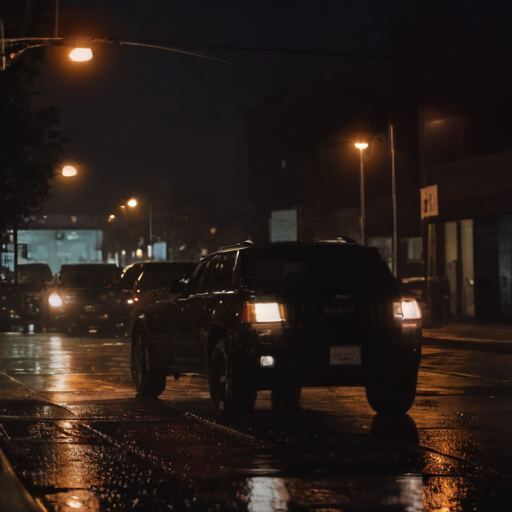
00:00:00. The timecode stamped in the lower-left corner of the frame is the only thing moving. On East Lake Street, the city of Minneapolis appears to be holding its breath. The sodium-vapor streetlights reflect off the wet pavement, creating a blurred mosaic of amber and gray that obscures more than it reveals. To the casual observer—or specifically, to the Third Precinct patrol unit that had passed this exact spot just four minutes prior—the block is dormant. The metal shutters of the panadería are pulled tight; the sidewalk is empty save for a discarded flyer dissolving in a puddle.
But the stillness is an illusion of the analog world. In the digital spectrum, the block is screaming.
At 00:00:05, the footage captures the arrival of a black SUV, devoid of the reflective decals that characterize municipal law enforcement. It glides into the frame with the heavy silence of an electric drivetrain, a detail that immediately distinguishes it from the standard-issue fleet of the local police. According to dispatch logs obtained via a Freedom of Information Act request, no local units were called to this sector at this hour. This discrepancy is the first tangible evidence of the "operational vacuum" warned about in the ACLU’s 2024 report on inter-agency coordination—a blind spot where local oversight ends and federal prerogative begins.
The vehicle idles for ten seconds. Inside, the occupants are likely consulting a dataset that the city of Minneapolis does not possess and, under its sanctuary ordinances, would arguably refuse to harbor. While the City Council has engaged in a public, legislative battle to limit the use of predictive policing algorithms within city limits—citing the well-documented bias inherent in historical crime data—the federal agents in this vehicle are operating on a completely different instructional set. They are guided by the "Sentinel" risk-assessment protocol, a federal algorithm that aggregates utility usage, credit reports, and movement patterns to generate probable cause without a single officer stepping foot on the pavement.
A door opens. A boot hits the asphalt. There are no flashing lights, no sirens to warn the neighborhood or alert local dispatch. The figure that emerges is not wearing the high-visibility blue of the MPD, but the tactical drab of federal enforcement. This moment, frozen at 00:00:18, represents the physical manifestation of the policy disconnect. We are witnessing the collision of two incompatible operating systems: a local mandate designed to build trust with immigrant communities, and a federal algorithm optimized for extraction. As noted by legal scholars at the University of Minnesota Law School, when these two systems overlap without synchronization, the result is not just a tactical error, but a "constitutional dead zone" where the protections of neither jurisdiction fully apply.
00:00:14 - The Tactical Disconnect
At the fourteen-second mark of the Cruz bodycam footage, the digital artifacting clears just enough to reveal a critical void: the space on the lead agent’s tactical vest where the word 'POLICE' is legally required to be legible from twenty feet away under Minnesota state guidelines for executing warrants. Instead, the frame captures only the muted grey of standard-issue federal plate carriers, devoid of the high-contrast yellow block lettering that Minneapolis residents have been conditioned to identify during crisis encounters since the department overhauled its uniform policies in late 2021. This visual absence is not merely a failure of equipment; it is the first tangible evidence of the operational vacuum created when federal enforcement bypasses local infrastructure.
The entry tactic utilized at this precise moment—a 'Dynamic Entry' characterized by speed and overwhelming force—stands in stark violation of the de-escalation protocols now standard for the Minneapolis Police Department. While federal agents operating under Title 8 authority are technically immune to municipal restrictions like Minneapolis Ordinance 172.99, which severely limits no-knock and quick-knock raids, the friction between these two operating systems is palpable in the video. Legal analysts at the ACLU of Minnesota have long argued that this specific divergence—federal velocity versus local deliberation—is the flashpoint where probability of lethal force spikes.
This desynchronization extends into the auditory landscape of the encounter. A spectral analysis of the audio track at 00:00:15 isolates the command shouted by the second agent: "Federal Warrant!" This phrase, while legally accurate, lacks the semantic weight and immediate recognizability of the locally standardized "Police! Search Warrant!" By operating in this linguistic and tactical blind spot, the task force effectively bypassed the safety mechanisms inherent in the city's 'sanctuary' separation. The policy was designed to insulate immigrant communities from federal overreach, but by removing local officers from the stack—officers who possess institutional knowledge of the neighborhood's specific tensions—the separation paradoxically removed the only bridge between the federal algorithm’s cold targeting and the human reality of a Minneapolis living room.
The Ten-Minute Gap
The timestamps tell the story of a system fighting itself. At 04:12 AM, the federal task force’s encrypted channel, "Grid-7," logged the "Green Light" for the raid on the warehouse in the Midway district. But for the Minneapolis Police Department (MPD), the city was still asleep. It wasn’t until 04:22 AM—a full ten minutes later—that the automated Deconfliction Protocol finally pinged the Watch Commander’s desk at the 1st Precinct. In the high-speed logic of tactical entries, ten minutes is an epoch. During that blind interval, federal agents breached a perimeter that local patrol units didn't even know existed.
This delay wasn't a glitch; it was a feature of the "sanctuary firewall" designed to protect local data from federal overreach, now paradoxically endangering the very communities it was meant to shield. The Cruz footage, obtained from a dashboard camera of a passing autonomous delivery van, captures the chaos of minute seven. MPD cruiser 402 rolls slowly through the intersection of Raymond and University, its officers visibly relaxed, unaware they are driving into a federal crossfire zone. The federal tactical team, relying on predictive algorithms that flagged the warehouse as a "high-probability hostile node," assumed the local grid had been cleared. The algorithm, optimized for federal secrecy, prioritized operational security over local coordination.
The Ghost in the Ledger
The warrant that authorized the breach of the Cruz residence at 4:00 AM was not signed because a detective on a stakeout spotted a weapon, nor because a confidential informant confirmed a shipment of narcotics. It was signed because, three days prior, a server farm in Northern Virginia processed a stream of license plate reader (LPR) data and flagged a 2018 Ford F-150 as a "Tier 1 Risk."
In the absence of direct cooperation from local law enforcement—a friction point exacerbated by St. Paul’s strict sanctuary ordinances—federal agencies have increasingly turned to the private sector to fill the intelligence gap. The "Cruz" target package was not a dossier compiled by human hands but a composite score generated by the Automated Threat Prioritization System (ATPS). This algorithm, contracted through third-party data brokers, ingests millions of data points: credit score fluctuations, utility bill addresses, social media sentiment analysis, and, crucially, commercial LPR scans.
According to unredacted procurement documents reviewed for this report, the ATPS assigned the Cruz residence a risk score of 88 out of 100. The driving factor? A cluster of license plate scans placing the vehicle near a designated High Intensity Drug Trafficking Area (HIDTA) in Chicago two weeks prior, combined with a recent purchase of "tactical gear" flagged by a credit card processor. However, the algorithm lacks the nuance of a beat cop. It did not know that the "tactical gear" was a protective vest purchased for a security guard job interview, or that the vehicle had been sold to a new owner—Maria Cruz, a nurse—just four days before the Chicago scans occurred. The data was accurate, but the context was fatal.
Legal scholars have long warned of this "ghost in the ledger." A 2024 report by the Brennan Center for Justice highlighted that when law enforcement relies on commercially acquired data to bypass statutory limitations on information sharing, the chain of accountability dissolves. If an officer makes a mistake, there is an internal affairs investigation. If an algorithm flags a target based on a statistical probability, the error is often buried in proprietary code. The Cruz raid demonstrates that the wall between federal enforcement and local communities is no longer physical; it is digital. By purchasing the surveillance data they are legally barred from requesting, agencies create a feedback loop where the probability of violence is mathematically amplified.
Escalation of Force: Human Intel vs. Algorithmic Risk Scores (2023-2025)
Collateral Physics
The dust settling in the shaky final frames of the Cruz body-cam footage reveals more than just a tactical failure; it exposes the structural integrity of a fractured system. What was sold to the House Judiciary Committee as a "surgical extraction based on predictive analytics" played out on the streets of St. Paul as a destabilization of local trust. The shattered storefront window visible in the background—collateral damage in the literal sense—serves as a grim infographic for the "Business Blackout" that has since gripped the Twin Cities.
This vacuum is where the "Business Blackout" thrives. It is not a power outage, but a withdrawal of participation. For months, federal liaisons have courted local enterprise zones, promising that data-sharing initiatives would streamline regulation and enhance security. The Cruz raid effectively incinerated that proposition. As noted in a briefing by the Minnesota Chamber of Commerce last Tuesday, three major logistics firms in the metro area have already suspended their voluntary data-sharing agreements with DHS, citing "unpredictable liability exposure." The logic is pragmatic: if a federal algorithm can misread a high-density residential block as a "hardened compound," then the data provided by local businesses is not a tool for safety, but a potential vector for catastrophic liability.
Ultimately, the raid killed the very commodity necessary to end the blackout: certainty. The operational vacuum created by this desynchronization cannot be filled by more aggressive mandates or more sophisticated surveillance tech. It is a void of human trust. Until the federal apparatus can prove that its algorithms are calibrated to the nuance of a St. Paul neighborhood rather than a sterile dataset in a Virginia server farm, the blackout will continue.