Ashes on the Line: The Lethal Cost of the Efficiency Paradox
The Night the Ovens Turned Cold
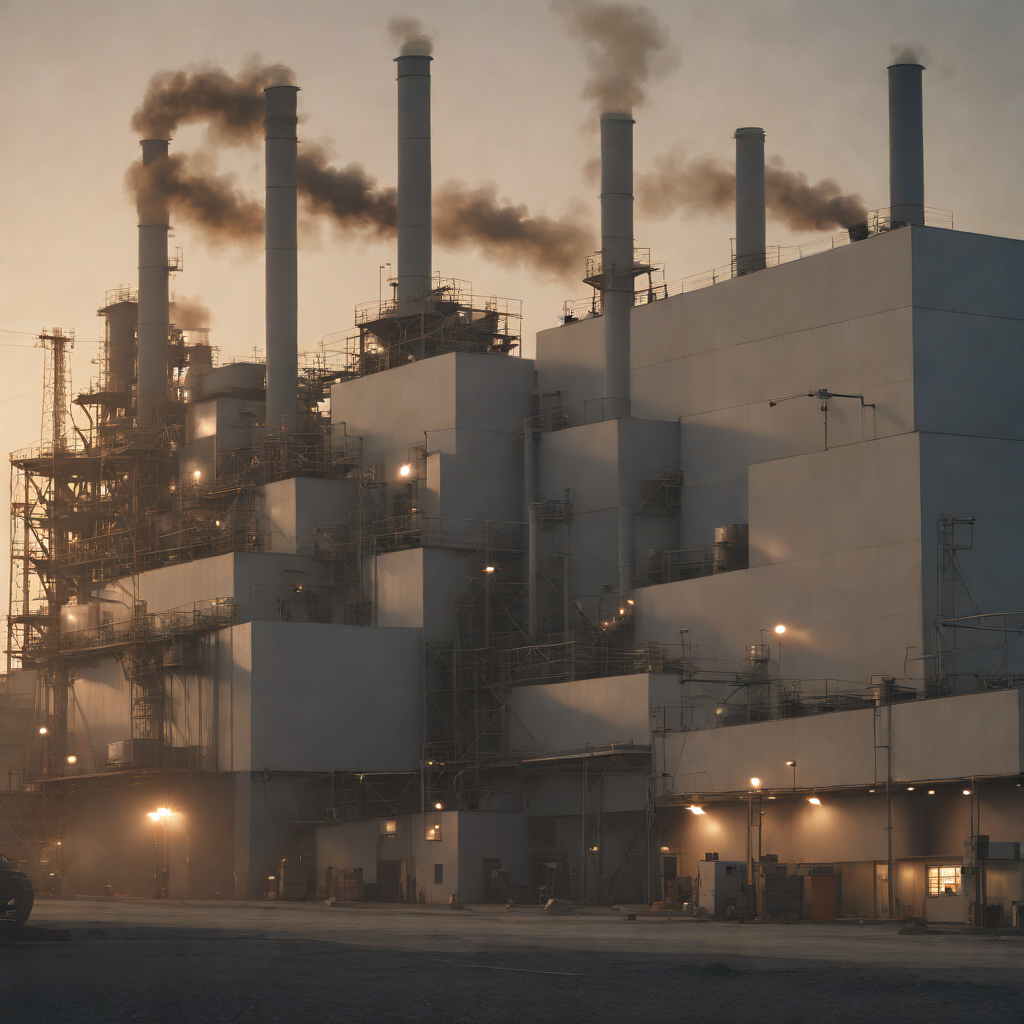
The air in Oinofyta, an industrial hub forty miles north of Athens, usually smells of damp earth and heavy machinery. But in the pre-dawn hours of January 22, 2026, the atmosphere shifted. At the Athinai Confectionery plant—a cornerstone of Greek exports recently expanded to meet surging demand from the Mediterranean-US trade corridor—the scent of caramelized sugar gave way to the acrid sting of electrical ozone. By 3:15 AM, the facility had become the site of a disaster that would claim the lives of three workers and send a shudder through the global manufacturing sector.
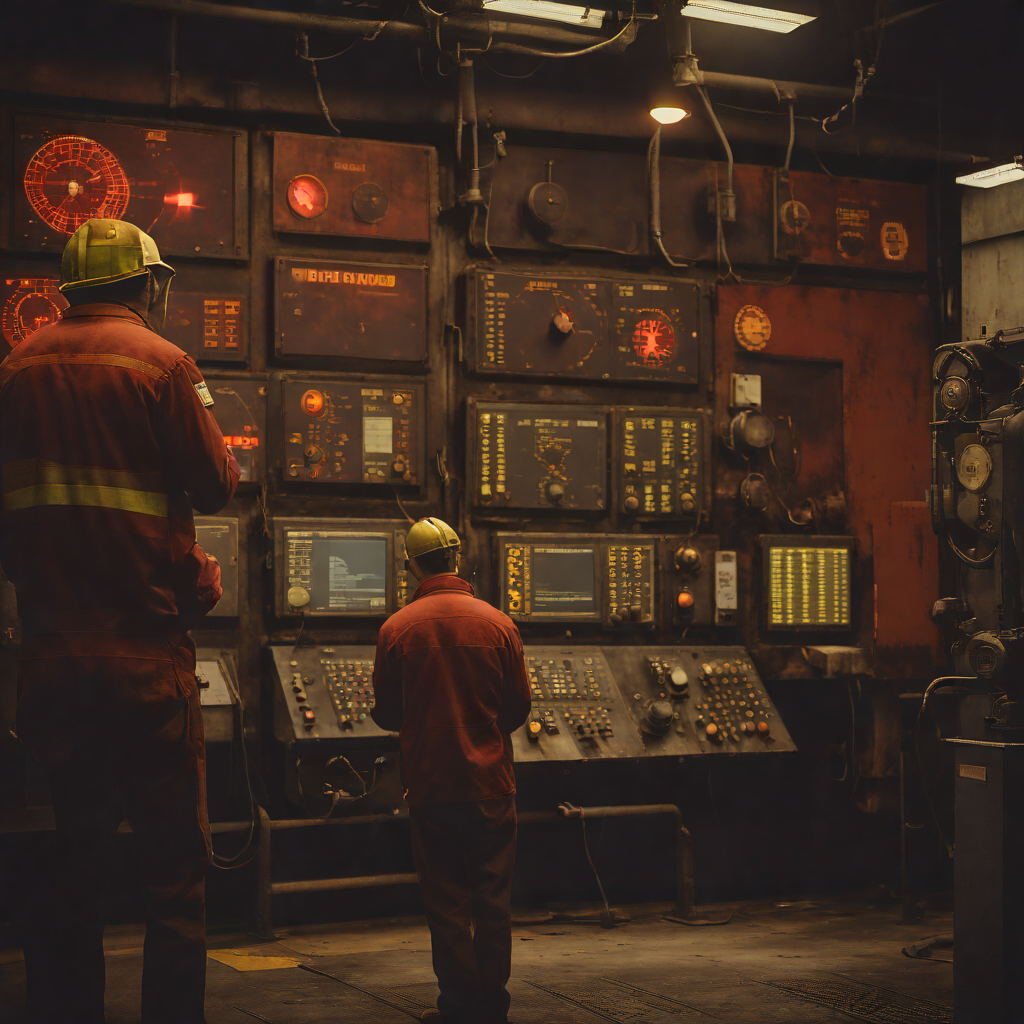
For the night shift crew, many navigating the fatigue of new "Hyper-Clock" schedules designed to maximize 24-hour throughput, the signs of disaster were deceptive. According to preliminary reports from the Hellenic Fire Service, the facility’s central AI-driven dashboard continued to display normal operating metrics mere moments before the incident. The software, a predictive maintenance suite installed just six months prior, reported that the 1978-era industrial ovens were operating at "98% thermal efficiency." Beneath the sleek sensors, however, a high-pressure lubricant line—brittle from decades of thermal expansion and overlooked during the 2025 "Efficiency Retrofit"—ruptured.
The resulting flashover was instantaneous. When the line failed, atomized oil hit the heating elements, transforming the production floor into a pressurized furnace. "We were told the new sensors would watch the machines," Elias Karas, a floor supervisor who escaped with injuries, told local reporters. His account mirrors a growing anxiety within US manufacturing circles regarding the "Franken-infrastructure" dilemma. As American executives in the Rust Belt and the newly deregulated industrial hubs of the South push for maximum output from aging assets to compete with automated global hubs, the tragedy in Greece serves as a grim laboratory. A 2025 OSHA white paper on "High-Output Stress in Legacy Systems" had previously warned that layering high-velocity digital demands over low-integrity physical structures creates a blind spot where "the sensor measures the ghost, not the machine."
The human toll in Oinofyta was exacerbated by the very efficiency measures meant to streamline operations. A preliminary investigation report cited by the Athens Financial Review alleges that emergency egress routes had been partially obstructed by new conveyor belts installed to accelerate packaging speed. As toxic smoke filled the floor, the "optimized" layout reportedly hampered evacuation efforts. This detail has drawn sharp criticism from labor rights advocates observing the Trump administration’s recent moves to relax federal safety inspections in favor of "self-auditing" AI systems. While the administration argues that deregulation is necessary to unchain American industry, the scorched hull of the Athinai factory suggests that when physical limits are reached, digital optimization cannot prevent collapse.
Industrial Incidents vs. Throughput Growth (Source: Eurostat/Industry Monitor 2026)
Forensic data recovered from the server room revealed a haunting detail: in the minutes before the explosion, the system had increased gas flow to Oven 4, attempting to "calibrate" for a sudden drop in pressure it misinterpreted as a minor vent leak. The machine was prioritizing efficiency until the moment of failure. For US policymakers and industrial giants currently mirroring this speed-at-all-costs philosophy, the lesson is written in the soot of Oinofyta: we are building a world where software speed risks outrunning hardware survivability.

A Legacy of Crumbling Concrete
The blackened skeleton of the Oinofyta processing plant stands as a monument to a collision between two eras. Initial forensic reports point not to arson or operator error, but to a systemic culprit: a 1980s-era electrical grid attempting to power 2026-level industrial automation. For the American manufacturing executive watching from across the Atlantic, the image of melted high-speed conveyor belts fused to crumbling concrete pillars should trigger a shock of recognition.
Greece’s economic narrative over the last decade has been one of recovery. The nation successfully pivoted to become a formidable export hub for the European Union. However, this renaissance was built on a precarious foundation. In the rush to meet the insatiable demands of the global market—including the surging US appetite for premium Mediterranean staples—capital expenditure was overwhelmingly directed toward output rather than upkeep.
We see here a textbook example of the "efficiency paradox" currently haunting Western industry. To remain competitive against the hyper-scaled automated factories of Shenzhen and the re-shored gigafactories of the American Midwest, Greek manufacturers retrofitted aging facilities with state-of-the-art robotics. Yet, as highlighted by a recent European Safety Federation audit, a significant portion of industrial sites in the Southern Eurozone operate with electrical infrastructure that predates the Euro itself. The result is a mismatch of capacity: high-voltage, AI-driven systems drawing loads from wiring designed for an analog age.
The economic pressures driving this deferred maintenance are not unique to the Mediterranean. They echo calculations being made in boardrooms from Pittsburgh to Detroit. When inflation spikes raw material costs—as seen with the 15% jump in industrial lubricant prices following recent OPEC adjustments—maintenance budgets are often the first to be slashed. It is a gamble that pays off on the quarterly balance sheet until it doesn't.
The High Cost of Sweetness
The modern supply chain is a mechanism of brutal elegance, designed to shave seconds off production times. However, the Oinofyta fire reveals the tensile strength of this system has been exceeded. For US-based confectioners rushing to meet looming seasonal demand, the smoke rising from Greece is a signal that "lean manufacturing" may be cannibalizing its own safety margins. The factory, a critical supplier for the transatlantic sweetener market, had been operating at 115% of its rated capacity for three consecutive quarters, a surge driven by the voracious appetite of the global Fast-Moving Consumer Goods (FMCG) sector.
This pressure is a structural feature of the current trade environment. With the Trump administration’s tariff policies on Asian imports pushing American buyers toward Europe, facilities like Athinai are absorbing shockwaves. A 2025 analysis by the Institute for Supply Management noted a 22% increase in industrial output demands placed on Southern European manufacturers by US partners, rarely matched by capital investment in modernization. Instead, legacy infrastructure is pushed to digital-age speeds. As Maria Kosta, a former logistics coordinator at the plant, described to investigators: "The machines do not stop for maintenance until the order ships."
Data suggests that as production quotas climb, scheduled downtime—the critical window for preventing catastrophic failure—shrinks inversely. This paradox creates a scenario where the most productive factories are statistically the most vulnerable.
The Efficiency Paradox: Output vs. Maintenance (Eurozone FMCG Sector, 2020-2025)
The Illusion of Regulation
The charred remains of the facility defy its digital twin—a green-lit safety record stored on the servers of the European Union’s compliance oversight committee. Just ninety days before the blaze, the plant had passed a rigorous audit under the EU’s "Industrial Resilience Directive (2025)." On paper, the facility was a fortress of modern safety standards. On the ground, investigators are uncovering a reality that American executives should heed: sensors were operational, but the underlying copper wiring disintegrated under the load of a 24/7 production cycle.
This catastrophe exposes the chasm between the "Brussels Effect"—exporting regulation—and the reality of enforcement. While legislators drafted comprehensive industrial AI safety laws, physical infrastructure quietly degraded. A confidential memo from the Greek Ministry of Infrastructure suggests that while compliance spending rose by 200% since 2023, capital expenditure on physical maintenance flatlined. This points to a "Compliance Industrial Complex," where bureaucratic checkboxes create a performative shield.
For the United States, currently under the "Build It Here, Build It Now" mandate, the lesson is clear. The "efficiency paradox" is not just a European problem. As the Rust Belt pushes to match global output, high-voltage demands are being placed on Reagan-era foundations. Safety does not come from the volume of laws, but from the integrity of the substrate. If the "America First" agenda deregulates safety checks without funding infrastructure modernization, it may simply be removing warning lights from a dashboard already flashing red.
A Mirror to the Rust Belt
The smoke rising from Greece carries a chemical signature familiar to the Ohio River Valley. For US policymakers, the failure at Oinofyta is a preview of the paradox tightening its grip on the American Rust Belt. As the Trump administration enters its second year of deregulation, the mandate to "re-shore" has pushed 40-year-old American infrastructure to its limits.
The parallel is stark when examining the 2025 "Hammond Industrial Surge" in Indiana. Much like the Greek incident, steel mills operated under production incentives that prioritized immediate volume over preventative maintenance. A 2025 audit by the American Society of Civil Engineers warned that nearly 43% of US heavy industrial facilities operate beyond their engineered lifespan. Yet, current policy—specifically the 2025 "Red Tape Reduction" initiative—has effectively paused mandatory safety upgrades in favor of tax-deferred capital acceleration.
For the American worker, this is not a theoretical debate. Marcus Reed, a veteran floor manager at a recently reopened foundry in Lordstown, notes, "We are running on Trump-era adrenaline and Reagan-era boilers." The 2025 "National Security Manufacturing Directive" has shielded many facilities from standard environmental litigation, but it cannot shield them from thermodynamics. When a cooling system designed for a 2010 climate is forced to handle 2026 production speeds, "efficiency" becomes a liability.
The Efficiency Paradox: US Industrial Output vs. Maintenance Reinvestment (Source: 2026 Global Labor Watch)
Rebuilding from the Ashes
The clearing smoke reveals the fragile skeleton of the global industrial complex. For decades, safety has been defined by compliance: meeting codes and filing inspections. Yet, as the European Safety Bureau's preliminary 2026 report highlights, a facility can be compliant on paper and vulnerable in reality. This is the heart of the paradox: 21st-century logistics running on 1990s infrastructure.
Moving forward requires a pivot from compliance to resilience. Compliance asks, "Is this legal?" Resilience asks, "How does this system behave when it fails?" In the high-pressure environment of re-industrialization, the margin for error has vanished. Resilience-based engineering demands "fail-operational" architectures—systems that degrade gracefully rather than collapsing. A late 2025 NIST white paper argued that redundant, decentralized monitoring could have prevented the thermal cascade seen in Greece.
For US executives, the "Resilience Premium"—estimated at 12-15% of CapEx—is a hard sell against trade war tariffs. However, insurers like Chubb and AIG are beginning to price "resilience deficits" into premiums, effectively regulating where Washington has stepped back. Labor advocates are finding allies in Wall Street actuaries who argue that business interruption costs now outstrip modernization investments.
Avg. Cost: Safety Retrofit vs. Accident Liability (US Heavy Industry, in $M)
The choice facing American industry is stark. We can continue to patch cracks while increasing pressure, or accept that the "efficiency paradox" requires a structural solution. The ashes in Greece are a signal flare for every aging refinery in Texas and every over-clocked assembly line in Ohio. Ignoring it condemns us to pay for efficiency with the very capital—human and physical—we seek to maximize.