Beyond the Tripwire: The Strategic Reinvention of US Forces Korea
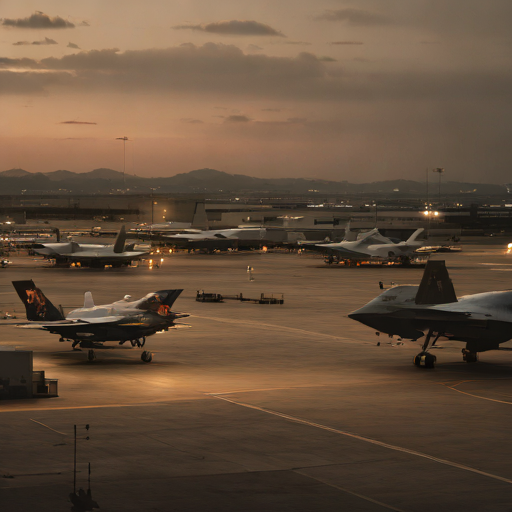
The End of the 'Tripwire'
For nearly seventy years, the strategic calculus of the Pentagon regarding the Korean Peninsula relied on a grimly effective metaphor: the "tripwire." The 2nd Infantry Division, stationed just miles from the Demilitarized Zone (DMZ) in forward operating bases like Camp Red Cloud and Camp Casey, served a function that was as political as it was tactical. Their physical presence guaranteed that any North Korean armored thrust—historically modeled as T-62 tanks rolling down the Uijeongbu corridor—would immediately result in American casualties. This ensured, instantly and automatically, the full-scale involvement of the United States military. It was a strategy built on the dark logic of inevitability.
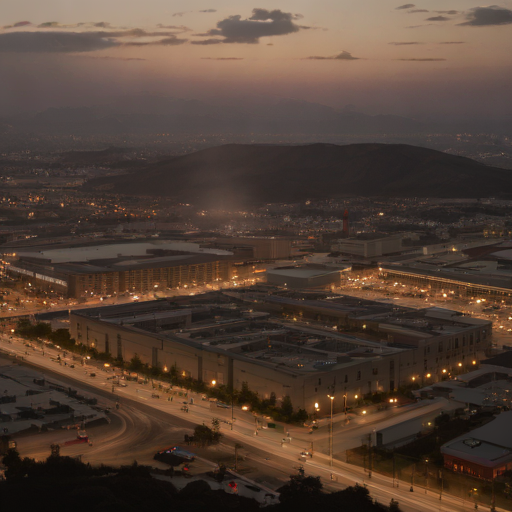
But visit Pyeongtaek today, roughly 40 miles south of Seoul, and it becomes immediately clear that the "tripwire" has been rolled up. Camp Humphreys, a sprawling $11 billion complex that now stands as the largest overseas U.S. military installation, is not a bunker; it is a fortress city designed for sustainment, not sacrifice. By consolidating forces well south of the Han River—out of range of the cheap, massed North Korean artillery that targets the capital—the U.S. has physically decoupled its soldiers from the initial shock of an invasion.
This geographic retreat is the physical manifestation of a doctrinal revolution known as "strategic flexibility." We are no longer looking at a static garrison force tethered solely to the defense of Seoul. As detailed in recent posture statements by U.S. Forces Korea (USFK), the modern mission has expanded radically beyond the peninsula. The assets stationed here—from the rotational armored brigades to the high-altitude U-2 surveillance aircraft—are viewed by Indo-Pacific Command not as fixed assets locked in a Korean foxhole, but as a regional fire brigade capable of pivoting to crises in the Taiwan Strait or the South China Sea.
From Garrison to Pivot Point
For the American taxpayer, this evolution fundamentally alters the return on investment. We are no longer paying for a static shield, but for a forward-deployed power projection hub. However, this flexibility introduces a new fragility to the alliance. A 2025 analysis by the Center for Strategic and International Studies (CSIS) notes that if U.S. troops in Korea are "dual-hatted" for regional conflicts, the "ironclad" guarantee of immediate defense becomes conditional on Washington's other priorities.
The "tripwire" suggested that America would lead the fight because it had no choice—we were literally in the way. The new reality at Camp Humphreys suggests that while America remains a committed ally, the choice to engage—and how—is being restored to Washington. Consequently, the transfer of Wartime Operational Control (OPCON) to a South Korean general is no longer just a matter of sovereign pride for Seoul; it is a strategic necessity for a Pentagon that requires its assets to be mobile, agile, and unburdened by the static requirements of a 1953 armistice line.
This transformation is driven by a cold calculus in Washington regarding the Taiwan Strait. As the 2025 Indo-Pacific Strategy Review explicitly noted, static garrisons are liabilities in modern missile warfare. General Paul LaCamera, commander of USFK, has repeatedly emphasized the necessity of "strategic flexibility"—Pentagon shorthand for the ability to deploy Korea-based assets to other theaters. For the families of service members stationed in Pyeongtaek, this changes the basic assumption of their presence; they are not just watching the North, but are now part of a larger, fluid chessboard stretching to the First Island Chain.
Estimated USFK Mission Focus Shift (Projected)
The OPCON Accelerator
The pivot pivots the logic of Wartime Operational Control (OPCON) transfer on its head. For years, the transfer—handing the reins of the combined defense to a South Korean general—was viewed in Washington as a concession to Korean nationalism. Today, it is a US strategic necessity. As long as an American general commands the Combined Forces Command (CFC), the US is politically and legally shackled to the peninsula's day-to-day defense. Transferring command releases the US from being the "primary" responder, allowing American forces to recede into a supporting, "flexible" role—available for Korea, but ready for the Indo-Pacific.
A classified annex to the 2026 National Defense Strategy, alluded to in recent Senate hearings by USFK Commander Gen. Xavier Brunson, underscores this urgency. The document reportedly argues that the US can no longer afford to tie down critical air and naval assets solely for a North Korean contingency when the pacing threat is China.
"We are no longer a garrison force hunkered down in bunkers north of Seoul," explains Dr. Elena Rossi, a senior fellow at the Center for a New American Security (CNAS). "Every asset in Korea today is being evaluated on a single metric: Can it fight in the Taiwan Strait tomorrow? If the answer is no, it’s being pulled or repurposed."
This realignment is accelerating the "Conditions-Based OPCON Transition Plan" (COTP). While publicly maintaining strict standards, the Pentagon is actively streamlining the verification process. The 2026 verification of Full Operational Capability (FOC)—the second of three critical phases—has been fast-tracked, driven not just by Seoul's readiness, but by Washington's impatience.
OPCON Transition Readiness: US vs. ROK Assessment (2024-2026)
The Economic & Security Equation
The ledger of the US-ROK alliance has long been calculated in simple, often contentious arithmetic: the "cost-plus-50" demands of previous administrations versus the hard rent checks cut by Seoul. But as the 12th Special Measures Agreement (SMA) negotiations concluded late last year, a quiet revolution occurred in the accounting department of the Pentagon. The conversation shifted from how much South Korea pays to keep American boots on the ground to what South Korea can build to keep the Indo-Pacific free.
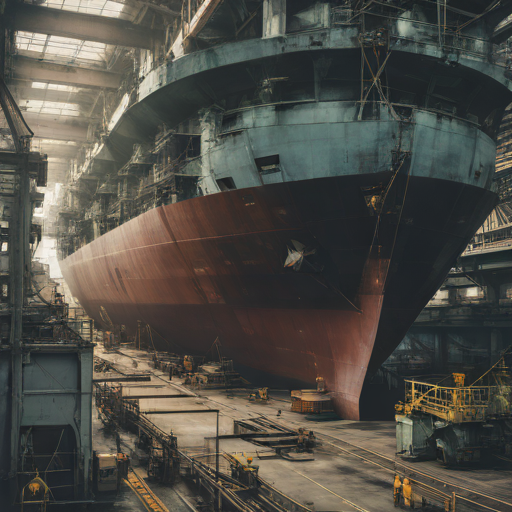
The "capability sharing" model replacing it is visible not in the negotiation rooms of Washington, but on the factory floors of Changwon. While American shipyards struggle with a backlog that delays Virginia-class submarine maintenance by months—a vulnerability highlighted by the Heritage Foundation's 2026 Index of US Military Strength—South Korean defense chaebols like Hanwha Ocean are stepping into the breach. When the US Navy successfully piloted the maintenance of a logistics support vessel at a Korean shipyard last month, it wasn't outsourcing; it was integrating a new supply chain node that the US tax base alone cannot rapidly replicate.
This industrial maturation changes the OPCON calculus. It is no longer a question of whether the ROK military is "ready" in terms of training, but whether their industrial base can sustain a high-intensity conflict without total reliance on American logistics. The numbers suggest they can.
ROK Defense Industry Export Growth (2021-2025)
The China Factor
For Beijing, the Korean Peninsula has long been a buffer state, a geographic shield against American influence on its border. But as the 28,500 American troops stationed south of the 38th Parallel evolve from a static "tripwire" aimed solely at Pyongyang into a dynamic, deployable regional force, that shield is beginning to look more like a spear.
This shift is subtle in press releases but seismic in strategic reality. A 2024 analysis by the Center for Strategic and International Studies (CSIS) highlights that the new "Strategic Flexibility" doctrine effectively untethers the US Forces Korea (USFK) from a single-theater mission. For the People's Liberation Army (PLA) planners in Beijing, this is a nightmare scenario: American air power and rapid-response units based in Osan and Kunsan—mere minutes of flight time from the Yellow Sea—potentially pivoting to intervene in a Taiwan Strait contingency.
This brings us to the "Thucydides Trap," the Graham Allison concept where a rising power and an established hegemon inevitably clash. The Korean Peninsula, once a localized standoff, is rapidly becoming the trap’s trigger mechanism. If USFK assets are free to move, Seoul becomes an unwilling participant in the broader Sino-American rivalry.
Navigating the Nuclear Shadow
The shift from a "tripwire" force to a "strategic flexibility" model has introduced a chilling calculus into the Pentagon’s war rooms. For decades, the mere presence of the 2nd Infantry Division north of Seoul served as a physical guarantee of U.S. involvement. Today, as those forces consolidate into the sprawling, technologically advanced Camp Humphreys well south of the capital, the question haunting defense analysts from Arlington to the Yeouido is simple: If the balloon goes up in the Taiwan Strait and USFK assets pivot south, who holds the line at the 38th parallel?
This is not a hypothetical anxiety. A 2024 wargame conducted by CSIS highlighted that in a dual-front scenario involving Chinese aggression in the South China Sea, the diversion of U.S. Air Force assets from Osan and Kunsan Air Bases left the Korean Peninsula critically exposed to conventional saturation attacks.
To patch this psychological and tactical fissure, the Biden-Harris administration doubled down on the 2023 Washington Declaration, establishing the Nuclear Consultative Group (NCG). However, for the investor class watching defense stocks, the reality is more tangible: the periodic docking of Ohio-class ballistic missile submarines (SSBNs) in Busan is less about military utility and more about reassurance theater.
North Korean Strategic Weapon Tests (2021-2025)
A New Alliance Architecture
The term "tripwire" has long haunted the corridors of the Pentagon and the barracks of Camp Humphreys. But as 2026 unfolds, that static, sacrificial architecture is being dismantled in favor of a dynamic power grid. The alliance is no longer a localized shield for Seoul; it is becoming a modular node in a broader Indo-Pacific security lattice, a transformation that necessitates South Korea taking the helm of its own wartime command.
Ultimately, the new alliance architecture recognizes that the 21st-century threat landscape is too complex for a single guarantor. By enabling Seoul to command its own defense while the U.S. provides high-end strategic enablers—nuclear deterrence, space-based intelligence, and naval dominance—Washington builds a stronger, more sustainable partner. The "tripwire" has been cut, not to sever the bond, but to allow both nations the freedom to maneuver. We are no longer chained together by fear of immediate destruction, but linked by the capability for collective projection.