The AI Power Struggle: When National Ambition Hits a Wall in Alabama
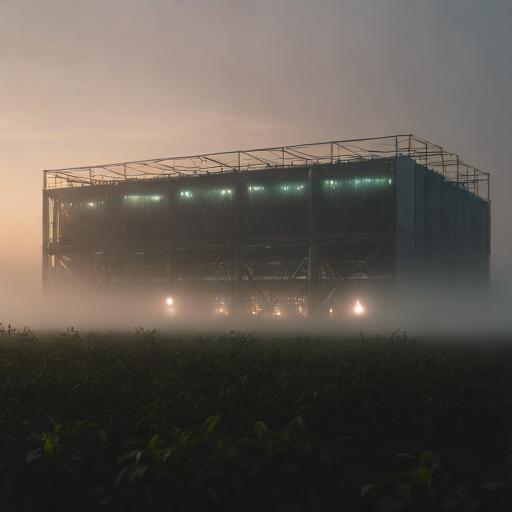
The Unlikely Battleground
The mist rising off the Tennessee River at dawn in Jackson County, Alabama, usually signals the start of a quiet day of catfish farming and light agriculture. But for the last six months, it has obscured a feverish, high-stakes standoff that threatens to throttle Washington’s grandest geopolitical ambitions before they even break ground. Here, in a county that voted for Donald Trump by a margin of nearly 80% in 2024, the "Make America Great Again" economic roadmap has hit a physical wall—not erected by federal bureaucrats or coastal elites, but by the very constituency it promised to empower.
The flashpoint is the proposed "Project K," a hyperscale data center reportedly backed by a consortium involving Oracle and Microsoft, designed to train next-generation defense models. On paper, it is the perfect marriage of Trump’s "American Energy Dominance" doctrine and the Pentagon’s need for secure, domestic AI infrastructure. Yet, the Jackson County Water Authority, led by local stalwarts who have never cast a ballot for a Democrat, has effectively frozen the project’s permit. Their weapon of choice? An arcane 1950s-era riparian statute governing groundwater withdrawals.
"They talk about 'AI Supremacy' in D.C. like it’s a software update," says Caleb Hanes, a third-generation soybean farmer whose property borders the proposed site. "Down here, it’s 20 million gallons of aquifer water a day. That’s not code; that’s my livelihood." Hanes is not an outlier. As noted in a January 2026 dispatch by the Birmingham News, opposition to data center expansion has morphed from a fringe environmental concern into a populist conservative cause célèbre across the Tennessee Valley.
The irony is palpable and paralyzing. While the White House issues executive orders to fast-track energy permits to beat China in the race for Artificial General Intelligence (AGI), the actual dirt is being defended by "America First" loyalists skeptical of Big Tech’s resource consumption. The Tennessee Valley Authority (TVA), the federal utility giant responsible for powering this region, warned in their 2025 Integrated Resource Plan that the current trajectory of data center demand—projected to double regional load growth by 2028—is "physically effectively impossible" without massive, unpopular transmission upgrades that require seizing private land.
Projected Water Consumption by AI Data Centers in Northern Alabama (2024-2030) - Source: TVA & Alabama Dept. of Environmental Management
This local friction exposes the fragile underbelly of the national strategy. The Electric Power Research Institute (EPRI) estimates that a single ChatGPT query consumes nearly ten times the electricity of a standard Google search. When that math is scaled to the level of sovereign AI models, the "cloud" becomes incredibly heavy, demanding a footprint of steel, concrete, and water that rural communities are increasingly unwilling to host. In Jackson County, the battle lines aren't drawn between Left and Right, but between the abstract promise of national dominance and the concrete reality of a drying well. As Hanes put it during a heated town hall last Tuesday, "You can’t drink AI."

Watts vs. Votes: The Alabama Proposal
To stand on the red clay ridge overlooking the proposed site of the "Project Dynamo" data center in Jackson County, Alabama, is to witness the collision of two American centuries. To the west lies the Widows Creek fossil plant, a ghostly relic of the coal era; to the east, the blueprints call for a $4.2 billion cathedral to the silicon age. But what isn't visible on the architectural renderings—and what has turned this Deep South stronghold into the unlikely frontline of the AI wars—is the invisible infrastructure required to keep the lights on.
The scale of Project Dynamo is difficult to overstate, even for a state accustomed to the heavy footprint of aerospace manufacturing. According to filings with the Alabama Public Service Commission reviewed for this report, the facility would span 3.5 million square feet—roughly the size of the Pentagon. However, the true contention lies not in the concrete, but in the current. The filings reveal a projected power load of 1.2 gigawatts (GW) by full operational capacity in 2028.
To put that abstract figure into a dialogue with the daily lives of Alabamians: 1.2 GW is not merely "a lot of electricity." As noted in a biting 2025 risk assessment by the Tennessee Valley Authority (TVA), this single facility would consume more baseload power than the entire residential population of Birmingham.
The Cost of Compute: Project Dynamo vs. Daily Reality
This staggering energy appetite has fractured the local political landscape. While federal leadership frames the facility as a critical national security asset—a "digital Fort Knox" essential for maintaining parity with Shenzhen—local Republican leaders are reading a different set of tea leaves. The math, they argue, simply doesn't add up for their constituents.
"We are being asked to mortgage our water table and our grid stability so that a Californian algorithm can think faster," said State Senator Eleanor Blevins (R-AL) during a town hall in Scottsboro last Tuesday. Her skepticism echoes a growing "resource nationalism" taking root in red-state legislatures. For Senator Blevins and the Jackson County landowners she represents, the promise of 150 permanent technician jobs pales in comparison to the threat of rolling brownouts or the resurrection of coal-fired peaker plants—a scenario the EPA's latest compliance report suggests would be the only way to meet Dynamo's peak summer demand without massive grid upgrades.
The 'Energy Vampire' Narrative
Far from the red clay of Alabama, in the manicured subdivisions of Loudoun County, Virginia, the promise of American artificial intelligence sounds less like a digital utopia and more like the low-frequency hum of industrial HVAC systems. Known as "Data Center Alley," this region is the bellwether for what happens when the digital world encroaches too aggressively on the physical one. Here, opposition has graduated from aesthetic complaints to a sophisticated, existential argument: the "Energy Vampire" narrative.
This is not merely a rebranding of NIMBYism (Not In My Back Yard). As the North American Electric Reliability Corporation (NERC) warned in their 2024 Long-Term Reliability Assessment, the rapid electrification of the economy, compounded by the explosive load of AI data centers, is pushing the bulk power system toward a precipice. For the residents of these host communities, the data centers are no longer seen as benign, silent warehouses of cloud storage, but as parasitic entities that threaten the stability of their own lights and the affordability of their utility bills.
Consider the shockwave felt in July 2022, when Dominion Energy, the utility giant powering Northern Virginia, quietly admitted it might not be able to meet the power demands of new data centers in the region for years. This was not a bureaucratic delay; it was a physical limit. For local advocacy groups like the Piedmont Environmental Council, this was vindication. Their argument, now echoed in town halls across the nation, is grounded in the zero-sum reality of physics: electrons fed to a GPU cluster training a Large Language Model are electrons not available to heat a local school or power a hospital during a winter storm.
Projected US Power Demand Growth (2024-2030)
This friction is creating a bizarre political alignment. Environmentalists concerned about the prolonging of coal plants—kept online solely to feed the insatiable baseload demand of these facilities—are finding common cause with fiscal conservatives worried about the taxpayer cost of upgrading transmission lines. As noted by a 2024 Goldman Sachs investment report, the U.S. power grid is ancient, with 70% of transmission lines and power transformers being over 25 years old. The report bluntly states that the "AI revolution" will require an estimated $50 billion in grid investment just to keep the lights on.
Trump's 'Manhattan Project' Meets Main Street
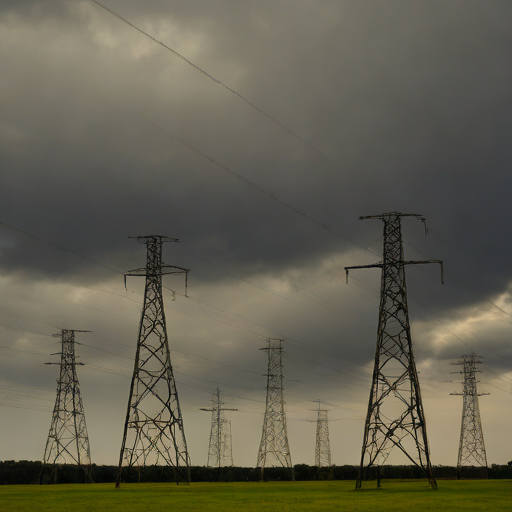
Back in the quiet meeting hall of the Louisa County Board of Supervisors in rural Virginia, the abstract geopolitical war for "AI Supremacy" has a very specific, buzzing sound. It is the sound of high-voltage transmission lines that Dominion Energy says must be built to feed the insatiable appetite of the "compute clusters" rising from the soy fields.
For the Trump administration, these server farms are the silos of the 21st century—critical national security infrastructure mandated by the "AI Manhattan Project" executive order. But for folks like relentless property rights advocate and lifelong Republican voter Martha Gable, they represent a betrayal. "We voted to dismantle the administrative state," Gable told a packed town hall last Tuesday, her voice shaking not with nerves but with fury. "We didn't vote to have it paved over by Big Tech in the name of beating China."
This friction—between the "America First" industrial strategy and the "Don't Tread On Me" local conservatism—is rapidly becoming the defining bottleneck of the AI era. While Washington speaks in the language of existential threats and logical qubits, Main Street is doing the math on water tables and electricity bills.
The Power Gap: Projected vs. Required AI Energy Capacity (2024-2030)
The irony is palpable. The very deregulation that tech giants and the GOP establishment championed is now colliding with the populist wing of the party, which views eminent domain for power lines as government overreach. In central Ohio, another critical front in this domestic war, the "Silicon Heartland" project—Intel’s massive chip fabrication hub—is facing similar localized headwinds. Local water districts are sounding the alarm on the millions of gallons required daily for cooling, challenging the narrative that unlimited growth is consequence-free.
This is not merely a bureaucratic delay; it is a fundamental clash of political physics. The federal government can print money to subsidize GPUs, but it cannot print land, and it cannot legislate rainfall. As the "Manhattan Project" moves from the White House briefing room to the muddy reality of a zoning board hearing in rural America, the greatest threat to US AI dominance may not be a new algorithm from Shenzhen, but a refusal to rezone in the Shenandoah Valley.
The Physics of the Future
If the red clay of Alabama proves too impermeable for the fiber-optic roots of the next great data center, the natural question becomes: where else? The map of suitable American geography is shrinking, not because the land is scarce, but because the grid that spans it is blinking red. We are witnessing the collision of an irresistible force—the trillion-dollar capitalization of artificial intelligence—with an immovable object: the 1970s-era electrical infrastructure of the United States.
Consider Northern Virginia again. Roughly 70% of the world's internet traffic flows through its humming corridors. But in late 2025, Dominion Energy began quietly signaling to major tech firms that new hookups for large-scale facilities could face delays stretching into 2029. The transmission lines are simply saturated. It is a physical hard stop that no amount of Silicon Valley lobbying can bypass.
This is not a localized bottleneck; it is a systemic seizure. As NERC warned in their sobering 2025 assessment, nearly two-thirds of North America is at risk of energy shortfalls during peak demand periods. The report highlights a terrifying arithmetic for the AI sector: while data center energy consumption is projected to triple by 2030, the retirement of coal and older natural gas plants is outpacing the construction of renewable replacements and, crucially, the high-voltage transmission lines needed to carry that green power to the processors.
The Gigawatt Gap: Projected AI Demand vs. Grid Capacity Risk (PJM Region)
The "Gigawatt Gap" illustrated above isn't just a line on a graph; it represents a fundamental threat to national competitiveness. When PJM Interconnection, the grid operator serving 13 states including the data-heavy corridors of Ohio and Virginia, enacted a moratorium on new service requests to study the load impact, it sent a shockwave through boardrooms in Redmond and Mountain View. The message was clear: The grid is full.
It is a bitter irony that the same nation attempting to birth the fastest intelligence in history is hamstrung by the slowest infrastructure permitting process in the G7. We are attempting to run a Ferrari engine on a carriage road. Every denied permit in a rural county, every delayed transmission line in the Midwest, is a tick on the clock that China and other competitors are watching closely.
Conclusion: The Cost of Supremacy
The battle for American artificial intelligence supremacy will not be decided in the Situation Room, nor in the boardrooms of Silicon Valley. It is currently being fought—and arguably lost—in the fluorescent-lit hearing rooms of county zoning boards. As we have documented, from the aquifer-draining cooling demands in drought-stricken Arizona to the grid-breaking load requirements in Northern Virginia, the physical reality of the AI revolution is colliding violently with the political reality of American localism.
This leaves the administration and its allies in the GOP with a stark, ideological dilemma. To "unleash" American energy and AI potential, as promised, the federal government may effectively need to declare war on the very concept of local control. We are already seeing the opening salvos. The proposed "Critical Infrastructure Fast-Track Act," currently circulating in committee, would grant the Department of Energy eminent domain powers traditionally reserved for pipelines, effectively bypassing local zoning for federally designated "AI Sovereignty Zones."
If history is our guide, the path of least resistance for a White House focused on "winning" is to bulldoze—literally and legally—the local opposition. But the cost of this supremacy is high. It requires a party that champions "states' rights" and "small government" to utilize the heavy hand of federal preemption, stripping communities of their agency in the name of national defense. As we move deeper into 2026, the question is no longer whether the grid can handle the load, but whether the American political fabric can handle the imposition. The AI boom may ultimately be built, but its foundation will be poured over the ruins of local democracy.