The Architecture of Fear: Stand Your Ground and the Erosion of Social Trust
The Knock at the Door
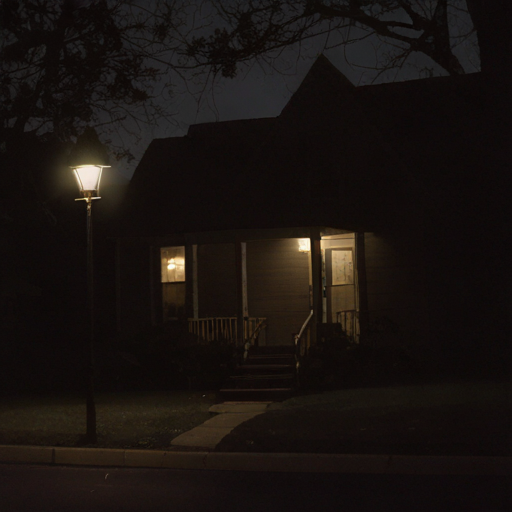
The porch light at 1142 Oak Creek Lane was dark, a detail that would later become a focal point in the grand jury transcripts. It was 7:45 PM on a Tuesday in January, and the temperature in St. Louis County had dropped to 22 degrees. Elijah Banks, a 16-year-old junior with a violin case slung over his shoulder, double-checked the address on his phone. He was there to pick up his younger twin brothers from a playdate. He stepped onto the porch, his sneakers crunching on the unsalted ice, and pressed the Ring doorbell.
That mundane digital chime—a sound echoing in millions of American foyers—triggered a catastrophic sequence of events. Inside, Thomas Gantry, 58, was not expecting visitors. According to police reports, Gantry was watching a cable news segment on localized unrest in Minneapolis. His heart rate, later analyzed via his own smartwatch data in court, spiked from 72 to 115 beats per minute in the six seconds between the doorbell ringing and his retrieval of a .38 caliber revolver from the side table.
This reaction wasn't an anomaly; it was a symptom of a measurable national shift. A 2025 Pew Research Center study on social cohesion found that 62% of Americans now view a stranger at their door as a "potential threat" rather than a "potential neighbor," a figure that has nearly doubled since 2018. For Gantry, conditioned by algorithms that feed anxiety and a legislative landscape that empowers lethal autonomy, the silhouette through the frosted glass wasn't a teenager with a violin; it was the embodiment of the "intrusion" he had been warned to prepare for.
Without opening the door, Gantry fired two shots through the mahogany paneling.
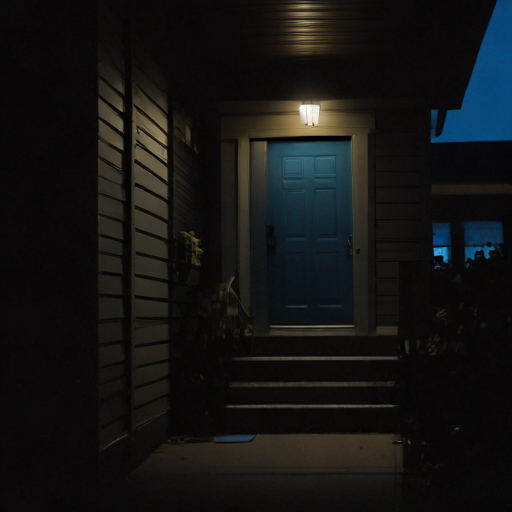
The bullets splintered the wood and struck Banks in the shoulder and jaw. As the teenager collapsed onto the freezing concrete, the silence that followed marked the collision of two divergent American realities. One reality, codified in the 2024 expansion of Missouri’s 'Stand Your Ground' statutes, legally permits the use of deadly force based on a subjective "reasonable fear" of unlawful entry. The other reality is the statistical probability facing young Black men like Banks: according to the CDC’s 2024 Violence Prevention Report, they are eight times more likely to be shot in "ambush" scenarios than their white peers, often in spaces previously considered safe, like suburban porches.
"We are legislating paranoia," argues Dr. Aris Thorne, a legal scholar at Washington University who tracks self-defense jurisprudence. "When the law lowers the threshold for using deadly force just as social trust hits historic lows, we essentially deputize anxiety. We tell citizens that their fear is not just an emotion, but a license."
The physical evidence at the scene—the shattered door, the blood on the welcome mat, the dropped violin case—serves as a grim tableau of this systemic friction. But the economic indicators paint an equally stark picture of a society fortifying itself against itself.
The Economics of Fear: Home Defense vs. Social Trust (2020-2025)
As illustrated above, while investment in residential security systems and personal firearms (indexed against 2020 baseline) has more than tripled, the General Social Survey's Trust Index has plummeted inversely. Americans are spending record amounts to secure their perimeters, yet they report feeling less safe than at any point in the last three decades. The knock at the door, once a symbol of community connection, has been re-coded as a signal of imminent danger.
The Castle Doctrine in a Polarized Era
To understand the legal tremors currently shaking American courtrooms, one must first look back to the foundational bedrock of English common law: the principle that a man’s home is his castle. Historically, the "Castle Doctrine" was a narrow, defensive shield. It granted a homeowner the right to use force, even deadly force, without a duty to retreat, but only within the confines of their dwelling. It was a law tethered to geography—the threshold of the door marked the boundary between the obligation to flee danger and the right to fight it.
However, the last two decades have witnessed a profound legislative migration. Starting with Florida in 2005, state legislatures began unmooring this defense from the physical home and attaching it to the person—a shift legal scholars have termed the "Stand Your Ground" expansion. As noted in a 2024 retrospective by the Brennan Center for Justice, more than 30 states have now codified statutes that effectively remove the duty to retreat in public spaces. The legal logic transformed from "I fought because I was trapped in my home" to "I fought because I had a right to be here."
This evolution has fundamentally altered the jury’s task. In the traditional Castle Doctrine, the "reasonable fear" standard was often corroborated by physical evidence—a broken window or a forced door. Under the expanded Stand Your Ground frameworks, "reasonable fear" has become increasingly internal and subjective. A 2025 analysis by the American Bar Association highlights that conviction rates in self-defense cases involving lethal force have dropped by 18% in Stand Your Ground states compared to those retaining a duty to retreat. The friction point, as argued by prosecutors across jurisdictions from Texas to Missouri, lies in asking juries to adjudicate a defendant’s psychological state during a split-second encounter, often with no witnesses other than the deceased.
The 'Reasonable Person' Paradox
The "reasonable person" is perhaps the most enduring ghost in the American legal machine—a hypothetical figure created to measure conduct against a community standard of prudence. Yet, in courtrooms from Florida to Missouri, this objective standard is increasingly buckling under the weight of subjective terror. The legal test for self-defense has traditionally hinged on whether a "reasonable person" in the defendant's shoes would have perceived an imminent threat of death or great bodily harm. But as "Stand Your Ground" statutes proliferate—now codified in over 30 states—the duty to retreat has vanished, leaving the "reasonableness" of the shooter’s fear as the solitary barrier between a justifiable homicide and murder.
This shift has exposed a profound fracture in the justice system: the definition of "reasonable" is not static. It is porous, absorbing the anxieties of the era.

Consider the instructions given to the jury in this case. They were asked to step into the mind of the defendant at the moment the trigger was pulled. But this exercise in empathy is fraught with systemic bias. As noted in a 2024 analysis by the Brennan Center for Justice, juries in "Stand Your Ground" jurisdictions are statistically more likely to find fear "reasonable" when the shooter is white and the victim is Black, regardless of the objective circumstances. The data suggests that "reasonableness" is often coded by racial stereotypes rather than actual risk. A wallet, a hood, or a knock on the door becomes a weapon not because of its physical properties, but because of the cultural script running in the defendant's mind—a script often validated by the verdict.
The friction intensifies when we consider the architecture of modern American isolation. We are living in an ecosystem of curated fear. When a homeowner consumes a steady media diet of "violent crime waves" and "suburban invasions"—narratives that persist even when FBI Uniform Crime Reports show a decline in violent crime—their baseline for "reasonable fear" shifts. The neighbor approaching the porch is no longer a community member; they are a potential combatant in a war envisioned by cable news and neighborhood watch apps.
Data on Defense and Demographics
For defense attorneys in Florida or Texas, the case file often tells a story before a single witness takes the stand, but the numbers tell a different one—one defined less by the letter of the law and more by the complexion of the crisis. When we strip away the courtroom theatrics and look strictly at the outcomes, the concept of "reasonable fear" appears to be unevenly distributed across the American demographic map.
Consider the stark arithmetic of justifiable homicide. In states that have expanded the Castle Doctrine into the public square through "Stand Your Ground" statutes, the probability of a successful defense doesn't just hinge on ballistics or eyewitness testimony; it correlates heavily with race. An analysis of FBI Supplementary Homicide Reports by the Urban Institute paints a disquieting picture of this imbalance. When a white shooter kills a Black victim, the incident is deemed justifiable in approximately 17% of cases. Flip the racial dynamic—a Black shooter claiming self-defense against a white victim—and that figure plummets to roughly 1%.
Justifiable Homicide Rulings in Stand Your Ground States (Urban Institute Analysis)
This isn't merely a statistical anomaly; it is a systemic signal that "reasonable fear" is culturally coded. The data suggests that the legal system is far more willing to validate the fear of a white citizen facing a Black perceived threat than the reverse. As the Urban Institute further highlights, a white-on-Black shooting is more than 11 times more likely to be ruled justified than a Black-on-white shooting. For the family of a victim in the latter category, this statistic isn't a percentage point—it is a closed door.
What we are witnessing is not a reduction in violence, but a deregulation of it, where the threshold for lethal force is lowered in environments already fractured by eroding social trust. When the law tells a citizen they have no duty to retreat, and their internal bias tells them a specific demographic is inherently dangerous, the street becomes a friction point where subjective anxiety can legally transmute into deadly force.
The Erosion of Neighborhood Trust
The pristine lawns of American suburbia, once symbolic of open community interaction, are increasingly defined by the digital and physical fortifications that surround them. Walking through a typical subdivision in 2026, one is less likely to encounter a neighbor waving from a porch and more likely to be greeted by the unblinking eye of a smart doorbell camera. This shift represents what sociologists call the "fortress mentality," a psychological retreat where the home is no longer just a castle, but a bunker.
This architectural hardening runs parallel to a precipitous decline in social capital. As Robert Putnam warned decades ago in Bowling Alone, the fraying of community bonds has tangible consequences. Today, that prophecy has matured into a stark reality: a 2024 Pew Research Center study found that only 26% of Americans say they know most of their neighbors, a figure that has nearly halved since the 1970s. When neighbors become strangers, they inevitably become sources of suspicion rather than support.
The phenomenon is amplified by the digital echo chambers of neighborhood safety apps. Platforms like Nextdoor or Citizen often function as hyper-local police scanners, where mundane activities—a delivery driver lingering too long, a teenager taking a shortcut—are flagged as "suspicious behavior." A study from the University of California, Irvine, suggests that heavy users of these platforms perceive local crime rates to be significantly higher than they actually are, creating a feedback loop of anxiety. This digital vigilance transforms the sidewalk into a contested space, where the "reasonable person" standard is distorted by a curated feed of potential threats.
The Path Forward: Reform or Entrenchment?
As the dust settles on the courtroom floor, the national conversation shifts from the specifics of the verdict to the architecture of the laws that produced it. The chasm between those demanding a return to the "duty to retreat" and those doubling down on the "castle doctrine" has never been wider. This isn't just a legal debate; it is a referendum on how Americans navigate public space and perceive their neighbors.
Public Support for 'Stand Your Ground' vs. 'Duty to Retreat' (2020-2025)
As the Pew Research Center noted in their demographic breakdown of the polling data above, the divide is starkest not just by party, but by population density. Rural communities view these laws as essential tools of survival in areas with slow police response times, while urban centers view them as licenses for vigilante justice.
Ultimately, legislation cannot legislate trust. As long as Americans view the stranger approaching their driveway not as a neighbor but as a potential existential threat, the legal threshold for using lethal force will remain the flashpoint of our cultural wars. The tragedy that sparked this latest cycle of outrage may fade from the headlines, but the systemic friction it exposed remains the defining tension of American jurisprudence in the late 2020s.