The Architecture of Silence: Venezuela's Weaponization of Missing Persons
The Midnight Knock: Anatomy of a Disappearance
It didn't happen at midnight, and there was no knock. For Rocío San Miguel, a 57-year-old attorney and one of Venezuela’s most methodical military analysts, the end of freedom came under the fluorescent hum of the Simón Bolívar International Airport.
It was Friday, February 9, 2024. San Miguel was checking in for a flight to Miami, a mundane ritual of modern travel that, in Venezuela, has become a high-stakes roulette. According to her legal team and reports from Amnesty International, she was approached by immigration officials just before control checkpoints. There was no shouting, no public spectacle—just a quiet request to step aside. Then, silence.
For the next 100 hours, San Miguel effectively ceased to exist. For US policymakers and international observers, this incident serves as a grim case study in what the UN Fact-Finding Mission on Venezuela describes as a "machinery of repression": the creation of an informational void designed to paralyze not just the individual, but their entire support network. When her daughter, Miranda Díaz San Miguel, went to the airport to inquire about her mother, she too vanished, along with San Miguel’s ex-husband and two brothers.
"The cruelty is the point," explains Alfredo Romero, director of the human rights NGO Foro Penal, which tracks politically motivated detentions. "They don't just take the target; they take the safety of the entire family structure."
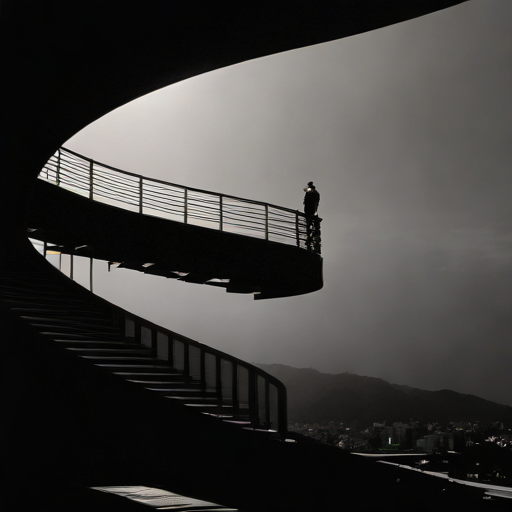
For families in Caracas, the first 48 hours of a detention follow a harrowing, almost script-like trajectory known as the "tour of terror." It typically begins at the concrete fortress of El Helicoide, the spiral-shaped headquarters of the Bolivarian National Intelligence Service (SEBIN). Families stand at the gates, often holding bags of food and fresh clothes—a grim optimizing of hope—only to be told by guards, "He is not here."
They then cross town to the Boleíta Norte neighborhood, to the headquarters of the Directorate of General Military Counterintelligence (DGCIM). The answer there is often the same. This bureaucratic gaslighting is not a glitch; it is a feature. A 2024 report by the Organization of American States (OAS) categorizes this practice not merely as poor administration, but as "enforced disappearance," a crime under international law designed to induce psychological paralysis.
By denying the detention initially, the state achieves two tactical goals. First, it prevents the immediate filing of legal protections like habeas corpus. Second, it weaponizes uncertainty. For the detainee, isolated in a cell without sunlight or legal counsel, the message is clear: You are alone. No one knows where you are. No one is coming.
The Labyrinth of Denial: Institutional Complicity
However, the abduction of a high-profile figure like San Miguel is merely the visible tip of a much deeper institutional rot. The heavy iron gates of El Helicoide, spiraling upward into the Caracas smog like a modern-day Babel, serve as the physical epicenter of this bureaucratic torture. But the true architecture of despair is not built of concrete; it is constructed of paperwork, stamped denials, and the deliberate silence of a judiciary that has abdicated its constitutional duty.
For families standing in the sweltering heat outside, the experience is less like a legal battle and more like a Kafkaesque loop designed to exhaust hope. Take the case of Maria G., whose husband was seized by unidentified men in black SUVs—a hallmark of SEBIN operations—in late 2024. When she petitioned the 34th Control Court of Caracas, the response was not a rejection, but a deflection. The court clerk, citing "administrative delays," refused to even log the habeas corpus petition, a fundamental violation of due process that a 2024 Amnesty International briefing describes as "systematic procedural erasure." The judge directed her to the prosecutor’s office; the prosecutor directed her back to the detention center. This is the "Rotational Denial" mechanism in action: a closed circuit where every door opens only to a hallway leading back to the street.
This is not mere incompetence or the byproduct of a crumbling state infrastructure. As documented by the UN Independent International Fact-Finding Mission on Venezuela, this coordination between the judiciary and intelligence services like the DGCIM is "active and intentional." Judges are not merely passive observers; they are gatekeepers of the void. In sworn testimonies collected by local NGOs, court officials have admitted to receiving direct orders from the Executive Vice Presidency to "freeze" specific files, effectively rendering the detainee legally non-existent.
The strategy effectively weaponizes time. Every day a detainee remains "missing" is a day the state can exert maximum leverage without the friction of formal charges. It creates a phantom jurisdiction where the laws of the Bolivarian Republic apply on paper, but the reality is dictated by the whim of the intelligence apparatus.
Judicial Silence: Habeas Corpus Outcomes (2024-2025)
The disparity illustrated above, based on aggregated data from Foro Penal and independent legal monitors, reveals the scale of the complicity. Less than 6% of legal challenges to arbitrary detention result in the state even admitting it holds the prisoner. This statistical chasm represents thousands of families trapped in the labyrinth, where the answer is never "no," but always "not here, not now, ask someone else."
Inside the Black Sites: El Helicoide and Beyond
While the paperwork ensures legal invisibility, the physical reality of detention requires concrete and steel. To the casual observer driving down the Autopista Francisco Fajardo in Caracas, El Helicoide looks like a relic of a failed future—a spiraling concrete pyramid carved into the rock, originally designed in the 1950s as a drive-through shopping mall. Today, it serves a much darker retail purpose: it is the central warehouse for the state’s most valuable hostages.
Access here has been weaponized. As noted in a July 2025 report by Amnesty International, the "bureaucracy of silence" has tightened; in August 2025, authorities arbitrarily restricted family deliveries of food and medicine—previously a daily lifeline—to Fridays only. This wasn't just a logistical shift; it was a psychological one.
"They cut the days so we would spend the rest of the week imagining the worst," says 'Elena', whose husband, a labor union organizer, vanished in the post-election sweeps of late 2024. She spoke on the condition of anonymity, fearing retribution from SEBIN. For Elena, that Friday line isn't about delivering arepas; it is a weekly plebiscite on her husband's existence. If the guards accept the bag, he is alive. If they refuse it, he is gone.
While El Helicoide is the visible face of detention, the DGCIM headquarters in Boleíta offers an even deeper void. Here, the "weaponized uncertainty" turns physical. The 2025 report by Robert F. Kennedy Human Rights details how detainees are often held in "temporary forced disappearance"—unacknowledged custody for weeks before a formal charge. Inside, survivors describe cells with no natural light, artificially kept at freezing temperatures, a tactic designed to disorient the biological clock and break the will without leaving immediate visible scars.
The Scale of Silence: Political Prisoners in Venezuela (2023-2025)
The data above, synthesized from Foro Penal and OAS observations, illustrates a grim new normal. The spike in 2024 wasn't a temporary wave that receded; it established a new baseline of incarceration. For US policymakers, the implication is clear: the "black sites" are no longer emergency measures. They are now permanent institutions of the state, as essential to the current governance model as the central bank or the oil ministry.
Psychological Warfare: The Strategy of Uncertainty
The physical architecture of El Helicoide serves a purpose beyond mere containment; it is designed to break the mind. The silence outside this spiraling fortress is not the quiet of peace, but the heavy, suffocating stillness of a waiting room where the doctor never comes. For Maria Corina Machado’s supporters and the families of over 2,000 detainees arrested since the disputed elections, this silence is the weapon itself.
Unlike the straightforward repression of mid-20th century dictatorships, where dissidents were often publicly jailed to send a clear message, the Maduro regime’s current tactic relies on the deliberate withholding of status. When a mother asks if her son is inside, the answer is rarely "yes" or "no." It is a shrug, a bureaucratic deferral, or a terrified silence.
This is not administrative incompetence; it is a calculated psychological operation. As the UN Independent International Fact-Finding Mission on Venezuela documented in its 2024 updates, the use of incommunicado detention for periods ranging from days to weeks serves a distinct tactical purpose: it paralyzes the prisoner's support network. "If I protest," a family member thinks, "will they hurt him? If I speak to the international press, will his file disappear?" This ambiguity forces families to police themselves more effectively than any squad of riot police could.
The psychological toll of this "ambiguous loss"—a term coined by Pauline Boss to describe the grief of losing someone without closure—is profound. It fractures the opposition's ability to organize. You cannot rally around a martyr if you aren't sure they are dead; you cannot campaign for a prisoner if the state denies they are in custody. In this way, the regime has modernized the terror of the desaparecidos, refining it into a tool of low-intensity, high-impact psychological warfare.
The View from Doral: The Diaspora's Vicarious Trauma
The terror generated by this uncertainty is not contained within Venezuela’s borders. It travels north, reaching deep into the United States. In the humidity of Doral, Florida—affectionately and painfully dubbed "Doralzuela"—the crisis of the missing is not a headline but a silent, vibrating notification on a smartphone that never comes.
The psychological toll is distinct and palpable, a phenomenon clinical psychologists are beginning to classify as "transnational vicarious trauma." It is visible in the waiting rooms of community health clinics on NW 41st Street, where anxiety prescriptions are quietly refilled. As reported by the Inter-American Commission on Human Rights (IACHR) in their late 2024 briefing, the strategy of "enforced disappearance" is designed specifically to export fear. It turns every family member abroad into a hostage of their own imagination.
"It’s a mute button pressed on the opposition, but the finger pushing it is thousands of miles away," explains Dr. Elena Machado, a psychologist working with refugee populations in South Florida. In her practice, she observes that the uncertainty inflicts a specific type of cognitive dissonance: the safety of American residency clashing with the visceral vulnerability of loved ones back home. A 2025 study by the Migration Policy Institute highlights that this diaspora is unique; unlike those fleeing economic collapse alone, recent arrivals are fleeing a targeted architecture of persecution that follows them.
Venezuelan Population in the US: A Growing Vulnerability (2010-2024)
For US policymakers, the chart above represents more than demographic shifts; it represents a growing constituency susceptible to foreign coercion. As the Center for Strategic and International Studies (CSIS) warned in a recent security memo, when an authoritarian regime can manipulate the behavior of US residents by holding their distant relatives as leverage, it creates a national security blind spot that traditional diplomacy is ill-equipped to handle.
Diplomacy's Dead End: The Limits of International Pressure
As the ripple effects of this trauma reach American soil, Washington finds its diplomatic toolkit increasingly obsolete. The halls of the Organization of American States in Washington, D.C., have become an echo chamber of well-intentioned impotence. While diplomats draft strongly worded resolutions condemning "systematic arbitrary detention," the reality on the ground in Caracas operates on a timeline that renders these maneuvers obsolete.
For decades, the standard U.S. playbook—ratcheting up individual sanctions, freezing assets, and issuing visa restrictions—operated on the assumption that the Maduro administration craved legitimacy or at least access to global financial markets. That calculus is now fatally flawed. As noted by the International Crisis Group's 2025 strategic assessment, the regime has successfully insulated its core security apparatus from Western financial pressure by pivoting toward a parallel economy underwritten by opaque cryptocurrency transactions and illicit gold trade.
The "Barbados Agreement" of 2023, once hailed by the State Department as the blueprint for democratic transition, now stands as a monument to diplomatic naivety. We traded tangible sanctions relief for promises of electoral fairness that were dismantled piece by piece—first with the disqualification of opposition primaries, then with the sophisticated architecture of "weaponized uncertainty" we see today. The families of the detained know this failure intimately.
The grim truth facing the White House is that the "maximum pressure" campaigns of the past have hit a hard ceiling. Sanctions have impoverished the general population—forcing millions more to flee north, creating a secondary migration crisis that further complicates U.S. domestic politics—while leaving the political elite and their security enforcers largely unscathed. Until Washington and Brussels can target the architecture of this uncertainty rather than just its architects, diplomacy remains nothing more than a spectator sport to tragedy.