The Death of Digital Trust: Why AI Scams Demand a Zero-Trust Life

When Your Grandchild's Voice Isn't Real
It was 2:14 PM on a Tuesday when Mary Jenkins, a 72-year-old retired schoolteacher in Scottsdale, Arizona, answered her landline. She didn't hear a robotic telemarketer or a stranger asking for gift cards. She heard her grandson, Tyler. He was crying.
"Grandma, I messed up," the voice sobbed, cracking exactly the way Tyler’s voice did when he was terrified. "I hit a car. A pregnant woman. They’re going to arrest me." The voice wasn't just a likeness; it had Tyler’s specific cadence, his breathless stutter when anxious. It was a biological key turning a lock in Mary’s brain, bypassing every skepticism filter she had built up over decades. She wired $9,000 within the hour.
Tyler, of course, was safe in his dorm room at Arizona State University, completely unaware that three seconds of audio scraped from a TikTok video had been enough to weaponize his identity against his own grandmother.
This is the new face of American fraud. We have graduated from the era of the "Nigerian Prince"—clunky, typo-ridden emails that required the victim to be greedy or naive—to an era of hyper-realistic, AI-enabled predation that simply requires the victim to be loving. As the Federal Trade Commission (FTC) reported in their 2024 analysis, imposter scams have become the single most effective tool in the fraudster's arsenal, stripping Americans of billions not through technical hacking, but through emotional hijacking.
The distinction is critical. In the early 2000s, avoiding fraud meant spotting a fake logo or noticing a strange URL. Today, it means doubting the evidence of your own ears. A 2023 study by McAfee, titled "The Artificial Imposter," revealed that 77% of AI voice scam victims lost money because they were unable to distinguish the cloned voice from the real person. The technology has democratized deception; tools that once required Hollywood-budget studios now run on standard laptops, capable of cloning a voice with as little as three seconds of reference audio.

The Billion-Dollar Surge: Reported Losses to Imposter Scams (Source: FTC)
The chart above, drawing on data from the FTC's Consumer Sentinel Network, illustrates a terrifying trajectory. Note the acceleration post-2022, coinciding with the widespread public release of generative AI audio tools. We are witnessing a decoupling of identity from presence.
"The biological 'trust anchor'—the visceral certainty that comes from hearing a loved one's voice—is broken," argues Dr. Sarah Chen, a forensic psychologist specializing in digital crime. "We are asking the average American to override millions of years of evolutionary programming that says 'Voice equals Person.'"
This escalation forces a grim reckoning for the US economy and social fabric. If we cannot trust a phone call from a spouse or a frantic video message from a child, the "high-trust" interactions that grease the wheels of daily life grind to a halt. We are moving toward a Zero Trust existence, not just in cybersecurity, but in the living room.
The Automaton Grifter: Scaling the Con
The boiler room of the late 20th century is a relic. We have all seen the cinematic depiction: rows of sweaty telemarketers in a cramped office, shouting over one another, reading from crumpled scripts while a manager paces the floor. That model of fraud—labor-intensive, high-friction, and inherently limited by human endurance—has been quietly decommissioned. In its place, the new engine of American grift hums in climate-controlled silence: racks of servers, likely leased from legitimate cloud providers, running instances of conversational AI that never sleep, never stutter, and never ask for a smoke break.
This is the era of the "Automaton Grifter," where the bottleneck of human labor has been removed from the equation of crime.
Consider the economics of the old "grandparent scam." A human operator might make 100 calls a day. If they are talented, they might hook two victims. It is a volume business constrained by biology. Today, as detailed in a late 2025 advisory by the FTC, a single sophisticated AI agent can initiate and sustain thousands of simultaneous, unique voice conversations. This is not a recording; it is a dynamic, responsive intelligence capable of parsing skepticism and pivoting its emotional tone in milliseconds.
"We are seeing the industrialization of social engineering," warns Dr. Elena Rosales, a cybersecurity analyst at the Brookings Institution. "The cost to generate a convincing, three-minute conversation with a victim has dropped from dollars to fractions of a penny. When the cost of the attack approaches zero, the attacker doesn't need a high success rate to be profitable. They just need volume."
This "turbocharging" effect transforms how fraud intersects with our daily lives. It allows scammers to move from generic "spray and pray" tactics to hyper-personalized campaigns at a population scale. By scraping data from the massive breaches of 2024 and 2025—data that likely includes your voice biometrics, your employment history from LinkedIn, and your family tree from Ancestry.com—these automated systems can construct a bespoke narrative for every target.
When your phone rings today, the voice on the other end isn't just guessing. It knows you just refinanced your home in suburban Atlanta. It knows your daughter is a junior at UGA. And thanks to voice synthesis models, it might even sound exactly like her.
The financial impact of this technological leap is stark. The FBI's Internet Crime Complaint Center (IC3) has tracked a vertical trajectory in losses attributed to "tech-enabled imposter scams," a category that has ballooned as generative AI tools became widely available on the dark web.
Escalation of Imposter Scam Losses (US)
For the American consumer, this effectively breaks the "trust anchors" we have relied on for decades. Caller ID is easily spoofed. Voice is now malleable data, not proof of identity. Even video—once the gold standard of verification—is succumbing to real-time deepfake injection. We are being forced into a "Zero Trust" posture not just in corporate networks, but at the kitchen table.
Case Study: The $25 Million Dollar Deepfake
It was a Tuesday in February 2024, and for a finance employee at the Hong Kong branch of Arup—a global engineering giant responsible for landmarks like the Sydney Opera House and New York’s Second Avenue Subway—the day began with a standard digital nudge: an email from the UK-based Chief Financial Officer. The request was secretive, urgent, and involved moving funds.
Under the old rules of the internet, the employee’s "trust anchors" held firm. The request felt off. It triggered the biological firewall we have all developed after years of mandatory cybersecurity training: suspicion. The worker correctly identified it as a potential phishing attempt and paused.
Then came the invitation to the video conference.
This is the precise moment where the modern era of fraud diverges from everything that came before. When the employee joined the Zoom call, they didn't see a static avatar or hear a grainy, synthesized voice. As confirmed by Hong Kong police superintendents in their subsequent briefing, the worker saw the CFO—face, mannerisms, and voice perfectly rendered. But it wasn't just him. The digital room was populated by other familiar colleagues, effectively simulating a "majority consensus" of reality.

"I suspected it was a scam at first, but I put my doubts aside after the video call," the employee later reported. The visual evidence overrode the procedural logic. In that virtual boardroom, everyone was a deepfake except the victim.
The result was a catastrophic failure of biometric verification. Over the next week, convinced by the "living" evidence of their superiors, the employee executed 15 transfers totaling $25.6 million (HK$200 million) to five different bank accounts. It wasn't until a casual follow-up with the actual head office days later that the illusion collapsed.
For American executives and the remote-working professionals of the Fortune 500, the "Arup Incident" is not a foreign curiosity; it is a bellwether. If a multinational corporation with enterprise-grade firewalls can be dismantled by a synthetic video stream, the consumer-grade safeguards protecting an individual's 401(k) or a small business's payroll are paper-thin.
As the FBI's IC3 noted in their 2024 annual report, the sophistication of Business Email Compromise (BEC) has graduated to "Business Identity Compromise." The trust anchor of "seeing is believing"—the bedrock of American business deals from Wall Street handshakes to Silicon Valley Zoom pitches—has been dissolved. We are no longer authenticating the person; we are merely authenticating the pixels.
Escalation of Deepfake Fraud Losses (Projected)
The FTC's Hammer: Can Regulation Catch Up?
In the echoing hallways of the Federal Trade Commission’s headquarters on Pennsylvania Avenue, a grim realization has settled in: the agency is no longer fighting individual scammers, but an automated industrial complex. When Chair Lina Khan unveiled the expanded "Rule on Government and Business Impersonation" in late 2024, it was hailed as a decisive strike against the rising tide of AI-generated fraud. Yet, nearly eighteen months later, the consensus among privacy advocates and Silicon Valley insiders alike is that the FTC is attempting to hold back a tsunami with a bucket.
The agency’s primary weapon, Section 5 of the FTC Act, which prohibits "unfair or deceptive acts or practices," was designed for a world of slow-moving mail fraud and telemarketing boiler rooms, not for generative adversarial networks that can clone a CEO’s voice in three seconds. While the FTC successfully utilized its new authority to fine three major VoIP providers last quarter for facilitating "robocall deepfakes," the operational reality tells a different story. As noted in the agency's own Fiscal Year 2025 enforcement report, for every AI-enabled scam operation shut down, three more emerge, often hosted on decentralized servers outside US jurisdiction.
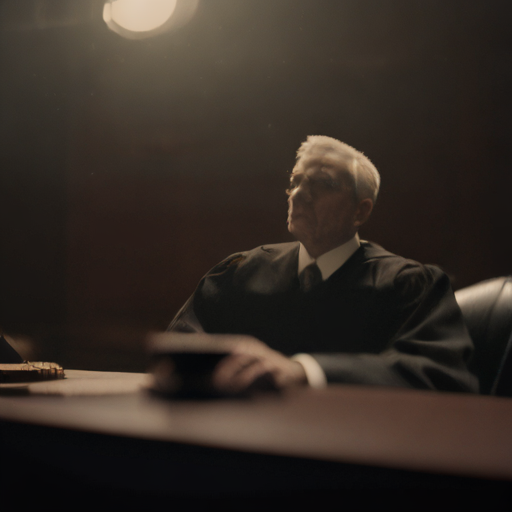
The disparity is starkest in the trenches of technological capability. During a recent Senate hearing, the FTC revealed that its dedicated "Office of Technology," tasked with analyzing these complex algorithmic threats, operates with a budget that is essentially a rounding error compared to the R&D spend of the companies whose tools are being misused. We are witnessing a regulatory asymmetry where federal investigators are manually reviewing audio files while criminal syndicates deploy autonomous agents capable of engaging thousands of victims simultaneously.
The Resource Gap: FTC Budget vs. Reported Fraud Losses (2021-2025)
This resource gap has forced the FTC to shift tactics from prevention to deterrence. The agency’s recent aggressive moves to hold AI model developers liable for "knowingly facilitating" fraud represents a desperate attempt to cut the supply chain of fraud tools. However, this has sparked a fierce backlash from the tech sector, arguing that such liability will freeze American innovation while offshore bad actors continue to operate with impunity using open-source models. For the American consumer, this regulatory stalemate means the "trust anchors" of the past are gone. The FTC’s hammer is heavy, but in the fluid, borderless world of AI crime, it is swinging at smoke.
The Psychology of the AI Trap
The human brain is an ancient piece of hardware running in a hyper-modern digital environment, and AI-driven fraud has found the root access codes. For millennia, hearing a loved one’s voice was irrefutable proof of their presence. If you heard your daughter crying for help, she was in danger. Evolution hardwired this response into our amygdala—the brain's fear center—long before silicon chips existed. Today, that biological shortcut has become our greatest vulnerability.
Consider the case of the Arizona mother who, in early 2023, picked up her phone to hear her teenage daughter sobbing, followed by a man demanding ransom. The voice wasn't just similar; it captured the specific cadence and breathing patterns of her child. As noted in testimony before the Senate Judiciary Committee, the audio was a deepfake, likely synthesized from a few seconds of social media audio. But for the mother, the biological signal was absolute. Her brain entered a "hot state"—a psychological term describing intense emotional arousal where the prefrontal cortex, responsible for rational decision-making and verification, effectively shuts down.
AI is not simply making scams more convincing; it is industrializing this "hot state." Dr. Hany Farid, a digital forensics expert at UC Berkeley, argues that we are facing a "reality apathy." When our primary senses—sight and sound—can be counterfeited, the cognitive load required to verify every interaction becomes unsustainable for the average American. We are accustomed to "trust but verify," but AI exploits the split second before verification begins.
The sophistication of these attacks relies on the "Halo Effect" of familiarity. In the past, a phishing email from a "Nigerian Prince" was easy to spot because it was alien to our daily experience. AI has inverted this. By scraping LinkedIn profiles, Instagram stories, and corporate "About Us" pages, large language models can now craft messages that mimic the syntax of your boss or the slang of your nephew.
A 2024 report by McAfee indicates that 77% of AI voice scam victims lost money because the caller knew specific, private details—pet names, travel schedules, or recent purchases—that formerly acted as "proof of life." This is the weaponization of context. When a caller ID shows "Wells Fargo Fraud Dept" (easily spoofed) and the voice on the other end cites your last three transactions (gleaned from a data breach) and speaks with the weary professionalism of a real bank teller (synthesized by AI), the "familiarity heuristic" kicks in. The brain defaults to trust because the pattern matches reality too perfectly to be a fabrication.
The Defensive Pivot: From Detection to Zero Trust
For years, the standard advice from Silicon Valley to Main Street was simple: trust your eyes and ears, but verify the source. In 2026, that advice is obsolete. The technological arms race between deepfake generation and deepfake detection is over, and the generators have won.
"Trying to detect a state-of-the-art AI voice clone with software is like trying to catch rain with a sieve," explains Dr. Elena Rosas, a cybersecurity analyst formerly with the NSA. "By the time we patch the sieve, the water has turned into vapor." This isn't hyperbole; it is the mathematical reality of generative adversarial networks (GANs). As noted in a late 2025 technical brief by the National Institute of Standards and Technology (NIST), detection algorithms currently lag behind generation capabilities by an average of six months—an eternity in a landscape where a CEO's voice can be cloned from a three-second YouTube clip.
The futility of this cat-and-mouse game has forced a fundamental philosophical shift in American cybersecurity: from detection (is this fake?) to provenance (is this verified?).
The industry's answer is the Coalition for Content Provenance and Authenticity (C2PA), a standard pushed by Adobe, Microsoft, and now mandated for political advertising by the Federal Election Commission. Think of C2PA not as a deepfake detector, but as a digital chain of custody—a tamper-evident seal for the digital age. When a photo is taken or a video recorded, the device cryptographically signs the file. If pixels are altered or audio is synthesized, the seal breaks.
However, technology alone cannot patch the "human vulnerability." The most effective firewall for the American family in 2026 is strikingly analog: the 'safe word.'
"We treat our family group chat like a corporate intranet now," says Mark Dher, a 44-year-old architect in Chicago whose parents were nearly swindled out of $5,000 by a voice clone claiming Mark was in a Mexican jail. "We established a verbal challenge-response protocol. If I call asking for money, my mom asks, 'What's the name of the dog we had in 1995?' If the voice on the phone doesn't say 'Buster,' she hangs up."
This practice, once the domain of spy thrillers, is becoming standard hygiene for the digitally integrated household. It represents the domestication of "Zero Trust" architecture—a concept pioneered by Forrester Research for enterprise networks, now adapted for the living room. In a Zero Trust model, no user or device is trusted by default, regardless of whether they are inside or outside the network perimeter.
For professionals, this shift means abandoning the convenience of SMS two-factor authentication, which is easily bypassed via SIM swapping. The new gold standard, as recommended by the Cybersecurity and Infrastructure Security Agency (CISA), is the hardware security key—a physical USB or NFC device like a YubiKey. It requires physical presence to unlock an account, rendering remote AI phishing attacks mathematically impossible.
Efficacy of Authentication Methods Against AI-Driven Phishing (2025)
As we move forward, the question isn't whether we can spot the lie, but whether we can cryptographically prove the truth. In an era where seeing is no longer believing, proving is everything.