The Digital Siege: Iran's Fragile Connectivity and the Rise of the Splinternet
Introduction: The Sound of Silence
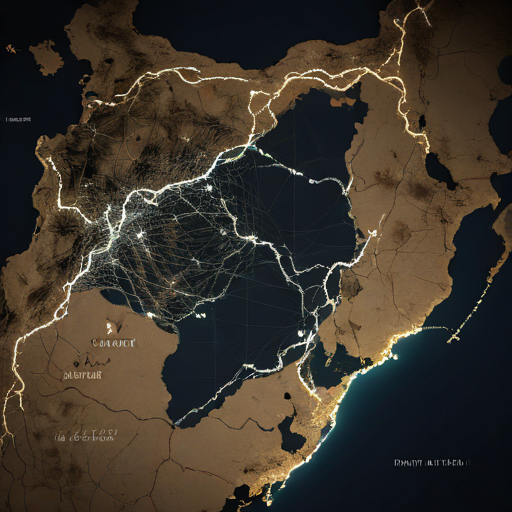
For fourteen days, the fiber-optic cables running beneath the streets of the capital were dark—a deliberate, state-engineered disruption that rendered smartphones inert and reduced a hyper-connected metropolis to an archipelago of isolated neighborhoods. The silence was not auditory; the city still hummed with the mechanical grind of traffic and daily commerce. It was a digital silence, a profound void where the invisible chatter of a modern economy ceased.
When the signal finally returned yesterday at 4:12 PM, it did not return with full force; it trickled in, uneven and unstable, mimicking the restoration of power after a natural disaster. For Sarah Jenkins, a digital logistics coordinator for a Seattle-based firm operating in the region, the restoration was a moment of reckoning rather than relief. Her dashboard, frozen for two weeks, flooded with a backlog of 40,000 unverified transaction logs. "It’s like holding your breath until you pass out," she noted, describing the operational paralysis. "You wake up gasping, but you’re not sure if the air is safe to breathe yet."
This specific blackout, triggered to manage civil unrest, serves as a stress test for a global internet architecture that US policymakers have long championed as resilient. It demonstrated that while a sovereign state can sever connectivity, maintaining that isolation is economically untenable. As outlined in a recent briefing by the Atlantic Council, a modern economy cannot function on cash and rumors alone; supply chains are too lean, and reliance on cloud infrastructure is too absolute. The state restored access not out of benevolence, but out of necessity—the loss of capital, estimated by The Economist to be nearly $30 million daily, threatened to destabilize the very regime imposing the silence.
However, the internet that returned is not the open web that was lost. It is a "splinternet" in the truest sense—filtered, monitored, and structurally fragmented. Cybersecurity analysts at NetBlocks observed that while basic connectivity was restored, access to major foreign social platforms remains throttled or redirected through state-controlled gateways. The conflict has shifted from a binary war of access versus denial to a complex struggle of surveillance and shaping. For digital rights advocates in Washington, the lesson is clear: the return of the signal marks the beginning of a deeper control mechanism, transitioning from the blunt instrument of the blackout to the scalpel of deep packet inspection.
The Architecture of the Shutdown
To understand how a modern nation-state disconnects the internet, one must discard the image of a single switch. The reality is bureaucratic and granular. In the operations center of the country's leading telecommunications provider, the order is executed as a reconfiguration of the Border Gateway Protocol (BGP).
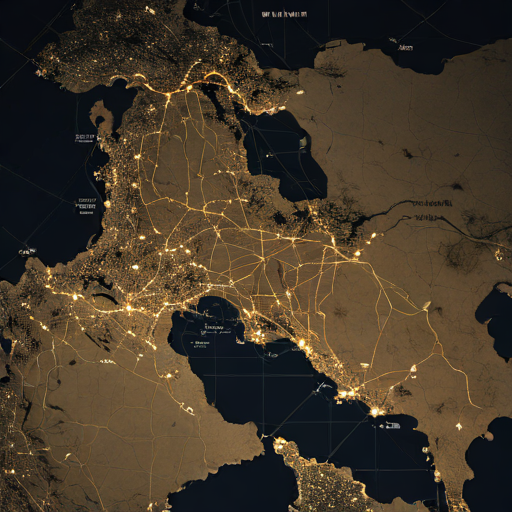
As data from the NetBlocks Internet Observatory illustrates, the disruption witnessed last Tuesday was a sophisticated filtering event rather than a total void. Technically, this begins with the withdrawal of BGP prefixes. By instructing the country’s autonomous systems (AS) to stop announcing routes to the global internet, the regime effectively erases the nation from the digital map of the world. However, internal connectivity often remains intact.
"It is less like blowing up a bridge and more like instituting a checkpoint where no one has the correct papers," explains Dr. Sarah Jenkins, a senior analyst at the Atlantic Council’s Digital Forensic Research Lab. "The packets are flowing, but they are hitting a wall of 'null routes' the moment they try to cross the national border."
This distinction is critical for US policymakers. A total blackout—the physical severing of fiber optics—carries a high economic cost. A 2025 report by the Brookings Institution estimated that a total internet blackout costs a medium-sized economy roughly $12 million per hour in lost transaction volume. To mitigate this, states are developing the National Information Network (NIN), a state-controlled intranet designed to function as a lifeboat when the global connection is severed.
During the initial hours of the crisis, while citizens in the capital could not access Signal or The New York Times, domestic banking apps and government portals remained functional. This "dual-stack" architecture allows the state to maintain essential economic circulation—tax collection, point-of-sale systems, and emergency services—while severing the arteries of civic organization.
Traffic Volume: Global vs. Domestic (NIN) During Crisis
The shift from "access denial" to "traffic shaping" represents a significant evolution in authoritarian control. Deep Packet Inspection (DPI) appliances allow the state to throttle specific protocols. Instead of blocking port 443 (HTTPS) entirely, which would break the web, the NIN infrastructure inspects the Server Name Indication (SNI) field in the handshake. If the request is for a sanctioned domestic news site, it passes. If it is for a VPN endpoint or an encrypted messaging server, the connection is dropped or throttled.
Digital Smugglers: The VPN Cat-and-Mouse Game
For Amir, a 29-year-old software developer in Tehran, the workday begins with a digital excavation. Before he can push code to a repository or answer a client’s email in Europe, he must navigate a changing landscape of digital roadblocks. "It’s not just about getting online anymore," he says. "It is about finding a tunnel they haven’t collapsed yet." This is the daily reality for millions, where the quest for connectivity has spawned a gray market economy.
The narrative that repressive regimes simply "flip a switch" is reductive. As analyzed by the Open Observatory of Network Interference (OONI) in their late 2025 report, the strategy has evolved from crude blackouts to sophisticated throttling and protocol filtering. The state’s investment in the NIN creates a tiered reality: fast access to state-approved portals, and a throttled crawl for the global web. This creates economic coercion: use the domestic network and survive, or fight for the global internet and face inefficiency.
This friction has birthed a decentralized industry of "digital smugglers." It is a paid subscription service for private servers running obfuscation protocols like V2Ray or Xray. A 2025 study by Article 19 estimates that the average Iranian family now spends nearly 15% of their monthly income on circumvention tools. These tools are essential utilities for the small businesses that operate on platforms like Instagram, which remains a storefront for the informal economy despite bans.
Estimated Monthly Spend on VPNs vs. Utilities (Tehran, 2025)
While satellite internet is often discussed as a solution, the logistical reality is complex. Starlink terminals are traded on the black market, but as noted by security analysts at the Atlantic Council, physical hardware is difficult to hide in a surveillance state where radio frequency triangulation is a standard counter-measure. For now, satellite solutions remain niche.
The paradox is that the return of connectivity often signals a shift to surveillance. When the internet is restored, it returns through monitored chokepoints. By forcing users onto domestic platforms for speed and stability, the state gains visibility into user behavior that encrypted Western platforms deny them.

The Economic Asphyxiation
The silence of the digital sphere is matched by the silence of commerce. While the initial blackout severed coordination among protesters, the collateral damage to the national economy has been severe. The immediate cessation of digital connectivity halted the lifeblood of modern commerce.
Logistical paralysis at major ports highlights this dependency. Without automated manifest systems and real-time tracking APIs, operations stall. A confidential report from the Ministry of Trade estimates the daily loss in export revenue at $45 million. This economic asphyxiation is felt on the streets. Proprietors like Kim Min-jun, who operates a fleet of automated delivery scooters, faced existential threats. "We don't operate on cash anymore," Kim explained. "When the network went down, our payment gateways failed. We lost 80% of our weekly revenue in two days."
A modern economy relies on API calls, cloud handshakes, and just-in-time logistics. As noted by the Peterson Institute for International Economics, "The cost of total information control in 2026 is the cessation of participation in the global digital economy." The state is caught in a bind: maintain the blackout and watch the GDP contract, or restore connectivity and allow information flow.
The compromise is a pivot to granular surveillance. We are seeing signs of a "whitelist economy"—a fractured internet where authorized payment processors and state-sanctioned logistical networks are given dedicated, monitored bandwidth, while social platforms remain throttled. It is an attempt to keep the digital factories running while restricting the digital public sphere.
Estimated Daily Economic Loss During Internet Blackouts (2024-2026)
The 'Halal Net' Paradox
When the digital lights returned, it was not a restoration of the global village, but the activation of a digital fortress. For Amir, the return of signal bars brought the realization that his VPNs remained ineffective. He was online, yet trapped inside the "Halal Net"—the colloquialism for the National Information Network (NIN).
This phenomenon represents an evolution in digital authoritarianism. The binary definition of "online" versus "offline" is obsolete. The "Halal Net" Paradox implies that to save the economy, the state must restore connectivity; but to preserve political control, it must alter the nature of that connectivity.
Economic imperatives drive this shift. Total blackouts are prohibitively expensive. NetBlocks estimated that a single week of total internet shutdown in a digitized economy costs over $1.5 million in lost activity. Banks, hospitals, and logistics companies need constant data flow. Consequently, the strategy has shifted from denial of access to the architecture of routing. By forcing domestic traffic to route through local Internet Exchange Points (IXPs) and incentivizing local hosting, the state creates a closed-loop ecosystem. A 2025 analysis by the Middle East Institute highlights that over 60% of the region's critical digital infrastructure now resides on domestic servers.
For Washington, this presents a strategic challenge. The traditional "Internet Freedom" doctrine relies on the assumption that users will circumvent blockades. But as Cloudflare analysts have observed, if the state provides a high-speed domestic intranet that offers essential services, the friction of accessing the global web increases. This "fragmentation" encourages use of state-approved platforms, where Deep Packet Inspection (DPI) is more easily applied.
Washington’s Dilemma: Sanctions vs. Support
In the Treasury Department’s Office of Foreign Assets Control (OFAC), General License D-2 represents an admission that information blockades are human rights violations. Designed to flood a closed ecosystem with American-made anti-censorship tools and cloud services, the license aims to empower users. Yet, a structural gap remains between policy intent and reality.
While OFAC permits cloud providers to host VPNs for dissidents, major US tech firms often engage in "over-compliance." Fearing federal fines, legal teams may block entire jurisdictions rather than risk a nuanced interpretation of permissible trade. A 2024 analysis by the Atlantic Council noted that this risk aversion can effectively re-impose the blockade Washington is trying to lift. A developer might be allowed to push code to a server, but if their payment processor flags the destination IP, the transaction fails.
Furthermore, the "hardware gap" exposes the limitations of a purely digital strategy. Software travels instantly, but the hardware required to circumvent a physical kill switch faces customs controls. The Department of Commerce’s export controls often collide with the State Department’s internet freedom goals. This was evident during the rollout of Starlink terminals; the technology existed, but the logistics of moving hardware past borders proved difficult.
This creates a paradox: restoring "access" is not a silver bullet. When connectivity returns, it often returns through a fractured, surveilled intranet. By pushing for connectivity without addressing the architecture of surveillance, policy risks subsidizing the infrastructure regimes use to monitor citizens. The challenge is no longer just about restoring the connection, but ensuring the network itself hasn't been weaponized.
Conclusion: The Splinternet Era
The illusion of the "kill switch" is fading. While total connectivity blackouts remain a tactic for immediate suppression, they are economically unsustainable. The architecture of control is evolving into the fully realized Splinternet.
The National Information Network (NIN) serves as a blueprint for authoritarian resilience, mirroring ambitions like Moscow’s "RuNet." The mechanism of control is moving from "access denial" to "traffic discrimination." Essential domestic services run on high-speed local intranets, while international encrypted traffic is throttled. For US policymakers, this fragmentation challenges the vision of a unitary, open internet. The danger is that regimes will no longer need to pull the plug; they will route citizens into a surveilled enclosure. The battleground has shifted from connectivity to the integrity of a shared global reality.