The Grounded King: Labour’s Gamble on Centralized Discipline
The Manchester Maneuver
In the shifting political topography of post-Brexit Britain, few figures loom as distinctively apart from the Westminster bubble as Andy Burnham. Known colloquially as the "King of the North," the Mayor of Greater Manchester has cultivated a brand of muscular regionalism that often feels more akin to a U.S. state governor than a traditional British mayor. Consequently, when rumors crystallized into a concrete play for a return to the House of Commons, the political tectonic plates began to shift. It was a maneuver that promised to bridge the chasm between the party’s metropolitan leadership and its alienated working-class base, yet it was met with a procedural door slammed shut by the party's National Executive Committee (NEC).
The sequence of events unfolded with the discipline of a boardroom takeover. Burnham, sensing a window of opportunity as the Conservative government struggled, signaled his willingness to serve in a future Starmer cabinet while retaining his mayoral platform—a dual mandate with historical precedent but modern logistical complexities. For observers in Washington familiar with the tension between the DNC establishment and grassroots insurgents, the response from Keir Starmer’s leadership team was a familiar exercise in risk aversion. Under the banner of "focus and discipline," the NEC effectively barred sitting mayors from seeking parliamentary selection, a rule ostensibly designed to ensure full-time dedication to mayoral duties but interpreted by regional analysts as a calculated containment strategy.
This decision reveals a deeper strategic fissure within the Labour leadership. Starmer, meticulous and prosecutorial, prioritizes a unified march toward Downing Street, minimizing variables that could be exploited by the Conservative-leaning press. Burnham, with his independent mandate and tendency to speak off-script regarding regional funding, represents a variable of the highest order. By blocking his path, the leadership has prioritized short-term electoral hygiene over the potential dynamism of a "big tent" coalition. It is a gamble that echoes the Democrats' struggles in the American Rust Belt: in attempting to sanitize the messenger, the party risks muting the message itself, reinforcing the perception of London-centric elitism that eroded the "Red Wall" in 2019.

The Starmer Doctrine: Discipline Above All
To understand Sir Keir Starmer’s move to sideline Burnham, one must look past the narrative of personal rivalry and examine the architecture of the "Starmer Doctrine." At its core, this philosophy mirrors the disciplined control seen in modern US presidential campaigns: the candidate is the message, and deviation is treated as a transmission error. For Starmer’s inner circle in London, the Mayor of Greater Manchester represents a variable they cannot control. Burnham’s brand of populism, effective at rallying the constituencies Labour needs, creates a rival power center that threatens the singular narrative of competence Starmer has constructed.
The decision is arguably an exercise in short-term risk management. By preventing the Manchester Mayor from potentially returning to Parliament, Labour leadership is enforcing a "one voice" policy. As noted in a recent analysis by the Institute for Government, the friction between Westminster and Metro Mayors is structural; however, Starmer’s approach has been to solve this friction through suppression rather than negotiation. Political strategists in London argue that a "loose cannon" in the North could provide the Conservative opposition with ammunition, portraying Labour as a party at war with itself. The logic is consistent: to win a general election, the party must appear as a government-in-waiting, disciplined and unified.
However, this centralization strategy carries a long-term risk. By limiting the influence of its most successful regional politician, Labour reinforces the perception that it is focused primarily on the London metropolitan elite. When focus groups in "Red Wall" constituencies—areas economically and culturally analogous to Pennsylvania or Michigan—express feeling ignored by the capital, silencing their most vocal champion validates their skepticism. A 2025 report from the Centre for Cities highlighted that while voters desire national stability, they prioritize local advocacy; by sacrificing the latter for the former, Starmer risks winning the tactical battle for message discipline while losing the strategic war for the heartland’s trust.
Echoes of the Rust Belt
To an observer in Pennsylvania or Ohio, the political geography of Northern England feels uncannily familiar. The "Red Wall"—that cluster of historically Labour-held constituencies across the Midlands and Northern England—is the spiritual twin of the American Rust Belt. In both regions, the defining sentiment is not just economic anxiety, but a profound cultural alienation from the metropolitan center. Voters in Bolton or Bury, much like those in Scranton or Youngstown, have long suspected that the capital views them as a problem to be managed rather than a partner to be empowered.
By blocking the Mayor of Greater Manchester from a broader platform, the Labour leadership has prioritized the tight discipline of a Washington-style campaign over the necessity of regional authenticity. Burnham represents an archetype that has proven potent in American politics: the local champion who is of the party but not owned by the party. He functions similarly to figures like Michigan Governor Gretchen Whitmer, leaders who sustain popularity by occasionally challenging their own national leadership to demonstrate loyalty to their constituents first. When Starmer silences Burnham, he risks stripping the party of its most effective bridge to voters who view London with the same skepticism a factory worker in Flint views San Francisco.

This "command and control" strategy reveals a fundamental misunderstanding of the post-industrial electorate. In the US, the Democrats began to claw back territory in the Rust Belt not by imposing rigid discipline from D.C., but by allowing local leaders to run on distinct regional identities. Starmer’s maneuver suggests a retreat to the Clinton-era playbook of the 1990s: triangulation and central message control. However, in an era of anti-establishment populism, distinct regional voices are often a pressure valve. By closing that valve, Labour risks proving the skeptics right: that despite the change in management, the decisions are still made by people who have never had to wait for a bus in Wigan.
A Tale of Two Power Centers
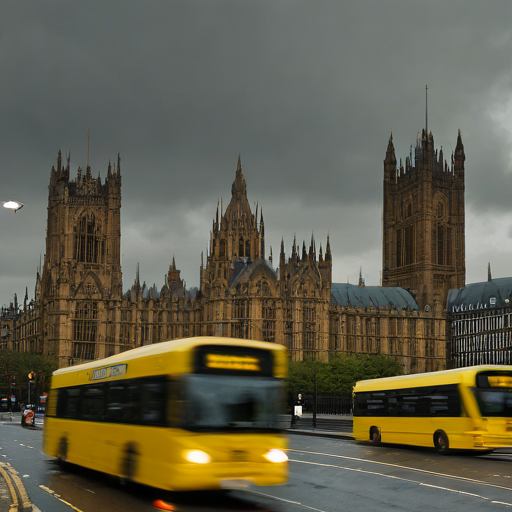
To understand the gravity of this tactical blockade, one might look to the yellow buses now rolling through Piccadilly Gardens in Manchester. These vehicles, part of the newly integrated "Bee Network," represent the first time a British region outside London has brought its bus system under public control since the deregulation era of the 1980s. This was not a legislative amendment passed in the House of Commons; it was an executive action by Andy Burnham. In blocking Burnham from returning to Parliament, the Labour leadership has inadvertently highlighted a stark reality: the Mayor of Greater Manchester currently wields significant tangible power over the daily lives of his constituents.
For the Labour leadership, strictly managing the candidate selection process is a calculated wager to sanitize the party’s image. However, viewing this through the lens of legislative maneuvering misses the broader structural shift. As the Institute for Government noted in their 2023 devolution analysis, Metro Mayors have begun to occupy a constitutional novelty in the UK: they are executives with personal mandates, distinct from the party whip. When Burnham stood on the steps of the Manchester Central Library in October 2020 to openly defy lockdown financial packages, he was channeling a persona that resonated deeply with the "Red Wall."
By keeping Burnham out of Westminster, Starmer may believe he is neutralizing a leadership rival. Yet, inside Parliament, Burnham would be subject to the whip and collective responsibility. Outside, anchored in a power base of 2.8 million people, he operates as a semi-autonomous political entity. The irony is palpable for voters who abandoned Labour in 2019 over a sense of cultural abandonment. Starmer’s justification—that Burnham should complete his mayoral term—reads to many local organizers not as a commitment to regional stability, but as a reassertion of establishment dominance.