The Man Who Explained India: Sir Mark Tully and the Lost Art of Listening
The Voice That Stopped a Nation
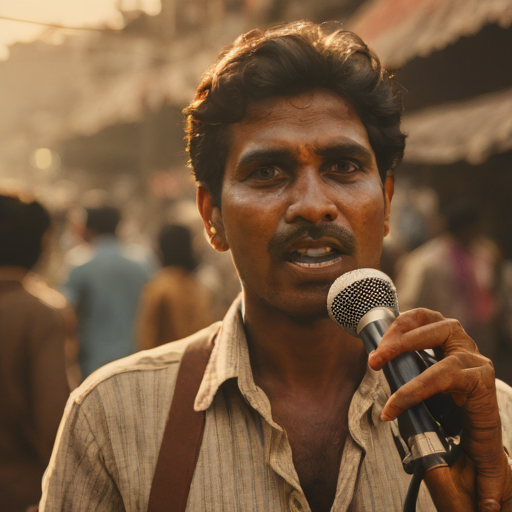
On the afternoon of October 31, 1984, a strange silence fell over the chaotic bustle of Delhi’s Connaught Place. Shopkeepers didn't turn to Doordarshan, the state-run television monopoly, to learn the fate of Prime Minister Indira Gandhi. Instead, from the tea stalls of Kolkata to the remote villages of Uttar Pradesh, millions tuned their shortwave transistor radios to a crackling frequency broadcast from London. They were waiting for one specific voice: Sir Mark Tully.
It was a profound paradox that defined an era: in post-colonial India, the most trusted source of news was a British man. At 9:20 AM that morning, the Prime Minister had been shot by her bodyguards. By 10:50 AM, she was clinically dead at AIIMS hospital. Yet, for over seven hours, the Indian public remained in a state of suspended animation as All India Radio (AIR) suspended regular programming for somber, non-committal music. It was Mark Tully’s voice on the BBC World Service that finally broke the silence, confirming the death to the Prime Minister's own people before their government did.
As veteran journalist Madhu Trehan observed in her analysis of the 1984 coverage, the Indian public had implicitly codified a new rule of verification: "It isn't true until Tully says it." This trust was not inherited; it was forged in the fires of integrity. During the Emergency of 1975, when the Indian state muzzled the press, Tully became the lifeline for a population starved of facts. Later, during Operation Blue Star in June 1984, while the government’s White Paper sanitized the military assault on the Golden Temple, Tully’s dispatch provided the unvarnished reality. His co-authored 1985 account, Amritsar: Mrs. Gandhi's Last Battle, dismantled the official narrative with the precision of a forensic audit.
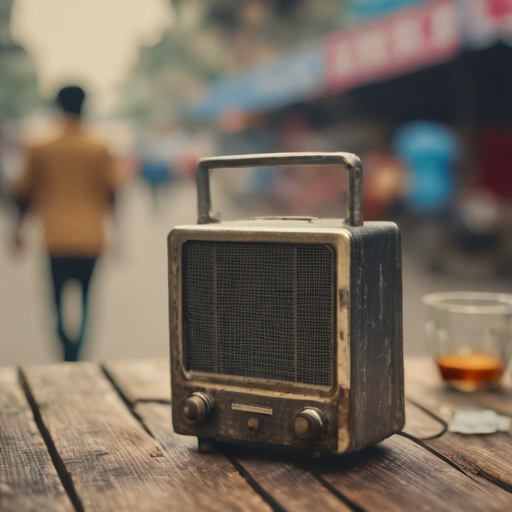
For the American observer, accustomed to the adversarial roar of a free press, the magnitude of Tully's influence requires a cultural translation. Imagine a scenario where the American public, skeptical of the White House press room during a national crisis, turned universally to a foreign reporter for the final word. That was the "Tully Sahib" phenomenon. He decolonized the Western gaze not by ignoring India’s fractures—caste violence, communal riots, political corruption—but by treating them with the gravity of a historian rather than the condescension of a colonial overseer.
Decolonizing the Western Lens
In the late 1980s, when American network news flickered to life with reports from the Indian subcontinent, the framing was almost algorithmically predictable: a montage of emaciated cattle, teeming slums, and the chaotic din of an inexplicable riot. This was the era of "parachute journalism"—a fly-in, fly-out model where Western correspondents translated the complexity of a civilization into thirty-second soundbites of despair.
Sir Mark Tully actively dismantled this model from within the BBC. While his contemporaries often filed stories from the sanitized air-conditioning of five-star hotels in New Delhi, Tully was frequently found miles off the paved road in the dusty heartland of Uttar Pradesh, sipping tea with village elders. His fluency in Hindi was not merely a linguistic tool but a bridge across the cultural chasm that separated the "India of the mind"—romanticized or pitied by the West—from the India of reality.
A defining divergence in coverage occurred during the Mandal Commission protests of 1990. While major Western publications framed the self-immolations of upper-caste students as a straightforward struggle against "reverse discrimination," Tully peeled back the layers to reveal a far more intricate power struggle. Broadcasting to millions, he explained that this was a seismic shift in the tectonic plates of Hindu society, a challenge to centuries of Brahminical hegemony that could not be understood through the binary lens of Western egalitarianism. As noted in his seminal work, No Full Stops in India, Tully argued that the Western obsession with "modernizing" India often blinded observers to the resilience and rationality of its traditional caste structures.
The Analog Slow News in a Digital World
In an era where news travels at the speed of fiber optics, often outpacing verification, the memory of Sir Mark Tully’s voice crackling over the BBC World Service offers a stark counterpoint to the frenetic energy of the modern newsroom. The contrast is visceral. Today, a breaking story in New Delhi hits a New York analyst’s feed in microseconds, often stripped of context. In the algorithmic race for engagement, nuance is the first casualty. As the Columbia Journalism Review observed in their 2024 analysis, the prioritization of "first to publish" over "best to explain" has correlated with a significant increase in retraction rates for major international bureaus.
Mark Tully represented the antithesis of this model. He operated on the principle of "being there"—not just physically, but culturally. When the Babri Masjid was demolished in Ayodhya in 1992, Tully didn’t just transmit a photo of the dust cloud. He remained on the ground, navigating hostile crowds to report not just what happened, but why the silence of the state machinery was as deafening as the chants of the kar sevaks. This level of trust was built on the friction of slow, deliberate verification—a standard that modern aggregators struggle to replicate.
Trust in Media: Local Voices vs. International Aggregators (2024)
Why This Matters to America Today
In the corridors of the State Department and the boardrooms of Silicon Valley, India is frequently reduced to a geopolitical abstraction: a "counterweight to China" or a "market of 1.4 billion." Yet, as the United States cements its strategic pivot to the Indo-Pacific, the risk of misreading our most complex partner has never been higher. A 2024 report by the Carnegie Endowment for International Peace highlights that the primary friction in US-India relations is often not policy, but "cultural dissonance"—a gap Tully spent forty years bridging.
For American stakeholders, the stakes are economic as well as diplomatic. Consider the "China Plus One" strategy that has driven giants like Apple and Tesla to expand aggressively into states like Karnataka and Gujarat. When Western firms face labor unrest or regulatory hurdles, the headlines often focus on supply chain disruption. However, a reader of Tully would recognize the deeper narrative: the collision of rigid Western efficiency with what he famously called "India's unique genius for surviving chaos." Without this nuanced understanding—the kind that acknowledges the interplay of caste, local politics, and spirituality—American capital risks faltering in the very market it seeks to cultivate.
US-India Trade Volume vs. Strategic Dialogue Frequency (2020-2025)
The End of the Embedded Correspondent?
The era of the "bureau chief" as a local institution—a fixture who knew the opposition leader’s birthday and the tea shop owner’s debt—is largely a relic. The mathematics of foreign correspondence has shifted ruthlessly. According to Nieman Lab analyses, maintaining a fully staffed foreign bureau can cost upwards of $250,000 to $500,000 annually. As domestic budgets bleed, foreign bureaus are often the first severed limbs, leading to a "hollowing out" of international coverage.
Decline in US Newspaper Newsroom Staff (2008-2022)
Who fills the void? Often, it is the "parachute reporter" or the precarious freelancer. While intrepid, these replacements rarely possess the institutional armor or the time to let a story ripen. When we lose the embedded correspondent, we risk returning to a colonial gaze, where the "Other" is defined only by their crises, not their humanity. Tully’s "slow journalism" establishes a standard of integrity that American media, besieged by the 24-hour outrage cycle, desperately needs to reclaim. To truly engage with India in 2026, Washington does not just need more diplomats; it needs more listeners.