The Museum Army: Why Russia’s Regression to 1950s Armor Reshapes the Modern Battlefield
Ghosts of the Cold War
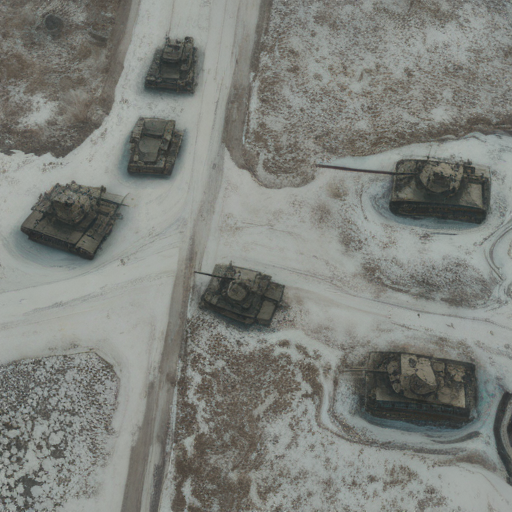
The footage, captured by a drone hovering over the frozen mud of the Zaporizhzhia sector on Tuesday, is grainy but unmistakable. It shows a column of armor moving south, not with the sleek, low-profile silhouette of the T-90M "Proryv" that dominated Moscow’s Victory Day parades just three years ago, but with the clunky, rounded turrets of the T-55—a tank that first rolled off Soviet assembly lines when Eisenhower was in the White House. For the casual observer, this visual anomaly screams of desperation: a superpower raiding its museums to plug the gaps in a collapsing front.
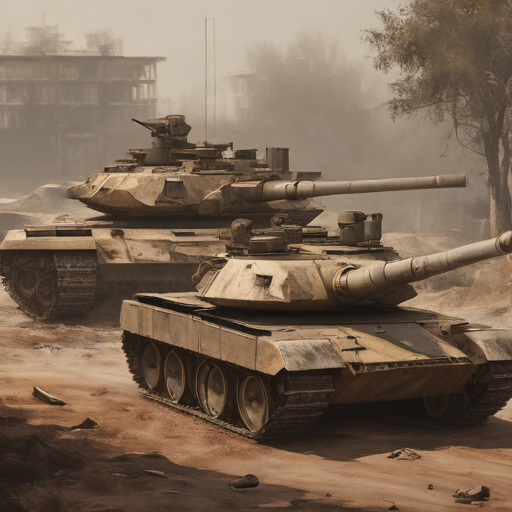
However, dismissed as mere scrap metal by Twitter pundits, this resurrection represents a far more dangerous calibration by the Kremlin. As noted by the Royal United Services Institute's (RUSI) January 2026 situational report, the deployment of these "steel coffins" is not an accident of logistics, but a deliberate pivot to asymmetric industrial attrition. Russia has effectively decoupled its tactical needs from its technological ambitions. "They aren't trying to win a tank duel with a Leopard 2," explains Dr. Elena Kogan, a senior analyst at the Stockholm International Peace Research Institute (SIPRI). "They are trying to bankrupt the Western arsenal by forcing a million-dollar Javelin missile to destroy a tank that costs less than a used Toyota Camry to refurbish."
This economic inversion is the new frontline. In the muddy trenches outside Robotyne, Ukrainian brigade commanders report that these obsolete hulls are increasingly being used not for breakthroughs, but as mobile artillery—"gun-wagons" sitting three kilometers back, lobbing 100mm high-explosive shells into defensive lines day and night. The accuracy is poor, but the volume is relentless. A Pentagon logistics assessment leaked last week suggests that Russia’s Uralvagonzavod plant has shifted focus from producing new T-90s to refurbishing these vintage hulls at a rate of 120 per month. This output, crude as it is, outpaces the entire combined heavy armor production of NATO Europe.
The strategic calculation is brutal but effective. By flooding the zone with "disposable" armor, Moscow is forcing Ukraine and its Western backers into a resource dilemma. Do you expend a scarce FGM-148 Javelin (unit cost roughly $178,000) to stop a T-62 that was written off the Soviet books in 1980? If you don't, that T-62 will systematically dismantle your infantry fighting positions. If you do, you bleed your stockpile dry before the modern Russian armor—the T-80BVMs and T-90Ms held in strategic reserve—ever enters the fight. As General Christopher Cavoli, Supreme Allied Commander Europe, warned in his testimony to the Senate Armed Services Committee earlier this month, "We are trading precision for volume, and the exchange rate is becoming unsustainable."
The Asymmetry of Attrition: Cost of Destruction (2026 Estimates)
This is the "Ghost Army" strategy: a zombie horde of low-value targets designed to absorb high-value munitions. It challenges the fundamental assumption of Western warfare that "quality beats quantity." In the precision era, we assumed we could target our way to victory. Russia is betting that we will run out of smart bombs before they run out of dumb tanks.
The Hollow Industrial Base
The vast assembly halls of Uralvagonzavod in Nizhny Tagil were meant to be the beating heart of a modernized Russian army, churning out the sophisticated T-90M "Proryv" to rival the American Abrams. Instead, recent satellite imagery and on-the-ground intelligence paint a picture of a facility struggling to breathe. The stalling of Russia’s premier tank manufacturer is not merely a supply chain hiccup; it is the direct consequence of a decades-long reliance on Western technology that has now been severed, leaving a "hollow" industrial base that cannot support the Kremlin’s ambitions with 21st-century hardware.
For the American taxpayer watching billions in aid flow to Kyiv, the distinction between a T-90 and a refurbished T-62 is critical. A T-90M requires advanced anti-tank guided missiles to neutralize; a T-62 can often be disabled by the far cheaper, ubiquitous anti-armor weapons flooding the battlefield. This shift changes the cost-exchange ratio of the war significantly.
The core of the paralysis lies in the "Thales Gap." For years, the T-90’s lethality depended on the Catherine-FC thermal imagers imported from the French company Thales. When sanctions slammed that door shut, Uralvagonzavod was forced to pivot to domestic alternatives like the PNM-T. However, as noted in a late 2024 analysis by the Center for Strategic and International Studies (CSIS), Russian domestic manufacturing yields for these high-grade optics are abysmally low. You cannot build a modern tank if it is blind at night, and without Western semiconductors and precision optics, the T-90M is effectively just a heavy, expensive metal box.
Estimated Russian Tank Production vs. Refurbishment (2025)
This technological starvation has forced the "strategic pivot" to attrition. Unable to produce quality, Russia must rely on quantity. But even the reserves are compromised. Reports from British Defense Intelligence have highlighted a rampant culture of corruption that has rotted the reserve fleet from the inside out. In the vast storage depots east of the Urals, inspectors have reportedly opened "mothballed" tanks only to find the copper wiring stripped, the engines missing, and the optics sold off on the black market years ago.
This is why we see T-62s on the front line. It is not just that they are available; it is that they are simple enough to be fixed with a hammer and wrench, bypassing the high-tech supply chains that have been strangled by Western sanctions. For the Pentagon, this validates the strategy of economic warfare: the degradation of Russia's military capability is happening not just in the mud of the Donbas, but on the factory floors of Nizhny Tagil, where the inability to source a single ball bearing or microchip halts a sixty-ton war machine.
Disposable Steel: The Tactical Shift
The T-62 sits dug into a berm outside Avdiivka, its engine cold, its tracks buried deep in the churned earth. To a satellite passing overhead, it looks like a tank preparing for an assault. But to the Ukrainian drone operator watching the heat signature of its barrel, it is something else entirely: a makeshift howitzer. This is not the armored breakthrough vehicle envisioned by Soviet doctrine in the 1960s; it is a static pillbox dispensing 115mm high-explosive fragmentation shells at a fraction of the cost of modern artillery.
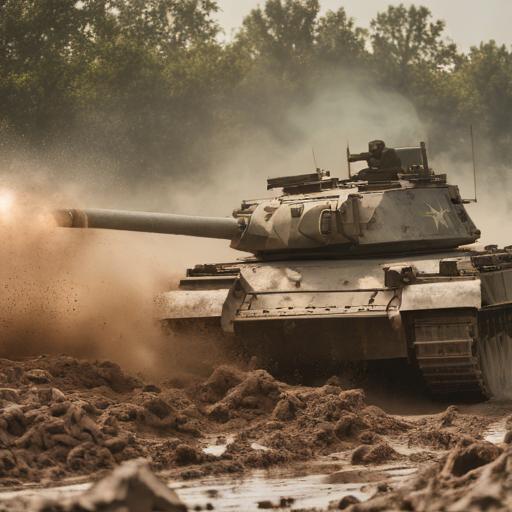
This deployment pattern marks a critical evolution in Russian tactics that Western observers often dismiss as mere desperation. While it is true that losses of modern T-72B3 and T-90M platforms have been staggering—with the open-source intelligence monitor Oryx visually confirming the loss of over 2,600 Russian tanks since February 2022—the reintroduction of these relics serves a colder, industrial logic. As noted in a late 2024 assessment by the Royal United Services Institute (RUSI), the Russian military has effectively decoupled fire support from maneuver. By utilizing obsolete tanks for indirect fire missions at ranges of 3 to 5 miles, they preserve the barrel life of their dedicated 152mm self-propelled guns for high-value targets, while saturating the front line with "good enough" high-explosive volume.
For the Ukrainian defender—and the American taxpayer funding their arsenal—this creates an asymmetric economic problem. A standard FGM-148 Javelin anti-tank missile, the crown jewel of American lethal aid, costs roughly $200,000 per shot, according to the Pentagon's 2025 budget estimates. Firing such a precision weapon at a rusted, hull-down T-55 that was effectively fully depreciated when the Berlin Wall fell is a losing exchange rate.
"It forces a hesitation," a sergeant with Ukraine’s 47th Mechanized Brigade noted in a field interview translated by the Kyiv Independent earlier this year. "You see the tank, but you know it’s bait. If we reveal our position to kill a piece of scrap metal, their real artillery targets us."
This is the essence of the "Disposable Steel" doctrine. It transforms the battlefield from a contest of technological supremacy into a grim accounting of industrial depth. Russia is not betting that a T-62 can defeat a German-made Leopard 2 in a duel; they are betting that the West cannot sustain the production of $200,000 guided munitions to kill targets that are virtually free. It is a strategy of attrition that challenges the Pentagon's preference for low-volume, high-precision warfare, forcing a re-evaluation of how we define "efficiency" in a protracted, high-intensity conflict.
The Javelin Paradox
The battlefield arithmetic is brutal, and for the Pentagon’s acquisition corps, it is beginning to look increasingly insolvent. Consider the sight captured by drone footage outside Avdiivka late last year: a solitary, rusting T-54 medium tank—a Soviet relic that first rolled off the assembly line when Eisenhower was in the White House—lumbering toward the contact line. It was crudely welded with "cope cages" and seemingly devoid of modern optics. To destroy it, a Ukrainian infantry team utilized an FGM-148 Javelin anti-tank missile.
Tactically, it was a kill. Strategically, it was a financial hemorrhage.
According to the Department of Defense’s Fiscal Year 2025 budget justification books, the replacement cost for a single Javelin missile has climbed past $240,000, not including the recurring costs of the Command Launch Unit (CLU). Conversely, military analysts at the Royal United Services Institute (RUSI) estimate the operational value of a refurbished T-54/55 at little more than the cost of the fuel in its tank and the salary of its crew—perhaps $25,000 in sunk logistical costs. We are witnessing a grim form of economic arbitrage: the United States is essentially firing Ferraris to destroy jalopies.
The Asymmetry of Attrition: Unit Cost Comparison (2025 Est.)
This disparity exposes the "Javelin Paradox." For decades, American defense doctrine has been predicated on the "offset strategy"—using superior technology to negate numerical advantages. As Dr. William LaPlante, Under Secretary of Defense for Acquisition and Sustainment, noted in a candid briefing to the House Armed Services Committee last month, "Precision is decisive only when inventory matches the threat density." When the threat is a flood of disposable steel, precision becomes a luxury trap.
The issue is not just dollar value; it is industrial capacity. A 2024 analysis by the Center for Strategic and International Studies (CSIS) highlighted that at peak production, Lockheed Martin and Raytheon could produce roughly 2,100 Javelins per year. Russia, by tapping into vast Soviet-era boneyards in Siberia, has demonstrated the capacity to regenerate hundreds of obsolete hulls monthly. They do not need these tanks to win duels against Abrams or Leopards; they only need them to act as mobile artillery and, more cynically, as missile sponges.
Every Javelin fired at a T-54 is one less Javelin available for a T-90M "Proryv" or for a potential contingency in the Taiwan Strait. This is the definition of industrial attrition. By flooding the zone with targets that are virtually free to field, Moscow is forcing the West to burn through high-end stockpiles that take years to replenish. We are effectively trading complex semiconductors and rare-earth guidance systems for cast iron. In a war of exhaustion, the side that can force the other to exhaust its "gold" on "dust" holds a terrifying advantage.
The Human Cost of Obsolescence
The air inside the hull of "Bort 402"—a refurbished T-62M sent to the Zaporizhzhia front line—doesn't smell like modern warfare. It smells of unburnt diesel, decades-old grease, and the distinct, metallic tang of fear. For Sergeant Dmitri Volkov (a pseudonym to protect identity), a conscript drafted from the outskirts of Perm, the war isn't viewed through the crisp, green-phosphor glow of a thermal imager, but through a periscope clouded by age and micro-scratches.
"It is like fighting with a bag over your head," Volkov described in a Telegram channel intercept analyzed by the Institute for the Study of War (ISW). "We hear the buzzing of the drones, but we cannot see them. The autoloader jams if you look at it wrong. We are not hunters; we are bait."
This is the visceral reality of Moscow's "industrial attrition" strategy. While American defense observers often deride the sight of these Soviet-era relics as proof of Russian logistical collapse—a "museum army" on the march—this analysis misses the grim economic calculus at play. A T-62, pulled from deep storage in Siberia and refitted with rudimentary "cope cages," costs the Russian Federation a fraction of what a modern T-90M costs to produce. More importantly, it costs nothing in terms of advanced semiconductors or sanctions-blocked optics.

Yet, to kill this obsolete steel beast, Ukrainian defenders are often forced to expend Western precision munitions worth orders of magnitude more. As noted in a late 2025 report by the Center for Strategic and International Studies (CSIS), the economic asymmetry is stark. A single FGM-148 Javelin missile costs the American taxpayer roughly $178,000. The refurbished T-62 it destroys might have a scrap value and reactivation cost of less than $200,000. When a $20,000 tank absorbs a $178,000 missile, Russia has successfully forced a near-parity economic exchange using equipment it considers disposable, while the West expends complex weapons systems that take months to replace.
The Asymmetry of Attrition: Weapon vs. Target Cost (Est. 2025)
For the crew inside, this strategy converts human life into a consumable resource. Without reactive armor capable of stopping modern tandem-charge warheads, and lacking the Hunter-Killer fire control systems standard in NATO tanks like the Abrams or Leopard 2, crews like Volkov's rely on volume of fire rather than precision. They are essentially operating mobile pillboxes, intended to absorb fire and reveal Ukrainian positions for artillery strikes.
The psychological toll of this obsolescence is quantifiable. Intercepted calls and morale reports suggest a "fatalistic nihilism" among crews assigned to older platforms. They know they are driving coffins. Yet, their presence on the battlefield creates a density of targets that Western aid packages struggle to match in volume. It challenges the American way of war, which privileges the survival of the platform and the crew through technological superiority. Russia has inverted this, prioritizing the survival of the state's industrial capacity by sacrificing the crew and the platform.
As a Pentagon logistics officer candidly remarked during a briefing last month, "We are building Ferraris to race against demolition derby beaters. We will win every individual race, but they can put a thousand beaters on the track for the price of our one Ferrari."
The Signal to Beijing and Washington
In the polished corridors of the Pentagon, the initial intelligence assessments regarding Russia's deployment of T-62 and T-55 tanks were met with a palpable sense of derision. It was easy for defense analysts in Arlington to dismiss these 60-year-old chassis as the desperate gasp of a failing military. However, that smirk has curdled into a grim realization. What we are witnessing is not merely a scraping of the barrel, but a brutal calculus that challenges the very foundation of the American way of war: the triumph of mass over microchips.
For Washington, the lesson is written in the staggering burn rates of ammunition and armor. The conflict has exposed the brittleness of a defense industrial base designed for "just-in-time" efficiency rather than "just-in-case" resilience. As the Center for Strategic and International Studies (CSIS) warned in a 2024 report, the US industrial base is currently ill-equipped for a protracted high-intensity conflict, with replacement times for key platforms measuring in years, not months. The deployment of obsolete Russian armor is a signal that in a war of attrition, "good enough" in massive quantities eventually overwhelms "exquisite" in limited supply. It forces the West to expend million-dollar precision-guided munitions on targets that cost less than a used pickup truck in suburban Maryland.
The Attrition Gap: Annual Tank Delivery Capacity (Est. 2025)
This data, aggregated from open-source intelligence and RUSI (Royal United Services Institute) estimates, illustrates a terrifying disparity. While General Dynamics Land Systems in Lima, Ohio—the sole producer of the Abrams tank—struggles to ramp up production lines that were allowed to go cold, Uralvagonzavod is churning out refurbished hulls on a 24-hour cycle. We are building Ferraris for a demolition derby.
The message being received in Beijing is perhaps even more critical. PLA strategists are likely validating their long-held doctrine that industrial depth is a strategic deterrent. The People's Liberation Army Daily has frequently discussed the concept of "war of exhaustion," and Russia's ability to sustain operations despite massive losses serves as a proof-of-concept for their own titanic stockpiles. If the US Navy runs out of Long Range Anti-Ship Missiles (LRASMs) within the first week of a Taiwan scenario—as wargamed by the Center for a New American Security—while Beijing can absorb losses and continue to flood the zone with "legacy" platforms, the technological edge of the US Seventh Fleet becomes a depreciating asset.
Ultimately, this pivot forces a hard conversation for the American taxpayer and military planner alike. We have spent decades optimizing for the "short, sharp war"—Desert Storm 2.0. But the muddy fields of Eastern Europe are screaming a different truth: Quantity has a quality all its own, and you cannot fight a roaring industrial furnace with a boutique workshop, no matter how advanced the artisans are.