The North Sea Battery: Europe's Supergrid Experiment and the Lessons for America
Ki: The Power Plant of Europe
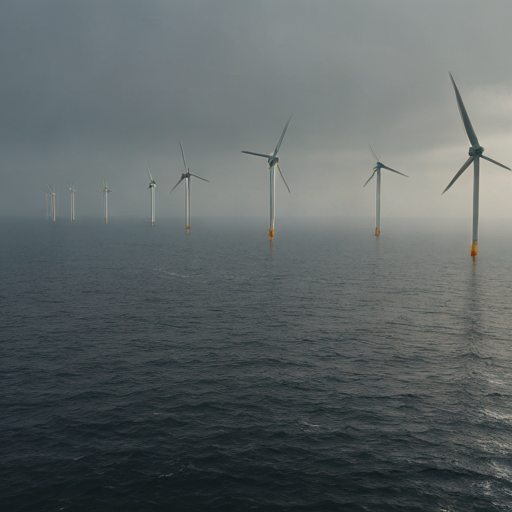
In the biting winds of the North Sea, far removed from the diplomatic meeting rooms of Brussels or London, a new industrial reality is taking shape. It is here, in the grey chop between Hull and Hamburg, that Europe is effectively constructing a machine the size of a continent. To understand the gravity of the Ostend Declaration, one must look past the press releases of 2023 and examine the sheer physics of the ambition: a target of 120 gigawatts (GW) of offshore wind capacity by 2030, swelling to 300 GW by 2050.
For the American energy executive watching from the other side of the Atlantic, often mired in the bureaucratic complexities of the Jones Act or the supply chain bottlenecks of the Eastern Seaboard, these numbers demand a recalibration of scale. To put 120 GW into perspective, it is roughly equivalent to the output of 100 average nuclear reactors, or enough to power about 100 million U.S. households. It is not merely a farm; it is a "Green Power Plant of Europe," a synchronized supergrid that treats the North Sea not as a barrier, but as a shared utility.
The Scale of Ambition: North Sea Targets vs. US 2030 Goal
The reintegration of the United Kingdom into this framework—despite the lingering friction of post-Brexit politics—is the clearest signal yet that energy security has eclipsed political isolationism. As noted in a recent analysis by the Oxford Institute for Energy Studies, the "physical reality of electrons" has forced a pragmatic detente. The UK, possessing some of the richest wind resources in the hemisphere, simply could not afford to be an island electrically, even if it remains one politically. Conversely, the EU recognized that a North Sea grid without British waters would be akin to building a transcontinental railroad while bypassing the Midwest.

This collaboration is visible in the interconnectors—massive subsea cables like the Viking Link—that allow Danish wind to power British homes, and British squalls to run Dutch data centers. For U.S. investors and policymakers, currently observing the faltering momentum of projects off the coast of New England, the lesson is stark. While American developers wrestle with state-by-state procurement fragmentation, Europe is standardizing a transnational basin. A 2025 report by McKinsey & Company highlighted that this "basin-wide" approach allows for economies of scale that single-nation projects struggle to achieve, reducing the Levelized Cost of Energy (LCOE) by an estimated 15% compared to isolated developments.
Seung: Physics Trumps Politics
In the icy, turbulent waters of the North Sea, physics has quietly overruled politics. While Westminster and Brussels spent the better part of a decade disentangling legal frameworks under the banner of Brexit, engineers at National Grid and Denmark’s Energinet were executing a project that physically bound the two regions tighter than ever before. The activation of the Viking Link in late 2023—the world’s longest land and subsea interconnector—serves as a 475-mile, 1.4-gigawatt rebuke to the concept of energy isolationism. It demonstrates a reality that US grid operators, currently navigating the fragmented regulatory landscape between PJM Interconnection and ISO New England, must urgently internalize: electrons follow the path of least resistance, and in a volatile global energy market, economic survival demands that policy follows the electrons.
The narrative of "Global Britain" often championed regulatory divergence, yet the sheer brutality of the 2022 energy crisis—precipitated by Russia’s invasion of Ukraine—forced a pragmatic retreat to collective security. As noted in the European Commission's 2023 report on North Sea cooperation, the UK's reentry into the North Sea Energy Cooperation (NSEC), despite being a non-EU member, was not a diplomatic courtesy but a structural necessity. The North Sea has effectively become the world’s largest testbed for a transnational "supergrid," moving beyond the inefficient point-to-point connections that currently characterize early US offshore wind projects.
Consider the operational reality of the Viking Link. When wind generation surges in Denmark’s Jutland peninsula, driving prices into negative territory, that cheap, green power flows instantly to British homes. Conversely, when the wind lulls in Scandinavia but gales batter the Scottish coast, the flow reverses. This arbitrage isn't theoretical; National Grid data indicates that in its first year of operation alone, interconnectors are projected to save UK consumers roughly £500 million ($635 million). For the American infrastructure investor, the lesson is stark: the value isn't just in the generation assets (the turbines), but in the arbitrage capability of the transmission itself.
To understand the magnitude of the shift occurring in the North Sea, one must first look at the "spaghetti problem" that has long plagued offshore wind development—a visual and logistical chaos that US regulators at FERC and BOEM are currently watching with trepidation along the Atlantic seaboard.
For decades, the standard operating procedure for offshore wind—both in Europe and the nascent US market—has been the "radial" or point-to-point connection. A developer builds a wind farm, lays a dedicated subsea export cable, and plugs it into a single onshore substation. It is the infrastructure equivalent of every house on a block running its own individual extension cord directly to a power plant. As noted in a 2025 analysis by the European Network of Transmission System Operators for Electricity (ENTSO-E), this approach is not only capital-inefficient but creates a landing-point bottleneck, forcing coastal communities to host a disorderly tangle of massive cables.
The North Sea "Supergrid" abandons this radial model for a meshed, "hub-and-spoke" architecture. At the heart of this transition is the Multi-Purpose Interconnector (MPI). Unlike traditional cables that either transmit wind power to shore or trade electricity between nations, MPIs do both simultaneously. The "LionLink" project connects the UK and the Netherlands, but crucially, it acts as a socket for offshore wind farms in the middle of the sea. When the wind is blowing, the line carries renewable energy to whichever market needs it most—or pays the highest price. When the air is still, the same cable trades baseload nuclear or hydro power between the Dutch and British grids.

Consider the Princess Elisabeth Island, currently under construction by the Belgian transmission system operator Elia. Located 45 kilometers off the Belgian coast, this is not a platform but a 6-hectare artificial landmass built from concrete caissons. It serves as a centralized nervous system, bundling cables from the 3.5 GW Princess Elisabeth wind zone and interconnectors from the UK and Denmark. Instead of six separate cables trenching through sensitive marine environments to land on the Belgian coast, the power is aggregated at sea, converted to high-voltage direct current (HVDC), and shipped to the mainland via a consolidated "energy highway."
Jeon: The Supply Chain Bottleneck
However, the ink on the Ostend Declaration was barely dry when the industrial reality began to diverge sharply from the political rhetoric. While prime ministers and chancellors were celebrating a future connected by a mesh of high-voltage cables, the executives in boardrooms from Aarhus to Hamburg were looking at balance sheets that bled red. This is the "profitless boom": a paradox where demand for offshore wind capacity is at an all-time high, yet the manufacturers essential to building it are fighting for survival.
For the US observer, this European contraction is not merely a distant market correction; it is a preview of the structural fragility threatening the Atlantic coast’s pipeline. The core issue is not a lack of will, but a violent recalibration of the cost of doing business. As noted in a late 2025 report by Wood Mackenzie, the price of offshore wind turbines has surged by nearly 30% since 2023. This inflation is not arbitrary. It is the downstream effect of a supply chain squeezed by the tripled cost of capital and the stubborn expense of raw materials.
Consider the plight of the "Big Three" Western turbine manufacturers—Vestas, Siemens Gamesa, and GE Vernova. Throughout 2024 and 2025, they have been locked in a struggle to fulfill legacy contracts signed in a pre-inflation era. These contracts, often fixed-price agreements, became liabilities as the price of steel plate—essential for turbine towers—refused to return to pre-pandemic baselines. A procurement officer at a major North Sea developer, speaking on condition of anonymity, described the situation bluntly: "We are trying to build 2030 infrastructure with 2019 budgets. The math simply does not work."
The Inflation Gap: Planned Capacity vs. FID Approvals (North Sea)
This bottleneck is exacerbated by a critical shortage of specialized installation vessels. The "supergrid" requires not just more cables, but next-generation High Voltage Direct Current (HVDC) converter stations and massive jack-up vessels capable of handling 15MW+ turbines. However, shipyards in Asia, where the majority of these vessels are built, are booked years in advance, often prioritizing domestic Chinese projects or simpler LNG carriers.
For the United States, this European stalling mechanism is a flashing red light. The Biden-Harris administration's 30GW by 2030 target relies heavily on a transatlantic supply chain. If European factories are backlogged or facing insolvency, the US projects—already grappling with Jones Act restrictions and lack of port infrastructure—will face delays that push completion dates deep into the 2030s. The lesson from the North Sea is unequivocal: setting a target is policy; securing the steel, copper, and vessels to build it is industrial strategy.
Gyeol: The Atlantic Mirror
While the North Sea is rapidly knitting itself into a unified "copper mesh"—a redundant, multinational grid capable of balancing variable wind output across borders—the view from the US Atlantic coast reveals a starkly different geometry. Here, the map looks less like a grid and more like a plate of spaghetti: a tangle of individual radial lines running from isolated offshore leases directly to the nearest available onshore substation.
This "extension cord" approach, where every project builds its own private transmission highway to shore, is a luxury the US can no longer afford. As noted in the Department of Energy’s 2024 "Pathways to Commercial Liftoff" report, this lack of coordinated transmission planning threatens to strand gigawatts of power at sea. The contrast is visceral when observing the logistical ballet in the North Sea. There, a specialized vessel might install a turbine in Dutch waters on Tuesday and cable in UK waters on Thursday. In the US, that vessel creates a legal crisis.
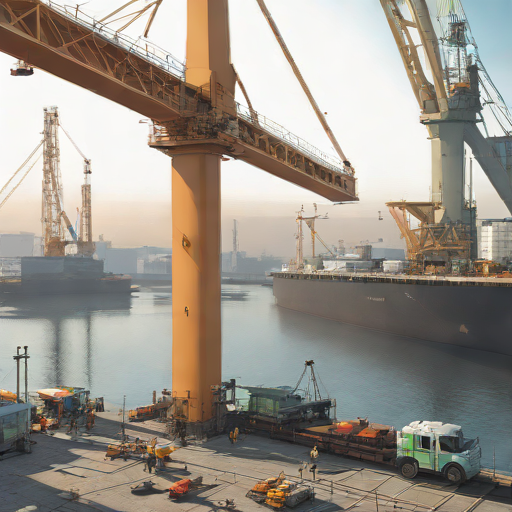
The Merchant Marine Act of 1920, known famously as the Jones Act, requires goods shipped between US ports to be transported on ships that are built, owned, and flagged in the US. While intended to protect national security, in the context of 2026 offshore wind, it acts as a significant throttle. Because there are currently few Jones Act-compliant Wind Turbine Installation Vessels (WTIVs) operational, developers are forced into a costly "feeder barge" system. Components are ferried from US ports by American barges to foreign-flagged installation vessels parked at the site, a dance that is dangerous in rough seas and inefficient in calm ones. A 2025 analysis by BloombergNEF estimated that this logistical friction adds a premium of 15-20% to US offshore installation costs compared to their European counterparts.
But the steel in the water is only half the battle; the electrons must move. The PJM Interconnection, which manages the grid for 13 states including the wind-rich coasts of New Jersey and Delaware, has a queue that is notoriously backlogged. While the UK’s National Grid ESO is proactively designing the "LionLink" multi-purpose interconnector to plug into Dutch grids, US developers are often fighting localized battles for interconnection rights. The result is a "first-come, first-served" system that incentivizes hoarding queue positions rather than strategic, regional planning.
The lesson from the North Sea is that physics ignores state lines. New York and New Jersey competing for the same supply chain resources while refusing to share offshore transmission backbones is a strategic error. A study by the Brattle Group suggests that a planned, mesh-ready ocean grid could save US consumers at least $20 billion by 2050 compared to the current radial approach. For the US to close the gap, the Federal Energy Regulatory Commission (FERC) must prioritize "Order 1920" style long-term regional transmission planning that forces ISOs (Independent System Operators) to look seaward as a single unit, not a collection of competing states.
Offshore Wind Transmission Efficiency: Radial vs. Mesh Grid (Projected Cost per MWh)
Ultimately, the stakes are industrial as well as electrical. If Europe succeeds in standardizing the technology for high-voltage direct current (HVDC) breakers and multi-terminal systems, they will define the global ISO standards for the remainder of the century. The US supply chain, already struggling to ramp up domestic production of basic subsea cables, would be relegated to the status of a rule-taker, purchasing European hardware to build American infrastructure. We are watching the fabrication of a global standard in real-time; the question is whether the United States will be a participant in that design or merely a customer of its output.