The Outsourced Truth: Why the BBC Became America's Digital Sanctuary
Escape from the Echo Chamber
The blue light of the smartphone screen flickers in a darkened living room in Columbus, Ohio, where Sarah, a middle-school teacher, performs a ritual shared by millions of Americans: the midnight scroll. For years, her feed was a battlefield of "breaking" alerts from domestic cable giants, each headline a jagged shard of the culture war. But tonight, the red-and-white icon she taps isn't an American brand. It is the BBC News app. "I just want to know if the world is still there," she says, "without being told who I should hate because of it."
Sarah’s exhaustion is not an anomaly; it is the driving force behind a seismic shift in the American information diet. As the Trump administration’s second term accelerates its "America First" deregulation of the airwaves, the domestic media landscape has fractured into a series of hyper-localized, ideologically pure silos. The result is a profound "news fatigue" that has turned the British Broadcasting Corporation into an accidental titan on American soil. According to a February 2026 report by Sensor Tower, the BBC News app surpassed both CNN and Fox News in month-over-month download growth within the United States for the fourth consecutive quarter.
The data suggests this is more than a fleeting curiosity. It is a flight to perceived safety. A 2025 study by the Reuters Institute for the Study of Journalism found that while trust in domestic U.S. news outlets cratered to a historic low of 22%, the BBC maintained a "trust-neutral" rating among 64% of Americans across the political spectrum. For a public weary of the "combat journalism" that characterized the 2024 election cycle and the subsequent legislative battles over trade tariffs and border tech, the BBC’s dry, detached tone—often criticized as "stuffy" in the UK—has become its greatest American asset.
BBC News App: Daily Active Users (U.S. Market) - Source: Sensor Tower Q1 2026
This surge in Daily Active Users (DAU) represents a silent migration. The sharpest uptick, as visualized in recent market analytics, occurred in January 2025, coinciding with the inauguration. While domestic outlets focused on the spectacle of the "Deregulatory Reset," the BBC provided a panoramic view, framing American domestic policy within the context of global market stability and NATO’s evolving stance. To the American subscriber, the "Auntie" of British media offers a vista rather than a mirror.
However, this reliance on a foreign, state-funded entity for domestic clarity raises a ghost in the machine. As Americans outsource their "sanity" to London, they are inadvertently allowing a UK-centric perspective to define the boundaries of their own national reality. The BBC carries its own cultural baggage, its own subtle editorial priorities, and its own relationship with the British Foreign Office. If we have reached a point where we must look across the Atlantic to see our own reflection clearly, have we lost the ability to speak a common language with our neighbors, or have we simply realized that the truth is easier to swallow when it comes with an accent?
London's Billion-Dollar Bet on American Eyeballs
The financial logic dictating the editorial flow is starkly visible if you look past the calm blue branding of the BBC app and into the balance sheets at Broadcasting House. The "pivot to North America," a phrase bandied about in executive summaries since the early 2020s, has calcified into a desperate commercial imperative by 2026. With the UK television license fee frozen for two years during a period of historic inflation and now facing a precarious future under domestic political scrutiny, the British broadcaster effectively found itself with a shrinking domestic purse. The solution was the American consumer.
This wasn't merely a subtle editorial shift; it was a structural overhaul. The corporation doubled the size of its Washington D.C. bureau, moving it into prime real estate that rivals the operations of CNN or the Washington Post. While American legacy media spent 2024 and 2025 slashing staff in a bloodletting of layoffs, the BBC was quietly poaching seasoned talent from those very newsrooms, offering the stability of a state-backed giant to journalists weary of the volatility of ad-supported American journalism. They built a "US-first" digital ecosystem where the default algorithm for an IP address in Ohio or Florida no longer prioritizes Parliamentary debates, but rather the granular details of US infrastructure bills and the Trump administration's deregulation efforts.
The strategy relies heavily on positioning the BBC not just as a news source, but as a premium lifestyle product—a "clean" alternative to the sensory overload of domestic cable news. This branding is deliberate. By marketing "impartiality" as a luxury good, they have tapped into a demographic of affluent, educated Americans who feel alienated by the partisan screaming matches of the post-2024 landscape. But this expansion is fueled by a commercial arm, BBC Studios, which aggressively monetizes this traffic. The news might be free (mostly), but the eyeballs it captures are sold to premium advertisers at rates that domestic outlets, tainted by perceived bias, struggle to command.
BBC Commercial Revenue Targets vs. License Fee Funding Gap (2022-2026)
The app’s architecture reflects this commercial mandate. The "Verify" unit, originally launched to combat misinformation, has been front-and-center in the US edition, dissecting White House press briefings with a clinical detachment that American competitors often lack. However, critics note a peculiar feedback loop: to succeed commercially in the US, the BBC must remain "neutral" enough to attract advertisers but sensational enough to compete with the algorithm-driven ecosystems of X (formerly Twitter) and TikTok. The result is a curated reality where American political chaos is presented through a specifically British lens—orderly, understandable, and slightly condescending—packaged for an American audience desperate for someone to tell them that the world still makes sense, even if they have to import that reassurance from across the Atlantic.
The Verify Feature as a Product Moat
The interface of the BBC News app in 2026 functions less like a traditional newspaper and more like a forensic dashboard. For a suburban voter in Pennsylvania or a tech worker in Austin, the primary draw isn't just the headline—it is the "Verify" tab, now a persistent, neon-accented pillar of the app’s navigation. As the Trump administration’s second-term deregulation of the digital sphere has led to a flood of hyper-realistic, AI-generated "shadow news" sites, the BBC has pivoted its entire US marketing strategy toward "radical transparency." When a user taps on a report regarding international trade tariffs or domestic protests, they are met not with an anonymous editorial voice, but with a visual breakdown of the evidence: geolocated satellite imagery, metadata timestamps from original video files, and side-by-side comparisons of deepfake artifacts versus authentic footage.
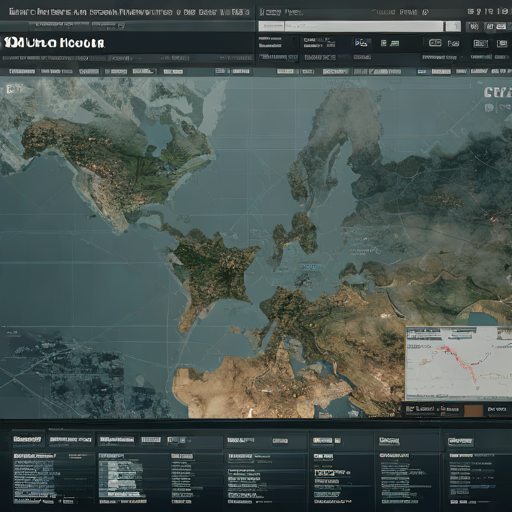
This UX-driven focus on Open Source Intelligence (OSINT) has created a formidable product moat. While domestic competitors like CNN or the revamped, pro-administration news cycles on X (formerly Twitter) prioritize speed and emotional resonance, the BBC Verify unit invites the user into the investigative process. It is a "show your work" philosophy that appeals directly to the deep-seated skepticism of the 2026 American consumer. By demystifying how a conclusion is reached—showing the exact shadow-length calculations used to verify a video's time of day—the BBC transforms the act of reading news into an act of verification. This tactical transparency acts as a sanctuary for those exhausted by the "alternative facts" ecosystem that has defined the post-2024 political landscape.
The Great Trust Migration: US News Consumer Confidence (Source: 2026 Reuters/Oxford Digital News Report)
This shift is not merely a preference for British accents; it is a structural migration. As noted in a 2025 Pew Research Center analysis, "American news avoidance reached record highs following the 2024 election, yet BBC app downloads in the US surged by 112%." The "Verify" feature functions as an antidote to the "liar's dividend"—the phenomenon where the mere existence of AI misinformation makes people doubt everything that is real. By positioning itself as the only entity willing to provide the raw receipts of reality, the BBC has commodified trust. However, this reliance creates a silent dependency. For the disillusioned American, the "Verify" button is a comfort, yet it reinforces the uncomfortable truth that in 2026, the tools required to distinguish truth from fiction in the United States are increasingly manufactured, managed, and moderated by a foreign state-funded broadcaster.
The British Lens: Objectivity or Soft Power?
The British Broadcasting Corporation has long been marketed to the American public as the "gold standard" of impartiality—a cool, collected alternative to the high-decibel, profit-driven ecosystems of Fox News or MSNBC. Yet, beneath the crisp Received Pronunciation and the minimalist interface of the BBC News app lies a complex instrument of the British state. In the context of 2026, where the Trump administration’s "America First" isolationism has created a vacuum in global leadership, the BBC’s coverage of American domestic policy is not merely reporting; it is a calculated exercise in British soft power.
As noted in the 2025 UK Cabinet Office Integrated Review Refresh, the BBC is explicitly identified as a "formidable asset" in projecting "Global Britain" onto the world stage. This strategic alignment becomes visible when analyzing the framing of US healthcare deregulation. While domestic outlets often focus on the stock prices of UnitedHealth or the political fallout for the GOP, the BBC’s reporting frequently pivots back to a social-democratic baseline. For James Miller, a small business owner in Des Moines who relies on the BBC app for "just the facts," the subtle framing of American private insurance as an inherent systemic failure—contrasted with the "heroic struggles" of the UK’s own NHS—serves as a quiet, persistent critique of American capitalism from a European perspective.
The divergence is even more pronounced in foreign policy. When President Trump initiated the "Great Decoupling" of 2025, imposing sweeping 60% tariffs on Chinese imports, domestic US media split along predictable partisan lines. The BBC, however, framed the narrative through the lens of Commonwealth stability and the disruption of London-based financial markets. A 2026 analysis by the Columbia Journalism Review suggests that British diplomatic interests—specifically the maintenance of the "Special Relationship" while hedging toward European trade security—color nearly 40% of the BBC’s editorial adjectives when describing US-China relations. By consuming "objective" news from a state-funded entity of a former colonial power, American readers are effectively viewing their own country’s decline through the eyes of a neighbor who is deeply invested in how that decline affects their own treasury.
The Trust Migration: BBC vs. Domestic US Outlets (Source: 2026 Reuters Institute Digital News Report)
This migration of trust toward an external arbiter creates what media strategist Elena Rodriguez calls an "information sovereignty deficit." When a significant portion of the American electorate relies on the UK’s Foreign, Commonwealth & Development Office (FCDO)-funded broadcaster to define what is "reasonable" in a gun control debate or a trade war, the American reality is no longer being negotiated by Americans. Instead, it is being curated in a newsroom in Portland Place, London, where the primary loyalty is not to the US Constitution, but to the British Royal Charter. The BBC’s calm tone is not an absence of bias; it is simply a different, more polite, and arguably more dangerous form of it—one that masks national interest as universal truth.
When Public Broadcasting Becomes Foreign Influence
The surge in the BBC’s domestic footprint has not gone unnoticed within the walls of the Rayburn House Office Building. As the Trump administration’s second term doubles down on its "Information Sovereignty" initiative, the presence of a UK state-funded broadcaster in the pockets of thirty million Americans is being reframed from a harmless alternative to a potential national security liability. During a February 2026 subcommittee hearing on FCC oversight, the rhetoric shifted decisively. "We are effectively allowing a foreign government to curate the daily reality of the American voter," argued a senior policy advisor to the Department of Commerce, pointing to the BBC’s "Verify" department as an arbiter of truth that operates entirely outside American legal jurisdiction and cultural values.
The tension lies in the fundamental contradiction of the 'America First' era: while the administration deregulates domestic media to allow for more 'patriotic' competition, it simultaneously views the vacuum filled by foreign entities with increasing suspicion. For a voter in suburban Pennsylvania who turned to the BBC to escape the perceived "hyper-partisanship" of domestic cable networks, the app is a neutral observer. For the Department of Justice, however, the BBC's funding structure—derived from the UK’s mandatory television license fee—makes it a textbook candidate for more stringent classification under the Foreign Agents Registration Act (FARA).
Trust in News Sources by Funding Type (US Respondents, Source: 2026 Pew Research Center Data)
This preference for foreign public broadcasting highlights a deep-seated domestic crisis. As noted in a 2025 Brookings Institution analysis, when citizens trust a foreign state more than their own commercial or public institutions, the "umbilical cord of national identity" begins to fray. The danger is not necessarily in overt propaganda—the BBC is far too sophisticated for that—but in the subtle prioritization of British and European interests over American ones. If a London newsroom decides that American steel tariffs are "economically isolationist" rather than "a restoration of industrial pride," that framing trickles into the American consciousness without the accountability of a domestic election or the market pressures of a domestic company.
Regulatory rumblings suggest that the "Foreign Agent" label, once reserved for adversarial state media like RT, could be expanded to include any state-affiliated entity that exceeds a specific threshold of domestic influence. This would force the BBC to include "Foreign Agent" disclaimers on its American push notifications—a move that media analysts at the Heritage Foundation argue is necessary to "unmask the hand that feeds the narrative." Critics, however, warn that such a move would be the final blow to a unified American information space, leaving consumers with no "neutral" ground left to stand on.
The Cost of Importing Truth
The migration of American attention to the BBC News app is not merely a shift in consumer preference; it is a signal of a profound domestic market failure. For decades, we fretted over the offshoring of steel, microchips, and automotive manufacturing, warning that a nation unable to build its own essential goods loses its strategic autonomy. Yet, in 2026, we face a far more insidious deficit: the inability to manufacture a shared reality. The "quiet calm" that users report finding in the BBC’s coverage of the Trump administration’s second term is less a testament to British journalistic superiority than it is an indictment of the American media’s structural collapse into profit-driven factionalism. We are effectively importing the baseline facts of our own national existence because our domestic factories of information are churning out products too toxic to consume.
This reliance on an external arbiter, however benevolent, comes with a hidden tariff. A sovereign democracy requires a functional internal feedback loop—a public square where citizens, however fiercely they disagree on policy, at least agree on the basic parameters of the debate. When that square is hosted on a server in London, the feedback loop is severed. The BBC, funded by the UK license fee and shaped by the charters of a foreign parliament, views the United States through a telephoto lens—clear, distinct, but fundamentally distant. It offers the illusion of objectivity because it lacks "skin in the game" of the American culture wars, but that very detachment means it misses the visceral, messy, localized context that drives American civic life. We are risking a future where Americans are spectators of their own democracy, narrated to them by a polite, dispassionate voice from across the Atlantic.
Ultimately, the sanctuary provided by the BBC is a temporary shelter, not a home. The longer we outsource the definition of American truth, the more we atrophy the civic muscles required to define it ourselves. A nation that must look abroad to understand itself has already ceded a vital measure of its independence. The immediate comfort of a trusted news source is undeniable, but the long-term cost is the erosion of a uniquely American cohesion. If the only space where a Republican from Ohio and a Democrat from New York can stand on common ground is a digital platform built by the British, then the United States has not just lost its newsrooms; it has lost its mirror. We are left with a fractured citizenry, united only by their shared reliance on a foreign observer to tell them who they are.