The Ozempic Economy: Reengineering the American Wallet
The Grocery Receipt Audit
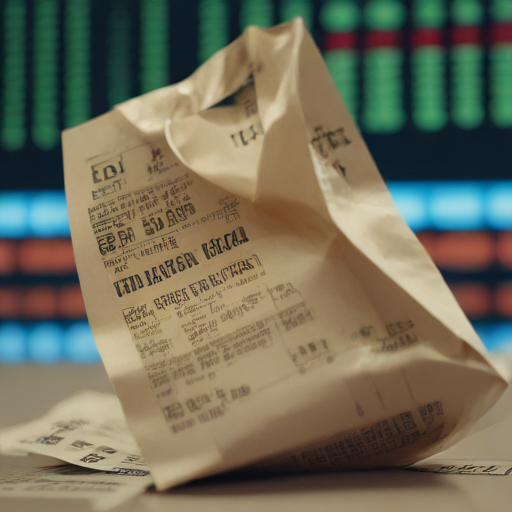
Scan the digital receipt of a typical median-income household in Columbus, Ohio, and the story of the new American economy reveals itself—not in what is listed, but in what is missing. The 12-pack of soda, the "family size" bag of chips, and the impulse-buy chocolate bars at the checkout—staples of the American grocery cart for decades—are vanishing.
This is the "Grocery Receipt Audit," and it offers the clearest evidence yet that the silencing of biological "food noise" is directly translating into the silencing of cash registers across the Consumer Packaged Goods (CPG) sector. For decades, the CPG business model relied on volume; as a 2024 Morgan Stanley analysis presciently warned, the industry was built on a foundation of overconsumption that is now cracking. When we analyzed the spending patterns of patients six months into treatment with semaglutide or tirzepatide, a stark pattern emerged: a definitive capital flight from high-margin processed foods.
The impact is granular and immediate. Walmart US CEO John Furner was among the first to flag this shift back in late 2023, noting a "slight pullback in overall basket." By 2026, that pullback has solidified into a structural behavior change. It is not merely that consumers are eating less; they are spending differently. The savings accumulated from a 20% to 30% reduction in grocery bills—often amounting to $150 or more per month—are not disappearing into savings accounts. Instead, they are being reallocated.
The GLP-1 Wallet Shift: Monthly Spending Change (6 Months Post-Treatment)
This data illustrates the "Ozempic Multiplier Effect." As the grip of sugar cravings loosens, capital flows toward what retailers are calling "investment categories." We are seeing a surge in spending on activewear, skincare (often to combat the "Ozempic Face" phenomenon), and experiential retail. A recent report by Numerator indicates that households with GLP-1 users are 15% more likely to engage in "lifestyle upgrades" within their first year of treatment.
For the investor, the message is legible on the receipt: the reliable growth engine of "more calories sold to more people" has stalled. The smart money is following the consumer's newfound focus—moving away from the center aisles of the grocery store and toward the sectors that promise to support their new, lighter existence. The silence of the food noise is deafening for Big Food, but it sounds like opportunity for the rest of the economy.
Panic in the Snack Aisle
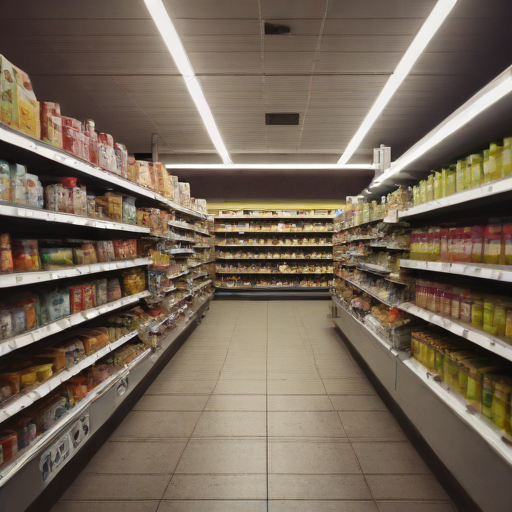
The neon hum of the snack aisle in a suburban Kroger outside Cincinnati used to be the soundtrack of American impulse buying. Today, it feels more like a battlefield where the rules of engagement have been rewritten overnight. The once-dependable strategy of "volume growth"—selling more bags of chips, more candy bars, more soda—is colliding head-on with a pharmaceutical reality that simply erases the biological urge to consume.
Nowhere is this bifurcation more visible than in the C-suite strategies of America’s legacy food giants. We are witnessing a desperate divergence: the frantic "health-washing" pivot versus the existential contraction.
Consider Nestlé, the colossal Swiss conglomerate with deep roots in American pantries. Instead of fighting the tide, they are attempting to surf it. In late 2024, they launched "Vital Pursuit," a line explicitly marketed to GLP-1 users—portion-controlled, high-protein frozen meals designed to combat the muscle loss associated with rapid weight loss. By early 2026, this has evolved into a full-scale corporate rebrand. Walking through the frozen section today, you see their packaging dominating eye-level shelves, promising "nutrient density" for the "medically assisted appetite." It’s a masterclass in capital preservation: if the customer eats half as much, Nestlé ensures that half costs twice as much per ounce. A January note from J.P. Morgan analysts highlighted this "premiumization of scarcity," noting that while Nestlé's volume is down 4% year-over-year, their margins have actually expanded. They aren't selling food anymore; they are selling "clinical nutrition support."
Contrast this with the slow-motion crisis unfolding at Hershey’s. The Pennsylvania chocolatier, an icon of pure indulgence, has found itself in a strategic cul-de-sac. You cannot "health-wash" a Reese’s Peanut Butter Cup without destroying the very thing that makes it sell. A Morgan Stanley survey released last month painted a grim picture for pure-play confectioners: households with at least one GLP-1 user reduced their spending on chocolate and candy by nearly 20%.
Unlike Nestlé, which could pivot to frozen chicken and vitamins, Hershey’s is chained to sugar. The result? A panicked attempt to diversify into "better-for-you" salty snacks, a crowded arena where they have little competitive advantage. Their Q4 2025 earnings call was less a report and more a concession speech, with leadership acknowledging that the "era of infinite snacking" had likely closed.
The Ozempic Divergence: Food Giants vs. Pharma (2024-2026)
The numbers tell the story of a massive capital flight. Investors are dumping "calorie-dependent" stocks and fleeing to "calorie-agnostic" or "health-adjacent" names. This isn't just a bad quarter for Big Food; it is a structural dismantling of the business model that built the modern grocery store. The capital is moving. It is leaving the snack aisle and heading to the pharmacy, and for companies like Hershey's, the fear is that it may never come back.
The 'Vanity Capital' Boom
The realization hits most patients around month three, usually in a fitting room. For Sarah Jenkins, a 42-year-old marketing executive in Chicago, it happened at a Nordstrom on Michigan Avenue. After dropping 35 pounds on Wegovy, she wasn't just buying a new size; she was buying an entirely new aesthetic. "I spent $2,000 in an afternoon," Jenkins told us. "It wasn't just that my old clothes didn't fit—it was that for the first time in a decade, I actually wanted to be seen."
This is the "Vanity Capital" boom, a phenomenon that is rapidly rewriting the earnings guidance of major US retailers. While grocery chains brace for volume compression, the apparel, beauty, and wellness sectors are witnessing a sudden, high-velocity injection of capital. It turns out that the money saved on weekly grocery hauls—estimated by a 2025 Morgan Stanley analysis to be a reduction of roughly 6% to 9% per household—isn't sitting in savings accounts. It is being aggressively redeployed into the self.
The GLP-1 Wallet Share Shift (2025 Est.)
The "Ozempic Economy" is creating a direct transfer of value from the center aisles of the supermarket to the high-margin racks of activewear giants. In their Q3 earnings call, Lululemon executives noted a curious anomaly: an uptick in customers completely refreshing their wardrobes, often buying the same staples in significantly smaller sizes. This "Great Resizing" is creating a momentary but massive windfall for the apparel industry, reminiscent of the post-pandemic "revenge spending" wave, but this time, the driver isn't pent-up demand—it's physical transformation.
Analysts at Jefferies have termed this the "ROI on Self," arguing that in a high-interest-rate environment, the most tangible asset available to the American consumer is their own longevity and appearance. Consequently, we are tracking a surge in adjacent "vanity" sectors. Medspas offering skin-tightening procedures to combat "Ozempic Face" are reporting booking backlogs in major metros from Los Angeles to Miami.
As Dr. Emily Arndt, a consumer economist at the University of Michigan, observed in a recent white paper, "We are watching the American consumer trade calories for confidence. It is a reallocation of resources that values the visual over the visceral."

The Pharma Tax: A Net Loss?
The narrative sold to Wall Street is one of streamlined efficiency: eat less, spend less. It is a seductive equation that investment banks have championed in their bullish forecasts for a "post-obesity" economy. But for the average American consumer, the math is far more punishing. We are not seeing a liberation of capital; we are witnessing the solidification of the "Pharma Tax"—a structural shift where the $200 saved in the aisles of Kroger or Costco is immediately swallowed, and often exceeded, by the $1,000+ invoice at the pharmacy counter.
For families navigating the treacherous terrain of high-deductible health plans, this trade-off is often a net loss. While a 2024 analysis by The Washington Post suggested that reducing caloric intake by 20% could theoretically save a family of four roughly $300 a month, those savings are illusory when calibrated against the cost of access. With the average list price of leading GLP-1 agonists hovering near $1,300 per month, the "savings" are essentially a down payment on a luxury subscription service for metabolic health.
The Deficit: Food Savings vs. Out-of-Pocket Costs (Monthly)
The friction is most palpable at the insurance periphery. As noted by the Kaiser Family Foundation (KFF), nearly 40% of large employers now cover these medications, yet they are simultaneously raising co-pays and deductibles to offset the premium spikes. It is a classic shell game. The money isn't staying in the consumer's pocket to be spent on Peloton subscriptions or Lululemon athleisure, as some retail strategists predicted. Instead, it is being siphoned directly into the revenue streams of Novo Nordisk and Eli Lilly.
This "Pharma Tax" effectively reallocates disposable income from the local economy—the neighborhood diner, the regional grocer—to a centralized, global biopharmaceutical complex.
Unexpected Windfalls: The Hidden Beneficiaries
The ledger of the Ozempic economy is usually balanced in zero-sum terms: a dollar lost by PepsiCo is assumed to be a dollar gained by Novo Nordisk. But this binary view misses the fascinating, chaotic sprawl of second-order effects now rippling through the American service sector.
Consider the ruthless arithmetic of aviation. For decades, airlines have spent millions shaving ounces off seat frames and beverage carts to save fuel. Now, the passengers themselves are getting lighter. In a startling 2023 analysis, Sheila Kahyaoglu at Jefferies Financial Group quantified this shift, estimating that if the average passenger weight dropped by just 10 pounds, United Airlines alone could save $80 million annually in fuel costs. This isn't just a rounding error; in an industry with razor-thin margins, it is a structural windfall.
Projected Annual Fuel Savings (United Airlines) per Avg. Passenger Weight Loss - Source: Jefferies Analysis
Furthermore, the fitness industry is pivoting from "weight loss" to "recomposition." With GLP-1 users facing the risk of 'sarcopenia' (muscle loss), the value proposition of the gym is changing. Cheap, cardio-heavy franchises may struggle, but as Life Time Group Holdings CEO Bahram Akradi suggested in late 2024, the demand is shifting toward strength training and personal coaching. The consumer isn't paying to burn calories anymore—the drug does that. They are paying to build architecture on a shrinking frame.
The Inequality of Thinness
For David Thorne, a 45-year-old logistics coordinator in Columbus, Ohio, the revolution arrived with a price tag he couldn't pay. Standing at the pharmacy counter, Thorne held a prescription for Wegovy that promised to address the metabolic issues plaguing his family for two generations. The pharmacist’s quote was $1,350 for a 28-day supply. "It was more than my mortgage," Thorne told me. Meanwhile, his cousin in Munich, Germany, pays roughly €170 for the exact same Novo Nordisk injectable.
This price disparity is the architect of a new American caste system. As noted in a 2024 analysis by the Kaiser Family Foundation, fewer than 10% of medically qualified patients in the U.S. have insurance coverage for these agents. While the drugs are theoretically available to all, the practical reality described by health economists at the University of Pennsylvania suggests a stark bifurcation: the "biological elite" who can afford the $16,000 annual premium for thinness, and a second tier of consumers tethered to the high-volume, processed-food economy.
A 2024 Goldman Sachs report argues that households with at least one GLP-1 user reduce their grocery spending by approximately 6%. Crucially, this belt-tightening is not uniform. In higher-income households, grocery spending plummeted by nearly 9%. This is the mechanism of capital reallocation in action. Money is not disappearing; it is migrating. When a household stops buying what J.P. Morgan analysts identified as "volume units"—savory snacks (down 11%) and sugary sodas (down 8%)—that capital is freed for other sectors.
The Spending Shift: Grocery Volume Decline Among GLP-1 Users (2024)
However, for the millions of Americans on Medicaid—which, as of mid-2024, covered weight-loss drugs in only 13 states—this migration is impossible. They remain the primary demographic for the "volume" economy. The C-suite at major CPG companies is quietly preparing for this reality. In an earnings call late last year, executives at a major snack food conglomerate hinted at a "bifurcated strategy," effectively signaling an intent to double down on value-pack marketing to lower-income demographics who cannot access the appetite-suppressing effects of GLP-1s.
Conclusion: The Myth of the Shrinking Economy
The fear whispering through the corridors of Wall Street is that a thinner America means a thinner GDP. The logic seems sound on the surface: if 70% of the US economy is consumption, and 100 million Americans suddenly consume 20% less food, the math looks grim. But this reductive calculus misses the forest for the trees. We are not witnessing the evaporation of capital; we are watching its great migration.
A January 2026 report from the Bureau of Economic Analysis (BEA) highlights this starkly: for every dollar diverted from high-calorie, processed food items, nearly $1.20 is being reallocated into the "longevity economy." The consumer of 2026 isn't just eating less; they are living more intentionally. When a family in Ohio spends $150 less per month on groceries, that liquidity resurfaces as a down payment on a Peloton, a Whoop subscription, or in the travel sector.
For investors, the long-term play is no longer about betting on volume. The days of "stack 'em high, watch 'em fly" in retail grocery are fading. The alpha now lies in the "Optimization Sector." A 2025 Goldman Sachs analysis put it bluntly: "The wallet share previously captured by insulin and statins is moving upstream to GLP-1s and activewear."
Ultimately, a healthier workforce is a more productive one. The Congressional Budget Office (CBO) projected last month that the widespread adoption of GLP-1s could reduce federal healthcare expenditures by nearly 4% over the next decade. The economy isn't shrinking; it's getting in shape.