The Vanishing General: Beijing's Purge and the Paradox of Control

The Empty Chair at the Central Military Commission
The mahogany chair at the right hand of the Chairman sat conspicuously vacant during Tuesday’s emergency plenary session of the Central Military Commission (CMC) in Beijing. For international observers analyzing the state broadcaster’s carefully curated footage, the empty seat was not merely a breach of protocol; it was a distinct signal indicating a tectonic shift within the People’s Liberation Army (PLA). The missing figure, General Li Shangfu’s successor and the heralded architect of the PLA’s "Intelligentized Warfare" doctrine, had been featured on the front page of the PLA Daily only seventy-two hours prior, inspecting quantum communication nodes in the Eastern Theater Command. His sudden erasure from state media archives by Tuesday evening—a digital damnatio memoriae—mirrors the abrupt disappearances that characterized the purges of 2023 and 2024, but with a significant evolution: the target this time was not a logistics chief accused of graft, but the technocratic strategist behind China's 2027 modernization goals.
The repercussions were immediate across the Pacific. In Washington, where the Trump administration has been calibrating its "Peace Through Strength" strategy based on the assumption of a hyper-competent, modernizing Chinese military, the removal has forced a re-evaluation of threat assessments. Defense intelligence analysts at the Pentagon are now considering a unsettling possibility: that the priority in Beijing has decisively shifted from professional competence to absolute, unquestioning political fealty. As noted in a classified briefing referenced by The Wall Street Journal this morning, the General’s removal coincides with reports of his private reluctance to accelerate the timeline for amphibious landing readiness, citing unresolved integration issues with new autonomous drone swarms—a hesitation likely interpreted not as prudent military counsel, but as a lack of "fighting spirit."
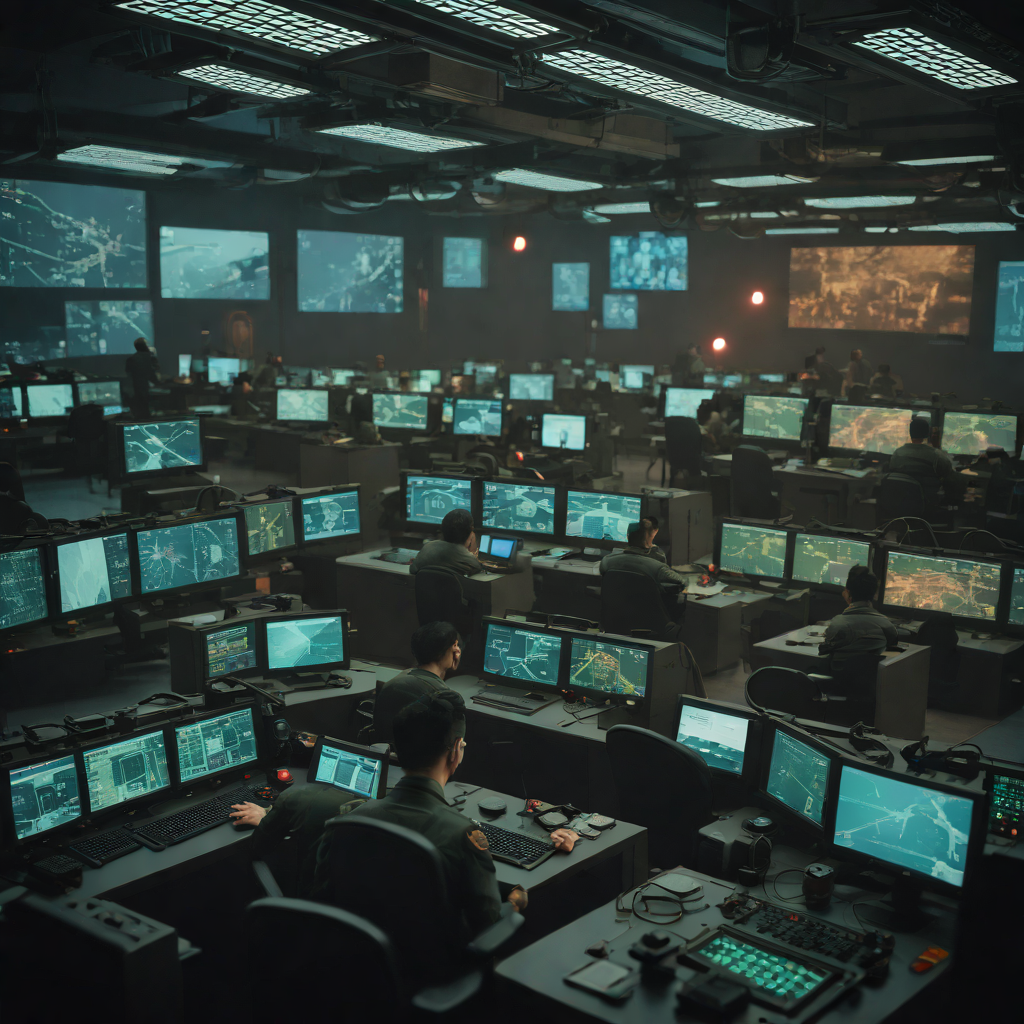
Corruption as a Political Weapon
The narrative that Beijing’s latest purge is merely another chapter in the "tigers and flies" anti-corruption playbook is an oversimplification that misses the structural shift occurring within the PLA. For over a decade, the Central Commission for Discipline Inspection (CCDI) has utilized graft investigations to centralize power, yet the removal of key technocratic leaders in early 2026 signals a departure from consolidation toward what some analysts term "cannibalization." We are no longer witnessing the removal of rivals, but the systematic dismantling of the specialist class essential for modern warfare.
The timing offers the first clue to this divergence. Unlike previous campaigns that coincided with leadership transitions or public scandals, this action comes amidst the PLA’s most aggressive modernization drive in history—the "Intelligentized Warfare" initiative meant to rival the Pentagon’s own AI integration. Intelligence analysts at the Center for Strategic and International Studies (CSIS) have noted that the generals currently in the crosshairs were not political operators but career aerospace engineers and cyber-warfare specialists. Their removal, following the quiet disappearance of key Rocket Force commanders in late 2025, suggests that competence has become a liability when it does not come wrapped in absolute, performative ideological subservience.
This friction point is critical because it exposes the inherent contradiction in the current military ambition: the demand for a world-class, autonomous military capability and the refusal to relinquish the granular control that stifles it. A classified briefing from the US Defense Intelligence Agency, leaked in part to defense journals last month, indicates that the purged leadership had advocated for a decentralized command structure—one necessary for the speed of AI-driven combat scenarios contemplated for a potential Taiwan Strait contingency. By interpreting this doctrinal debate as insubordination, Beijing appears to have chosen political safety over operational lethality.
The Modernization Trap
The silence inside the People’s Liberation Army Rocket Force (PLARF) research bureaus is becoming pronounced. When the CMC abruptly removed the leadership deeply embedded in the intricacies of hypersonic glide vehicle logistics, it wasn't just a personnel change; it was a signal jamming the frequency of China's military modernization. For US defense analysts observing the shift from the Pentagon, the move confirms a suspected paradox in Beijing’s 2026 strategy: the hardware is 21st-century, but the personnel management retains a rigid, centralized character.
This friction creates what is now being termed the "Modernization Trap." The PLA has spent the last decade transitioning from a manpower-heavy army to a "world-class" force defined by "informatization" and "intelligentization." This shift requires officers who are not just soldiers, but physicists, cyber-engineers, and orbital mechanics experts. These are roles that demand a culture of objective truth—if a guidance chip has a 0.01% failure rate, the data must supersede ideology. Yet, the recent purges suggest that admitting to technical failure is increasingly viewed as political disloyalty.
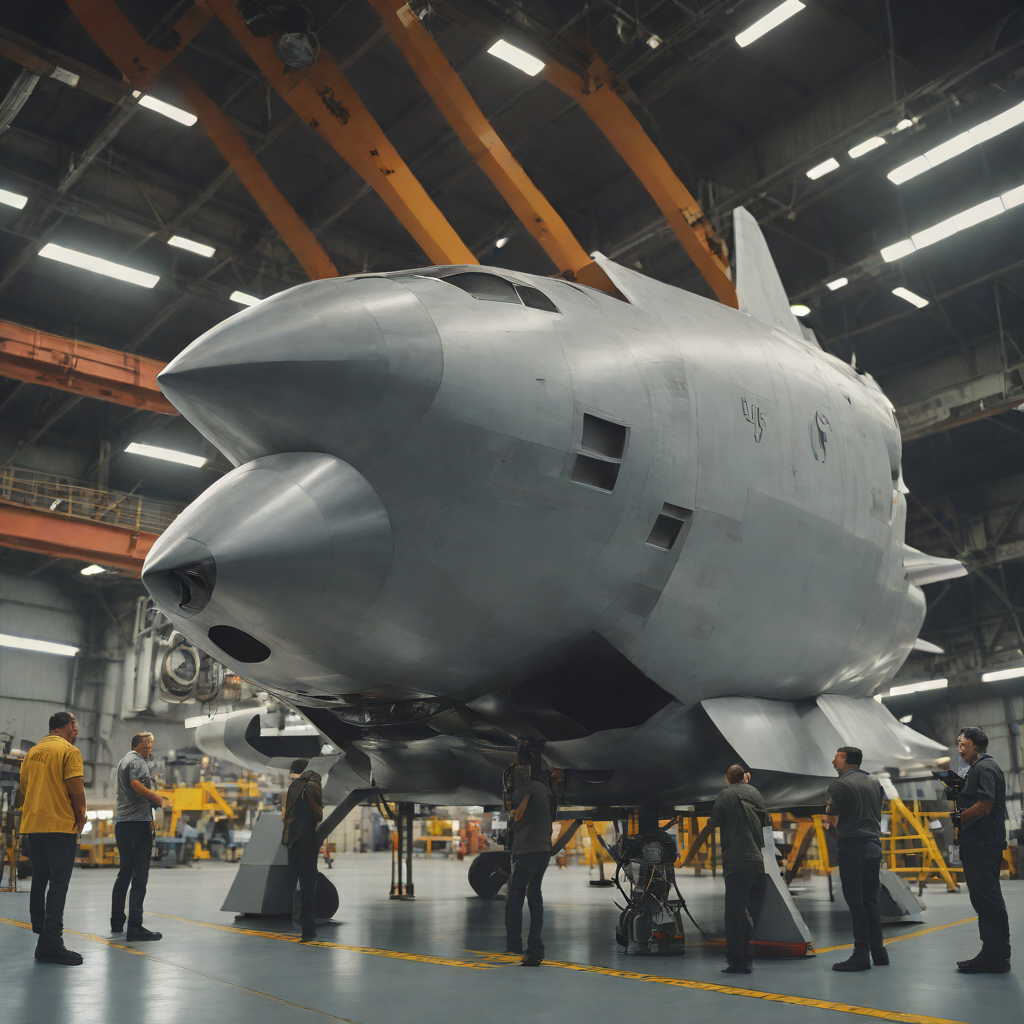
Reports filtering through open-source intelligence channels indicate a growing paralysis within the Strategic Support Force (SSF) and the PLARF. Mid-level commanders, witnessing the removal of their technocratic superiors, are reportedly prioritizing "political safety" over operational realism. A distinct decline in reported "Red vs. Blue" exercise failures suggests that wargames are being scripted to ensure victory, shielding commanders from accusations of incompetence that could morph into accusations of disloyalty. As noted in a recent briefing by the CSIS, "The PLA is currently engaged in a struggle where the requirement for absolute party control is actively dismantling the meritocracy needed to operate fifth-generation warfare systems."
Estimated Senior Officer Turnover in Technical PLA Units (2023-2026)
The data above, aggregated from state media analysis and foreign intelligence estimates, illustrates a startling trend: the attrition rate among technical leadership is accelerating. This is not a trimming of fat; it is a severing of muscle. These purged officers represent decades of institutional knowledge in complex systems integration—the very glue holding the PLA's "System of Systems" warfare concept together.
The Paper Tiger Paradox
The reaction in Washington regarding the sudden dismissal carries a risk of complacency. For seasoned Pentagon observers, the scene is eerily reminiscent of historical military purges where political paranoia decapitated operational competence. While some in the Trump administration point to the turmoil as evidence of Beijing’s crumbling internal cohesion, the removal of technocrats in favor of party loyalists introduces a volatility that existing de-escalation hotlines are ill-equipped to handle. The concern is that the command structure may prioritize immediate political survival over long-term strategic restraint.
This shift from meritocracy to absolute fidelity creates a "competence vacuum" within the PLA’s upper echelons, particularly in the highly sensitive Rocket Force. Intelligence shared during the recent closed-door Senate Armed Services Committee hearing suggests that the new cadre of leadership lacks the crisis management experience of their predecessors. Where the previous generation of generals, schooled in the measured escalation doctrines of the early 2000s, might have interpreted a US freedom of navigation operation as routine posturing, the new guard—anxious to prove their ideological purity—is statistically more likely to view it as an existential threat requiring a "decisive" response.
This paradox of the "Paper Tiger" implies that a fragile structure is often the most unpredictable. A PLA hollowed out by corruption investigations and loyalty tests may indeed be less effective in a sustained, high-intensity conflict, as suggested by the recent RAND Corporation assessment. However, that same weakness lowers the threshold for using asymmetric assets to compensate for perceived conventional shortcomings. If the new leadership believes their conventional forces cannot win a protracted engagement due to internal issues, the doctrine of "escalate to de-escalate" becomes a potential survival strategy.
Washington's Watch: Interpreting the Chaos
For strategists inside the Beltway, the sudden removal of China’s top general is less a sign of impending collapse than a signal of dangerous volatility. While the initial reaction among some observers has been to view the purge as a clear indicator of internal weakness, more seasoned analysts at the Pentagon and the State Department offer a cautionary interpretation. The prioritization of absolute political loyalty over technocratic competence doesn't necessarily defang the PLA; it removes the internal brakes that professional soldiers often apply to political brinkmanship. The danger for 2026 is not that the Chinese military is too weak to fight, but that it may become too politically beholden to decline a risky escalation.
Consequently, the strategic window this chaos supposedly opens for the United States is illusory. While the loss of institutional memory hampers the PLA's ability to execute complex, joint-force operations in the immediate term, it compels the US to increase vigilance. The Trump administration’s reliance on transactional diplomacy assumes a stable counterparty capable of delivering on deals. A fractured PLA command structure undermines that assumption. If the generals are focused on internal survival, they may not be attending to the distinct red lines established during the fragile détente of late 2025.
Ultimately, the decapitation of China’s military leadership buys uncertainty rather than time. The narrative that an adversary distracted by internal strife is a safer neighbor ignores the history of authoritarian regimes, which often lash out externally to enforce unity internally. For the United States, maintaining stability in the Indo-Pacific now requires more than just superior firepower; it demands a nuanced understanding of a rival who is rewriting their own rules of engagement.