Columbia’s Legal Turn: The Pragmatic Retreat in the Trump Era
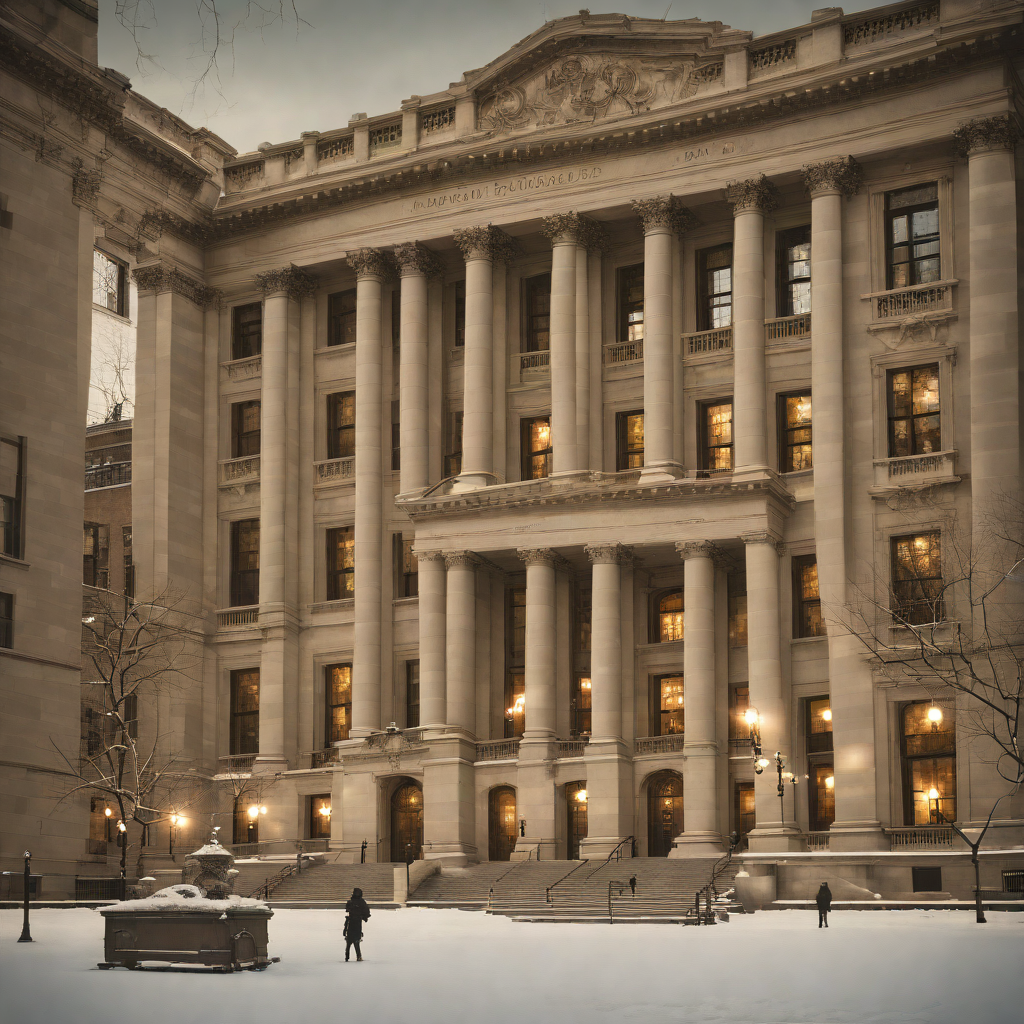
A Quiet Tuesday in Morningside Heights
The winter wind whipping off the Hudson River and cutting across the Low Memorial Library steps carried a chill distinct from the usual New York January bite. It was quiet on the plaza—strangely so, given the storms of protest that had defined this space just two years prior. On this Tuesday morning, the silence wasn't empty; it was expectant. The campus, a fortress of limestone and intellect in Morningside Heights, was waiting for a signal, and it arrived not with a megaphone, but with a succinct, lawyerly email to the alumni network.
The Board of Trustees’ selection of Rebecca Sterling, the former Chancellor of the University of Wisconsin System and a constitutional scholar known for her unyielding defense of procedural neutrality, lands with the weight of a gavel. Sterling is not the "philosopher-president" typical of the Ivy League tradition—she is a creature of the public sector, a veteran of state legislature budget battles in Madison, and, crucially, a legal tactician. Her appointment is a stark departure from the era of ideological brinkmanship. It is a calculated retreat from the culture wars into the fortress of administrative pragmatism.
To understand the magnitude of this shift, one must look south to Washington. The second Trump administration, emboldened by a mandate for "educational accountability," has made no secret of its targets. The Department of Education’s recent memo, leaked earlier this month, explicitly outlines a framework for reviewing the tax-exempt status of endowments exceeding $10 billion—a category where Columbia, with its estimated $14 billion war chest, sits comfortably, and vulnerably. By bringing in Sterling, a leader who spent the last decade navigating the hostile fiscal waters of state-funding cuts and legislative oversight committees, Columbia is signaling a pivot from expansion to preservation.
"This isn't about vision; it's about survival mechanics," notes Dr. Alan Chen, a higher education historian at NYU, observing the move from across town. "You don't hire a constitutional lawyer with a background in public auditing to lead a revolution. You hire them to build a firewall."

The Long Shadow of 2024
To understand the Morningside Heights boardroom today, one must first look back to the spring of 2024. That season did not merely result in the resignation of Minouche Shafik following the aftermath of the Hamilton Hall occupation and the broader crisis; it fundamentally broke the implicit contract between the Ivy League and the American public. The images of law enforcement entering academic buildings were not just a PR crisis but a signal that the "Managerial Liberalism" model—where university presidents acted as grand mediators of discourse—had failed. The subsequent Congressional hearings, where leaders from Harvard, Penn, and eventually Columbia withered under the prosecutorial glare of House Republicans, codified a new reality: in the era of populist scrutiny, academic prestige offers no immunity against political force.
The Board of Trustees’ decision this week to appoint a seasoned chancellor from a major public university system—a constitutional lawyer by trade who has spent the last decade navigating the hostile legislative waters of a red-state capital—is a direct admission that the game has changed. This is no longer a search for a visionary scholar or a global economist; it is the hiring of a wartime consigliere. The selection signals that Columbia anticipates the Trump administration’s Department of Education will not be satisfied with mere strongly worded letters. With threats of endowment taxes and the revocation of federal research grants moving from campaign rhetoric to drafted executive orders in the Oval Office, the university has pivoted to a leader whose primary skillset is not fundraising or pedagogy, but regulatory survival.
This shift represents a "retreat to competence," a strategy outlined in a confidential 2025 memo from the Association of American Universities, obtained by news outlets, which warned that "ideological vulnerability is now a fiscal liability." By choosing a leader who cut their teeth managing the whims of a conservative state legislature—negotiating tenure reviews in exchange for funding stability—Columbia is effectively importing a "public option" governance style to the private sector. The logic is brutal but pragmatic: a president who can legally dismantle a Title VI complaint before it reaches a courtroom, or who can speak the language of "administrative neutrality" that the current Washington establishment demands, is more valuable than one who can quote Fanon or Friedman.
The Wisconsin Playbook
To understand the strategic pivot occurring in Morningside Heights, one must look 900 miles west to Madison, Wisconsin. Here, the boundaries between the academy and the state legislature are not theoretical but geographical—State Street literally connects the university administration to the Capitol dome. It was in this crucible that the incoming leadership forged a reputation not for ideological purity, but for survivalist pragmatism. At the University of Wisconsin, the "Wisconsin Playbook" emerged as a defensive doctrine: trade symbolic victories for structural survival.
The defining moment of this doctrine—and the likely blueprint for Columbia’s defense against the current administration's scrutiny—occurred during the contentious budget negotiations preceding the 2025 academic year. While Ivy League presidents were issuing moral proclamations that withered under congressional cross-examination, the Wisconsin leadership was engaged in a quieter, grittier transaction. As detailed in legislative records from the time, the university agreed to freeze diversity, equity, and inclusion (DEI) hiring and reorient positions toward broadly defined "student success" metrics in exchange for the release of hostage funds destined for a new engineering building and employee raises. Critics within the faculty senate decried it as a capitulation; supporters, including pragmatic donors and bipartisan regents, saw it as the only viable path through a polarized political minefield.

Shielding the Endowment
The selection of a chancellor with deep roots in public administration and constitutional law is not merely a hiring decision; it is a fortification strategy. For nearly a decade, the Ivy League has operated under the assumption that its massive endowments and reputational inertia would insulate it from the shifting political tides in Washington. The events of 2024 and 2025 shattered that illusion. With the Trump 2.0 administration now fully operational and wielding executive power with a distinct focus on "institutional accountability," Columbia’s Board of Trustees has signaled a decisive shift: the era of the philosopher-president is over. The era of the wartime general counsel has begun.
This pivot is driven by the cold calculus of risk management. The threats facing Morningside Heights are no longer abstract debates over free speech zones or syllabus decolonization; they are existential fiscal and legal challenges. The Department of Education, under its new aggressive mandate, has moved beyond warning letters to active audits of Title VI compliance, leveraging the threat of withholding federal research grants—a lifeline that accounts for hundreds of millions in annual revenue. A chancellor capable of navigating a Congressional subpoena is now more valuable than one capable of securing a Nobel laureate. As noted by legal analysts reviewing the chaotic university hearings of the previous congressional session, the inability of former academic leaders to parse the distinction between "legal protection" and "moral posturing" under oath resulted in immediate reputational capitulation. Columbia is preemptively closing that vulnerability.
The most tangible target of the new administration’s scrutiny is the university’s endowment, currently valued at approximately $14 billion. While previously treated as a sacred educational trust, the "America First" fiscal agenda views these accumulated fortunes as under-taxed hedge funds masquerading as non-profits. The proposed expansion of the 1.4% excise tax on net investment income—potentially raising it to match private foundation rates—would fundamentally alter the university's operating model. The new leadership choice reflects a need for a negotiator who can speak the language of compliance and tax code rather than the language of the faculty lounge. It is a defensive crouch, designed to shield the endowment from being raided to fund populist initiatives.
Projected 10-Year Liability: Current vs. Proposed Endowment Tax Models
Furthermore, the "deregulation" promised by the Trump administration in the corporate sector has inverted into "weaponized regulation" for the higher education sector. The administration’s leveraging of accreditation agencies to enforce ideological neutrality creates a paradox where the university must simultaneously protect academic freedom while avoiding the "political activity" triggers that could jeopardize its non-profit status. A legal scholar at the helm suggests that Columbia intends to fight these battles in the courtroom using administrative law, rather than in the court of public opinion. This is a retreat from the spotlight, prioritizing the preservation of the institution’s sovereign machinery over its role as a cultural protagonist.
The Donor Dilemma
The appointment of a chancellor steeped in the bruising legislative battles of the public sector—where funding is wrestled from skeptical statehouses dollar by dollar—was clearly designed to inoculate Columbia against the hostile oversight of the second Trump administration. However, this calculation ignores the unique volatility of the university's other primary constituency: the Manhattan donor class, whose currency is not just capital, but influence. While the Board of Trustees prioritized a legal shield against Washington's deregulation and fiscal scrutiny, they may have underestimated the cultural friction of importing "Midwestern pragmatism" into the high-stakes ecosystem of Ivy League philanthropy.
In the public university systems from which the new leadership hails, success is measured by stability, accessibility, and the ability to keep the institution off the front page of a partisan newspaper. In the gilded corridors of Morningside Heights, however, silence is often interpreted as irrelevance. High-net-worth alumni, many of whom manage hedge funds or lead multinational corporations, are not looking for a quiet administrator; they are accustomed to purchasing vision and prestige. The "Midwestern nice" approach—characterized by consensus-building and conflict avoidance—risks alienating a donor base that has become increasingly activist following the campus upheavals of 2024 and 2025. As noted in a recent Chronicle of Higher Education analysis, "The modern mega-donor demands the same ROI from their alma mater as they do from their portfolio: measurable impact and ideological alignment."
The danger lies in a fundamental misalignment of incentives. The new administration's mandate is defensive: protect federal research grants from the Department of Education's "anti-woke" auditing and shield the endowment from the proposed 2026 "Elite University Excise Tax." This requires a strategy of caution, bureaucracy, and perhaps even performative compliance with new federal guidelines on free speech. Yet, this very bureaucratization threatens to dilute the "exceptionalism" that donors are paying for. If Columbia begins to look and act like a well-run state utility rather than a bastion of elite thought leadership, the checkbooks may close. We saw a prelude to this in late 2025, when Harvard's pivot to "institutional neutrality" was met not with applause, but with a 15% dip in annual giving, as donors on both the left and right felt the university had simply opted out of the moral conversation entirely.
Projected Revenue Risks: Federal Cuts vs. Donor Attrition (2026)
Redefining Elite Governance
The selection of a chancellor with a formidable legal pedigree rather than a public intellectual’s dossier marks the definitive end of the "Academic Celebrity" era in the Ivy League. For nearly two decades, elite institutions prioritized leaders who could capture the cultural zeitgeist, turning university presidencies into pulpits for global moralizing. However, the appointment of a seasoned litigator to Columbia’s helm suggests that in 2026, the priority has shifted from capturing headlines to surviving them. This transition is not merely a changing of the guard; it is a tactical retreat into administrative pragmatism, designed to armor the university against the fiscal and regulatory artillery of the second Trump administration.