The Death of General Winter: Automated Warfare Erases the Season of Peace

Silence Broken by the Buzz
For centuries, the vast, frozen steppes of Eastern Europe held a grim promise for defending armies: "General Winter" would arrive, stalling offensives and freezing supply lines in a reprieve of sub-zero stasis. From the retreat of the Grande Armée to the stalling of the Wehrmacht outside Moscow, the plummeting mercury was the ultimate arbiter of operational tempo, forcing a seasonal pause that allowed exhausted units to regroup. But in January 2026, on the wind-swept outskirts of Kupiansk, that historical silence has been permanently broken. The reprieve is gone. Instead of the howling wind, the dominant sound cutting through the heavy snowfall is the high-pitched, omnipresent whine of quadcopter swarms and the heavier thrum of loitering munitions, unbothered by the frostbite that incapacitates human infantry.
Defense analysts at the Atlantic Council have characterized this winter as a "decoupling event"—the precise moment in military history where kinetic activity became statistically independent of meteorological conditions. While infantry units on both sides dig deep into the frozen mud to survive the minus-20-degree cold snap, autonomous systems, hardened against the freeze and powered by next-generation solid-state lithium-sulfur batteries, continue the hunt. A recent field report from the Institute for the Study of War highlights a startling statistic: despite a record-breaking blizzard last week that grounded traditional manned aviation, drone sortie rates dropped by less than 15% compared to clear-weather averages. In previous conflicts, such weather would have imposed a total operational blackout. Today, thermal sensors cut through the whiteout, turning the heat signatures of warming vehicles and huddled troops into high-contrast targets, fundamentally altering the calculus of survival.
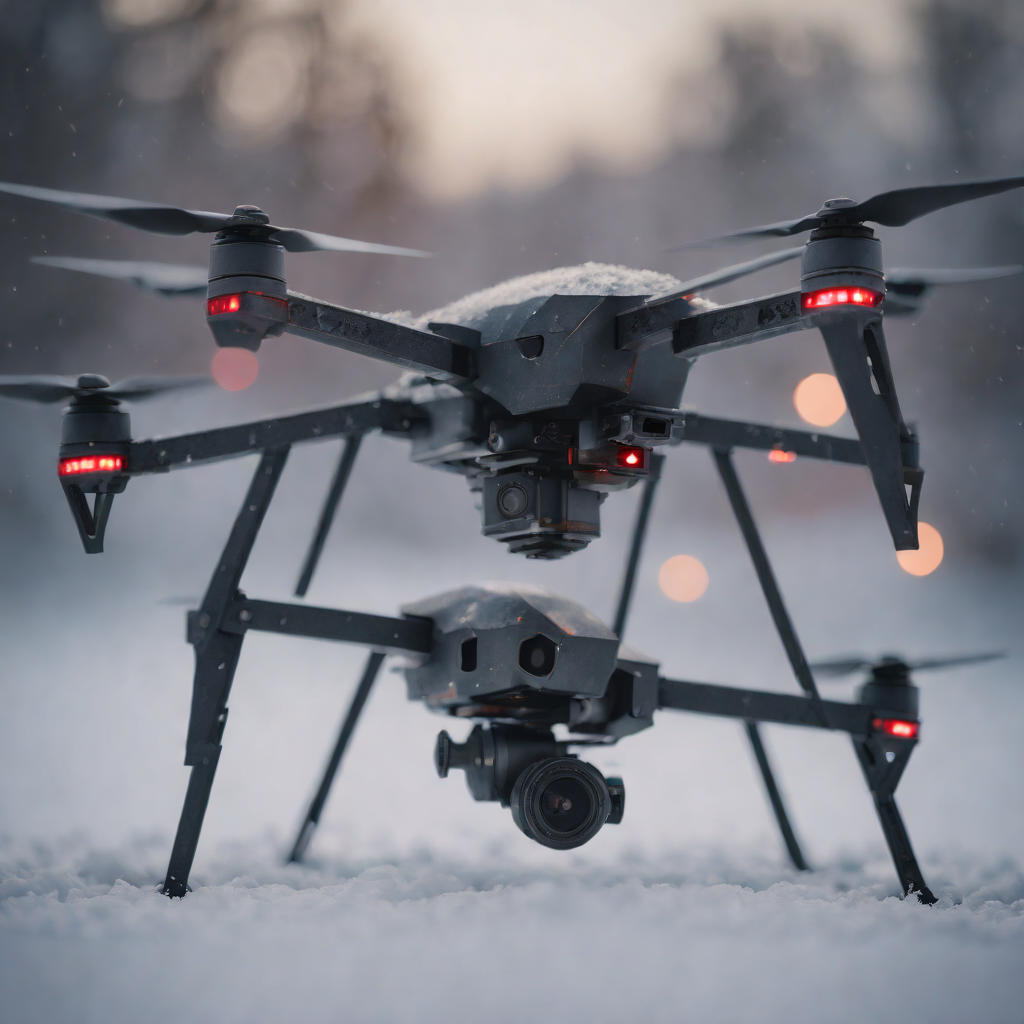
This shift marks the dawn of "Always-On War." The logistical pause, once a guaranteed phase of the winter campaign season, has evaporated, replaced by a relentless algorithmic attrition. As noted by former Pentagon policy advisors now analyzing the conflict's data streams, the strategic implication for the United States is profound: the concept of a "safe" season for reorganization is obsolete. The psychological toll of this relentless surveillance is reshaping the very definition of attrition, moving it from a purely material calculation to a test of cognitive endurance under 24/7 observation, where the environment itself no longer offers shelter.
Thermal Eyes and Lithium Hearts
The blizzard that buried the Donbas front in mid-January 2026 was severe enough to freeze diesel fuel in the lines of 60-ton main battle tanks, turning armored columns into static, snow-covered pillboxes. Yet, as the mercury dropped to -25°F, the sky remained alive. While internal combustion engines sputtered and seized, a new generation of electric autonomous systems, powered by self-heating solid-state batteries and guided by algorithmic thermal imaging, continued the offensive. This divergence marked the definitive moment where the operational tempo of war decoupled from the limitations of the biological and mechanical world.
The technological pivot rests on two critical advancements that have matured rapidly under the accelerated procurement cycles of the last two years: thermal resilience in energy storage and AI-enhanced sensor acuity. As noted in the Pentagon’s Q4 2025 Operational Assessment, the deployment of "Block III" heavy-lift quadcopters—equipped with localized resistive heating elements woven directly into the battery casing—has effectively negated the catastrophic voltage sag that plagued earlier drone fleets in winter conditions. Unlike the diesel engines of 20th-century doctrine, which require immense energy expenditures simply to idle and prevent freezing, these solid-state lithium-sulfur power cells remain dormant yet combat-ready, activating instantly to deliver peak torque to rotors unburdened by thickening lubricants.
This shift has inverted the traditional "General Winter" defense strategy. Historically, defenders relied on extreme cold to slow an aggressor's logistics and degrade their morale. Today, however, the cold acts as a force multiplier for the attacker’s sensor suites. Modern uncooled microbolometers, now standard on commercial-off-the-shelf (COTS) drones modified for military use, thrive in high-contrast thermal environments. Against a backdrop of deep freeze, even the smallest heat signature—a soldier’s breath, a generator exhaust, or the warm engine block of a stalled truck—glows with piercing clarity. A 2025 report by the Center for a New American Security (CNAS) highlighted that target acquisition rates for autonomous loitering munitions actually increased by 14% during sub-zero operations compared to summer baselines, primarily because foliage cover is absent and thermal deltas are maximized.
Drone Operational Uptime vs. Temperature (2024 vs. 2026)
The implications for attrition strategies are profound. The logistical footprint required to sustain this electric offensive is fundamentally different from the heavy fuel convoys of the past. Small, decentralized units can recharge drone swarms using portable tactical nuclear micro-reactors or high-density chemical fuel cells, bypassing the vulnerable fuel tanker convoys that were prime targets in 2022-2024. This decentralization aligns with the Trump administration's "Distributed Lethality" initiative, which prioritized the acquisition of low-cost, expendable assets over exquisite, maintenance-heavy platforms.
However, this reliance on high-tech componentry introduces a brittle dependency on specific raw materials. The "Lithium Heart" of the modern offensive is only as strong as the supply chain feeding it. While the systems perform flawlessly in the cold, the geopolitical warmth required to secure high-grade processed lithium and germanium for thermal optics remains a point of friction. Intelligence briefings provided to the Senate Armed Services Committee last week warned that while US stockpiles are sufficient for the current operational tempo, a protracted conflict would rapidly deplete reserves of the specific solid-state electrolytes needed for these winter-grade batteries.
The Industrialization of the Swarm
The sheer scale of the 2026 winter offensive has shattered the illusion that modern warfare is a contest of exquisite, irreplaceable platforms. Instead, what we are witnessing in the frozen steppes is the brutal arithmetic of industrial capacity, where the decisive metric is no longer the capability of a single unit, but the velocity of the replacement pipeline. The Pentagon’s latest logistical assessments, leaked to The Washington Post earlier this month, reveal a staggering burn rate: over 55,000 autonomous aerial and ground systems are being neutralized monthly. This attrition rate—significantly higher than the 10,000 per month observed in 2024—would have collapsed the Air Force of the 2010s in days; today, it is merely a variable in a supply chain equation managed by algorithms as cold as the battlefield itself.
This new reality of "Always-On War" is underpinned not by pilot endurance or weather windows, but by a factory-to-frontline ecosystem that operates with the relentless efficiency of an Amazon fulfillment center. The “Swarm” is not a static inventory; it is a flow. A Senior Fellow at CNAS, testifying before the Senate Armed Services Committee last week, described this shift as the "commoditization of lethality." While traditional defense primes still focus on multi-billion dollar platforms, a shadow industrial base—comprising retooled automotive plants in Michigan and 3D-printing farms in Texas—has emerged to feed the maw of the conflict. These facilities, beneficiaries of the Trump administration's aggressive deregulation of dual-use technologies, are churning out "Class 3" expendable drones at a cost of under $1,000 per unit, a price point that makes them cheaper to lose than to recover.
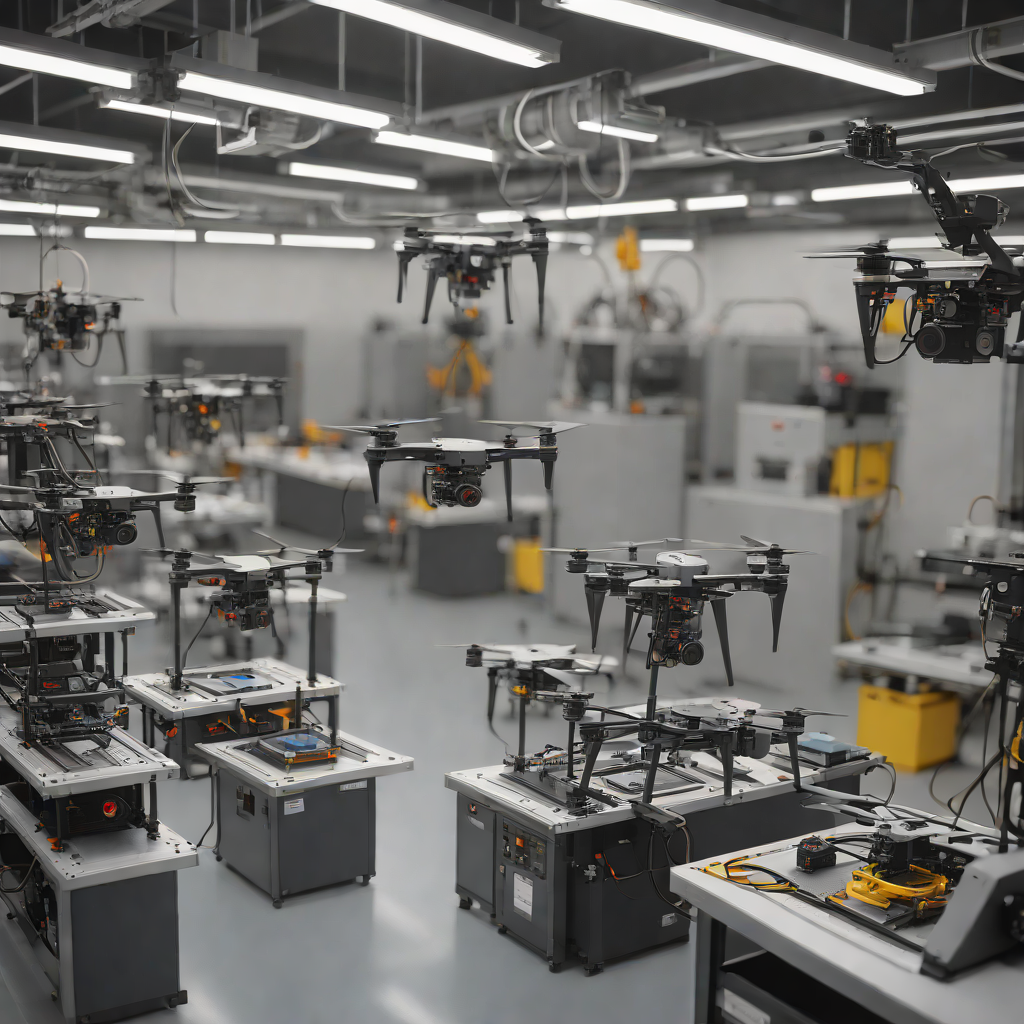
The logistical genius—and horror—of this system lies in its decoupling from environmental constraints. Traditional air support is grounded by the blizzards currently hammering the operational theater; the autonomous swarm, however, relies on lidar and non-optical sensors that pierce through the whiteout. This capability creates a relentless pressure that human psychology is ill-equipped to withstand. But sustaining this pressure requires a supply chain that never sleeps. We are seeing the deployment of "forward-manufacturing" hubs, mobile shipping containers equipped with automated CNC mills and additive manufacturing units, capable of printing airframe replacements within fifty miles of the front. As reported by Defense News, these mobile factories have reduced the "sensor-to-shooter" loop to a "scrap-to-sortie" loop, recycling battlefield debris into fresh munitions in under 48 hours.
Yet, this industrial triumph masks a deepening strategic vulnerability. The reliance on commercial-off-the-shelf (COTS) components has exposed the US defense industrial base to the volatility of global consumer markets. A shortage of generic ceramic capacitors, triggered by trade friction with Southeast Asian manufacturers, recently threatened to halt production of the ubiquitous "Kestrel" loitering munition. It is a stark reminder that in the era of industrialized swarm warfare, a missing ten-cent component can silence a battalion as effectively as an EMP blast. The war is no longer being fought just by generals in command centers, but by procurement officers battling for inventory in a globalized, fragmented marketplace.
The Psychological Siege
The concept of "General Winter"—the historical ally of the defender, freezing mechanized advances and grounding air support—has effectively been retired from the strategic lexicon. In the deep freeze of the 2026 Eastern European theater, where temperatures dropped to -20°F this past week, a new reality emerged for dug-in infantry. Traditionally, a blizzard meant a reprieve; a time to regroup while visibility zeroed out. But for Sergeant First Class Miller (a pseudonym to protect active personnel), deployed as an advisor near the conflict zone, the snowstorm brought no silence. "It used to be that if you couldn't see your hand in front of your face, neither could the enemy," Miller recounts, gesturing to the whiteout outside his temporary command post. "Now, the AI doesn't need to see. It senses heat signatures, radio frequency leakage, and even the magnetic anomaly of our generators through the storm. There is no 'off' switch anymore."
This erosion of the "environmental shield" has precipitated a crisis of cognitive endurance. The psychological burden is no longer just the fear of kinetic impact, but the certainty of constant observation. When a specialized, ruggedized loitering munition can perch on a frozen branch, powered down and listening for the specific acoustic signature of a weapon clearing a jam before autonomously re-engaging, the definition of a "safe perimeter" dissolves. There is no rear area when the frontline is determined not by geography, but by sensor range.
Reported Hyper-Arousal Incidents in Combat Zones (per 1,000 Troops)
Meta-analyses of combat stress data, including a pivotal 2025 behavioral health study by the Walter Reed Army Institute of Research, highlight this escalation. The data identifies a nearly 62% increase in "chronic hyper-arousal" markers among units facing autonomous adversaries compared to those in traditional counter-insurgency environments just four years prior. The findings suggest that the human nervous system is struggling to adapt to an adversary that lacks biological rhythms.
The strategic implication is a new form of attrition that targets the mind rather than the body. Defense analysts have begun referring to this as "Cognitive Siege." The constant, low-level buzz of autonomous systems—or arguably worse, the silence that implies they are in 'ambush mode'—enforces a state of permanent wakefulness. Sleep deprivation is no longer a side effect of war; it is a tactical outcome weaponized by the enemy's algorithmic persistence. As noted in a recent briefing to the Senate Armed Services Committee regarding the Fiscal Year 2027 Defense Authorization, "We are training soldiers to fight machines that do not sleep, do not shiver, and do not blink." This decoupling of operational tempo from biological and meteorological cycles forces a grim calculus for the Pentagon: unit rotations must be shortened, not because of physical casualties, but because the psychological batteries run dry long before the ammunition does.
The Economic Asymmetry
The ledger of modern warfare has become dangerously unbalanced. While the headlines of the 2026 winter offensive focus on the relentless, automated nature of the assaults, the backend data reveals a more insidious strategic crisis: the mathematics of interception are collapsing. On the frozen plains of Eastern Europe, we are witnessing the weaponization of economic exhaustion. The calculus is brutally simple. An autonomous loitering munition, cobbled together from commercial-grade electronics and 3D-printed chassis, costs roughly $15,000 to manufacture at scale. The interceptor required to neutralize it—often a bespoke, radar-guided missile from Western stockpiles—burns through taxpayer funds at a rate of $2 million to $4 million per launch.
This fiscal hemorrhage is no longer theoretical. A confidential report circulated to the Senate Armed Services Committee earlier this month, leaks of which have agitated the current administration, highlights that for every dollar the aggressor spends on offensive autonomy, the defending coalition is forced to spend nearly $300 on defense. This is not a war of attrition in the traditional sense of manpower; it is an attrition of solvency. President Trump’s recent rhetoric regarding NATO contributions finds its sharpest edge here. The demand for allies to "pay their fair share" is arguably less about political posturing and more about the simple fact that the US defense industrial base can no longer subsidize this asymmetry indefinitely. The "Always-On" war doesn't just exhaust the batteries of drones; it depletes the treasuries of the nations attempting to shoot them down.
The Asymmetry of Attrition: Cost Per Engagement (2026 Estimates)
The tactical implications of this financial disparity are creating a "mission kill" capability without a single kinetic impact. Commanders on the ground are reporting a hesitation to engage low-value targets, a psychological paralysis induced by the knowledge that their magazines are finite and prohibitively expensive to replenish. When a swarm of fifty cheap drones appears on radar, the decision to fire becomes an agonizing economic gamble. Do you expend a quarter of a billion dollars in interceptors to stop a swarm worth less than a luxury car, or do you let them through and risk the infrastructure? This is the new fog of war—a cloud of red ink that obscures strategic clarity. As one defense analyst noted in testimony to Congress last week, "We are using gold bullets to shoot down paper airplanes, and we are running out of gold."
A New Doctrine for NATO
The age-old military maxim of "General Winter"—the assumption that severe weather freezes conflict lines and forces operational pauses—has been effectively decommissioned on the plains of Eastern Europe. The relentless pace of the 2026 winter offensive, sustained not by shivering conscripts but by frost-resistant autonomous loitering munitions and unmanned ground vehicles (UGVs), presents a stark strategic wake-up call for the Pentagon. As the Senate Armed Services Committee reviews the latest National Defense Authorization Act, the lesson is unambiguous: the United States can no longer plan for distinct "campaign seasons." Warfare has become a continuous, algorithmic grind where the primary constraint is not the endurance of the soldier, but the latency of the supply chain.
This shift necessitates a fundamental rewriting of NATO doctrine, moving from a philosophy of intermittent, overwhelming force to one of persistent, granular attrition. A recent analysis by the Center for Strategic and International Studies (CSIS) highlights that during the blizzard conditions of January, while manned armored columns remained static, autonomous swarm attacks increased by 40%. For US planners, this validates the "Replicator" initiative's second phase, yet it also exposes a critical vulnerability: human cognitive endurance. While machines do not sleep, the operators in Nevada and Ramstein do. The "Always-On" war demands a triple-shift rotation for remote crews that the current recruitment numbers simply cannot support, forcing a difficult conversation about the extent to which lethal decision-making authority must be delegated to the edge.
President Trump’s insistence on "burden-sharing" takes on a new technological dimension in this context. It is no longer enough for NATO allies to merely hit the 2% GDP spending target; proponents of the administration's policy argue that this investment must be directed specifically towards interoperable autonomous architectures rather than legacy platforms. The heavy tanks that dominated Cold War planning are proving to be logistical liabilities in a battlespace saturated by cheap, weather-impervious drones. The US Army’s pivot toward "human-machine integration" is not just a modernization goal but a survival imperative. If the adversary can execute offensive maneuvers in -20°F whiteouts using $1,000 drones, a $10 million manned tank is not a deterrent—it is a target.
Ultimately, the decoupling of warfare from environmental constraints forces a re-evaluation of what "peace" negotiations look like. In previous conflicts, exhaustion and weather created natural diplomatic windows. Today, those windows are nailed shut. If attrition is automated, the political cost of continuing a war drops significantly for the aggressor, dragging out timelines indefinitely. For Washington, this means the goal of future aid packages must shift from sustaining the frontline to achieving "swarm superiority"—the ability to overwhelm the enemy’s autonomous networks faster than they can be replenished. The battlefield of the future will not be measured in territory held per season, but in the relentless, uninterrupted calculation of exchange rates, twenty-four hours a day, three hundred and sixty-five days a year.