The Manchester Mutiny: Labour's Revolt and the Western Coalition Crisis
A Letter from the North
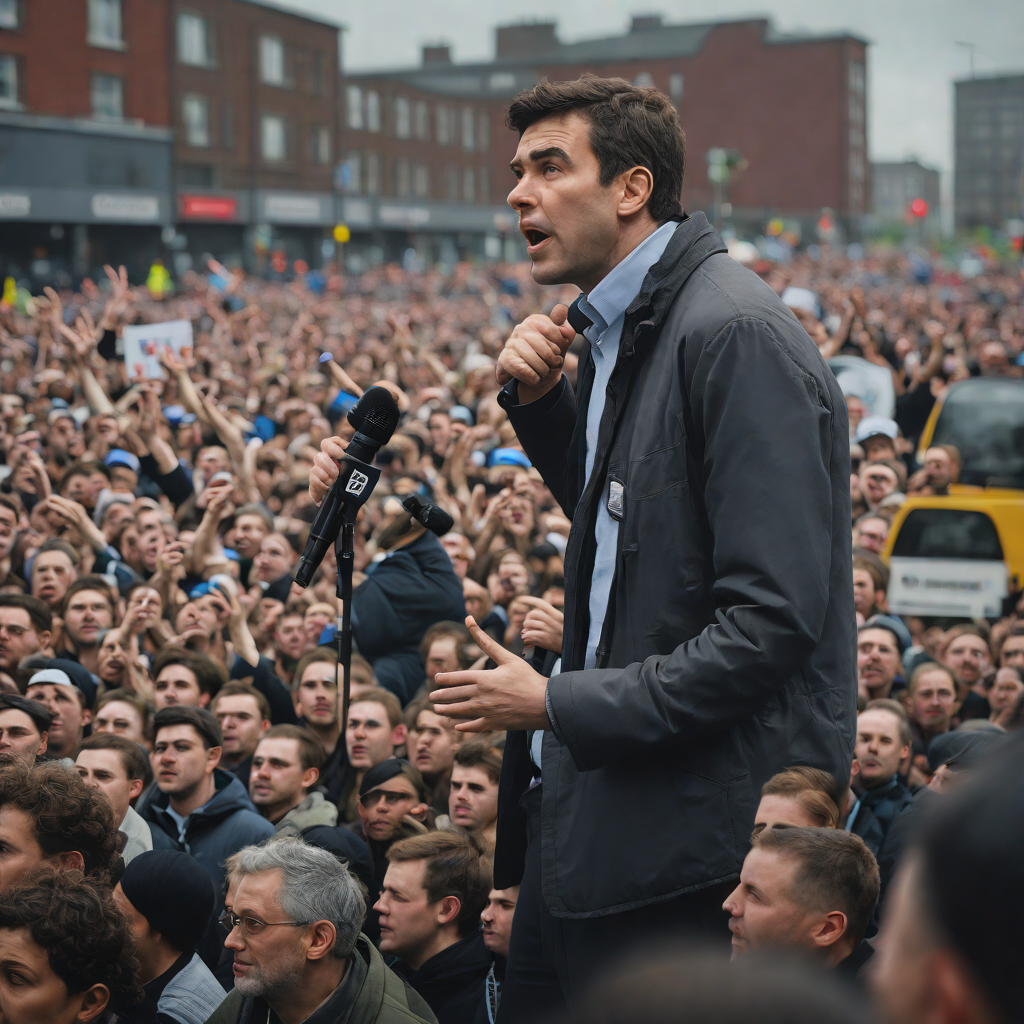
The letter, released early Tuesday morning, carried the digital signatures of fifty Labour Members of Parliament, a bloc large enough to imperil the government's legislative agenda in Westminster. Ostensibly, the missive was a localized grievance—a formal protest against Greater Manchester Mayor Andy Burnham’s decision to indefinitely "pause" the expansion of the localized basic income pilot due to "unprecedented fiscal headwinds." But for political strategists looking beyond the immediate geography of Northern England, the document reads less like a policy dispute and more like an indictment of the modern center-left coalition. It marks the precise moment where the demands of post-industrial regional hubs finally collided with the rigid fiscal conservatism required by the 2026 global economic climate.
This "rebellion of the fifty" is not merely an internal squabble; it is a mirror image of the fractures currently widening within the American Democratic coalition. Much like the tensions seen last month between California Governor Gavin Newsom and the progressive caucus over state budget cuts in response to federal deregulation, the British Labour party is discovering that the "big tent" collapses when resources become scarce. The MPs, largely representing constituencies in the "Red Wall" that have yet to feel the benefits of the promised digital economy, framed Burnham’s retreat not as pragmatic governance, but as a betrayal of the social contract. As noted in a briefing by the Institute for Fiscal Studies released shortly after the letter, the core conflict is no longer about ideology, but solvency: "Regional leaders are being asked to deliver 2030 services on 2020 budgets, creating a governance vacuum that populism is eager to fill."
The specific trigger—Burnham’s concession to the Treasury’s demand for "efficiency savings" in exchange for continued devolution powers—exposes the fragility of the "autonomy for austerity" trade-off. For years, the unspoken deal in Western liberal democracies has been that regional leaders could pursue progressive social experiments as long as they remained fiscally neutral. That era appears to have ended. By signing this letter, the fifty MPs have effectively declared that the cost of fiscal credibility in the eyes of bond markets—now volatility-prone in the wake of President Trump's aggressive trade realignments—is too high a price to pay if it means abandoning the most vulnerable. This is a direct challenge to the party’s central authority, echoing the "states' rights" battles of the US, but flipped: here, the regions are demanding more federal intervention to shield them from the cold logic of the market, while the central party leadership, terrified of a bond run, preaches the gospel of restraint.
The Austerity of Necessity
To understand the ferocity of the parliamentary rebellion in Westminster this week, one must first look not at the benches of the House of Commons, but at the bond yield charts on the terminal screens in the City of London. The controversy centers on the "Burnham Pause"—a direct consequence of Prime Minister Starmer's refusal to underwrite the £12 billion emergency debt restructuring for the Greater Manchester Combined Authority. This was not a political maneuver born of malice, but a capitulation to a new, brutal global arithmetic.
In the corridors of Whitehall, the logic was cold and absolute. With the US 10-year Treasury yield hovering near 5.2%—driven by President Trump’s aggressive deregulation and deficit-financed tax cuts—global capital is hemorrhaging from European markets, seeking the higher returns and perceived safety of the dollar. The Treasury’s internal "Red Book" assessment, reportedly leaked to The Guardian last Friday, painted a stark picture: any signal of fiscal looseness from the UK government would trigger a "sovereign risk premium" instant punishment from the markets, reminiscent of the disastrous autumn of 2022. The Chancellor had no room to maneuver. Bailing out Andy Burnham’s flagship regional infrastructure projects would have required issuing gilts that the market simply had no appetite to buy without demanding punitive interest rates.
This is the "Austerity of Necessity." Unlike the ideological austerity of the 2010s, which was framed as a moral imperative to balance the books, the cuts of 2026 are defensive entrenchments against a volatile international monetary system. When the 50 Labour MPs—mostly from the "Red Wall" constituencies that border the crumbling industrial heartlands—stood up to vote against the government whip, they were not just protesting a funding cut. They were raging against the realization that the promise of "devolution" and "leveling up" is structurally incompatible with the UK’s diminished standing in a Trump-dominated global economy.
The decision to effectively place Manchester’s transport network into 'managed administration' exposes a fatal flaw in the Western liberal model of the mid-2020s. We told regional hubs like Manchester, Leeds, and Lyon to innovate, to build "Silicon Valleys" of their own, and to take on debt to fuel growth. Yet, the moment the global tide turned—when the "Trump Trade" sucked liquidity back across the Atlantic—central governments were forced to sacrifice these regional satellites to protect the core sovereign credit rating.
For the residents of Salford and Trafford, this macroeconomic checkmate manifests in immediate, visceral losses: the indefinite suspension of the Metrolink expansion and the freezing of the frantic green retrofitting program that was supposed to be a model for the world. Andy Burnham, whose political brand was built on the idea of the "King of the North" challenging the Westminster bubble, found his checkmate not at the ballot box, but in the bond markets. The rebellion of his parliamentary allies is the sound of a political consensus fracturing under the weight of an economic reality that no longer allows for the luxury of regional ambition. The central state has survived, but it has done so by cutting off circulation to its limbs.
The Manchester Model vs. Westminster
In the chill of a January morning in Greater Manchester, the yellow trams of the 'Bee Network' run on a schedule that defies the chaos often seen in London's commuter belt—a tangible artifact of what Mayor Andy Burnham calls "place-first politics." When 50 Labour MPs broke the whip this Tuesday, initiating the most significant internal rebellion since the government took office, they were not merely voting against a budget line item; they were casting a vote of confidence in this "Manchester Model." The dispute, ostensibly over the Treasury's refusal to underwrite regional transport bonds amidst the 2026 liquidity crunch, has revealed a profound ideological schism. It is a clash between the "Westminster Consensus"—which prioritizes bond market stability and technocratic efficiency—and a nascent regional populism that demands protection from the harsh winds of the global economy.
The timing of this fracture is inextricable from the geopolitical reality of 2026. President Trump's aggressive "America First" tariff regime—imposing a 10% levy on foreign steel and manufactured goods—has disproportionately hammered the industrial North of England, while the service-heavy economy of London and the Southeast remains relatively insulated. The Treasury’s response has been one of defensive crouch: tightening the national belt to maintain sterling’s value and avoid the inflation spikes seen in the US. However, Burnham’s camp argues that this orthodox fiscal conservatism is a suicide pact for post-industrial communities. They contend that without state-led investment to shield these vulnerable regions, the Labour Party risks repeating the mistakes of the 2010s, alienating its core constituency in favor of satisfying international creditors.
For the American observer, this dynamic mirrors the tension between a powerful state governor—akin to the assertive independence seen in California or Texas—and a federal administration paralyzed by gridlock, except here, the combatants ostensibly belong to the same political tribe. The "Manchester Model" effectively functions as a state-within-a-state, utilizing devolved powers to integrate health and social care, cap bus fares, and pursue a localized industrial strategy that often runs counter to national directives. While Westminster speaks the language of "tough choices" and "fiscal drag," Burnham speaks the language of immediate relief and regional pride, a dialect that resonates far more deeply with voters watching their purchasing power erode under the dual pressures of automation and trade isolationism.
The data underscores this shifting center of gravity. As the central government struggles to navigate the "Adjustment Crisis"—the painful transition of the workforce away from white-collar roles displaced by Generative AI—public trust has migrated away from national institutions toward local figures who are perceived as more accountable and responsive. The rebellion of the 50 MPs is a lagging indicator of a trend that has been visible in polling data for months: the electorate no longer believes that a centralized state in London has the capacity, or the will, to solve local problems.
Public Trust in UK Political Levels (Jan 2026) - Source: British Social Attitudes Survey
By crushing the rebellion through procedural maneuvering, the central leadership may have won the parliamentary battle, but they have inadvertently validated Burnham’s thesis. The optics of a Labour government whipping its own MPs to deny funding for Northern infrastructure plays directly into the hands of populist critics, who argue that the party has become a vehicle for London-centric technocracy. The "Manchester Model," with its emphasis on tangible delivery over fiscal abstraction, offers a seductive alternative. If the center cannot accommodate this demand for regional agency, the fracture lines exposed this week will likely widen into a chasm, threatening to swallow the government’s majority in the volatile election cycles to come.

Echoes of the American Divide
The shouts echoing through the halls of Westminster this week regarding the Burnham decision sound indistinguishable from the closed-door arguments currently tearing apart the Democratic National Committee in Washington. When 50 Labour MPs crossed the aisle to protest what they termed "the abandonment of the North," they weren't just challenging UK party leadership; they were enacting a transatlantic drama that American political observers know all too well. This is not a uniquely British mutiny. It is the exact same structural fracture visible in the US Democratic Party’s struggle to hold its own "Blue Wall" in the Midwest against the siren song of Trump’s "America First" deregulation.
To understand the severity of this fracture, one must look past the headlines of political infighting and into the factory floors of the Rust Belt. Just as the "Burnham 50" represent constituencies where automation is rapidly outpacing retraining efforts, the US Congressional Progressive Caucus finds itself paralyzed by a leadership prioritizing fiscal caution precisely when their base demands a wartime economic mobilization. A January 2026 report by the Brookings Institution highlights this convergence, noting that the "Adjustment Crisis"—the sudden displacement of semi-skilled labor by the latest wave of embodied AI—is hitting Gary, Indiana, with the same ferocity as it hits Sunderland, England. In both cases, the center-left establishment’s response has been a technocratic promise of "future growth," a message that rings hollow against the tangible reality of closed factories and, in the American context, the catastrophic infrastructure failures exposed by the ongoing "Railgate" crisis.
The tragedy for Western liberal parties is that their fiscal conservatism, intended to prove competence against populist recklessness, is being interpreted by their core base as managed decline. While the Trump administration pushes for aggressive, deficit-financed reindustrialization—ignoring long-term inflation risks for short-term employment gains—Democrats are trapped defending the "responsible" path. This dynamic mirrors the Labour leadership's stance on the Burnham budget cuts. As noted by former Labor Secretary Robert Reich in a recent op-ed, the "Rust Belt Democrat" is becoming an endangered species not because of culture wars, but because their party creates policy for the service economy while they live in an industrial vacuum. When a Representative from Michigan screams about the need for immediate federal intervention in automated logistics hubs, and is met with a lecture on the bond market, the silence that follows is where the election is lost.
2026 Automation Displacement Risk Index: Transatlantic Manufacturing Hubs (Source: Oxford Economics/Brookings)
This shared crisis suggests that the "Burnham Rebellion" is a prelude to the battles likely to dominate the 2026 US midterms. The "Adjustment Crisis" does not respect national borders. Whether it is a train derailment in Minnesota caused by aging tracks and automated maintenance oversight, or a budget slash in Northern England, the grievance is identical: the center-left has become the party of the status quo in an era that demands radical protectionism. If the Democrats cannot reconcile the demands of their post-industrial regional hubs with the fiscal constraints of the current global economy, they risk more than just internal dissent; they risk a permanent realignment where the working class views the "party of the people" as the architects of their obsolescence.
The Cost of Internal War
The spectacle of fifty Labour MPs crossing the floor—metaphorically, if not yet physically—to oppose the Burnham decision reverberates far beyond the gothic corridors of Westminster. For the opposition, this fissure is not merely a tactical error by the government; it is a strategic gift. In the tea rooms of the House of Commons, emboldened Conservative backbenchers are already framing the rebellion as proof that the ruling party is fundamentally ungovernable, paralyzed by the very ideological diversity it once championed as a strength.
This internal discord provides the perfect narrative fuel for a resurgent Reform UK. By positioning the government's fiscal tightening as a betrayal of the working-class voters in the North, populist figures are successfully peeling away the fragile coalition that swept Labour to power. Polling data from the Midlands suggests that for every MP who rebels on principle, thousands of voters are reconsidering their allegiance, viewing the chaos not as democratic debate, but as administrative incompetence. The message resonating in the "Red Wall" constituencies is simple and devastating: if the government cannot agree on how to govern, why should it be trusted with the economy?
However, the most severe cost of this internal war is being calculated three thousand miles away in Washington. The second Trump administration, defined by a transactional "America First" foreign policy, views alliance maintenance through the lens of utility and strength. A United Kingdom distracted by fratricidal infighting is a partner of diminishing value. Diplomatic cables suggest that State Department officials are increasingly skeptical of London’s ability to commit to long-term security pacts or trade agreements when the Prime Minister’s authority is so visibly contested by his own party.
For a White House that demands its allies "pay their way" and maintain absolute domestic order, the rebellion confirms a suspicion long held by the American right: that European-style social democracies are inherently unstable in the harsh economic climate of 2026. As the US pivots further toward isolationism, selectively engaging only with partners who can offer tangible, reliable support against geopolitical rivals, the UK’s internal fragmentation risks downgrading the "Special Relationship" to a historical footnote. The rebellion, therefore, is not just a domestic headache; it is a geopolitical liability that threatens to leave Britain isolated at the precise moment the global order is being redrawn.

The Twilight of the Big Tent
The rebellion of fifty Labour MPs against Andy Burnham’s budget compromise is not merely a localized disciplinary failure; it is the death rattle of the "Big Tent" political strategy that has defined center-left governance for half a century. In the drafty corridors of Westminster, the mood suggests that the structural integrity of these broad coalitions has reached its breaking point. The friction is no longer about policy nuance but about a fundamental incompatibility: the desperate capital requirements of post-industrial regional hubs like Manchester and Leeds cannot be reconciled with the austere fiscal conservatism demanded by the 2026 global bond markets. Burnham’s pivot—driven by the necessity to stabilize the pound in the wake of President Trump’s renewed protectionist tariffs—exposes the raw nerve that connects the Rust Belt of America to the Red Wall of Britain.
This moment signals a transition from the era of ideological cathedrals to an age of transactional bazaars. The assumption that a single party can house both the cosmopolitan technocrats of London and the protectionist trade unions of the North is buckling under the weight of the "Adjustment Crisis." Just as the Democratic coalition in the United States strains to align Silicon Valley accelerationists with displaced manufacturing workers, UK Labour is finding that the glue of shared history is no longer strong enough to bind divergent economic realities. The "Manchester Faction," as these fifty dissenters have been dubbed, are not acting out of mere petulance; they are responding to the stark reality that their constituents’ economic survival is decoupling from the national GDP growth metrics prioritized by the Treasury.
Looking ahead, it appears increasingly likely that the unified mass party is an artifact of a bygone, high-growth era. If the Burnham leadership cannot quell this insurgency with something more substantial than whip threats—specifically, a decentralized funding model that bypasses the restrictive sovereign debt limits—we may witness the formalization of this fracture. The future of Western liberal democracy likely resembles the fragmented parliaments of Northern Europe, where governance requires the constant, exhausting negotiation of ad-hoc alliances rather than the steady hand of a monolithic majority. The rebellion is a warning: in a world of scarce capital and automated labor, the "Big Tent" offers no shelter from the storm.