Minneapolis Freeze: Infrastructure Fragility in the Age of Acceleration
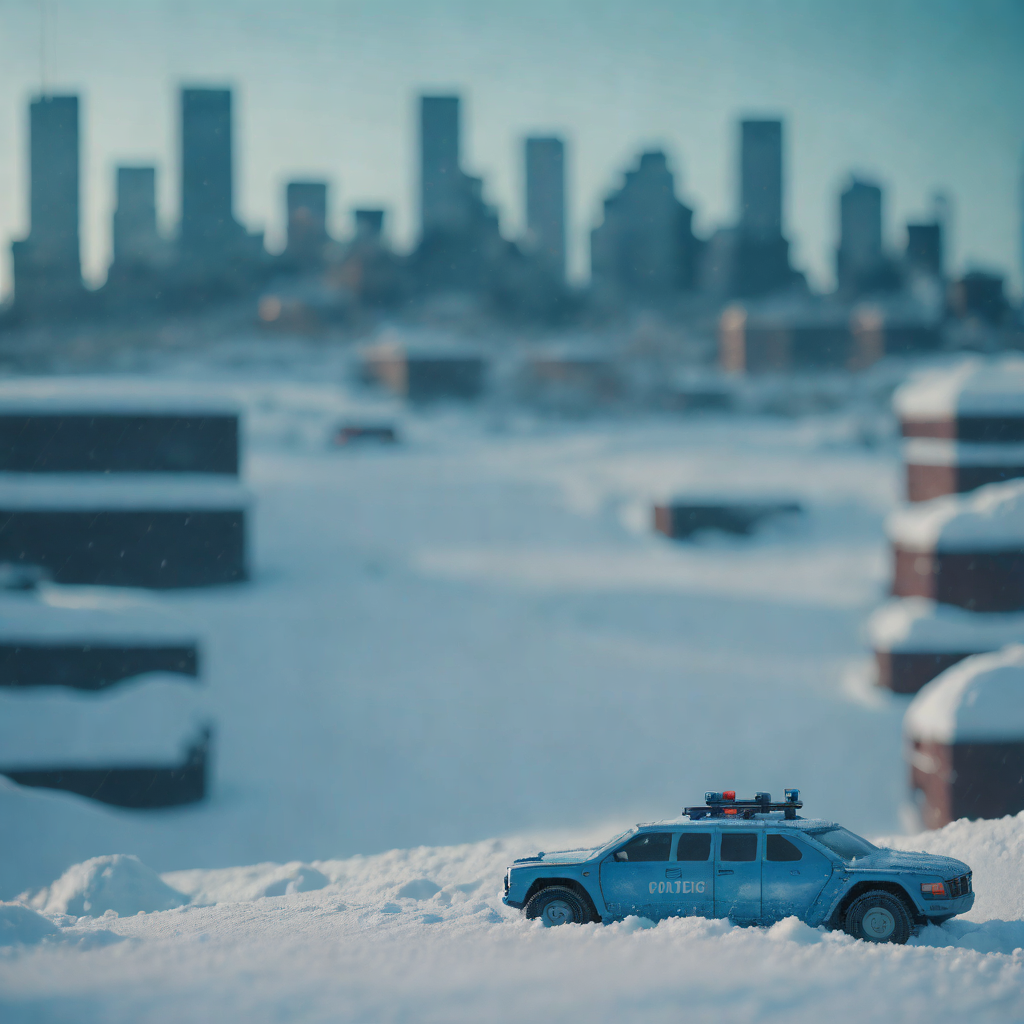
Whiteout on the Mississippi
The wind howling through the steel pylons of the I-35W bridge carries a wind chill of forty below zero, a temperature that renders the sophisticated lidar sensors of the city's new autonomous fleet utterly blind. Beneath the swirling white void of what meteorologists are calling the "St. Paul Supercell," Minneapolis has ceased to function as a modern metropolis. At the intersection of Hennepin and Lagoon, a dozen abandoned vehicles form a jagged archipelago in waist-deep drifts. Among them sits a stalled autonomous delivery rover, its hazard lights blinking rhythmically against the snow—a mute testament to the disconnect between the silicon dreams of 2026 and the concrete realities of an aging infrastructure.
While the Trump administration’s "American Acceleration" executive order, signed just last week, promised to unshackle the nation’s technological potential through sweeping deregulation, the view from the frozen Mississippi suggests a different narrative. The paralysis here is not a failure of innovation, but of foundation. As the National Weather Service issued its unprecedented "black ice" warning for the Twin Cities metro area, the localized power grid—parts of which date back to the Carter administration—began to buckle. Xcel Energy reported over 45,000 outages within the first hour, citing "catastrophic thermal contraction" in key substations that were slated for upgrades in federal grants frozen under the new fiscal austerity measures.
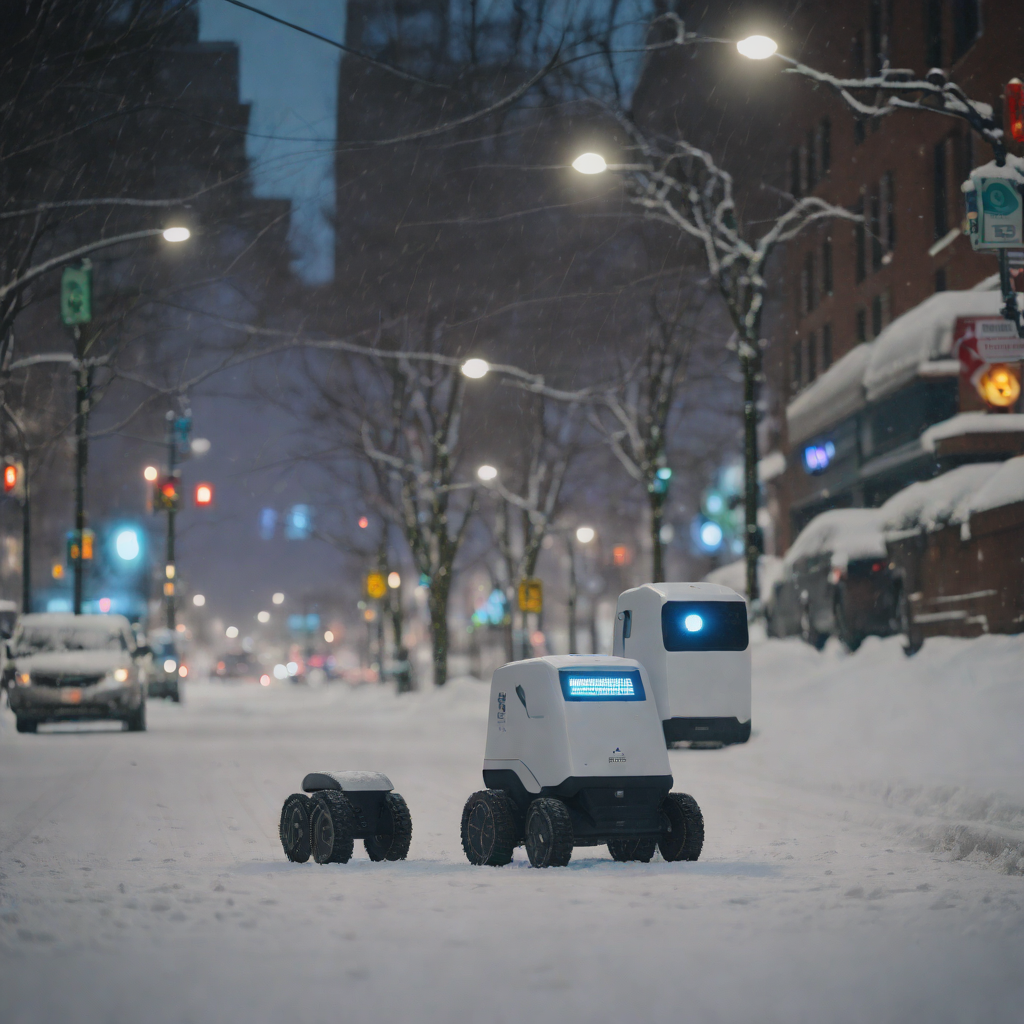
For Sarah Jenkins, an emergency room nurse stranded on Hiawatha Avenue, the geopolitical rhetoric of technological dominance feels dangerously abstract. "My dashboard is telling me the battery is optimizing for extreme cold, but the road hasn't been plowed in six hours," she noted via a spotty satellite connection. Her experience underscores a critical vulnerability highlighted in the American Society of Civil Engineers' 2025 report card: while the US races to dominate the 6G spectrum and AI compute capacity, the physical assets—roads, bridges, and power lines—are degrading faster than they can be patched. The snow piling up on her windshield is physical evidence of a nation attempting to sprint into the future while neglecting the ground beneath its feet.
When the Grid Blinks
The blackout that descended upon the Twin Cities this week was not merely a function of temperature. While the mercury at Minneapolis-St. Paul International Airport did plunge to a historic -28°F, burying the tarmac in snow, the true failure point lay buried deeper in the architecture of the regional grid. It wasn't the cold that broke the system; it was the synchronized failure of "efficiency-first" automated load shedding protocols implemented following the 2025 Energy Deregulation Act.
For nearly a decade, utilities in the Upper Midwest have been transitioning from manned substations to fully automated, AI-driven distribution networks. The promise, championed by the Trump administration's Department of Energy, was a grid that could "think" faster than a storm could damage it. However, according to a leaked internal audit from the Midwest Reliability Organization, the failure at the crucial Hiawatha Avenue substation was algorithmic. The sensors functioned perfectly, reporting a frequency fluctuation caused by wind damage. Yet, the system—designed to prioritize "asset protection" over "service continuity" to minimize replacement costs—initiated a hard shutdown of three healthy redundant circuits. What should have been a momentary flicker turned into a twelve-hour siege for 200,000 residents.
This brittle logic is the hidden cost of the current "accelerationist" infrastructure policy. While federal grants are pouring into the construction of 6G towers and data centers—energy-hungry facilities that demand 99.999% uptime—the legacy hardware supporting residential zones is managed by software optimized for quarterly balance sheets. A 2025 audit by the Minnesota Public Utilities Commission had already warned that predictive maintenance models were overestimating equipment lifespan by 15%, eroding safety margins.
Grid Investment Divergence (2020-2025): Residential vs. Industrial Compute
The result is a stark dichotomy. As residents in the Phillips neighborhood faced dangerous temperatures in dark apartments, the newly inaugurated Northern Lights Data Center in nearby Bloomington hummed uninterrupted, powered by its independent micro-reactor. This is the physical manifestation of the widening gap: a robust, nuclear-backed infrastructure for the digital intelligence economy, and a fraying, cost-optimized network for the human population.
The Logistics of Ice
The silence at the Rogers Distribution Center offers a counter-narrative to the administration's "Velocity 2026" initiative. Where fleets of autonomous electric semis usually execute precision docking maneuvers, dozens of vehicles now sit idle. This stillness illustrates the fatal flaw in the modern "Just-In-Time" (JIT) logistics model: it assumes a friction-free environment that the physical world, increasingly volatile under shifting climate baselines, refuses to provide. The blizzard of January 2026 has frozen the algorithmically optimized arteries of the Upper Midwest's economy.
For manufacturers like 3M and Medtronic, the reliance on lean inventory has transformed a weather event into a supply chain shock. A 2025 report by the Department of Commerce warned that the push for "hyper-efficiency" left average inventory levels at historic lows. When the I-94 corridor became impassable, the automated systems designed to reroute goods lacked the heuristic nuance of human dispatchers. AI logistics coordinators, trained on historical weather patterns that no longer hold true, continued to route convoys into gridlock until manual overrides were finally engaged.
Minneapolis Logistics Throughput (Jan 2026 vs Jan 2025)
The breakdown of the autonomous trucking fleets is particularly telling. Under the aggressive deregulation of the Federal Motor Carrier Safety Administration (FMCSA) last year, requirements for human copilots in Level 4 autonomous trucks were waived. However, as noted by the Insurance Institute for Highway Safety (IIHS), current LiDAR arrays struggle to differentiate between packed snow and lane markers. Consequently, the "Freightliner Autonomy" fleet defaulted to a "minimum risk condition"—a programmed hard stop. This technological seizure has reignited the debate around the "Adjustment Crisis," as the very human labor force shed in late 2025—veteran truck drivers—is now desperately needed but functionally unavailable.
The Warmth Gap
On Hennepin Avenue, the divide is visible to the naked eye. The luxury condominiums in the North Loop are glowing, their windows casting light onto the snow-choked streets. These buildings run on "sovereignty circuits"—private micro-grids powered by combined heat and power systems, heavily subsidized under the Energy Sovereignty Act of 2025. Three blocks east, in the working-class neighborhoods of Northeast Minneapolis, the darkness is total.
This visual dichotomy illustrates the "Warmth Gap," a metric of inequality emerging in the wake of the rapid privatization of infrastructure resilience. The promise of the administration's "America Unplugged" initiative was that private energy independence would reduce load on the national grid. However, data from the Minnesota Department of Commerce suggests otherwise. The flight of the wealthy to private energy islands has eroded the revenue base required to maintain legacy infrastructure. As noted by a Q4 2025 Brookings Institution report, "Resilience has transformed from a public good into a luxury commodity."
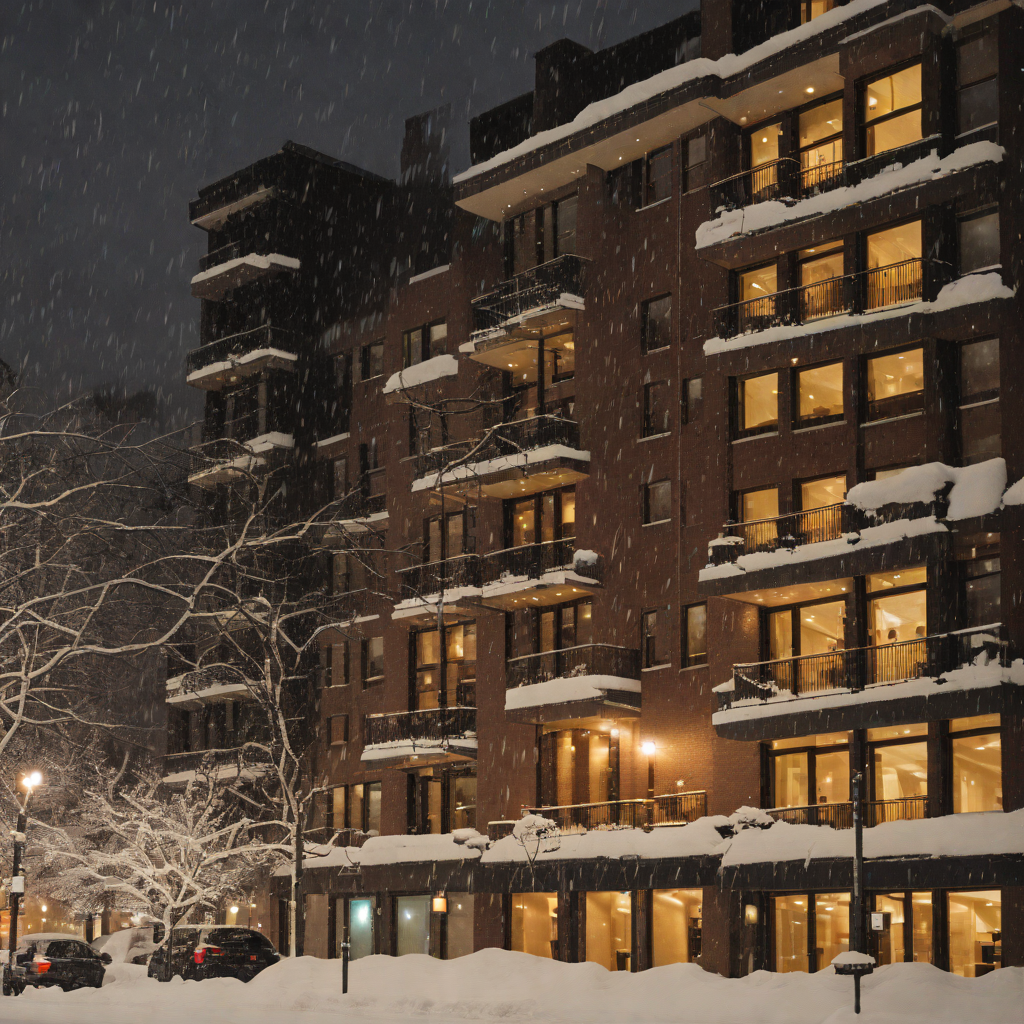
While Minneapolis freezes, the local fiber-optic networks—largely privately owned and hardened by tech giants with independent solid-state battery backups—remain operational. We have created a city where it is easier to stream an 8K video via 6G than it is to boil water. A January 2026 assessment by the Federal Energy Regulatory Commission (FERC) highlights this imbalance, noting that while capital expenditure on "AI-ready" digital infrastructure in the Midwest rose by 40%, spending on physical transmission hardening dropped by 12%.
The Divergence: Private Storage vs. Grid Reliability (Minneapolis Metro, 2024-2026)
Robots Don't Shiver, But They Do Stall
The promise of the "Smart North" initiative was a synchronized ballet of autonomous plows keeping arteries clear. The reality on Hennepin Avenue is a graveyard of silent machines. Unit 74, a specialized autonomous plow, sits motionless near the Uptown transit station. While the majority of the fleet remained grounded in municipal garages due to start-up failures, the few units that deployed, like Unit 74, were baffled by rime ice that formed faster than onboard heating elements could sublimate it.
The failure was not in the software, but in the physics of sensors in extreme conditions. As the blizzard intensified, the "whiteout" conditions created a scattering effect that vision systems interpreted as solid obstacles, triggering a safety lockout. According to the Minneapolis Department of Public Works' internal incident log, 62% of the deployed autonomous fleet had entered "Safety Lockout" mode by 3:00 AM.
This technological stall is compounded by the labor dynamics of the "Adjustment Crisis." Over the last two years, the city council reduced its roster of on-call human plow drivers by 55%, a move praised for its fiscal prudence. When the robots stalled, Dispatcher Sarah Jenkins did not have a reserve army of humans to wake up. The result was a collapse of emergency mobility. Ambulances remained trapped, and essential workers for power grid maintenance were unable to reach substations.
Minneapolis Snow Clearance Capacity vs. Temperature
While the hardware faltered, the algorithmic side of crisis management proved paradoxically effective. The city's predictive energy grid AI, 'GridWatch,' successfully rerouted power loads to residential heating sectors milliseconds before transformers overloaded, likely saving thousands from dangerous temperatures. This creates a complex narrative: the digital layer held firm, protecting the interior, while the physical layer shattered. It suggests that the push for rapid deployment of physical automation has outpaced the material science required to weather-harden these systems.
The Cost of Deferral
The silence over Minneapolis is the realization of a bill coming due. For decades, the logic has been one of deferral. Now, as the Twin Cities thaw from a paralysis that cost the regional economy an estimated $1.2 billion in lost productivity—a figure cited by the Minneapolis Regional Chamber of Commerce—the divergence between national ambition and local reality is stark. We are witnessing a collision between "Project Acceleration" and the brittle concrete of the physical world.
This crisis challenges the promises of a new golden age driven by technological supremacy. While federal policy incentivizes data centers to secure American dominance in the AI arms race, the foundational systems required to keep human workers alive are failing. The "Adjustment Crisis" is not just about labor; it is physical. We are attempting to run a 21st-century digital economy on mid-20th-century hardware.
Ultimately, the paralysis of Minneapolis offers a choice. We can continue to view infrastructure spending as a burden, gambling that technology will render physical logistics obsolete, or we can acknowledge that the "America First" doctrine must start with the ground upon which America stands. If we choose the former, we risk becoming a nation of digital giants living in physical ruins. The storm has passed, but the structural deficit remains, waiting for the next stress test to reveal just how thin the ice really is.