The Great Liquefaction: Sicily's Scars and the Global Infrastructure Crisis
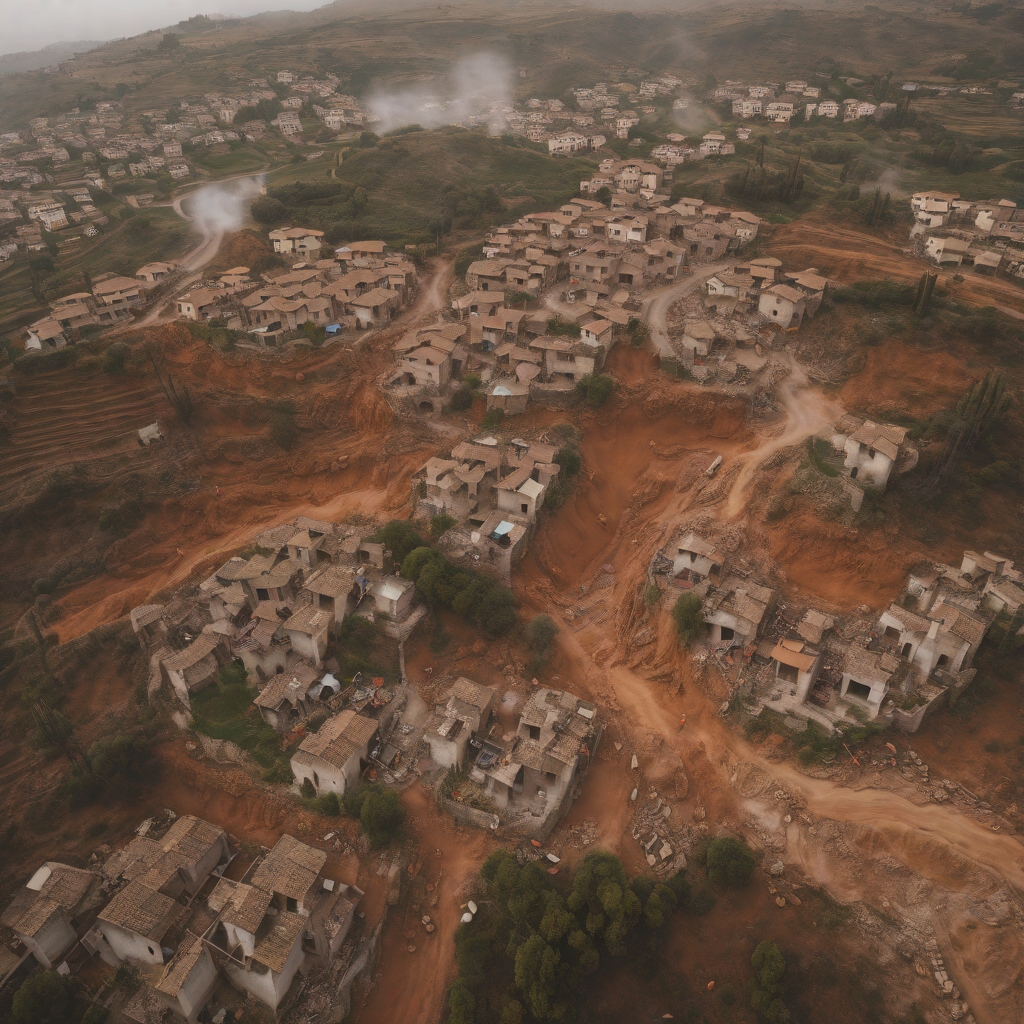
A Village Swallowed Whole
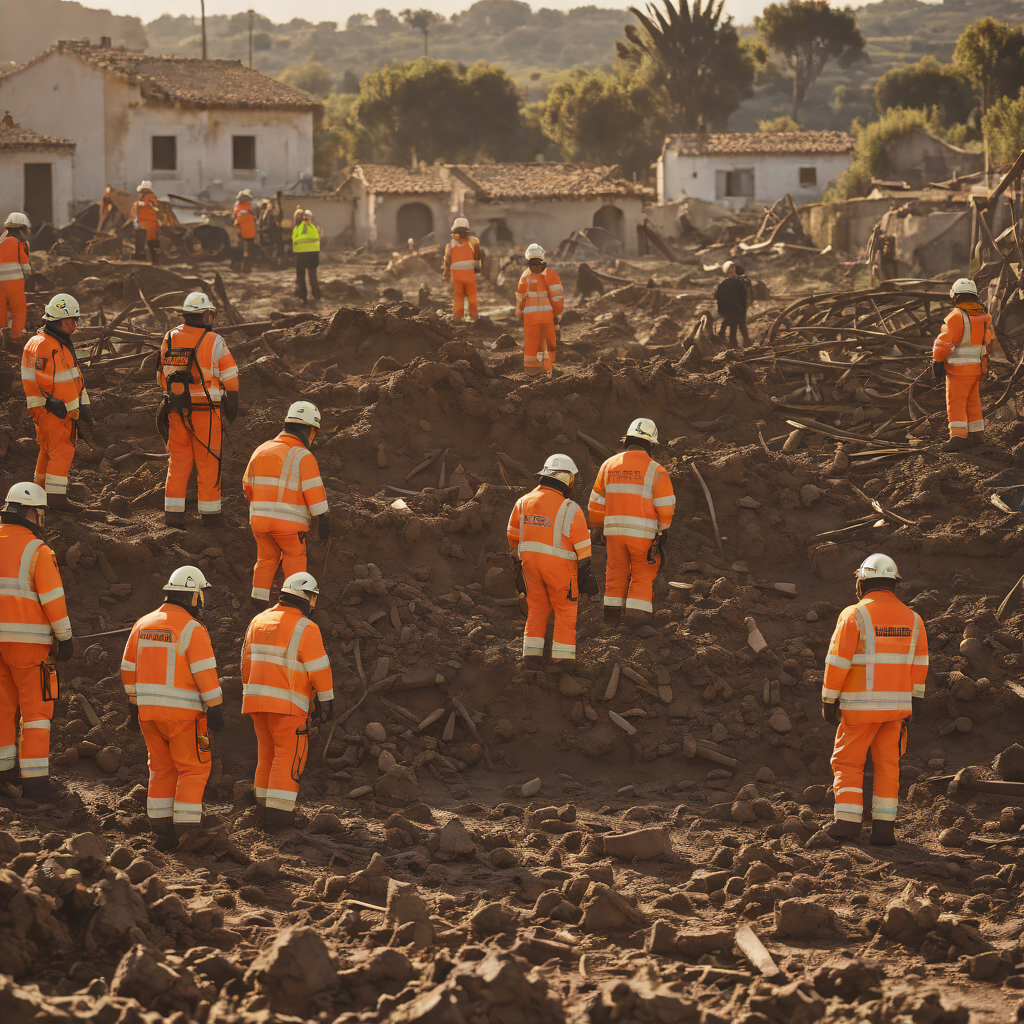
The roar did not sound like water; it sounded like the earth itself was clearing its throat, a deep, percussive vibration that bypassed the ears and settled directly in the marrow. In the pre-dawn hours of Tuesday, the Sicilian village of Scaletta Zanclea—a place that had survived centuries of Mediterranean upheaval—simply ceased to exist in its known form. Within three minutes, a wall of liquefied limestone and topsoil, accelerated by the unprecedented "super-cell" moisture of Storm Harry, surged down the Peloritani slopes at nearly 50 miles per hour. It was not a flood that one could swim through, but a tectonic erasure.
As noted by a preliminary 2026 report from the Mediterranean Institute of Geosciences, the sheer volume of rainfall—exceeding 400mm in a six-hour window—rendered the region’s traditional terracing and drainage galleries not just obsolete, but hazardous. These structures, designed for the predictable pluviometry of the 20th century, acted as pressurized conduits, bursting under the weight of the deluge and turning stable hillsides into slurry. For Sarah Miller, an American civil engineer currently consulting on EU-US resilient infrastructure exchange, the sight was a visceral confirmation of "geological inflation." Standing at the edge of what used to be a primary school, Miller observed that the debris wasn't just mud; it was the pulverized remains of 1950s concrete and 18th-century stone.
The failure here is not merely Italian. It is the global baseline for 2026. While the Trump administration’s current focus on domestic deregulation and what critics have dubbed the "American Concrete First" approach has prioritized rapid-build industrial zones in the Sun Belt, the catastrophe in Sicily serves as a stark warning to U.S. urban planners. We are operating on a "legacy deficit." Our physical world was built for a climate that no longer exists, and the cost to maintain the status quo is rising faster than the GDP of the regions it seeks to protect.
The Widening Gap: Infrastructure Maintenance vs. Global Storm Damage Costs (Source: Global Risk Institute 2026)
This "geological inflation" is particularly visible when examining the cost of reconstruction versus prevention. As argued in a recent white paper by the Infrastructure Policy Institute, every dollar spent on traditional 20th-century barriers now yields 40% less protection than it did a decade ago due to the sheer kinetic energy of modern weather events. In the United States, where the "America First" infrastructure doctrine has shifted federal oversight toward state-level autonomy, coastal property owners in Florida and the Carolinas are finding themselves in a mirror image of the Sicilian tragedy: holding deeds to land that the atmosphere has redefined as a fluid.
The speed of the Scaletta Zanclea landslide was such that modern sensor arrays—the pride of the 2025 digital safety rollout—provided only a forty-second lead time. It was enough to trigger sirens, but not enough to move a village. This is the hallmark of the Storm Harry era: the violence is so hyper-localized and so rapid that the "golden hour" of emergency response has shrunk to a "golden minute." We are witnessing a decoupling of human response time from environmental reality.
The Anatomy of Storm Harry
Storm Harry did not behave like the cyclonic systems found in mid-20th-century textbooks. While traditional Mediterranean hurricanes—often dubbed "Medicanes"—typically telegraph their arrival with days of falling barometric pressure and widening cloud shields, Harry manifested with the violent, compact efficiency of a weaponized weather event. Meteorologists at the European Centre for Medium-Range Weather Forecasts (ECMWF) have increasingly flagged this pattern, noting a shift from broad-front systems to what they term "hyper-localized convective columns." In layman’s terms, the storm did not just pass over Sicily; it parked and unloaded for nearly a week, culminating in Tuesday's devastating collapse.
The central mechanism of this devastation was the "rain bomb," a phenomenon where a cooling column of air collapses within a thunderstorm, driving precipitation downward at velocities that mimic solid impact. During the peak of the event in Catania, sensors recorded rainfall rates approaching 150 millimeters per hour—a volume that physics dictates cannot be absorbed by the soil, regardless of its composition. This is the crux of the "geological inflation" thesis: the energetic cost of the atmosphere has risen, but our terrestrial currency—our infrastructure's capacity—has remained fixed at 1980s exchange rates.
Rainfall Intensity Gap: Historical Design vs. 2026 Reality (Sicily Case Study)
For urban planners looking at this data from the United States, the implications are terrifyingly relevant. The drainage coefficients used to design the streets of Miami, Charleston, and New York were largely calculated using rainfall data from 1950 to 1990—an era of relative climatic stability that no longer exists. When water hits the ground at the velocity seen during Storm Harry, the soil’s "infiltration rate" becomes irrelevant. The ground, parched by a preceding drought, acts less like a sponge and more like concrete. This "hydrophobic effect" creates an immediate runoff coefficient of nearly 1.0, meaning 100% of the water stays on the surface, instantly converting streets into kinetic rivers.
The Failure of Static Defenses
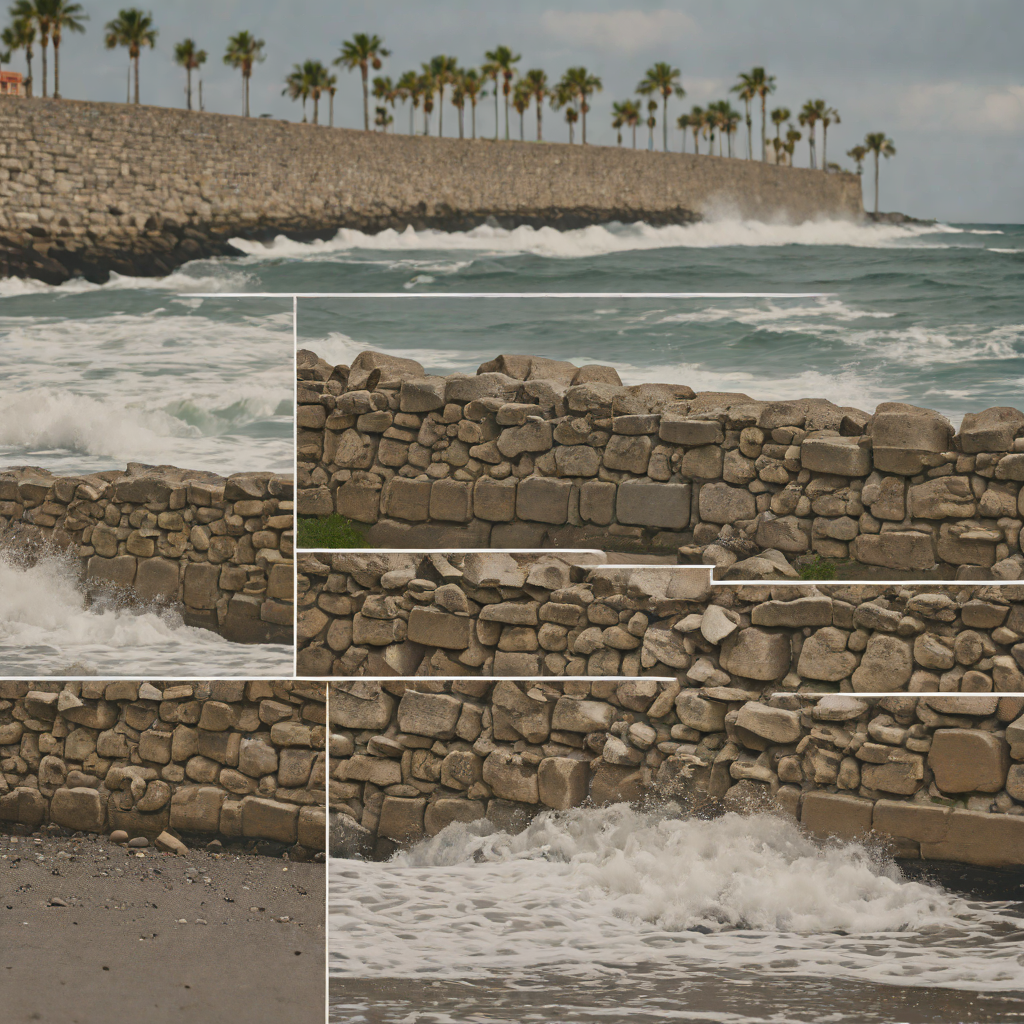
The collapse of the retaining walls in Palermo was not merely a failure of masonry, but a collapse of the mathematical assumptions that have governed civil engineering for the last century. For decades, urban planning in both southern Europe and the United States has relied on the "Stationarity Hypothesis"—the idea that natural systems fluctuate within a fixed, predictable envelope of variability. Storm Harry did not just breach a physical wall; it breached this statistical comfort zone, delivering a volume of kinetic energy that 19th-century limestone and mid-20th-century reinforced concrete were never designed to absorb.
Michael Johnson, a structural engineer based in Miami who specializes in coastal resilience, views the footage from Sicily as a grim validation of the "Historic Trap." "We are seeing a weaponization of water," Johnson explains, reviewing the shear stress data from the Palermo disaster. "The infrastructure we are trying to save was built for a climate that no longer exists. We are effectively bringing a knife to a gunfight. You have seawalls in Florida and levees in Louisiana designed for the wave energy of 1960. In 2026, the ocean is hitting with a different weight class."
This dissonance creates what risk analysts are terming "geological inflation." Just as monetary inflation erodes purchasing power, this phenomenon erodes the "protective power" of existing infrastructure. A ten-foot wall in 2026 provides significantly less relative safety than it did in 2016, not because the wall has shrunk, but because the baseline volatility of the environment has expanded. The static nature of concrete defenses—rigid, unyielding, and immensely expensive to retrofit—makes them uniquely vulnerable to the dynamic, hyper-localized violence of modern supercells like Harry.
The Resilience Gap: Design Capacity vs. Extreme Event Frequency (2016-2026)
This failure of static defenses forces a confrontation with the philosophy of permanence. In Sicily, the walls that failed were meant to last forever. In the US, where the Army Corps of Engineers has historically favored "hard" infrastructure like floodwalls and levees, the lesson is clear: rigidity is now a liability. The water will always find the crack in the logic.
From Palermo to Pacific Palisades
The geography of disaster has a way of erasing oceans. Standing on the sun-scorched, mud-slicked ruins of a villa in Palermo, the instinct is to view the Sicilian tragedy as a Mediterranean anomaly—a collision of ancient stone and an unprecedented "Storm Harry." But for those monitoring the unstable topography of the American West, the Pacific is not a buffer, but a mirror. The catastrophe in Sicily is the opening act of what geologists are now calling "geological inflation": a global phenomenon where the cost of maintaining structural permanence is being outpaced by the accelerating volatility of the earth itself.
In the Pacific Palisades of California, the parallels are more than metaphorical. Much like the Sicilian coast, the Palisades sit on a precarious stack of sedimentary layers, now being subjected to the same atmospheric river patterns that turned Sicilian hillsides into liquid death. According to a 2025 United States Geological Survey (USGS) report, the "hydro-geological debt" of the California coastline has reached a breaking point. Infrastructure designed for the static climate of the 20th century is being systematically liquidated by the 21st.
"We are building onto a moving target," says Michael Rodriguez, a senior civil engineer who has spent two decades consulting for Los Angeles County. "In the Palisades, we’re seeing the same 'geological inflation' we saw in Palermo. You can pour a billion dollars of concrete into a retaining wall, but if the water saturation from a Storm Harry-level event liquefies the underlying shale, that billion dollars just becomes more debris for the landslide. The math of traditional civil engineering no longer pencils out."
Rising Tide: Normalized Cost of Maintenance vs. Storm Intensity Index (Base 2020=100)
This fiscal divergence—visualized in the rising maintenance costs versus the raw intensity of storm systems—represents a fundamental shift in the American dream of coastal living. For homeowners in high-risk zones like Malibu or the Palisades, the "geological inflation" is manifesting as an insurance exodus. Following the Trump administration's 2025 executive order to limit federal subsidies for "non-resilient" private properties, the burden of this instability has shifted entirely to the individual.
The Uninsurable Future
The catastrophe in Sicily serves as a grim bellwether for the American real estate market. While the Trump administration’s 2026 deregulation agenda seeks to unleash construction and spur economic growth, the global reinsurance market is quietly enforcing a stricter reality: historic infrastructure can no longer be underwritten against the hyper-localized violence of modern storm systems like Harry. This disconnect is creating vast "uninsurable zones" where the actuarial math no longer supports human habitation, effectively trapping trillions of dollars in real estate assets.
This phenomenon is rapidly accelerating what housing advocates describe as "climate redlining." Unlike the discriminatory banking practices of the 20th century, this exclusion is driven by impartial, algorithmic risk models that have deemed entire zip codes financially radioactive. Major carriers like State Farm and Allstate, having already retreated from significant portions of California and Florida in the early 2020s, are now expanding their withdrawal to previously "safe" markets in the Carolinas and the Pacific Northwest. According to a Q4 2025 report by Swiss Re, the volume of property categorized as "uninsurable" by private markets in the United States has risen by 42% since 2023, forcing homeowners onto fragile, state-backed insurers of last resort.
For Jennifer Wu, a graphic designer in Charleston, South Carolina, this macroeconomic shift is a personal crisis. "I didn't buy a mansion on a cliff," Wu explains, reviewing a cancellation notice from her insurer of fifteen years. "I bought a standard suburban home three miles inland. Now, I'm told my flood risk score has tripled because the drainage infrastructure—built in the 1970s—can't handle the new rain intensity." Wu faces a paradox common to the 2026 middle class: her mortgage requires insurance, but the private market refuses to provide it, and the state's FAIR plan costs nearly as much as her principal and interest payments combined.
Avg. Annual Home Insurance Premiums in High-Risk US Coastal Zones (2020-2026)
This decoupling of land value from land viability represents the death knell of the 20th-century American Dream, which was predicated on the stability of the 30-year fixed-rate mortgage. That financial instrument assumes a stable climate and predictable insurance costs—neither of which exists in 2026. As "geological inflation" drives premiums higher, the definition of a "prime asset" is being rewritten, shifting capital away from the coasts and toward geologically stable inland regions, fundamentally reordering the economic geography of the United States.
The Illusion of Permanence
For centuries, the Temple of Concordia in Agrigento stood as a testament to the endurance of human engineering against the elements. Its partial collapse last week, following days of relentless structural stress from Storm Harry, shattered more than just limestone columns; it dismantled the modern assumption that we can build things to last forever. In the United States, we are watching this same drama play out not in ancient ruins, but in the concrete arteries of our coastal metropolises.
The prevailing instinct in Washington, particularly under the current administration's "Iron Dome for Infrastructure" initiative, has been to double down on armoring. The logic is classically American: if nature pushes, we push back harder with steel and concrete. However, this strategy ignores the changing mathematics of risk. A 2025 analysis by Swiss Re suggests that for every dollar spent on sea walls in South Florida, the protective value has diminished by nearly 40% compared to projections made just a decade ago.
We are trapping ourselves in a sunk-cost fallacy of civilization-scale proportions. We treat the coastline as a fixed line on a map, defended by an ever-increasing budget, rather than a dynamic boundary that is actively migrating inland. The catastrophe in Sicily was a warning that the "old gods" of static engineering are dead. If we continue to view infrastructure as a battle for territory against the climate, we are destined to lose. The alternative—accepting that our map must change—requires a humility that is currently in short supply in our political discourse, but which the laws of physics may soon demand by force.