The Static Trap: Sicily's Collapse and the West's Warning
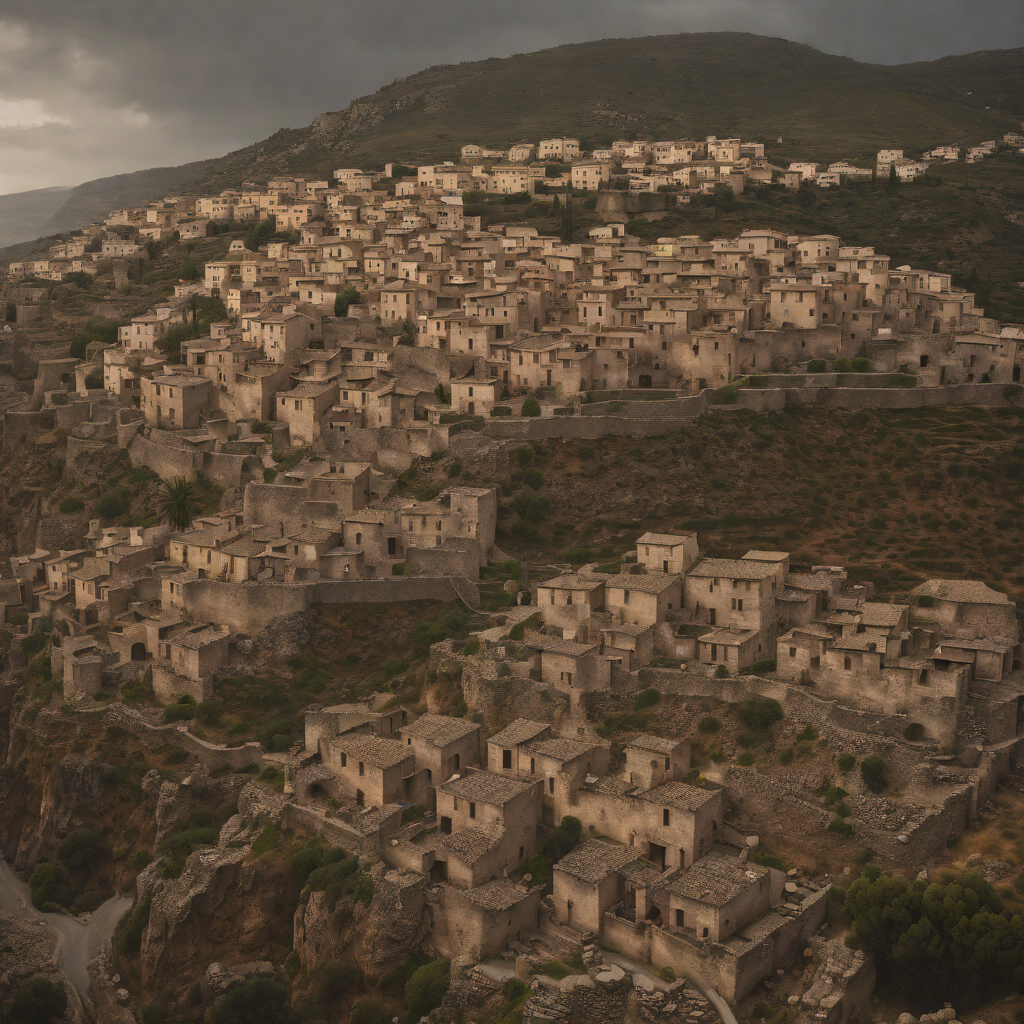
The Moment the Earth Gave Way
It started not with a roar, but with a snap—the distinct, high-pitched crack of reinforced concrete surrendering to physics. On the slopes overlooking the Mediterranean, where centuries-old olive groves have long coexisted with post-war urban sprawl, the geography of Sicily was violently rewritten in minutes. Storm Harry, a hyper-localized cyclonic system that meteorologists from the European Centre for Medium-Range Weather Forecasts (ECMWF) had flagged as "anomalous but anticipated," dumped what the Sicilian Civil Protection Department confirmed was three months' worth of rain in fewer than six hours. Yet, as the dust settles and the mud hardens, it is becoming clear that it was not merely the water that caused the devastation; it was the rigidity of the human response built decades ago.
For Maria Romano, a 64-year-old retired schoolteacher who has lived on Via dei Ciclamini her entire life, the warning signs were written in the asphalt weeks prior. "The cracks in the road were getting wider, like mouths opening," she recalls, standing amidst the debris of what was once a neighborhood piazza. "We told the municipality. They said it was just settling. But the earth doesn't settle when it drinks this much; it dissolves." Her account aligns with ignored data from the Italian Institute for Environmental Protection and Research (ISPRA), which noted in late 2025 that 94% of Italian municipalities are now at risk of landslides—a statistic that has crossed the Atlantic as a grim warning for American infrastructure planners currently grappling with similar vulnerabilities in California and Appalachia.
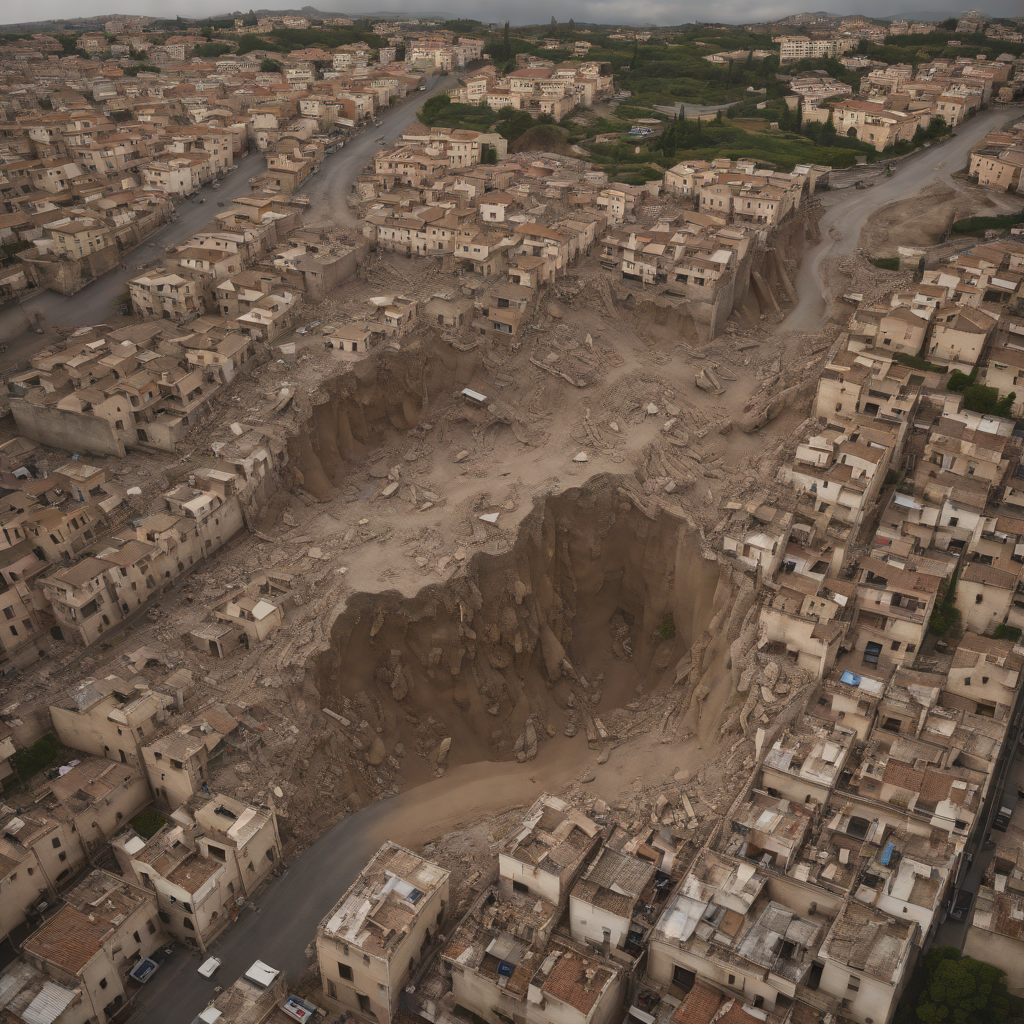
When the hillside finally gave way at 3:14 AM, it took with it a chaotic mix of history and modernity. Retaining walls constructed during the economic boom of the 1960s—designed for the rainfall patterns of the mid-20th century—sheared off completely. Drone footage captured by local emergency services reveals a scar in the landscape nearly half a mile wide, a brown wound where apartment blocks once stood. The mud didn't just slide; it liquified, carrying cars, streetlights, and the very foundations of the local economy down toward the valley floor. This destruction exposes the brutal reality of the "static trap." The engineering standards that governed the construction of these Sicilian roads—much like the aging levees in the American Midwest—assumed a stable climatic baseline. Storm Harry shattered that assumption, turning static concrete defenses into deadly projectiles in a dynamic climate era.
Anatomy of a Medicane
To understand why a hillside in Sicily—a landscape defined by centuries of relatively predictable seasonal rhythms—suddenly liquefied, we must look beyond the mud and into the atmospheric engine that drove it. Storm Harry was not a typical winter depression; it was a textbook "Medicane," a hybrid meteorological phenomenon that is rapidly transitioning from a rare anomaly to a seasonal regular.
Meteorologically, the Mediterranean has traditionally been dominated by baroclinic instability—storms driven by temperature contrasts between polar air from the north and warmer air from the south. However, Storm Harry exhibited the terrifying symmetry of a tropical cyclone. Satellite imagery from the ECMWF captured a distinct eye-like structure and deep convection bands wrapping around a warm core. This transformation is thermodynamic. It is fueled directly by the heat content of the ocean, a mechanism usually reserved for the Caribbean or the Gulf of Mexico, not the Tyrrhenian Sea in late January.
The fuel for this engine is undeniable. Data from the Copernicus Marine Service indicates that sea surface temperatures (SSTs) in the central Mediterranean have been hovering at 3°C to 4°C above the seasonal average throughout the winter of 2025-2026. This marine heatwave acts as a high-octane propellant. When a cold upper-level trough descended from Northern Europe—a standard winter event—it collided with this localized "hot tub." The result was explosive vertical motion. The atmosphere, charged with excessive moisture from the anomalously warm sea, released energy with a violence that overwhelmed the region’s hydrological models.
Mediterranean Sea Surface Temperature Anomalies (Jan 2026) - Source: Copernicus
This is where the meteorological reality collides with the "static" nature of our built environment. Sicilian infrastructure, much like older infrastructure in California or Appalachia, was designed for a climate era that no longer exists. The drainage culverts, retaining walls, and terraced slopes were engineered to handle the steady, stratiform rainfall of the 20th century, not the torrential, tropical-rate downpours of a Medicane. Storm Harry dumped six months' worth of rain in 36 hours. The soil, already desiccated by the previous summer's record droughts, had lost its permeability. Instead of soaking in, the water sheeted off the surface, gathering velocity and debris until it hit the sheer limit of geological cohesion.
We are witnessing a "phase change" in weather systems. Dr. Elena Moretti, a climatologist at the University of Bologna, described it to reporters not as a storm, but as a "stress test for a civilization built on assumptions." The assumption was that the Mediterranean acts as a buffer. In reality, the warming sea has turned it into a battery, storing thermal energy and releasing it in concentrated, destructive bursts. For US observers, Storm Harry is a mirror. It reflects the same atmospheric physics threatening the coasts of Florida and the Carolinas, where the Atlantic’s warming profile is similarly rewriting the rules of engagement between the ocean, the sky, and the concrete we pour to protect ourselves.
The Legacy of Deferred Maintenance
The mud that buried the hillside villas in Sicily this week was not merely an anomaly of weather; it was a receipt for decades of transactional governance. While the immediate catalyst was a torrential downpour typical of the volatile 2026 climate patterns, the structural culprit is what Italian geologists call dissesto idrogeologico—hydrogeological disorder. This is not a new phenomenon, but rather the catastrophic intersection of aggressive post-war urbanization and a "fix-on-failure" mentality that has plagued Western democracies from Rome to Washington. The tragedy serves as a parallel case study for the risks inherent in the Trump administration’s deregulation agenda: while you can cut red tape, you cannot deregulate gravity, nor can you negotiate with soil saturation limits.
The infrastructure in question—concrete retaining walls, drainage channels, and terraced slopes—was largely constructed during the economic boom of the 1960s and 70s. These static structures were engineered for a climate that no longer exists, designed using historical rainfall data that has been rendered obsolete by the intensified hydrological cycles of the mid-2020s. As noted by the 2025 ISPRA report, nearly 94% of Italian municipalities are now at risk of landslides or floods. Yet, the funding mechanisms remain reactive. For years, ribbon-cutting ceremonies for new highways have garnered political capital, while invisible maintenance work—grouting cracks, reinforcing foundations, clearing culverts—has suffered from chronic underinvestment.
This dynamic creates a deceptive facade of stability. Dr. Emily Carter, a structural forensic engineer from Chicago currently consulting on European resilience projects, describes the situation as "concrete cancer." "We are seeing a systemic failure of the protective shell built fifty years ago," Carter explains, pointing to the corroded rebar exposed by the slide. "In the US, we see this with our levees and bridges; in Italy, it’s the hillsides. The common thread is that we treated infrastructure as a one-time purchase rather than a subscription service requiring constant renewal. We deferred the maintenance costs to balance annual budgets, effectively borrowing from the safety of future generations. That debt is now being called in."
The economic implications of this deferred maintenance are staggering. Analysis by the Global Infrastructure Hub indicates that the cost of emergency restoration is often four to ten times higher than the cost of preventive maintenance. However, the political will to spend billions on preventing a disaster that might happen is scarce, especially in an era of fiscal austerity and isolationist prioritization. The focus in 2026 has shifted toward hardening borders and accelerating industrial output, often sidelining the unglamorous work of retrofitting aging public works.
The Cost of Inaction: Preventive vs. Emergency Spending (G7 Average, 2020-2025)
Ultimately, the landslide serves as a grim microcosm of the "static vs. dynamic" conflict. We have built static civilizations—cities rooted in place, relying on predictable water flows and stable geological formations—on a planet that is becoming increasingly dynamic and unpredictable. The failure in Sicily is a warning that the legacy of deferred maintenance is not just about potholes or crumbling bridges; it is about the fundamental viability of our inhabited spaces in the face of a changing physical reality.
From Palermo to Pennsylvania
The mud that buried the streets of Palermo speaks a language that requires no translation in Pittsburgh or San Bernardino. While the geography differs—Sicily’s steep limestone slopes versus the clay-heavy hills of Appalachia or the fire-scarred canyons of California—the architectural sin is identical: we have built static fortresses for a world that has become aggressively dynamic. The catastrophe in Italy is not an outlier; it is a preview of a structural reckoning that American civil engineers have been warning about since the mid-2020s, now accelerated by an era of aggressive deregulation.
In Pennsylvania, the risk is less about dramatic cliff-side collapses and more about the quiet, relentless saturation of aging foundations. Linda Kowalski, a 48-year-old nurse living in a suburb west of Philadelphia, represents the millions of Americans living in what insurers are quietly reclassifying as "uninsurable zones." Her 1970s split-level home sits on land that was stable for fifty years but has seen a 20% increase in soil moisture retention since 2023. "The basement walls aren't cracking because of a single storm," Kowalski told us, pointing to fresh sealant applied just weeks before the latest heavy rains. "They are buckling because the ground itself has changed, and the drainage systems built fifty years ago simply cannot move this volume of water." Her struggle is not unique; it mirrors the plight of homeowners across the Rust Belt where Victorian-era sewage and retention systems are overwhelmed by the new hydro-reality.
This disconnect between historical engineering standards and current climate reality is exacerbated by the current political mandate. The Trump administration’s push for "rapid deployment" of new infrastructure often bypasses the slower, more expensive retrofitting of existing systems. While new highways are greenlit under the 'America First' expansion act, the maintenance backlog for existing bridges and retention walls has ballooned. A 2025 report by the American Society of Civil Engineers (ASCE) noted that while new construction starts are up, the funding gap for resilience retrofitting—literally holding the ground together under existing towns—has widened by $200 billion. The report argues that the "fix-it-first" philosophy has been abandoned in favor of ribbon-cutting ceremonies, leaving legacy infrastructure to face 2026 weather patterns with 1960s durability.
The parallel to Sicily becomes starkest when looking at the unchecked sprawl into high-risk areas. Just as Palermo’s expansion ignored the hydrogeological warnings of the mountain, American exurbs are pushing further into floodplains and unstable hillsides, driven by a housing market that prioritizes square footage over geological stability. When the ground eventually gives way—whether in a violent slide or a slow, crushing subsidence—it will not be an act of God, but a predictable failure of policy. The bill for decades of deferred maintenance and reckless zoning is coming due, and as the residents of Palermo have learned, nature collects its debts with compound interest.
The Uninsurable Future
The tragedy in Agrigento, where the Valley of the Temples was scarred by a sudden hillside collapse this week, is being viewed by risk analysts not as an anomaly, but as a grim preview of the American real estate market’s trajectory in 2026. While the geography is Sicilian, the economic mechanics are identical to those currently fracturing the housing markets in California, Florida, and coastal Texas. We are witnessing the end of the "static earth" assumption that has underpinned property insurance for a century. When the ground moves—whether from mudslides in the Mediterranean or coastal erosion in the Carolinas—the financial bedrock of homeownership crumbles with it.
For decades, the actuarial tables governing American housing assumed that a 100-year flood happened once a century and that solid ground remained solid. That calculus has collapsed. Major carriers, having already paused new policies in high-risk states in 2024 and 2025, are now executing a "Great Retreat." They are decoupling from regions where the physics of climate volatility collide with the physics of profit.
Rachel Thorne, a 48-year-old freelance architect in Santa Barbara, California, represents the human face of this actuarial correction. "I didn't lose my home to a fire," Thorne explains, staring at a cancellation notice from a major insurer that had covered her family for twenty years. "I lost it to a spreadsheet." Her coverage was not renewed due to 'wildfire density risk,' despite her property never having been singed. Her only alternative was the state-backed FAIR plan, often described as the insurer of last resort, which offered half the coverage for triple the premium. Thorne's experience is becoming the standard, not the exception, creating a class of "zombie properties"—physically intact but financially toxic because they cannot be insured, and therefore, cannot be mortgaged.
Avg. Annual Home Insurance Premiums in High-Risk US States (2022-2026)
The tension is exacerbated by the current political climate. The Trump administration's aggressive deregulation agenda, designed to spur construction and lower housing costs, has ironically clashed with the insurance industry's risk aversion. While the White House pushes to cut "red tape"—often including stringent environmental and building codes—insurers are demanding more resilience, not less. A 2025 annual report by reinsurance giant Swiss Re underscored this paradox, explicitly stating that "climate adaptation measures are a prerequisite for insurability." The industry's message is clear: they cannot insure a building boom that ignores the climate reality. If the federal government removes the guardrails, insurers simply leave the road.
This creates a perilous gap. The administration's stance on disaster relief—emphasizing state responsibility and fiscal conservatism—signals that the federal cavalry may not arrive with the same frequency or funding depth as in previous eras. Consequently, the "Sicily Effect" is forcing a revaluation of the American Dream. The premium for living in scenic, dynamic environments is no longer just a figure of speech; it is a literal, exorbitant bill that many middle-class Americans can no longer afford to pay. As insurers retreat, they leave behind a market where safety is a luxury good, and the risk is borne entirely by the homeowner.
Beyond Concrete and Steel
The collapse of the reinforced concrete barrier in Sicily serves as a grim autopsy of 20th-century engineering philosophy. For decades, the western world built civilization on a premise of stationarity—the statistical assumption that future weather patterns would fluctuate within the predictable boundaries of the past. That assumption is now dead, buried under the mud in Italy and eroding along the coastlines of the American South. The tragedy is not merely that the wall failed, but that it was designed for a world that has ceased to exist.
For David Chen, a civil engineer tasked with auditing levees in the Mississippi Delta, the footage from Sicily was less a shock than a confirmation. "We are trying to contain a dynamic beast with static cages," Chen explains, noting that the hydraulic models used to design much of America's flood infrastructure rely on rainfall data from the 1950s and 60s. "The concrete we pour today takes twenty-eight days to cure, but the climate data renders it obsolete before the ribbon is cut." This disconnect creates what the American Society of Civil Engineers (ASCE) identified in their late 2025 report as the "Resilience Deficit"—the widening gap between the structural capacity of existing grey infrastructure and the kinetic energy of modern storm systems.
While the Trump administration has aggressively pushed for the "Build Fast" initiative—slashing environmental review times to accelerate construction permits—critics argue this approach merely accelerates the deployment of doomed assets. Deregulation facilitates speed, but it does not alter physics. The insurance industry has already reached this conclusion ahead of the government. Major carriers like State Farm and Allstate, having largely retreated from coastal California and Florida by 2025, are effectively pricing "static" protection out of the market. They are signaling that concrete walls, no matter how thick, are no longer insurable assets in high-risk zones.
The economic reality is stark: the cost of maintaining the illusion of invulnerability is becoming insolvent. As illustrated below, the financial burden of repairing static infrastructure following climate events has now surpassed the regular maintenance budgets of most municipalities, creating a debt spiral where cities borrow just to rebuild what will inevitably break again.
The Resilience Deficit: Infrastructure Repair vs. Climate Damages (2020-2025)
The alternative requires a fundamental psychological shift: moving from "grey" infrastructure—rigid concrete meant to resist water—to "green" infrastructure meant to accommodate it. This is the logic of the "Sponge City" concept, popularized in China and the Netherlands, and now finding desperate traction in American cities like Hoboken and Norfolk. Instead of channeling water away through pipes that are easily overwhelmed, these systems use permeable pavements, urban wetlands, and floodable parks to absorb excess rainfall. It is an admission that we cannot defeat the water; we can only negotiate with it.
However, green infrastructure is not a panacea for the most vulnerable zones. The hardest conversation, and the one the Sicily disaster forces to the surface, is about strategic retreat. In parts of the Outer Banks and the Louisiana coast, the debate is no longer about how to build a better wall, but how to dismantle the town. This "managed retreat" is politically toxic—no elected official, from the local mayor to the White House, wants to preside over the map shrinking. Yet, the persistent failure of static defenses suggests that if we do not manage the retreat, nature will manage it for us, chaotically and catastrophically. The bill for a century of deferred maintenance is coming due, and it appears the currency required is not just dollars, but territory.