Tehran's Survival Strategy: Leaked Footage Reveals Militarized Control
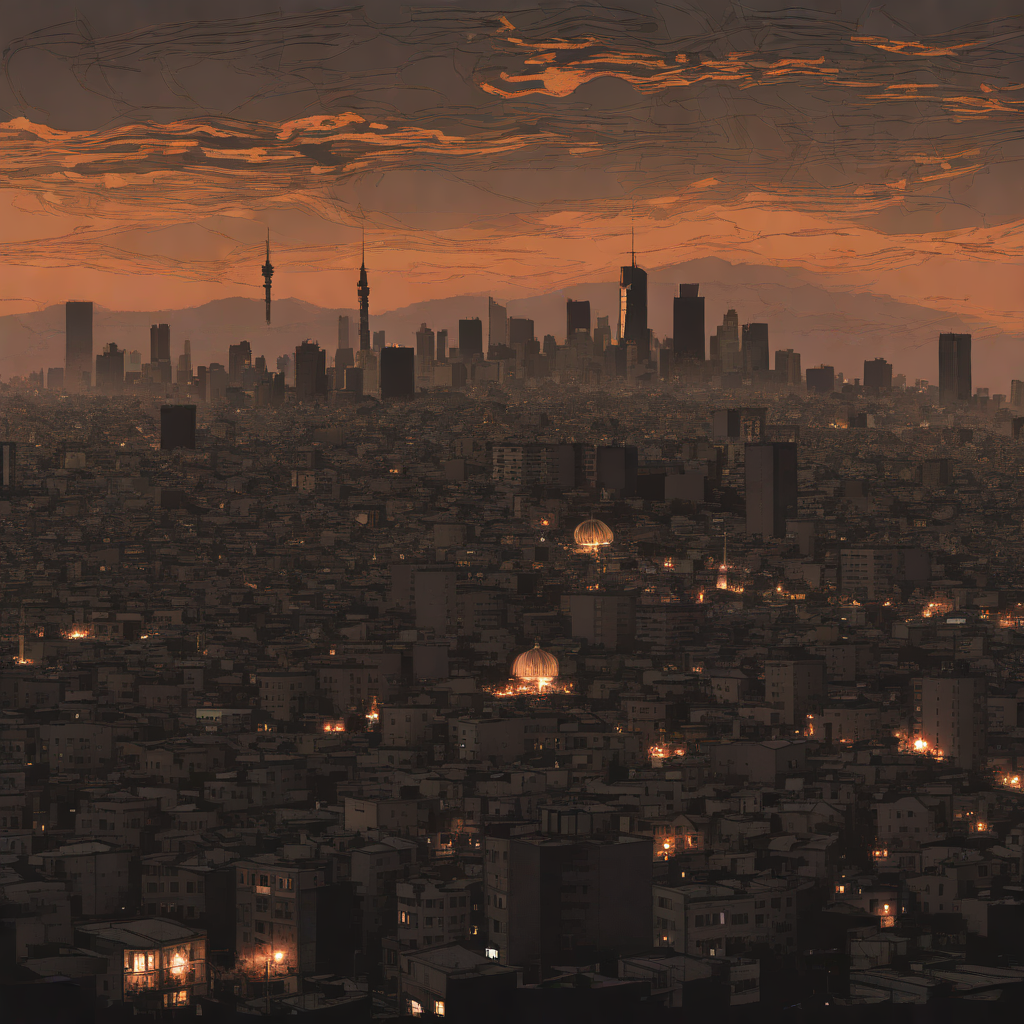
The Breach in the Digital Wall
The footage is grainy, stabilized only by the trembling hands of the citizen journalists who risked execution to upload it, but the resolution is high enough to shatter the Iranian regime's carefully curated silence. In a video verified by open-source intelligence groups late Monday, the corridors of Tehran’s Sina Hospital are no longer places of healing but holding pens for the dying. Gurneys are abandoned in favor of blood-slicked tile floors, where young men and women—identifiable by the university scarves still wrapped around their necks—gasp for breath, their bodies riddled with birdshot and high-caliber rounds. This is not the clean, clinical suppression of dissent the Islamic Republic has projected to the world since the internet blackout began three weeks ago; it is a chaotic, desperate bloodletting.
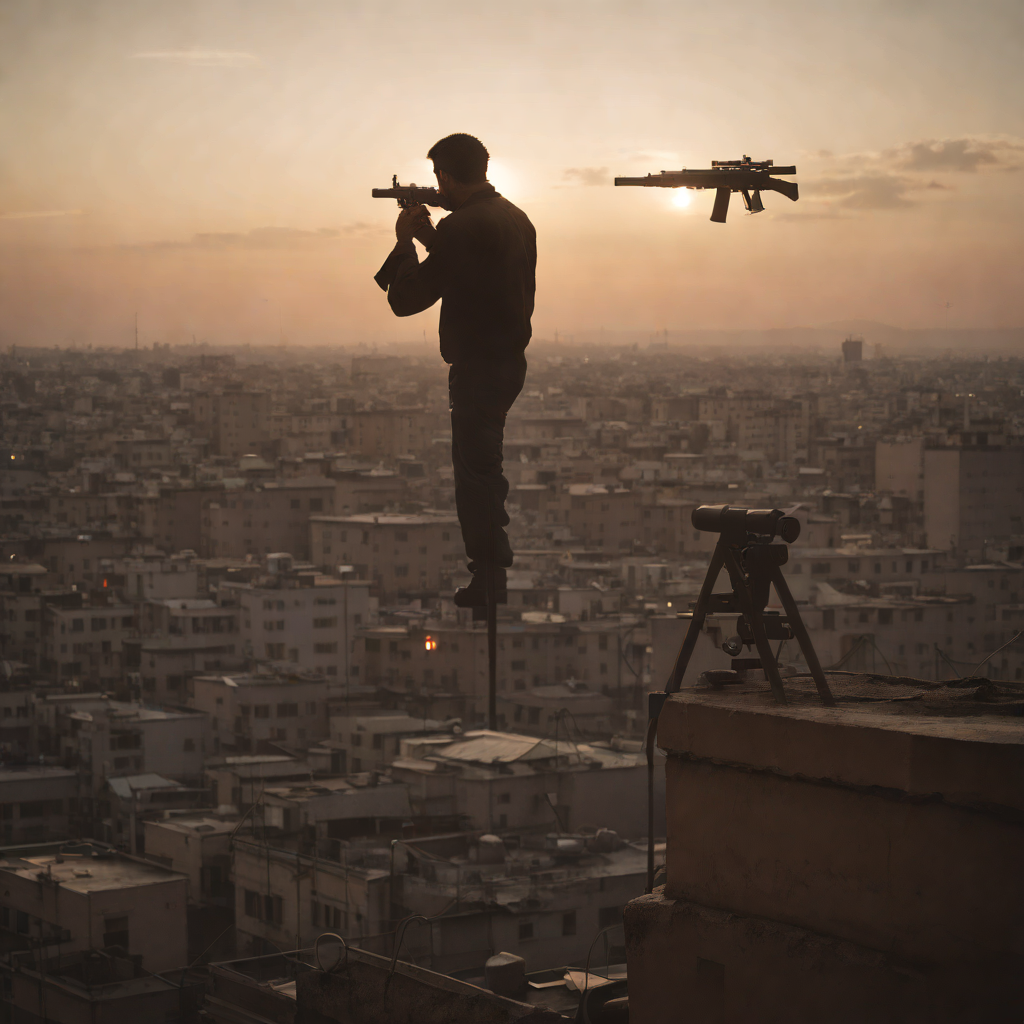
Another clip, geo-located to the rooftops overlooking Enghelab Square, offers a chilling tactical perspective. It does not show the protesters below, but the regime’s answer to them: snipers, positioned not for crowd control, but for lethality. The sheer volume of this visual evidence, piercing through the state’s digital firewall via illicit Starlink terminals and mesh networks, confirms a grim reality that diplomatic cables have only hinted at. The regime has moved beyond the preservation of legitimacy. It has entered a phase of raw survivalism, where the pretense of law and order has been abandoned for the blunt force of a besieged fortress.
For the foreign policy realists in Washington, this visual deluge presents a paradox. In previous decades, such undeniable documentation of state-sanctioned atrocities might have triggered a coalition of the willing or, at the very least, a unified transatlantic sanctions package. But in the isolationist climate of 2026, the reception is markedly different. The Trump administration, entrenched in its "America First" doctrine, views these images not as a call to humanitarian intervention, but as data points in a strategy of containment. The prevailing sentiment in the West Wing is that Tehran’s internal combustion is a net positive for U.S. energy dominance, provided the chaos remains strictly within Iranian borders. The digital wall has been breached, exposing the horror within, but the geopolitical wall around the crisis is being built higher and thicker by an international community that has lost its appetite for moral crusades.
From Policing to Occupation
The shift from riot control to lethal engagement is not merely an escalation in violence; it is a fundamental restructuring of the state’s relationship with its citizenry. When security forces deploy snipers to rooftops in dense residential areas—a tactic documented in recent weeks across Kurdistan and Baluchistan provinces—they are no longer policing a disturbance; they are occupying hostile territory. This transition from baton-wielding Basij enforcement to the cold precision of long-range ballistics signals that the Islamic Republic has exhausted the utility of fear and has moved to a strategy of attrition. As noted in a January 2026 intelligence briefing by the Institute for the Study of War, the deployment of heavy-caliber weaponry against unarmed protesters indicates that the regime now views the street not as a public space to be reclaimed, but as a battlefield to be pacified.
This militarization of domestic security reveals a critical fracture within the regime's traditional apparatus. Reliance on snipers suggests a distrust in the reliability of rank-and-file security personnel on the ground. During previous waves of unrest in 2022 and 2024, reports surfaced of exhaustion and hesitation among regular police forces faced with prolonged civil disobedience. By elevating the conflict to rooftop engagements, the Revolutionary Guards (IRGC) effectively bypass the need for face-to-face confrontation, reducing the psychological burden on their enforcers and minimizing the risk of defections. A 2025 analysis by the Carnegie Endowment for International Peace highlighted this "insulation strategy," arguing that the regime is increasingly relying on specialized, ideological hardliners to execute violence that conscripted soldiers might refuse.
For the international community, specifically the isolationist Washington of 2026, this visual evidence serves as a grim calibration point. The pile-ups in hospital corridors, captured in verified footage from Mahabad, are not triggering the humanitarian interventionist impulses of the past decade. Instead, they are being read by the Trump administration as metrics of a containment problem. If the Iranian state is treating its population as an insurgency, the resulting instability is viewed primarily through the lens of border security and energy market volatility rather than human rights. The "war on the street" confirms that the regime has abandoned any pretense of legitimacy for raw survivalism, a precarious position that historically precedes either total totalitarian clampdown or chaotic state collapse.
Escalation of Lethal Force Events (2025-2026)
The Economic Vitals
The snipers on the rooftops of Javanrud are not merely enforcers of religious orthodoxy; they are the final line of defense for a treasury that has effectively evaporated. To understand why the Islamic Republic has pivoted from performative legitimacy to naked coercion, one must look past the slogans and at the ledger. The unrest convulsing the provinces is less a debate about cultural mores and more a riot of bread and petrol.
For decades, the unspoken social contract in Iran was simple: political silence in exchange for subsidized survival. Cheap electricity, nearly free gasoline, and price-controlled staples were the bribe the state paid to its citizens. In early 2026, that contract was unilaterally torn up. The triggering event wasn't a fatwa, but the sudden removal of the 'Kalala' fuel subsidy—a desperate move by a budget office suffocated by the renewed 'Maximum Pressure' campaign from Washington.
The impact was immediate and visceral. In the Grand Bazaar of Tehran, merchants have reportedly begun refusing the Rial entirely. While anecdotal reports from traders like "Hossein"—who told monitors via encrypted channels that he trades only in gold or stablecoins—cannot be universally verified, they align with broader trends documented by economic watchdogs. Data from the parallel market monitor Bonbast indicates the Rial has lost nearly 60% of its value against the dollar since the inauguration of the second Trump administration. This freefall is accelerated by the strict enforcement of secondary sanctions on Chinese 'teapot' refineries that once quietly absorbed Iranian crude.
Iranian Rial Market Rate (IRR to 1 USD): The Collapse of 2024-2026 (Source: Bonbast / US Treasury Data)
This hyperinflation has severed the regime's ability to maintain its patronage networks. The IRGC, once able to fund its loyalty through off-the-books smuggling empires, is finding its liquidity constrained. The US Navy's targeted interdiction of smuggling vessels in the Strait of Hormuz—ordered by a White House prioritizing 'American Energy Dominance'—has choked off specific black market routes. Crucially, global markets have not panicked; record North American output has insulated the broader energy sector from these localized disruptions, allowing the US to squeeze the IRGC without spiking prices at the pump.
The "hospital pile-ups" seen in leaked footage from Karaj are the direct result of this triage. Public healthcare funding has been slashed by nearly 40% in real terms this fiscal year, according to leaked budget directives cited by the World Bank. When a government decides that tear gas is a more essential import than insulin, it acknowledges that it no longer views its population as citizens to be served, but as a biological threat to be managed. The violence is not an aberration; it is a calculated foreclosure on the nation's future to pay for the regime's present.
The Deafening Silence of 2026
The grainy, handheld footage emerging from Isfahan isn’t the chaotic, shaky video of civil unrest familiar to the early 2020s; it is terrifyingly static. A three-second clip verified by open-source intelligence groups shows a sniper on a rooftop, followed by the immediate collapse of a protestor in the street below. There is no dispersal order, no tear gas, just the kinetic efficiency of a regime that has moved past crowd control to population management. Medical NGOs operating through encrypted channels report a surge in "targeted trauma"—specifically blinding injuries and shattered femurs—filling the hallways of hospitals like Al-Zahra, where staff are reportedly forced to triage patients based on political affiliation. This visual evidence confirms a grim transition: Tehran has abandoned the pretense of maintaining public order for a raw, militarized survivalism.
Yet, unlike the global outcry that followed the death of Mahsa Amini in 2022, the international reaction in 2026 has been defined by a conspicuous, strategic hollow. The outrage cycle, once the primary engine of Western diplomatic pressure, appears to have stalled. In Washington, the Trump 2.0 administration’s "America First" doctrine has recalibrated the value of human rights intervention against the metric of domestic stability. State Department briefings have notably shifted terminology, reclassifying the crackdown from a "human rights violation" to an "internal security matter," provided it does not disrupt the flow of energy through the Strait of Hormuz. As one senior analyst at the Heritage Foundation noted during a panel on energy security last week, "The current administration views moral condemnation without strategic leverage as a depreciating asset. If the oil flows, the tweets stay in the drafts."
This withdrawal is not merely American. The European Union, fractured by its own "Winter of Discontent" and paralyzed by the ongoing internal debates regarding the Digital Services Act and energy sovereignty, has failed to form a cohesive bloc. Brussels is effectively muted, trading moral high ground for assurances that a destabilized Iran won't trigger another migration crisis or an energy price shock that could topple fragile coalition governments in Berlin and Paris. The result is a geopolitical "containment zone" where atrocities are tolerated as long as they remain within the borders of the Islamic Republic. The West has not stopped watching; it has simply decided that the cost of acting exceeds the price of conscience.
The Empathy Gap: Casualties vs. Western Sanctions (Iran Crises)
Proxies and Power Vacuums
The breakdown of central authority in Tehran is not just a domestic tragedy; it is a geopolitical tectonic shift that is sending tremors through the Levant and the Arabian Peninsula. For decades, the Islamic Republic operated as a coherent, albeit hostile, conductor of a regional orchestra, synchronizing the actions of Hezbollah in Lebanon, Shia militias in Iraq, and the Houthis in Yemen. Today, as the regime turns its guns on its own citizens in Isfahan and Tabriz, that conductor has dropped the baton, leaving heavily armed proxies to improvise in a void of strategic direction.
Intelligence reports from the last forty-eight hours indicate a frantic, confusing silence on the encrypted channels that usually link the Quds Force headquarters to its operational commanders in Beirut and Sana'a. A field assessment by the Atlantic Council notes that for the first time in years, monthly logistical transfers to Southern Lebanon have been halted—not by Israeli interdiction, but by paralysis within the IRGC’s own logistics directorate, which is currently repurposed for crushing dissent in Tehran’s bazaars. The implications are volatile: a starving proxy is an unpredictable one. Without the steady hand of their patrons, local commanders in the Beqaa Valley or the Yemeni highlands may feel compelled to launch high-profile strikes against Israel or Red Sea shipping lanes, not as part of a grand strategy, but as a desperate bid to prove their utility and demand attention—and funding—from a distracted patron.
This decentering of command creates a "power vacuum" that is paradoxically more dangerous than the calculated escalations of the past. When Tehran ordered a strike, there was a return address and a calculated risk of retaliation. When a fractured Hezbollah cell acts on its own survival instincts, the rules of deterrence dissolve. We are already seeing the precursors of this anarchy: yesterday’s inexplicable, low-level drone harassment of a Greek-flagged tanker off the coast of Hodeidah appeared to lack the sophisticated targeting data usually supplied by Iranian surveillance vessels, suggesting the Houthis are operating blind.
The Thermodynamics of Dictatorship
In the brutal calculus of authoritarian stability, a regime ceases to be a government and becomes an occupying force the moment it turns heavy weaponry on its own medical infrastructure. The thermodynamic reality of the Islamic Republic in early 2026 is one of overheating; the energy required to suppress the entropy of dissent has surpassed the state’s political capital, leaving only kinetic force. The verified footage emerging from Tehran this week—specifically the rooftop positioning of IRGC snipers overlooking the emergency triage tents at Milad Hospital—confirms that the Supreme Leader’s circle has abandoned the pretense of theological legitimacy for the raw, panicked survivalism of a garrison state. This is no longer a policing action; it is a reconquest of urban centers that have psychically seceded from the revolution.
Yet, the tragedy of this bloody pivot is compounded by the geopolitical vacuum in which it occurs. In 2026, the international community’s capacity for outrage has been hollowed out by the harsh realities of the "America First" retrenchment. With the Trump administration strictly adhering to its doctrine of isolationism—and domestic attention monopolized by the "Compound Crisis" of frozen infrastructure and civil unrest in Minneapolis—Washington has signaled that its strategic interest ends at the Strait of Hormuz. As long as the Strait remains navigable and the global energy markets remain distinct from the humanitarian catastrophe on the ground, the West appears willing to tolerate a North Korea-style transformation of Iran: a hermetically sealed pariah state where the suffering is contained behind a digital and physical iron curtain.
This containment strategy assumes that a regime willing to cannibalize its own population can remain stable enough to export oil. However, the internal thermodynamics suggest otherwise. By severing the final strands of the social contract, the regime has removed the population’s incentive for restraint. When a shopkeeper in Isfahan knows that a hospital visit is as dangerous as a street protest, the threshold for radicalization evaporates. We are witnessing the birth of a volatile equilibrium where the state survives only through the constant, exhausting application of maximum force—a system that is historically destined to burn out, not fade away. The Islamic Republic may survive the winter of 2026 through the barrel of a gun, but it rules over a graveyard of its own making, waiting for the inevitable spark that kinetic containment cannot extinguish.