The Tory Fracture: Braverman's Gamble and the American Echo
Westminster's Earthquake
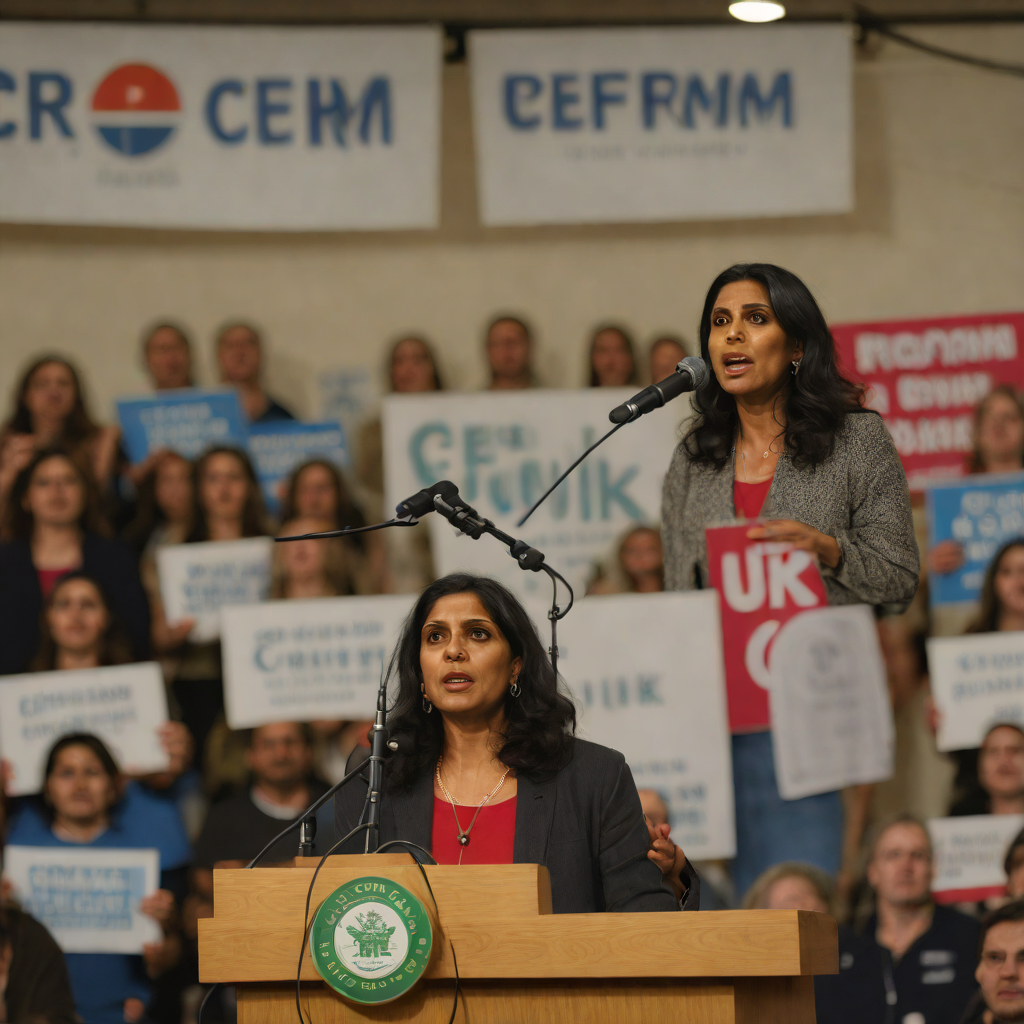
The announcement came not from the polished podiums of Tufton Street, but from a cramped community hall in Stoke-on-Trent, the symbolic heart of the "Red Wall" that the Tories have struggled to retain since the chaotic election cycles of the early 2020s. When Suella Braverman stepped onto the stage flanked by Reform UK leadership, the collective gasp in Westminster was audible across the Atlantic. It was a Tuesday morning in late January 2026, and the tectonic plates of British conservatism didn't just shift; they snapped. This was not merely a defection; it was a hostile takeover bid for the soul of the British Right, executing a maneuver that American observers recognize intimately from the consolidation of the "Trump 2.0" era.
For the beleaguered remnants of the "One Nation" caucus, huddled in emergency meetings at the Carlton Club, the message was catastrophic. Braverman’s pivot effectively imports the ruthless efficiency of the American primary challenge to the genteel dysfunction of the UK parliamentary system. Just as the MAGA wing systematically dismantled the neoconservative old guard of the GOP—a process solidified by President Trump’s sweeping 2024 victory and subsequent cabinet appointments—Braverman is betting that the traditional Conservative brand is a depreciating asset. She calculates that the populist energy currently driving the White House's deregulation blitz is the only currency with value in a polarized electorate. A senior Tory backbencher, speaking on condition of anonymity to The Times, described the move as a calculated demolition, noting she ensures the old establishment loses the war even if she doesn't win the immediate battle.
The parallels to the US political landscape are stark and deliberate. Braverman's rhetoric—focused on the "betrayal of the mandate" regarding border control and the "tyranny of the administrative state"—is a direct linguistic import from the playbook that has defined Washington since the 2025 inauguration. While the Conservative Party leadership attempts to dismiss this as the flailing of a marginalized faction, the data suggests otherwise. Internal polling leaked to Politico Europe—though unverified and likely optimistic for the rebels—claims that nearly 40% of the remaining Conservative voting coalition views Reform UK not as a spoiler, but as the authentic successor to the Brexit revolution. If accurate, this alignment signals the end of the broad-church compromise that kept the Tories in power for nearly two decades, replacing it with a sharper, more ideological trans-Atlantic consensus.
The Hollow Crown of Conservatism
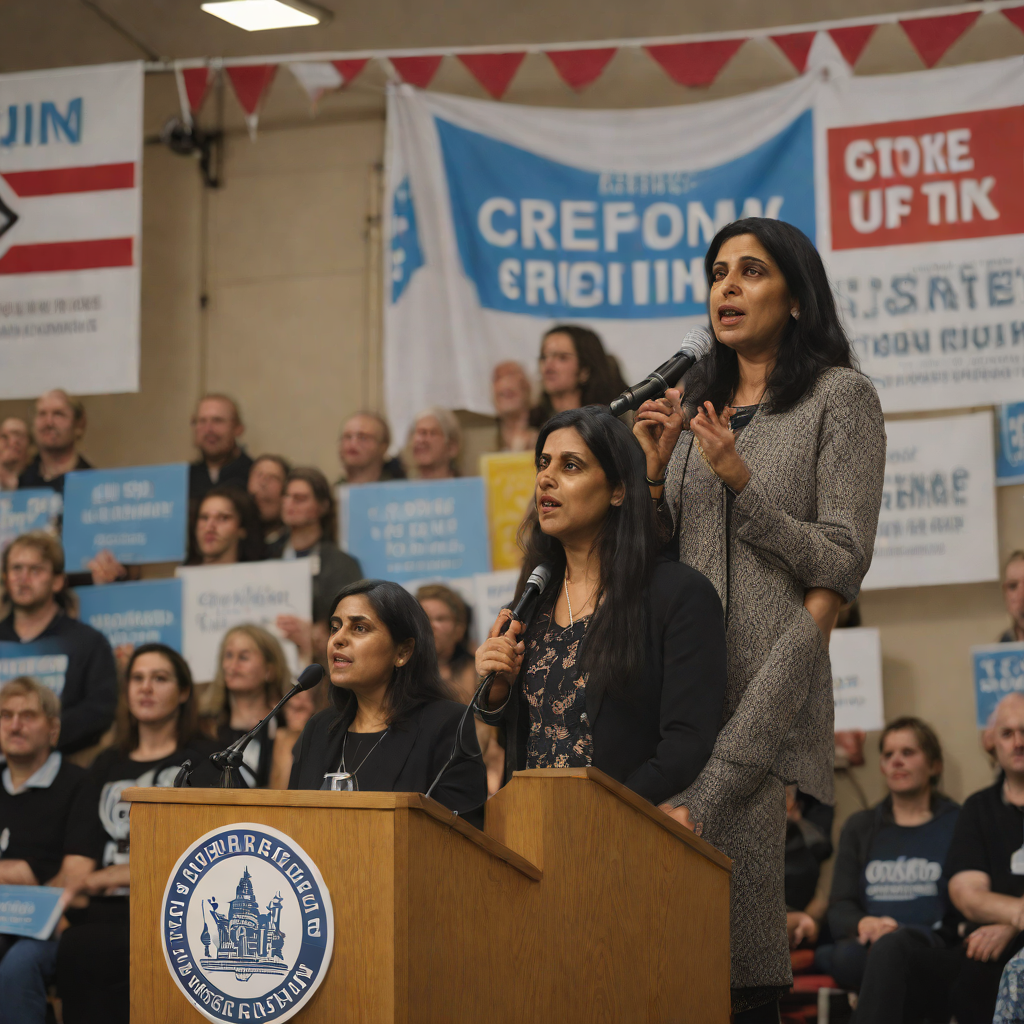
The tea rooms of Westminster have long been the sanctuary of the Conservative Party's "One Nation" elite—a place where moderation was once currency and the "steady hand" was the ultimate political virtue. But walk through Clacton or the rusted industrial belts of the Midlands today, and that currency has been devalued to near zero. The "Blue Wall," once the Tories' great conquest, is fracturing, not under the pressure of a resurgent Labour left, but from a seismic shift to the right. Suella Braverman’s strategic orbit toward Reform UK is not merely a personal gamble; it is the structural collapse of a party that spent fourteen years trying to govern as a broad church, only to find the pews empty.
Much like the Republican establishment in the United States prior to the full consolidation of President Trump’s second term, the British Conservative hierarchy assumed that the "sensible center" would hold against the tides of populism. They were wrong. The electorate’s grievance is no longer just about the economy; it is visceral, rooted in the perceived loss of cultural sovereignty and border control. As the Financial Times observed earlier this month, the failure of the Sunak years wasn't fiscal incompetence, but a "technocratic deafness" to the roar of identity politics. The voter who once trusted the steady hand of the Tories now looks at the record immigration figures—still hovering at historical highs despite repeated promises—and sees betrayal.
This sense of betrayal has created the vacuum that Braverman and the Reform machine are all too eager to fill. It mirrors the exact dynamic seen in the American Rust Belt leading up to the 2024 election. The "One Nation" caucus offered management; Reform offers restoration. When Braverman speaks of "ending the polite consensus," she is channeling the same energy that propelled the "America First" agenda back into the White House. It is a trans-Atlantic echo chamber where the primary currency is not policy detail, but the assertion of national will against international obligation.
The data underscores this existential migration. Recent polling suggests a direct correlation between the hardening of immigration rhetoric and voter retention among the working-class right, a demographic the Tories largely rented rather than owned.
Voter Trust on Immigration Policy (Conservative Leavers, Jan 2026)
The numbers paint a stark picture of a "Hollow Crown." The Conservative Party retains the institutional legacy, the donors, and the history, but it has lost the monopoly on the conservative voter. By clinging to the veneer of respectability and international law—hesitating on the ECHR while Reform promises a "clean break"—the Tories have allowed themselves to be outflanked on the very ground they claimed to defend. The irony, noted by political historians like Lord Hennessy, is that by trying to appease everyone, the party has ended up representing no one, leaving the door wide open for a movement that requires no such polite triangulation.
Mirroring MAGA: The Atlantic Connection
The Atlantic Ocean has never been narrower for the British Right. Just as the Concorde once promised supersonic travel between London and New York, a new, ideological supersonic corridor has opened up, transporting not passengers, but political playbooks directly from the MAGA war rooms of Mar-a-Lago to the fractured conservative landscape of Westminster. The sight of Suella Braverman sharing a rhetorical stage with Reform UK figures isn't merely a local realignment; it is the visible manifestation of a trans-Atlantic synchronization that has been quietly building since the early days of the 2024 US election cycle.
This phenomenon goes beyond simple admiration. It is a strategic wholesale import of the "Trump 2.0" operating system. When President Trump reclaimed the White House in 2025, his victory was interpreted by a specific faction of British Tories not as an anomaly, but as a roadmap. The "America First" agenda, characterized by its aggressive deregulation and unyielding border enforcement, provided a template that Braverman and her allies are now attempting to overlay onto a British political geography that has historically favored moderation.
The intellectual architecture of this shift is visible in the cross-pollination of think tanks and conferences. The National Conservatism conference series, once a fringe gathering, has become the central nervous system for this exchange, serving as a clearinghouse where Republican strategists and British MPs swap notes on "anti-woke" legislative frameworks. A 2025 analysis by the Center for European Reform highlighted that over 40% of the policy language used by the British populist right now mirrors the vernacular of the Heritage Foundation’s "Project 2025," suggesting a deliberate alignment rather than coincidental convergence.

However, this mirroring strategy ignores a critical divergence in the electorate. While the "Trump Coalition" in the United States successfully welded working-class grievances with traditional Republican concerns, the British version risks alienating the very "Blue Wall" voters it seeks to court. In the US, the populist pivot was fueled by a distinct economic protectionism that resonated in the Rust Belt. In the UK, as noted by recent polling from YouGov, the appetite for American-style "culture war" rhetoric remains significantly lower than the demand for functional public services, like a working NHS. By adopting the combative style of the Trump administration without the accompanying economic populism that drove his 2024 resurgence, Braverman and Reform UK may be importing the noise without the signal.
Critically, this "Atlantic Connection" complicates the official "Special Relationship." The current Trump administration has made it clear that loyalty is transactional. For the British Right, the gamble is high: aligning with the US President’s brand of national populism might secure favor in Washington, potentially smoothing post-Brexit trade friction, but it risks rendering the Conservative Party unelectable at home. As former Tory grandees warn, the "Americanization" of British conservatism threatens to hollow out the broad church of the party, leaving behind a husk that speaks with an American accent to a British public that has stopped listening.
The Spoiler Effect or the New Vanguard?
However, the sheer arithmetic of Westminster’s First Past the Post system transforms this ideological crusade into a potential electoral suicide pact. Unlike the proportional representation systems common in continental Europe—or even the primaries of the United States, where insurgencies like the Tea Party or MAGA can capture the party machinery from within—the British parliamentary model mercilessly punishes division. The "Spoiler Effect" here is not merely a risk; it is a mathematical certainty that has haunted the British Right since the spectre of the 1997 Labour landslide.
Political strategists in London are already drawing grim comparisons to the "Canada 1993" scenario, where the fracture of the Canadian conservative movement reduced the governing Progressive Conservatives to exactly two seats. Current polling modeling by YouGov-Cambridge suggests a similar catastrophe is plausible. If Braverman’s faction formally splits the vote with the official Conservative candidates in key "Red Wall" constituencies, they don't just lose; they hand the seats to Labour on a platter with vote shares as low as 35%.
The Efficiency Gap: Projected Seat Losses in a Split-Right Scenario (2026 Models)
For the pragmatic wing of the Tories, this is not a strategy but an act of arson. A senior analyst at the Institute for Government notes that under current boundaries, a 50-50 split of the right-wing vote could theoretically leave the Conservative Party as the third party in Parliament, behind the Liberal Democrats—a psychological blow from which the institution might never recover.
Yet, to view this solely through the lens of seat counts is to misunderstand the specific accelerationist philosophy driving Braverman’s cohort. Much like the "burn it down" rhetoric that characterized the early days of the Trump takeover of the GOP apparatus, the goal is not immediate governance but the permanent displacement of the "One Nation" centrists. The calculation is brutal but clear: better to wander in the wilderness for a decade and return as a pure, populist vanguard, than to govern as a diluted coalition beholden to the status quo. They are betting that the British electorate, fatigued by years of technocratic management, will eventually crave the clarity of the American model—even if the price of admission is a Labour supermajority in the interim.
Beyond the Channel: The European Context
To understand Suella Braverman’s strategic calculation, one need only look across the English Channel, where the cordon sanitaire—the firewall once separating mainstream conservatism from the nativist right—has not just eroded; it has been effectively incinerated. The United Kingdom is not an island in this political sense; it is merely a lagging indicator of a continental phenomenon that has accelerated dramatically since the inauguration of Donald Trump for his second term. Braverman’s pivot is not a uniquely British eccentricity, but a localized reaction to the same "Identity Crisis" that has reshaped the political geography of France and Germany.
In Paris, the distinction between the traditional Les Républicains and Marine Le Pen’s National Rally (RN) has become increasingly porous. Just as Braverman seeks to merge the Tory right with Reform UK’s populist energy, French conservatives have faced the reality that survival requires accommodation. As noted by the European Council on Foreign Relations in their early 2026 assessment, the "normalization" of the RN under Jordan Bardella provided the blueprint for the modern populist right: shedding the skin of fringe radicalism to wear the suit of government-in-waiting. When Braverman speaks of "sovereignty" and "border control," she is speaking the lingua franca of a new European consensus that sees the nation-state as the primary bulwark against globalization—a direct echo of the "America First" doctrine radiating from Washington.
Germany offers perhaps the starkest warning for the British Conservative establishment. The Christian Democratic Union (CDU), once the unshakeable anchor of European stability under Angela Merkel, has spent the last two years agonizing over the "Brandmauer" (firewall) against the Alternative for Germany (AfD). The collapse of this firewall in state legislatures in the former East—where local CDU chapters found it impossible to govern without AfD votes—mirrors the tactical dilemma facing the Tories in the Red Wall. A 2025 analysis by the Konrad Adenauer Foundation highlighted that voters no longer punish cooperation with the populist right; instead, they punish the paralysis of the center. Braverman’s alignment with Reform UK is a bet that the British electorate has reached this same inflection point: that the "One Nation" refusal to engage with the populist right is seen not as moral fortitude, but as political impotence.
This trans-Atlantic synchronization is bolstered by the current occupant of the White House. The "Trump 2.0" administration has actively bypassed traditional diplomatic channels to engage with ideological kin in Europe, creating a feedback loop of legitimacy. When American trade delegates prioritize bilateral talks with nations adopting "sovereign" economic policies, it signals to figures like Braverman—and her counterparts in Berlin and Paris—that the future belongs to the disruptors. The "One Nation" conservatism of the past, with its emphasis on international institutions and genteel decline, has no patron in Washington today. Thus, the death knell ringing for the old Tory consensus is harmonized with the bells tolling for traditional centrism across the continent, signaling a new era where the right is defined not by fiscal prudence, but by cultural defense.
A New Trans-Atlantic Consensus
The alignment of Suella Braverman with the Reform UK apparatus is not merely a localized tactical maneuver; it is the definitive trans-Atlantic echo of the ideological consolidation that has defined the American Right since the 2024 election. Just as the "Trump 2.0" administration effectively dismantled the lingering remnants of the neo-conservative establishment to forge a singular national-populist front, Braverman’s pivot signals the abandonment of the "Broad Church" philosophy that sustained the Conservative Party for nearly a century. This is no longer about managing a coalition of free-marketeers and social traditionalists; it is a hostile takeover bid for the soul of British conservatism, modeled explicitly on the successes of the MAGA movement across the pond.
For observers in Washington, this shift creates a new kind of "Special Relationship"—one less rooted in diplomatic history or shared military intelligence, and more in ideological synchronicity. The agenda for the upcoming 2026 CPAC conference in National Harbor already hints at this realignment, where Reform UK speakers are expected to draw larger crowds than sitting Tory MPs, speaking a vernacular of border security and anti-woke corporatism that is indistinguishable from the rhetoric coming out of the Trump White House. The danger for the British Right, however, lies in the structural differences of their electoral map. Unlike the United States, where the rigidity of the two-party system forced a transformation of the GOP from within, the UK’s parliamentary system allows for a vote-splitting fracturing that is currently handing massive advantages to the opposition.
Right-Wing Vote Fragmentation: UK vs US Consolidation (2024-2026)
The chart above, aggregating polling data from YouGov UK and Pew Research, illustrates the divergence. While the American Right has consolidated under the Trump banner (reaching 52% aggregate approval in key demographics), the British Right is cannibalizing itself. Braverman’s bet is that she can eventually unite these lines, but in the interim, she risks leading her faction into the electoral wilderness.
Geopolitically, this developing consensus fundamentally alters the value proposition of the United Kingdom to the United States. If the British Right successfully morphs into a "MAGA-on-Thames" entity, the current US administration will likely view London less as a strategic bridge to Brussels and more as an outpost of American-style deregulation on the European continent’s doorstep. This aligns perfectly with the White House's current preference for bilateral leverage over multilateral frameworks. The "One Nation" Conservatism that once prioritized stability and European integration is being traded for a disruptive populism that mirrors the "America First" agenda. The result may well be a stronger ideological alliance, but it comes at the cost of the UK's independent leverage; an isolated Britain, estranged from the EU and mimicking US policy, risks becoming less of a partner and more of a client state.