The Defensive Mutation: Columbia University's High-Stakes Gamble
A Marriage of Convenience on Morningside Heights
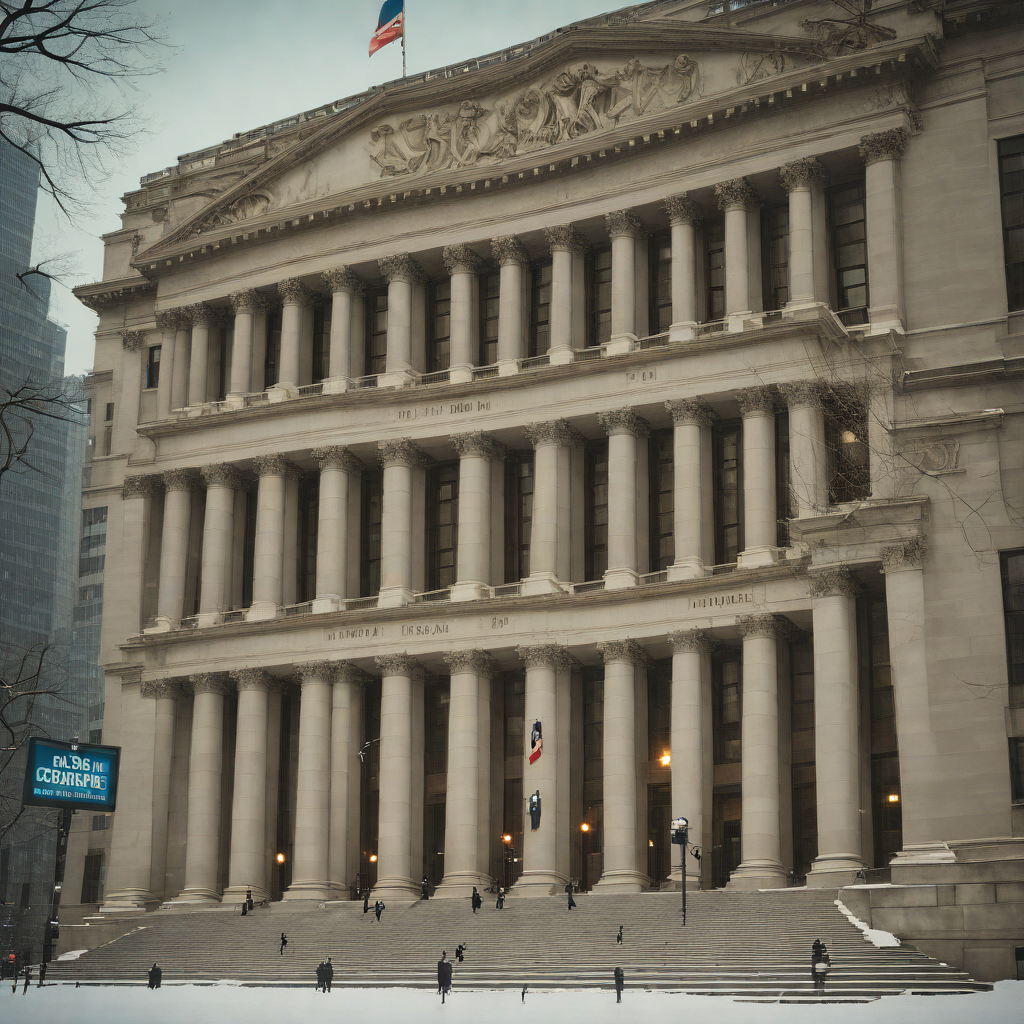
The wind off the Hudson cuts through the stone canyons of Morningside Heights with a cruelty particular to January 2026, finding the gaps in the scarves of students hurrying past the Low Memorial Library. The campus, typically a thrumming hive of discourse, feels braced—like a coastal town awaiting a hurricane. Inside the President's House, the mood shifts from academic contemplation to the tense energy of a corporate war room. This is where the new, uneasy alliance governing Columbia University takes its shape: a marriage of convenience engineered to survive the hostile takeover of American higher education.
On one side of the mahogany table sits Rebecca Sterling, the newly appointed Chancellor. A constitutional scholar with a reputation forged in the icy legislative battles of the University of Wisconsin system, Sterling is the "Stoic Academic." She speaks in the precise, muted tones of procedural law, signaling to the faculty that the university’s commitment to inquiry is still guarded by one of their own. Across from her, scrolling through a tablet with the manic energy of a trading floor, is Marcus "Mac" Fenty, the university's first "Chief Transformation Officer." A former distressed-asset manager, Fenty is the "Brash Dealmaker."
Their partnership has sparked intense debate. Reports surfaced last week alleging Fenty described the university as "a hedge fund with a teaching problem" during a private gala. When reached for comment, Fenty's office denied the specific phrasing but issued a statement emphasizing that "operational realism is required to protect the university's core mission." The Board of Trustees has remained supportive, aware that Fenty represents a desperate bid to preserve the university’s $14 billion endowment against the "Endowment Tax" acceleration threatening to pass the Republican-controlled House this spring.

The Scholar's Burden and the Dealmaker's Ledger
This odd coupling—the constitutional lawyer and the corporate raider—is not an administrative quirk; it is a defensive mutation. Sterling’s role is to translate the university’s existence into the language of "institutional neutrality" that the Department of Education now demands for federal grant eligibility. She ensures that when inquiries regarding Title VI compliance arrive from Washington, the university’s files are impeccable.
Fenty’s role is distinct: to ensure that when alumni from Wall Street threaten to withhold donations over "campus culture," they see a leader who speaks their language of ROI and restructuring. For (Pseudonym) Sarah Miller, a junior researcher in the history department, the impact is tangible. "We used to apply for grants based on historical significance," she says, adjusting her coat against the draft in a library reading room where the heating has been lowered to cut energy costs. "Now, the new internal forms ask us to project the 'economic relevance' of our archival work."
Miller’s experience reflects the broader anxiety detailed in the Chronicle of Higher Education’s January report, which warned that the "Wisconsin Model"—trading autonomy for fiscal survival—is rapidly becoming the standard for private elites terrified of losing their tax-exempt status. At a recent town hall, Sterling spoke of "resilience through adherence to core values," while Fenty presented a slide deck on "Operational Lean-ness," stating that "tenure is a privilege, not a suicide pact for the budget."
The Cost of Survival: Administrative vs. Academic Spending (Projected 2026)
The Wisconsin Model Transplanted
To understand the gravity of the shift at Morningside Heights, one must look to the dismantling of tenure and shared governance in the University of Wisconsin system a decade ago. What was once dismissed by Ivy League administrators as a tragic outcome for public education has, by 2026, mutated into a survival strategy for the nation's wealthiest private institutions. The "Wisconsin Model"—defined by the erosion of faculty protections in favor of administrative flexibility—is no longer just an austerity measure; it is the blueprint for defensive restructuring in the Trump 2.0 era.
The administration knows that in the current political climate, where the Department of Education leverages accreditation to enforce "ideological neutrality," the university cannot afford to be run solely as a republic of letters. It must run as a compliant, defensive corporation. This logic is brutal but irrefutable under the metrics of the Higher Education Accountability Act of 2025, which links federal student loan subsidies to graduate income data.
Dr. Elias Thorne (Pseudonym), the newly appointed Provost, finds himself tasked with the internal audit required to pay for this protection. "It’s not a purge, Elias, it’s a portfolio adjustment," Sterling told him, presenting a report titled Curricular Viability & Federal Risk Factors. The document flagged several departments for review. Thorne argues that the Core Curriculum is the university’s soul, but the metrics disagree. A 2025 report by the Heritage Foundation, now guiding White House policy, named mandatory humanities requirements as "hidden taxes on workforce readiness."

The Hidden Cost of Compromise
The friction at the heart of Columbia’s dual-leadership experiment is most visible in the "Global Governance Initiative," a research program often critical of isolationist trade policies. It was recently "realigned" under the new School of Strategic Resilience. While critics call it censorship, the administration views it as risk mitigation.
Dr. Aris Thorne, Dean of the new School of Strategic Resilience, counters the narrative of decline. "We are not abandoning our principles," Thorne stated in an email to faculty. "We are adapting them to a world where geopolitical realities cannot be ignored. Our goal is to ensure Columbia remains a leader in relevant, actionable research."
Despite these assurances, the strategy has triggered a quiet crisis of legitimacy. While the endowment remains safe—outperforming the Ivy League average—Columbia’s standing in the Global Academic Freedom Index has slipped. European partners are beginning to hesitate, viewing the university less as an independent citadel of thought and more as a soft-power arm of US foreign policy. The "Dealmaker" has prioritized efficiency, measuring success in patents and contracts. Yet, efficiency is often the enemy of resiliency. By pruning the "inefficient" branches of inquiry, the institution risks becoming streamlined but fragile.
The Funding Flip: Federal Grants vs. Corporate Contracts (Ivy League Average)
Blueprint for Survival?
The experiment unfolding on the steps of Low Library is a stress test for the private research university in a populist age. By bifurcating its leadership, Columbia is attempting to engineer a biological defense against a political environment that views the Ivy League with skepticism. This dual-headed governance model represents a tacit admission that the "unitary president" is an artifact of a bygone era. In 2026, the threats are too distinct to be managed by a single skill set.
If Columbia’s gamble succeeds, we may see the rapid adoption of this "Consulship" model across the Ivy League: one leader for the internal polis, one for the external wars. It would signify the evolution of the university into a sovereign entity, capable of conducting its own foreign policy and economic planning independent of federal whims. But if it fails—if the friction between the Scholar’s idealism and the Dealmaker’s pragmatism tears the administration apart—it will validate the critique that the modern university has lost its way. Columbia is no longer just educating students; it is educating its peers on whether it is possible to remain elite in an era that challenges the very concept of elites.