The Gateway Deadlock: Infrastructure as the New Political Battlefield

The Eleventh Hour for the Hudson Arteries
Beneath the grey chop of the Hudson River, the North River Tunnels are weeping. Built in 1910 by the Pennsylvania Railroad, these twin tubes remain the single most critical choke point in the American economy, ferrying over 200,000 passengers daily between New Jersey and Manhattan. But today, the weeping is literal: saltwater residues from Hurricane Sandy—now nearly fourteen years in the past—continue to aggressively eat away at the concrete lining and the 12,000-volt cables that power the trains. Engineers call it "spalling," a clinical term for the slow, agonizing disintegration of the tunnel walls. For the Northeast Corridor, it is a ticking time bomb that the current administration seems content to let tick, utilizing the infrastructure’s fragility as a bargaining chip in a high-stakes federalist standoff.
The precipice was reached earlier this week when the Department of Transportation issued a sudden "review and pause" order on the finalized funding tranches for the Gateway Program. This bureaucratic freeze does more than just delay paperwork; it halts the procurement of specialized tunnel boring machines effectively indefinitely. According to the Gateway Development Commission's latest risk assessment, every month of delay adds approximately $50 million to the project's price tag due to materials inflation and logistical reshuffling. However, the cost of inaction dwarfs these figures. A report released last week by the Regional Plan Association warns that an unplanned shutdown of just one of the two tubes—a scenario deemed "highly probable" within the next three years without massive intervention—would reduce capacity by 75%, effectively severing the economic artery of the Northeast and stranding a workforce essential to the global financial sector.
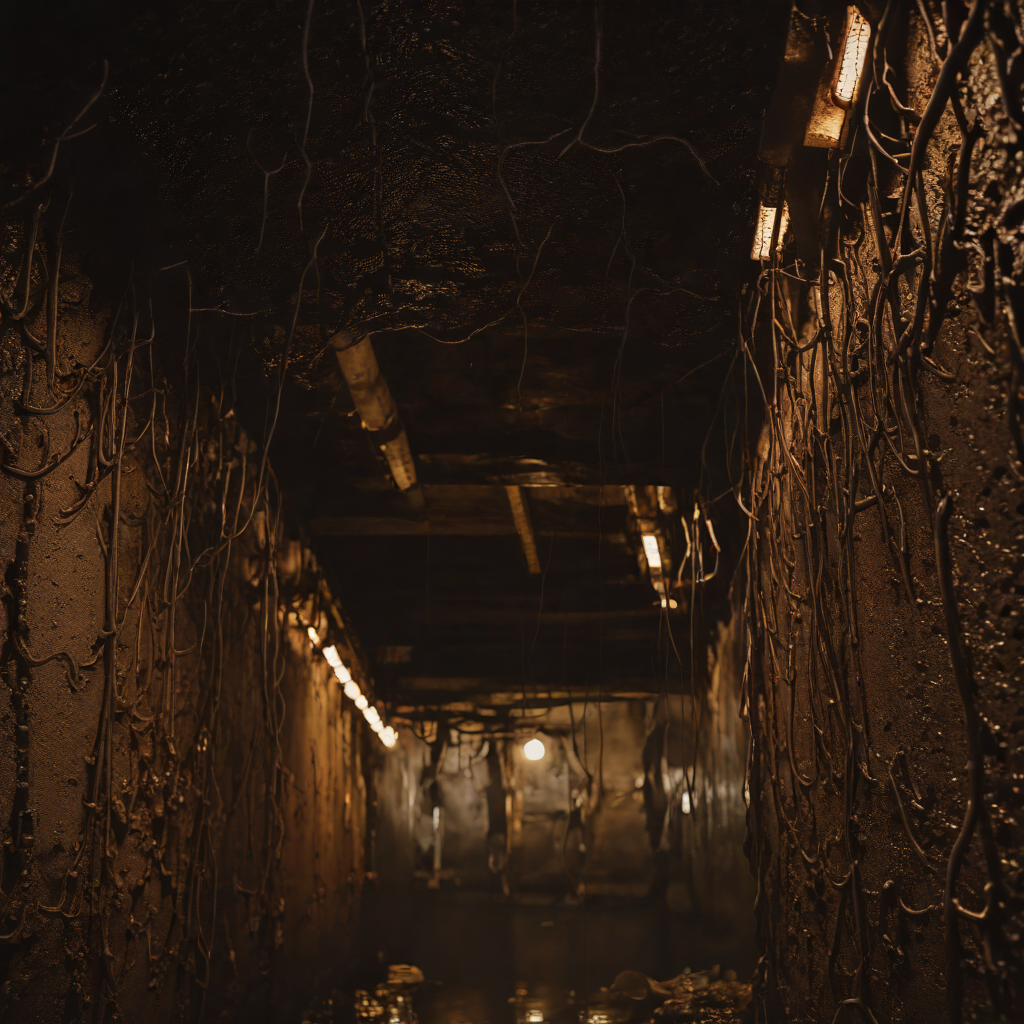
For those on the ground, the abstract politics manifest in visceral, daily anxiety. "David Chen," a senior maintenance technician who has worked the graveyard shifts in the tunnels for over a decade, describes the deterioration as a battle against nature that they are slowly losing. "You patch a leak in one section, and the hydrostatic pressure just builds up and bursts through ten feet down the line," Chen explains, noting that the bench walls, which house critical electrical signals, are cracked to the point of exposing rusted rebar. The implications of a failure here are not merely a bad commute; they represent a potential seizure of 20% of the national GDP. When the Trump administration conditions the release of these infrastructure funds on state-level deregulation concessions from New York and New Jersey, they are not just negotiating a budget; they are gambling with the physical connectivity of the entire Eastern Seaboard.
Projected Daily Economic Loss from Single-Tube Shutdown (2026 Est.)
A Stranglehold on the Northeast Corridor
To understand the sheer magnitude of the gamble currently playing out within the Department of Transportation’s stalled grant approvals, one must look seventy feet beneath the surface of the Hudson River. Here, in the twin-tube North River Tunnels, the architectural legacy of 1910 is visibly crumbling. These tunnels are not merely regional transit links; they are the singular vascular system connecting Washington D.C. to Boston, a corridor that generates approximately 20% of the entire United States GDP. By effectively freezing the federal funding committed by the previous administration for the Gateway Program, the Trump White House has placed a geopolitical chokehold on its own financial capital, creating a paradox that defies traditional economic logic: in the name of "America First," the administration is risking the cardiac arrest of the American economy.
The leverage is undeniable, but the collateral damage is already manifesting in the daily ledger of American commerce. For "Michael Johnson," a logistics coordinator for a mid-sized freight forwarder based in Newark, the political standoff has become an operational nightmare. "We used to budget for weather delays," Johnson explains, pointing to a dashboard of red alerts tracking shipments bound for the Port of New York and New Jersey. "Now, we budget for infrastructure failure. Every time a signal fails in those tunnels because of saltwater corrosion that wasn't fixed ten years ago, my trucks sit idle. That cost gets passed directly to consumers in Ohio and Pennsylvania." Johnson’s experience illustrates the fallacy of viewing the Northeast Corridor (NEC) as a contained "Blue State" problem; the supply chains severed here ripple outward to the manufacturing hubs of the Midwest, ironically punishing the very electoral base the administration seeks to protect.
Projected Daily Economic Loss from Hudson Tunnel Failure (2026 Est.)
The data underscores this interconnectivity with alarming clarity. A 2025 analysis by the Regional Plan Association, adjusted for current inflationary pressures, suggests that a forced shutdown of just one of the two tubes would cost the national economy upwards of $100 million per day. Yet, the narrative emerging from the executive branch frames the Gateway Program—the plan to build new tunnels and repair the old ones—as a "regional handout" rather than a national imperative. This rhetoric ignores the reality that the Northeast Corridor is the heaviest volume passenger rail line in the Western Hemisphere, carrying a workforce that manages global capital flows. As indicated by recent Federal Reserve regional economic assessments, severing this link would likely trigger a contraction in the financial services sector severe enough to offset the administration’s gains from recent deregulation efforts.
This weaponization of federalism represents a dangerous evolution in American governance. Historically, infrastructure projects of this scale—like the Interstate Highway System or the Hoover Dam—were viewed as unifying national assets, immune to partisan leverage. However, by treating the Hudson Tunnel funding as a bargaining chip to extract concessions from New York and New Jersey on immigration enforcement and sanctuary city policies, the federal government is effectively holding the national GDP hostage. The "America First" doctrine, which prioritizes domestic strength to counter external threats like China, is seemingly cannibalizing the very infrastructure required to maintain that strength. If the tunnels fail before the politics are resolved, the resulting economic seizure will not distinguish between a Republican voter in the Rust Belt and a Democrat in Manhattan; the paralysis will be total.
The Zero-Sum Game: Infrastructure as Political Weapon
The directive from the Department of Transportation arrived on a Tuesday morning, not with the bang of a gavel, but with the silent bureaucratic finality of a "pending audit" notification. For the thousands of engineers and laborers mobilized for the Gateway Program—the critical expansion of the Hudson River rail tunnel—the message was clear: the federal spigot had been turned off. While the White House Press Secretary framed the indefinite funding pause as a "necessary fiscal recalibration" in light of the spiraling disaster in Minneapolis, seasoned observers see a different calculus at play. This is not merely an accounting measure; it is the weaponization of concrete and steel, a siege tactic deployed against the economic aorta of the Northeast Corridor to extract political capitulation from recalcitrant state governments.
The timing is too precise to be coincidental. Just days after New York and New Jersey governors announced a joint refusal to implement the administration’s new "ICE Authority Expansion" mandates, the Gateway funding—secured under the previous Biden administration and reaffirmed by Congress—vanished into the ether of executive review. The official rationale cites the need to divert resources to the "Minneapolis Emergency," where the collapse of heating infrastructure continues to grip the headlines. Yet, as noted by the Brookings Institution in their emergency brief earlier this week, the funding mechanisms for capital transit projects and disaster relief are legally distinct silos. The redirection is unprecedented, signaling a breakdown in the unspoken norms of federalism: infrastructure is no longer a shared national interest but a bargaining chip in a high-stakes loyalty test.
For those on the ground, the abstract political chess match has immediate, tangible costs. Johnson, at the Port Newark-Elizabeth Marine Terminal, describes the mood as one of paralyzed dread. "We aren't just moving boxes; we are moving the economy," Johnson says, pointing to the scheduling monitors that are already flashing warnings about capacity limits. "The existing tunnels are century-old arteries clogged with cholesterol. If they go down because maintenance funds are held hostage in Washington, we aren't talking about late trains. We are talking about a heart attack for the entire Eastern Seaboard." His fears are backed by data; the Northeast Corridor Commission estimates that a shutdown of just one existing tube could cost the national economy $100 million daily, a figure that dwarfs the purported savings of the current audit.
Projected Daily Economic Loss: Hudson Tunnel Failure Scenario (Source: NEC Commission 2025 Report)
The administration’s strategy mirrors the "starve the beast" tactics used during the deregulation waves of 2017-2020, but with higher stakes. By linking infrastructure solvency to political compliance, the executive branch is effectively creating a two-tier system of states: those that align with the "America First" deregulation agenda and receive federal largesse, and those that resist and face crumbling bridges and stalled tunnels. It is a dangerous precedent that transforms the federal government from a partner in development into a transactional overlord. As the standoff drags into its second week, the question is no longer whether the tunnel will be built, but whether the fabric of the federation can withstand the tension of such a heavy-handed pull.
The Technical Debt Trap
Every hour the Gateway Program remains a pawn in Washington's political chess game, the price tag ticks upward, not linearly, but exponentially. While the White House and the governors of New York and New Jersey engage in a high-stakes standoff over deregulation mandates, the physics of the North River Tunnels refuse to negotiate. Built by the Pennsylvania Railroad in 1910, these arteries—which carry a staggering 20% of the nation's GDP—are suffering from a corrosive legacy that predates the current administration by over a century, compounded severely by the saltwater inundation from Superstorm Sandy back in 2012.
For "Michael Rossi," a senior structural engineer who has inspected the crumbling bench walls of the tunnels for over fifteen years, the "pause" in federal funding is a misnomer. "There is no pause in decay," Rossi notes, pointing to the spalling concrete that exposes 116-year-old steel to the damp, brackish air. "We are spending more today on emergency patches than we would have spent on debt service for the new tunnel if we had broken ground three years ago." His assessment aligns with data from the Gateway Development Commission, which indicated in late 2025 that maintenance costs for the existing tubes had surged 40% year-over-year, creating a paradox where the government spends billions to keep a dying asset on life support rather than investing in its successor.
The financial mathematics of this delay are brutal. In 2017, the estimated cost for the new tunnel and rehabilitation of the old ones hovered around $12.7 billion. By the time the Biden administration left office, inflation and supply chain disruptions had pushed that figure past $16 billion. Now, in the deregulation-heavy but funding-averse climate of 2026, independent analysts project the final receipt could breach $22 billion. This isn't just standard construction inflation; it is the "risk premium" of uncertainty. Contractors, wary of the federal government's willingness to pull the plug mid-project to leverage state concessions on immigration or environmental waivers, are baking massive contingencies into their bids.
The Cost of Inaction: Gateway Project Estimated Costs (2015-2026)
This escalation represents a "technical debt trap" that threatens to swallow the region's transit budget for a generation. As noted by the Regional Plan Association's 2026 infrastructure audit, every dollar spent covering the inflation spread is a dollar stolen from other critical needs—signaling upgrades, station accessibility, and connecting line repairs. The weaponization of this infrastructure project has effectively created a shadow tax on the Northeast Corridor. When the federal government withholds the committed 50% funding share to force New York to abandon its "sanctuary state" policies, the immediate victim is not the political leadership in Albany, but the logistics companies and commuters who absorb the cost of unreliability.
Major logistics firms are already hedging against a potential catastrophic failure. "We can't rely on a single point of failure that is 116 years old and politically orphan," explains the Director of Operations for a major East Coast freight distributor. They have begun diverting sensitive cargo to trucking routes along I-95, ironically increasing the very carbon footprint and road congestion the Trump administration's deregulation agenda claims to mitigate by unshackling industry. The tunnel, therefore, becomes a symbol of a deeper dysfunction in American federalism: the inability to separate the physical survival of the nation's economic engine from the transient leverage of partisan warfare.
Beyond the Tunnel: The Fracture of Federalism
The stalemate at the Hudson River is no longer merely a budgetary dispute; it has mutated into a constitutional stress test. As the Trump administration continues to withhold the pivotal $12 billion grant—funds that were ostensibly secured in the final months of the previous administration—the message to New York and New Jersey is stark: infrastructure funding is now transactional, tethered not to engineering needs but to political compliance. This weaponization of the federal purse strings threatens to shatter the century-old compact of the Northeast Corridor, turning a critical logistical artery into a bargaining chip for deregulation and state-level policy concessions.
For David Chen, the logistics manager in Newark, this political brinksmanship translates into immediate, tangible costs. "We aren't just talking about trains running late or commuter inconvenience," Chen explains, reviewing a ledger of penalties incurred from increasingly unreliable freight windows. "We are talking about the inability to plan for the next quarter. If that tunnel shuts down for emergency repairs without a backup, nearly 20% of the national GDP hits a physical bottleneck. We are pricing in a catastrophe that Washington seems content to invite."
The implications extend far beyond the immediate commuter belt. The Regional Plan Association has long warned that a failure of the existing North River Tunnels—damaged by Superstorm Sandy and deteriorating daily—would cost the national economy upwards of $145 billion over four years. Yet, the current Department of Transportation has signaled that the release of funds is contingent upon the repeal of specific state-level corporate tax provisions and "sanctuary" status protections, a move legal scholars describe as a coercive expansion of executive power. This brand of "transactional federalism" suggests a new era where the map of American infrastructure is redrawn not by population density or economic necessity, but by the willingness of state governors to capitulate to federal mandates.
If the federal government effectively walks away from the Gateway Program, it signals the end of the collaborative mega-project era. States, already stretched by the municipal bond market volatility of late 2025, cannot shoulder these colossal capital expenditures alone. The alternative—rapid and unregulated privatization—looms large, potentially handing control of public transit sovereignty to private equity consortiums with little accountability to the daily rider.
Projected Daily Economic Loss from Northeast Corridor Disruption (USD Millions)
The breakdown of this partnership forces a grim reckoning for the republic: If the federal government ceases to be the guarantor of interstate commerce, does the United States remain a single, cohesive economic entity, or does it fracture into competing regional blocs? As the concrete in the Hudson tunnels continues to crumble, so too does the assumption that keeping the nation connected is a shared American priority.