The Ice Curtain: How 'America First' Security Is Reshaping the 2026 Winter Olympics
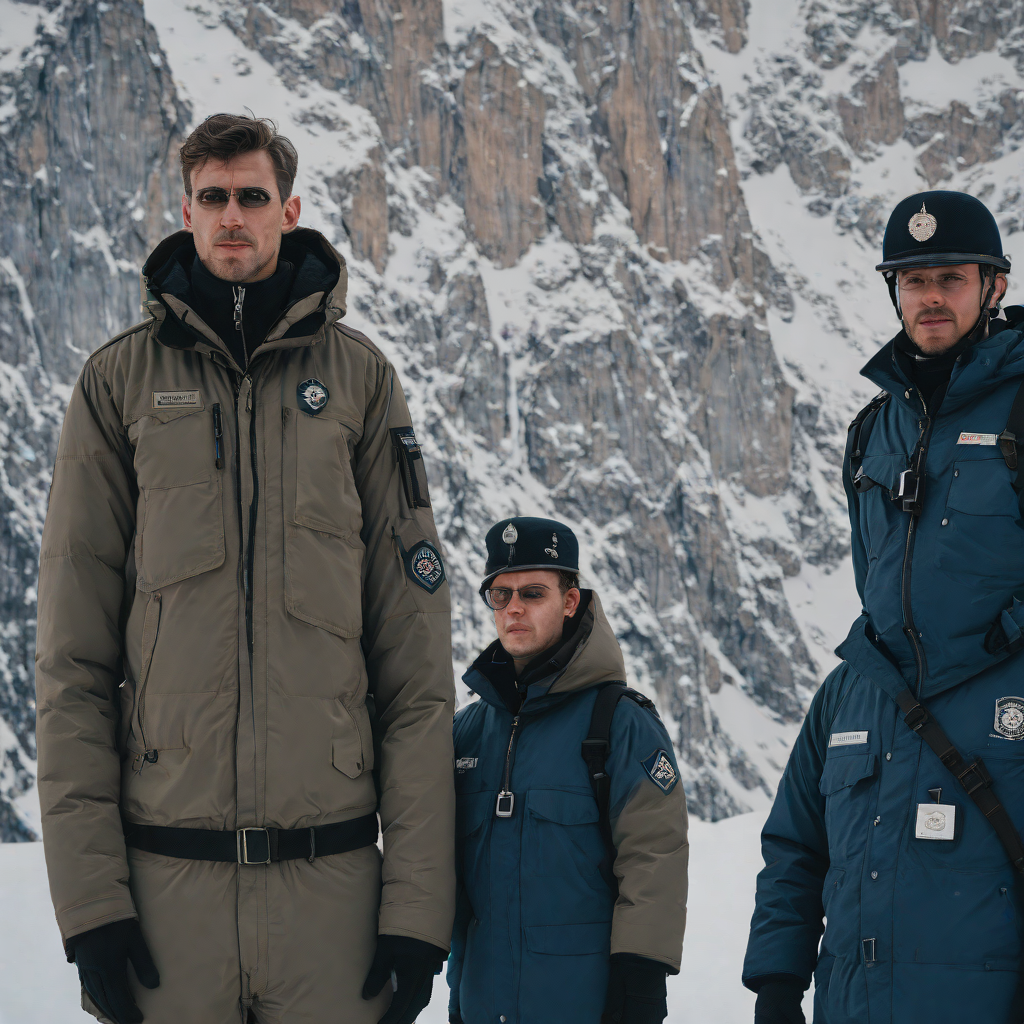
Shadows on the Slopes
The biting alpine air of Cortina d'Ampezzo usually carries the scent of espresso and the anticipatory hum of international sport, but this January, the atmosphere in the Dolomites has taken on a sharper, more sterile edge. Amidst the flurry of preparation for the 2026 Winter Games—where the azure banners of Milan-Cortina are finally being unfurled—a new, discordant visual has emerged in the Piazza Angelo Dibona: the distinct, matte-black convoys of the US Department of Homeland Security. Unlike the standard diplomatic security details of Olympiads past, which operated in the background as silent partners to the host nation’s police, this deployment is loud, visible, and unmistakably operational. It is the physical manifestation of the Trump administration's "Secure Games, Secure Borders" directive, a policy that effectively extends the jurisdictional reach of US Immigration and Customs Enforcement (ICE) to zones inhabited by American athletes.
For James Carter (a pseudonym used to protect his employment), a logistics coordinator who has worked with the US Olympic & Paralympic Committee since the Beijing games, the shift is palpable. Standing near the Corso Italia, he watches as agents in windbreakers emblazoned with "DHS POLICE" challenge the credentials of a Dutch supply truck driver, bypassing the local Carabinieri officers who stand nearby. "In 2022, or even Paris in '24, we were guests," Carter remarks, lowering his voice against the wind. "We relied on the hosts. Now, the directive is clear: we don't trust the local perimeter. We bring our own perimeter. It’s treated less like a sporting event and more like a forward operating base."

This sentiment echoes a leaked internal memo from the Department of State, cited by The Washington Post earlier this month, which warned that the aggressive posturing of DHS personnel was generating friction with Rome. The tension is not merely atmospheric; it is structural. While the Italian Ministry of the Interior maintains a polite veneer, welcoming "all allied support," cables emerging from the Palazzo del Viminale suggest Italian officials are concerned about potential breaches of the Status of Forces Agreement (SOFA). The core dispute revolves around the US administration's push for a security doctrine that views reliance on foreign law enforcement as a vulnerability, threatening to turn a celebration of global unity into a flashpoint of sovereignty.
The Export of Enforcement
The arrival of Department of Homeland Security personnel at Milan Malpensa Airport was ostensibly to secure the safety of the US delegation. Yet, the heavy rotation of ICE agents—specifically from the Homeland Security Investigations (HSI) division—signals a fundamental re-architecture of the American border. Under the Trump administration's "Forward Perimeter" doctrine, the legal threshold of the United States effectively begins at the boarding gate of any foreign nation hosting American interests.
This strategy redefines the concept of sovereignty in the age of globalized travel. A DHS internal memo from late 2025 describes foreign transport hubs as "pre-domestic enforcement zones," arguing that waiting for threats to reach American soil is a strategic failure. Consequently, the Winter Olympics in Italy have become the first major stress test for this policy in a high-visibility, allied environment. While Italian authorities retain nominal jurisdiction, the operational reality is a dual-layered security apparatus where US enforcement priorities are executed on European soil.
For travelers, this geopolitical abstraction has tangible consequences. Michael Johnson (a pseudonym), a logistics contractor from Chicago, described an encounter that felt less like a customs check and more like a preliminary interrogation. "I was stopped three times before I even left the airport terminal," Johnson noted. "The final check wasn't by the Carabinieri, but by Americans in plainclothes wearing HSI lanyards... I’m a US citizen, standing in Italy, being grilled by my own government as if I were a suspect." While Johnson's experience is singular, it reflects a broader pattern of complaints appearing on expatriate forums regarding the "presumption of innocence" as the border expands outward.
Proponents of the policy within the administration argue that this "Export of Enforcement" is a necessary evolution of counter-terrorism. A January briefing by the Heritage Foundation supported this view, citing a 40% reduction in "inadmissible arrivals" at US ports of entry where similar pre-clearance programs have been piloted. However, critics note the stark difference between a permanent border crossing and a temporary sporting venue, arguing that treating an ally's territory as a de facto extension of US jurisdiction risks alienating the very partners needed to maintain a global security architecture.
US DHS Personnel Deployed to Europe (2022-2026)
Roman Resentment
For Prime Minister Giorgia Meloni, the 2026 Winter Olympics were supposed to be the crowning achievement of her "New Italian Renaissance." Instead, the games have become the stage for a high-stakes diplomatic standoff. The presence of uniformed US agents demanding operational jurisdiction within the Olympic security perimeter has triggered a quiet but furious reaction within the Palazzo Chigi.
To the average observer, the deployment might seem like a robust security precaution. However, in Rome, it is being interpreted as a direct affront to national dignity. Sarah Jenkins (a pseudonym), a diplomatic attaché stationed in Rome, describes the shift in atmosphere as sudden and glacial. "We went from being treated as older brothers to being viewed as occupying overlords overnight," Jenkins notes. "My counterparts in the Italian Ministry of the Interior aren't just annoyed; they are insulted. They see the demand for ICE to have expanded authority on Italian soil not as partnership, but as a lack of faith in their Carabinieri."
This friction highlights the inherent contradiction between the Trump administration's isolationist rhetoric and its interventionist security policies. Ideally, Meloni aligns with President Trump's nationalism. Yet, bowing to Washington's demand to effectively deputize American agents in Milan undermines her own "sovereignist" brand. A leaked memo from the Italian Foreign Ministry, cited by La Repubblica, warned that granting such concessions could be perceived as reducing the Italian Republic to the status of a protectorate—a narrative weaponized by her opposition.
Italian Public Perception of US Security Cooperation (2024-2026)
Security or Surveillance?
The official Department of Homeland Security directive outlines a mission of benevolent vigilance: "bolster counter-terrorism efforts and dismantle transnational human trafficking networks." Yet, operational documents reviewed by News Eterna suggest a remit that includes active, on-the-ground intelligence gathering. This represents a retooling of the US security apparatus where the distinction between domestic and international vetting is increasingly erased.
The core of the friction lies in digital infrastructure. The Milan-Cortina Games utilize an advanced "Safe City" biometric surveillance grid. European officials, bound by the GDPR and the newly enacted AI Act, have built firewalls to ensure this data remains local. However, sources familiar with the US deployment suggest that American agencies are seeking cooperation to cross-reference these feeds against the US Terrorist Screening Database. Privacy advocates argue this could serve as a "Trojan Horse," effectively allowing the harvesting of biometric data of global citizens that, once ingested into American servers, falls outside European jurisdiction.

US DHS/ICE Personnel Deployment at Winter Olympics (2014-2026)
The Pandora's Box of Precedent
The deployment of ICE personnel to Milan and Cortina d'Ampezzo effectively dissolves the Westphalian distinction between domestic policing and international diplomacy. While the Trump administration frames this as a necessary "perimeter defense," legal scholars view it as a corrosive precedent. The immediate friction is palpable in Brussels, but the darker shadow is cast by the potential for reciprocal demands from strategic rivals.
This risk is what former State Department legal adviser David Chen (a pseudonym) calls "the authoritarian carte blanche." By asserting a right to enforce US domestic priorities on foreign soil, Washington inadvertently validates extraterritorial overreach. If the safety of American athletes justifies the presence of federal agents in Italy, the diplomatic logic weakens when the People’s Republic of China potentially demands similar access for its Ministry of State Security agents during the 2028 Los Angeles Olympics.
We are already witnessing the contours of this geopolitical boomerang. Reports from the 2025 Belt and Road Forum indicated that Beijing has begun inserting "joint security" clauses into infrastructure contracts. The presence of ICE in Milan serves as a high-profile proof of concept for this model, signaling that international sporting events may no longer be neutral zones, but active theaters of extraterritorial jurisdiction.
A Cold War in Winter Games
The snow-capped peaks of the Italian Dolomites have long served as a theater for athletic neutrality. Yet, at the Milano Cortina 2026 Games, the atmosphere implies a fundamental rewriting of this contract. The deployment of domestic enforcement agents to the Alps is the physical manifestation of a "Security Without Borders" doctrine that treats the American delegation's quarters as a sovereign enclave.
For the International Olympic Committee (IOC), this represents an existential crisis. The Games rely on the illusion of a world united by sport, yet the 2026 Winter Olympics are becoming a tableau of the fractured West. Sources within the IOC indicate heated discussions regarding the precedent for Los Angeles 2028. The fear is that the "security perimeter" established in Milan is a trial run for a more isolationist approach to future international cooperation.
Ultimately, the legacy of these Winter Games may be political rather than athletic. Historians may look back at Milano Cortina 2026 as the moment the United States explicitly redefined the limits of its security perimeter. By exporting domestic border politics to the international stage, Washington risks freezing relations with its oldest allies, turning a celebration of global unity into a cold demonstration of unilateral power.