The Iowa Paradox: High-Tech Boom Meets Heartland Struggle in 2026
The Rally and the Receipt
The neon glow of the Iowa Events Center in Des Moines reflects a nation currently obsessed with its own momentum. Inside, the stage is set for President Trump’s "Victory in the Heartland" rally, a celebration of a 2026 economy that, on paper, is screaming toward unprecedented heights. With the S&P 500 recently crossing a historic threshold and the administration’s "Deregulation 2.0" initiatives reportedly slashing billions in corporate overhead, the rhetoric of a renewed American Golden Age is the evening’s primary currency. But three blocks away at a local Fareway grocery store, the currency is much less optimistic.
For James Carter, a 54-year-old third-generation corn farmer from Boone County, the "Trump Boom" is a headline that hasn’t reached his kitchen table. Clutched in his hand is a receipt from this morning: a gallon of milk, a dozen eggs, and a box of cereal. In January 2026, that basic triad costs 18% more than it did just fourteen months ago, despite the administration’s claims that the "Efficiency Blitz" by the newly formed Department of Government Efficiency (DOGE) would tame the "Biden-era" inflation tail. While the national GDP growth remains robust, driven largely by the silicon-and-steel sectors of the West Coast and Texas, the Midwest is grappling with what regional analysts call the "Mid-Automation Hollowing."
The disconnect is starkest in the agricultural sector. A 2025 Department of Agriculture year-end summary noted that while corn and soybean yields hit record highs, the actual labor hours required per acre have plummeted by 30% following the rapid integration of AGI-driven autonomous harvesting fleets. These fleets, touted as the pinnacle of the administration’s "Technological Sovereignty" push, have secured American food dominance against Chinese competition but have simultaneously turned once-bustling small towns into quiet corridors of automated efficiency. For workers like Carter, whose skills were once essential to the mechanical upkeep of the Heartland, the 2026 "Adjustment Crisis" isn't a theoretical policy challenge—it is the sound of a disappearing middle-class wage.
Economic Divergence: National Growth vs. Midwest Real Wage Growth (Source: 2026 Regional Economic Survey)
The administration argues that this friction is a necessary "purging of inefficiency." During a recent press briefing, the Secretary of Commerce suggested that the displacement of traditional labor is the "birthing pain of a 6G-integrated economy." However, this overlooks the systemic infrastructure decay exposed by the "Compound Crisis" of late January. As catastrophic winter storms hammered Iowa this week, the newly deregulated private power grids struggled to maintain stability, leading to rolling blackouts that the Des Moines Register attributed to "deferred maintenance under the guise of cost-cutting."
While the rally-goers cheer for the abolition of the "regulatory state," the receipt in James Carter’s pocket serves as a different kind of ballot. It records the cost of a society that has prioritized the speed of capital over the stability of its citizens. The administration’s celebration of a "hollowed-out" boom relies on the hope that the spectacle of national strength can distract from the quiet erosion of local dignity. As the speakers at the Events Center roar about the end of the "American Decline," the quiet reality of 2026 Iowa suggests that the decline hasn't ended—it has simply been automated.
Wall Street's High, Main Street's Low
The disconnect between the glowing green tickers of the New York Stock Exchange and the rusted silos of the American Midwest has reached a breaking point in early 2026. While President Trump’s second term has been characterized by a relentless pursuit of deregulation that sent the S&P 500 to a record 6,800 points this month, the victory lap feels premature in the shadow of Iowa’s eroding middle class. The "Trump 2.0" economic miracle, fueled by the aggressive integration of AGI into corporate workflows and the dismantling of the "regulatory state," has certainly fattened the margins of the Fortune 500, but it has done so by hollowing out the very workers who formed the backbone of the 2024 movement.
A January 2026 report from the Federal Reserve Bank of Chicago illustrates this "K-shaped" divergence with startling clarity. While corporate profits in the tech and energy sectors have surged by 22% year-over-year, real median income in rural Iowa has stagnated, offset by a localized inflation rate for machinery and fertilizer that remains 14% higher than the national average. For James Carter, the market’s record highs are a distant abstraction. "The President talks about a 'Golden Age of Growth,' but I’m looking at a 9% interest rate on a line of credit for an autonomous harvester I was forced to lease because the local labor pool vanished," Carter explains. He represents a growing class of "technological sharecroppers"—producers who are producing more than ever thanks to AI-driven precision agriculture, yet keeping less of the profit as capital migrates toward the software providers and silicon manufacturers in California and Texas.
The administration’s "America First" trade posture, while intended to protect domestic industry, has inadvertently created a squeeze on the agricultural heartland. Retaliatory measures from the EU and a cooling trade relationship with a de-risking China have depressed commodity prices even as the costs of production climb. As noted by a recent white paper from the Peterson Institute for International Economics, the deregulation of the transport sector was supposed to lower costs, but the rapid "algorithmification" of logistics has instead allowed major carriers to implement dynamic pricing models that penalize small-scale rural shippers. The result is a paradox: Iowa’s output is at an all-time high, but its economic sovereignty is at an all-time low.
The Great Divergence: S&P 500 vs. Rural Iowa Purchasing Power (2024-2026) | Source: Fed/USDA
The Silent Silos: Agriculture's Corporate Consolidation
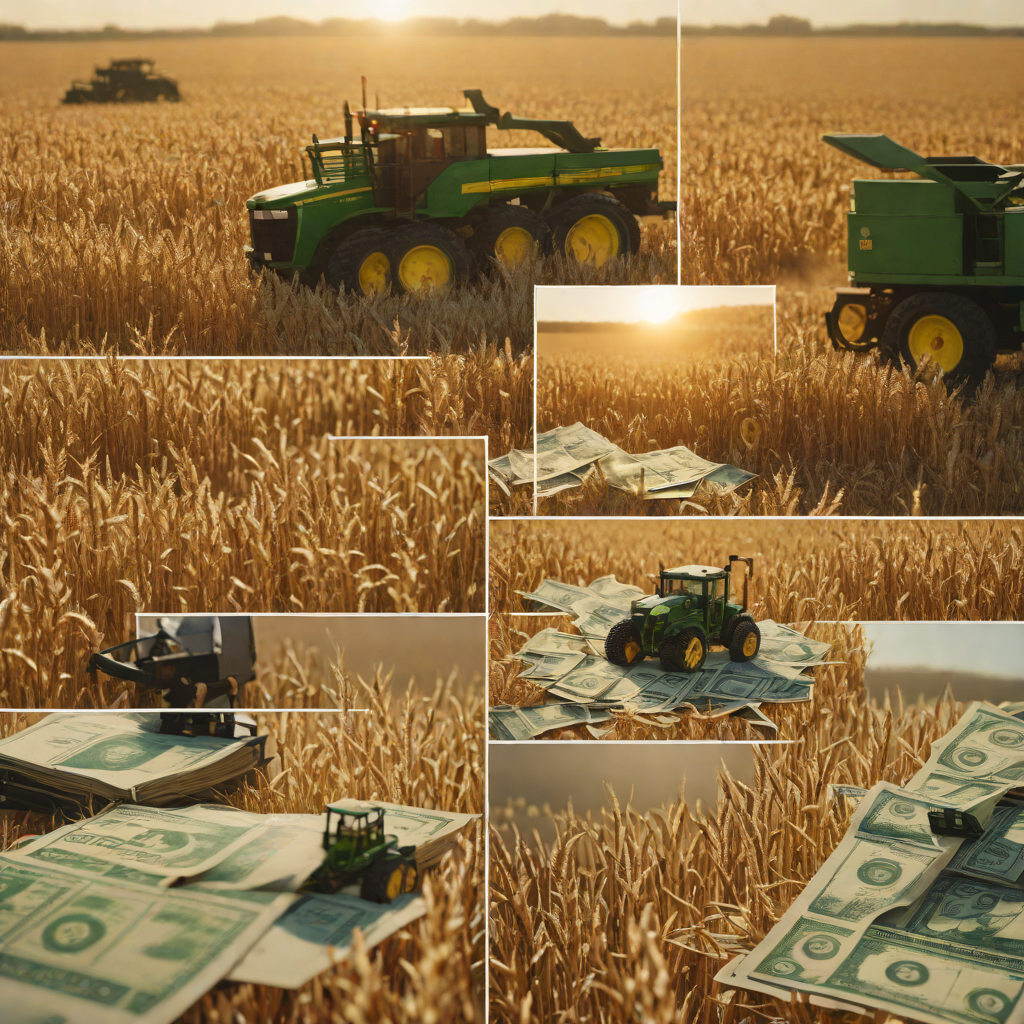
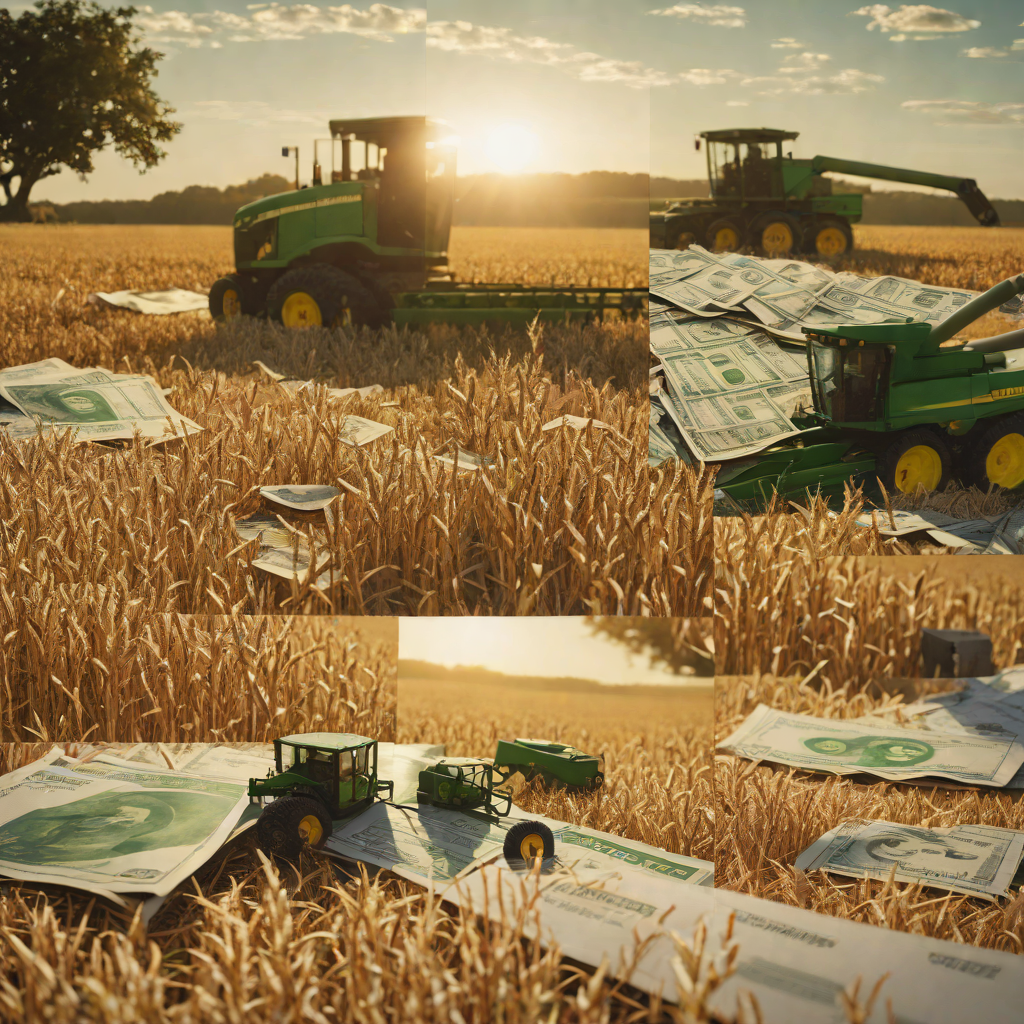
On a crisp morning in Boone County, the silence is deceptive. From the roadside, the fields look more productive than ever, meticulously groomed by autonomous John Deere X9 combines that harvest with sub-inch precision, guided by the Starlink satellite constellation. Yet, the farmhouse at the end of the gravel drive sits empty, its windows dark. This is the paradox of the 2026 agricultural boom: the land is yielding record outputs, but the people who once tended it are disappearing, replaced by remote management firms and algorithmic efficiency.
Carter, still holding on to his family's legacy, notes that the decision to sell for many of his neighbors wasn't a choice, but a mathematical inevitability. "The Trump administration promised us freedom from regulation," Carter explains. "But deregulation didn't free the farmer; it freed the suppliers." Carter refers to the wave of vertical mergers approved by the FTC in late 2025, which allowed the "Big Three" ag-tech giants to consolidate seed, chemical, and machinery markets into a unified "subscription service." To plant the proprietary drought-resistant seeds required to meet export standards, farmers must now use specific digitized equipment and proprietary fertilizers, driving input costs up by 18% year-over-year while commodity prices remain suppressed by the very abundance efficient automation creates.
The disconnect between Wall Street's celebration of agricultural productivity and the Main Street reality in rural Iowa is stark. While the S&P 500 Agricultural Index hit an all-time high last week, buoyed by the administration's "AI in Agriculture" subsidies, independent farm net income has plummeted. The "2025 Agricultural Modernization Act," often touted by the White House as the catalyst for this golden age, offered tax credits for automated systems that cost upwards of $450,000—a capital barrier that effectively barred family operations from competing. The result is a tiered economy: mega-farms that can amortize these costs over ten thousand acres, and smaller operations that are slowly bled dry by the efficiency gap.
The Efficiency Gap: Ag-Corp vs. Independent Farm Income (2022-2026)
This consolidation has profound downstream effects on the local social fabric. A recent study by the University of Iowa’s Rural Policy Research Institute notes that for every 10% increase in corporate land ownership in a county, local retail revenue drops by 4%. The logic is simple: a corporate farm manager purchasing inputs in bulk from a national distributor bypasses the local seed dealer, the local mechanic, and the local bank. "We aren't just losing farms," warns the Institute's lead economist. "We are losing the transactional velocity that keeps rural towns alive."
Rusting Belts and Robot Arms
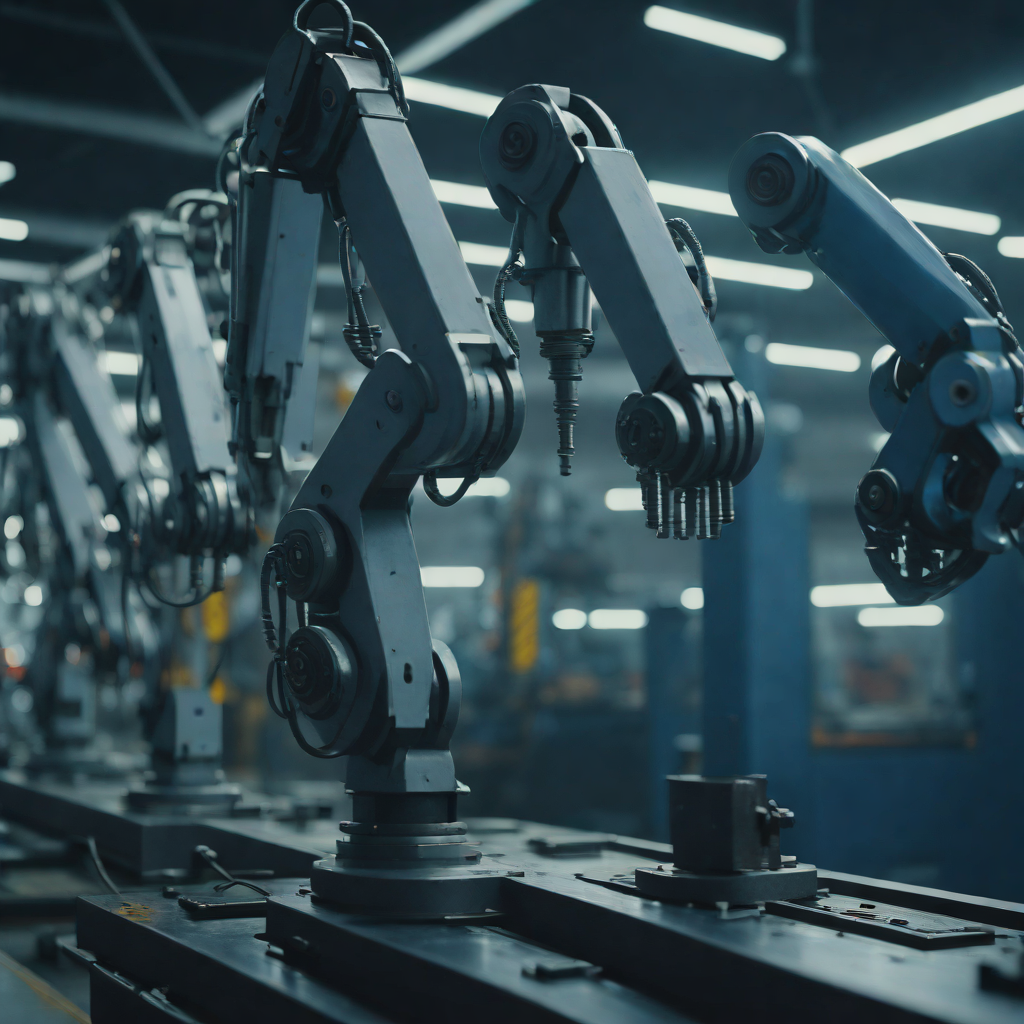
The hum of the "Patriot Manufacturing Zone" outside Cedar Rapids is deceptive. From the highway, the sprawling complex looks like the bustling heart of the promised industrial renaissance, a direct beneficiary of the Trump administration's "American Forge" deregulation package passed late last year. But inside the million-square-foot facility, the lights are dimmed. There is no shift change whistle, no crowded cafeteria, and shockingly few cars in the employee lot. Instead, the floor is dominated by a silent, synchronized ballet of articulate robotic arms—mostly Japanese and German engineered, despite the "Made in USA" banners—assembling heavy machinery with a precision no human crew could match.
This is the reality of the "Adjustment Crisis" in 2026 Iowa. While the Dow Jones Industrial Average celebrates record highs fueled by AI integration and slashed corporate tax rates, the anticipated jobs boom has materialized as a capital equipment boom. For Mark Daniels, a 48-year-old machinist who spent two decades at the plant before its "modernization" retrofit, the irony is bitter. "They told us the tariffs would bring the work back," Daniels says, sitting in a diner that has seen its lunch rush evaporate. "And the work did come back. The jobs didn't. They just brought the machines here to do it."
The numbers support Daniels' observation. According to a Q4 2025 report by the Federal Reserve Bank of Chicago, manufacturing output in the Midwest has risen by 14% since the introduction of the new trade barriers, yet manufacturing employment in the same region has contracted by nearly 11%. This divergence marks a critical decoupling: production has been onshored, but labor has not. The administration’s pivot to "unshackled innovation" has effectively subsidized the automation of the Rust Belt, creating a "hollow core" economy where GDP growth no longer correlates with community stability.
The Great Decoupling: Iowa Manufacturing Output vs. Employment (2020-2026)
The Credit Card Cliff
While the tickers on Wall Street flash green, celebrating the deregulatory adrenaline shot of the second Trump administration, the financial reality in Iowa’s dining tables and checkout lines tells a divergent story. The headline GDP figures, bolstered by high-frequency trading algorithms and the booming valuation of AI infrastructure, obscure a fragile foundation: a consumer economy that is increasingly running on fumes—specifically, high-interest revolving credit. We are standing on a "Credit Card Cliff," where the illusion of prosperity is maintained not by income growth, but by the accumulation of debt at legally maximized interest rates.
To understand the mechanics of this silent crisis, one need only look at the shifting payment patterns in Davenport and Cedar Rapids. Sarah Miller, a 34-year-old shift supervisor at a regional logistics hub, represents a demographic the administration’s "American Golden Age" rhetoric has largely bypassed. Despite a nominal 4% wage increase last year—a figure touted by the Department of Labor as evidence of trickle-down success—Miller’s purchasing power has effectively collapsed. "The paycheck looks bigger, but the grocery cart is lighter," she explains, referencing the stubborn inflation in food and energy sectors that tariffs have exacerbated. To bridge the gap between her stagnant real wages and the rising cost of survival, Miller, like millions of Americans, has turned to plastic.
This is not the frivolous spending of the pre-2008 era. The debt accumulating on Iowan balance sheets in 2026 is existential. A Q4 2025 report by the Federal Reserve Bank of Chicago highlighted a disturbing trend: for the first time in two decades, the primary driver of credit utilization in the Midwest has shifted from discretionary goods to essential services. The deregulation of the banking sector, a cornerstone of the current administration’s 2025 legislative agenda, removed critical caps on late fees and variable APR adjustments. The result is a predatory compounding effect. While the wealthy leverage cheap, asset-backed loans, the working class is financing daily life at APRs touching 28%.
The Debt Divergence: S&P 500 vs. Credit Delinquency (2022-2026)
Loyalty Tested in the Heartland
In the coffee shops of Des Moines and the grain elevators of Cedar Rapids, the record-shattering heights of the S&P 500 feel like a transmission from a distant planet. While the Trump administration’s second-term policies have successfully untethered the stock market from traditional regulatory gravity, fueling a 14% surge in tech-heavy indices since the start of 2026, the view from the Iowa furrow is decidedly more grounded. The "America First" deregulation sweep has indeed stripped away environmental hurdles for industrial expansion, yet for the independent producer, this has manifested as a "Hollow Boom"—a period where top-line national growth masks a systemic erosion of the rural middle class.
The tension is most visible in the rapid deployment of autonomous agricultural systems. Under the current administration’s "Technological Sovereignty" initiative, subsidies have pivoted toward AI-integrated hardware, favoring massive corporate land-holdings that can afford the capital-intensive transition to driverless fleets. For James Carter, the math no longer computes. "The administration talks about bringing jobs back, but every new tax credit for 'Smart Farming' feels like a severance package for the small operator," he observes, noting that while his yields are consistent, the cost of diesel and AI-subscription fees has climbed 19% since 2024. As highlighted in a recent Iowa State University economic brief, the divergence between corporate agricultural profits and net farm income for independent operators has reached its widest gap in forty years.
The Divergence: National Markets vs. Iowa Farm Income (Source: USDA/BLS 2026)
This economic squeeze is creating a complex political friction. Historically, the Iowa GOP base has traded economic volatility for cultural security, a bargain that held firm through the first Trump term. However, the 2026 "Adjustment Crisis"—where automation has begun to displace not just blue-collar factory workers but also the administrative back-office staff of rural insurance and logistics firms—is testing the limits of that loyalty. Political strategists in the Midwest are beginning to track a subtle but significant "Minneapolis Ripple." Following the catastrophic infrastructure failures in neighboring Minnesota earlier this week, which many local critics attribute to the rapid dismantling of federal oversight, a sense of precariousness has entered the conversation. The cultural alignment remains, but it is increasingly shadowed by a pragmatic fear: that the "hollow core" of the boom might eventually lead to a total collapse of local resilience.