Empire of Smoke: The Governance Crisis Behind New York’s Cannabis Collapse
The Purge in Albany
The corridors of the State Capitol in Albany have long been accustomed to the echoes of political ambition, but the silence that followed the sudden decapitation of the Office of Cannabis Management (OCM) leadership was different—it was the quiet realization of a billion-dollar blunder. Governor Kathy Hochul’s decision to dismantle the agency’s top brass was not merely an administrative reshuffle; it was a public admission that the state’s flagship progressive experiment had collapsed under the weight of its own bureaucracy. The vision of a "gold standard" for social equity, once touted in press releases and victory laps, has dissolved into a cautionary tale of how regulatory paralysis can strangle an industry before it even takes its first breath.
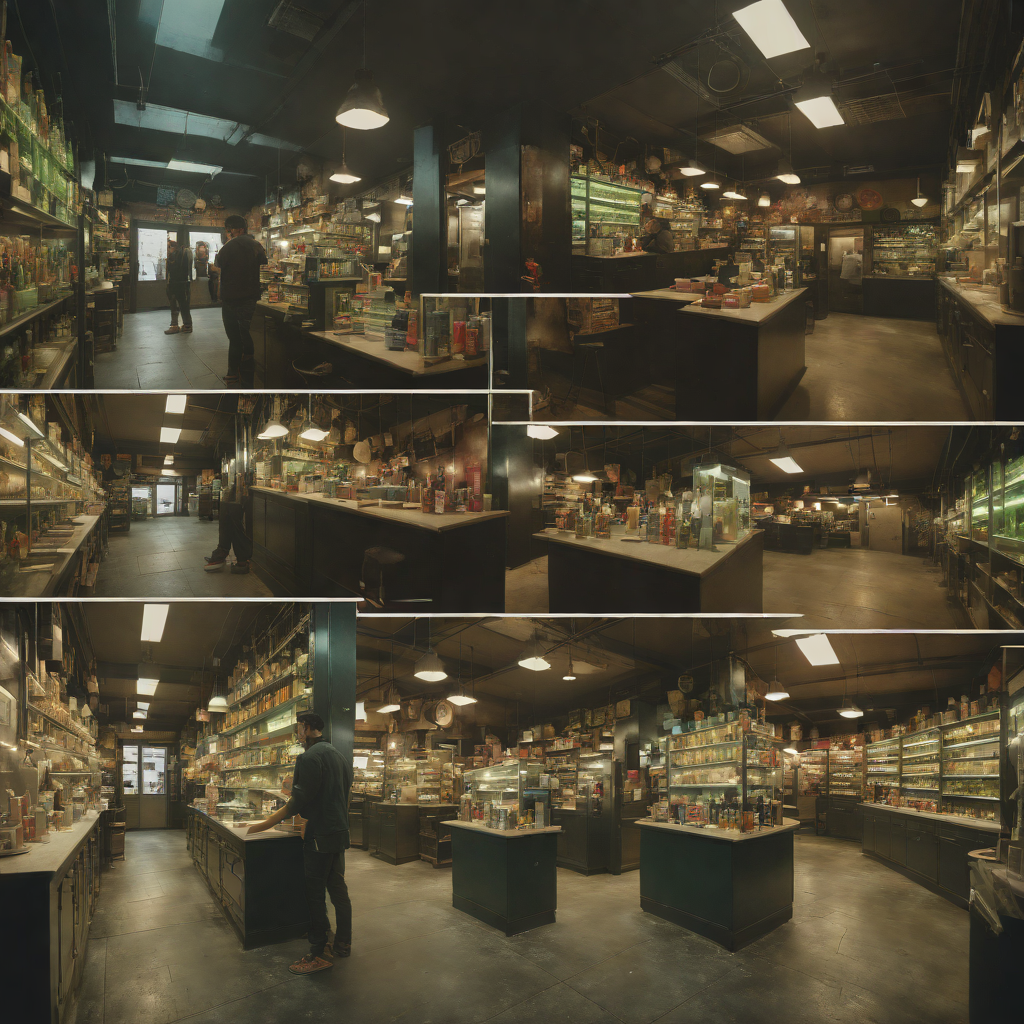
For (Pseudonym) Michael Johnson, a licensed dispensary owner in Queens, the turmoil in Albany is not an abstraction—it is a monthly balance sheet bleeding red ink. "We followed every rule, paid every fee, and waited for inspections that were delayed by months," Johnson explains, standing in an empty showroom that contrasts sharply with the bustling, neon-lit illicit smoke shop just two blocks away. While the state spent two years agonizing over the perfect regulatory framework, the black market moved with the speed of pure capitalism, filling the void with unlicensed storefronts that pay no taxes, adhere to no testing standards, and face enforcement actions that, until recently, amounted to little more than the cost of doing business.
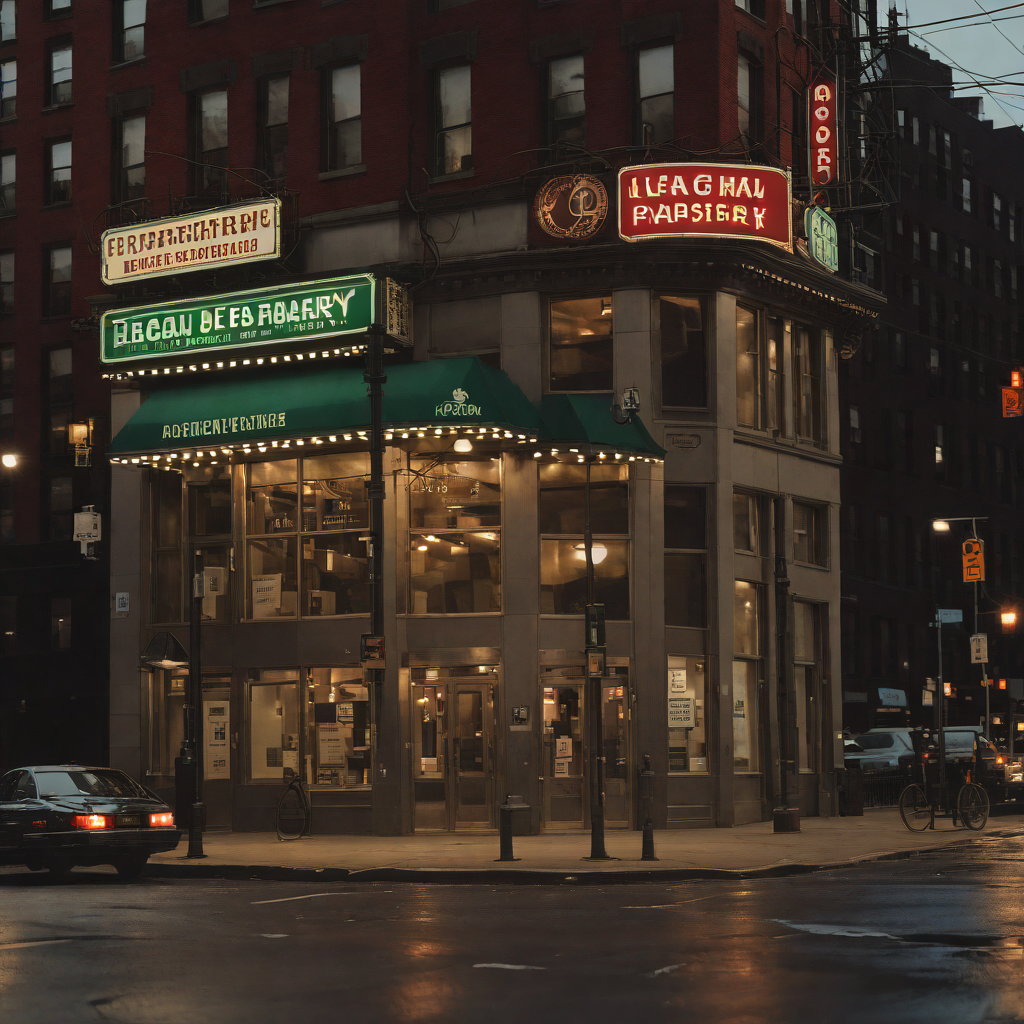
The Governor's "purge" of the OCM was intended to signal a new era of enforcement and efficiency, but for operators like Johnson, it feels like rearranging deck chairs on a sinking ship. The systemic failure stems from a fundamental disconnect between the legislative intent and the operational reality. The Marihuana Regulation and Taxation Act (MRTA) was designed with noble intentions: to prioritize licenses for "justice-involved" individuals. However, as noted in the blistering internal assessment commissioned by the Governor’s office, this idealism was not matched by logistical competence. The licensing queue became a bottleneck of epic proportions, turning a projected economic engine into a fiscal liability.
NY Cannabis Market Share: Legal vs. Illicit (2024-2026)
Anatomy of a Stalled Launch
The road to New York’s cannabis paralysis was paved not with bad intentions, but with a uniquely Empire State brand of bureaucratic hubris. When the MRTA was signed into law, it was heralded as a framework designed to prioritize social equity over corporate consolidation. Yet, five years later, a review of internal agency memos and court filings suggests that the very mechanisms intended to level the playing field became the architects of the market's stagnation. The defining failure was not the goal of equity, but the operational incompetence that left hundreds of entrepreneurs insolvent while the illicit market exploded.
The collapse began with the creation of the Conditional Adult-Use Retail Dispensary (CAURD) program. While politically potent, the program rested on shaky legal ground. By restricting the initial application pool, the OCM inadvertently invited a barrage of federal lawsuits arguing that the state was violating the Dormant Commerce Clause. These legal challenges, which froze the licensing process for months at a time throughout 2023 and 2024, were predicted by multiple legal analysts. Instead of pivoting, state leadership doubled down, creating a bottleneck that effectively strangled the legal market in its crib.
The human cost of this administrative gridlock is best illustrated by the experience of "(Pseudonym) Marcus Thorne," a Queens native who secured one of the first provisional licenses. Thorne, who spent three years in the state correctional system in the early 2000s, liquidated his 401(k) and signed a commercial lease in anticipation of a 2024 opening. "They told us the 'turnkey' shops were coming," Thorne explains, referencing the state's promise to build out dispensaries using a $200 million social equity fund. However, the fund struggled to raise private capital, and the promised locations failed to materialize on schedule. By early 2026, Thorne was paying rent on an empty storefront, bleeding cash while an unlicensed bodega across the street sold untested product with impunity.
The Billion-Dollar Gray Market
Walk down any major avenue in Manhattan—from the polished storefronts of SoHo to the bustle of Hell's Kitchen—and the scent is unmistakable. It is not the smell of a regulated, taxed commodity, but the brazen aroma of a regulatory vacuum. The "gray market" is no longer a fringe operation operating in shadows; in 2026, it is the dominant retail experience for the average New Yorker, a multi-billion dollar shadow economy that has capitalized on every misstep of the OCM.
For consumers like Sarah Miller, a 34-year-old marketing executive living in Brooklyn, the choice between legal and illicit is purely economic. "I want to support the legal dispensaries," Miller admits. "But the licensed shop is a twenty-minute subway ride away, has a line out the door, and charges nearly double after taxes. Here, I walk in, pay cash, and leave. The state made it too hard to do the right thing." Her sentiment echoes a staggering statistic from a late 2025 consumer survey by the Siena College Research Institute, which found that nearly 60% of New York cannabis consumers still primarily purchase from unlicensed sources.
The math behind this failure is stark. Legal operators are suffocated by a potent cocktail of taxes—a 13% retail tax combined with a potency tax that distributors often pass down—driving prices well above street value. Meanwhile, illicit operators function with the agility of a startup. A 2025 analysis by the Empire Center for Public Policy estimated that for every dollar spent in a legal dispensary, more than four dollars are exchanged in the unregulated market. This isn't just lost tax revenue; it is a direct transfer of wealth from compliant business owners to opportunistic networks.
NY Cannabis Market Share Estimates (2025)
The Political Price of Paralysis
To understand the precarious position of Governor Kathy Hochul as the 2026 election cycle heats up, one must dissect the anatomy of the "Cannabis Purge" that has come to define her administration’s regulatory reputation. The firing of top officials was less a corrective measure and more a public admission of systemic failure. It validated the criticisms that had been mounting from both the left and the right: that the state was simultaneously strangling legal operators with red tape while effectively ignoring the explosion of the illicit market.
Take the case of "(Pseudonym) Elena Rodriguez," a prospective dispensary owner in Brooklyn who secured a CAURD license. "I played by every rule they invented, even as the rules changed weekly," Rodriguez explains, gesturing to a commercial space that sat empty for eighteen months while she burned through her savings. Her experience reflects a broader betrayal: the state’s social equity goals, designed to empower those harmed by prohibition, ended up trapping them in a financial purgatory.
This administrative chaos has handed a potent weapon to Hochul's political rivals. In the current climate of 2026, where the Trump administration’s "America First" doctrine emphasizes law and order and federal skepticism of state-level drug liberalization, New York’s disorderly market serves as a convenient cautionary tale for conservatives. It allows the opposition to frame the Democratic leadership not just as ideologically misplaced, but as technically incompetent.

As we look at the license issuance data, the bottleneck is stark. The system was designed to throttle supply to protect small farmers, but instead, it starved the retail sector, leaving the 2024 and 2025 harvests with nowhere to go.
NY Cannabis: The Supply-Retail Disconnect (2023-2026)
A State in Search of Direction
The firing of top officials at the OCM was intended to be a surgical strike—a decisive move by Governor Hochul to excise the paralysis that had seized New York’s legal weed market. Yet, as we stand in early 2026, the dismissal of Executive Director Chris Alexander and other key architects feels less like a solution and more like a diagnosis of a deeper pathology. A 2025 audit by the State Comptroller’s office estimated that New York missed out on nearly $2 billion in projected tax revenue over the first three years of legalization—capital that was supposed to fund social equity programs and community reinvestment.
The political cost for Governor Hochul has shifted from a mere headache to a defining vulnerability. In an era where the Trump administration in Washington is aggressively deregulating industries to spur growth, New York’s inability to manage a legalized market stands in stark contrast. The narrative being written by opposition leaders is no longer just about cannabis; it is about competence.
Ultimately, the redemption of New York’s cannabis market requires more than just new faces in the OCM’s Harlem headquarters. It demands a fundamental rethinking of how the state balances social goals with market mechanics. The lesson for the Hochul administration is that policy without execution is merely performance. New York remains a state in search of direction, not because it lacks a compass, but because it has spent so long debating the route that the destination has begun to drift out of reach.