The Wire in the Woods: Oklahoma Scandal and the Collapse of Small-Town Impunity
The Hot Mic in the Heartland
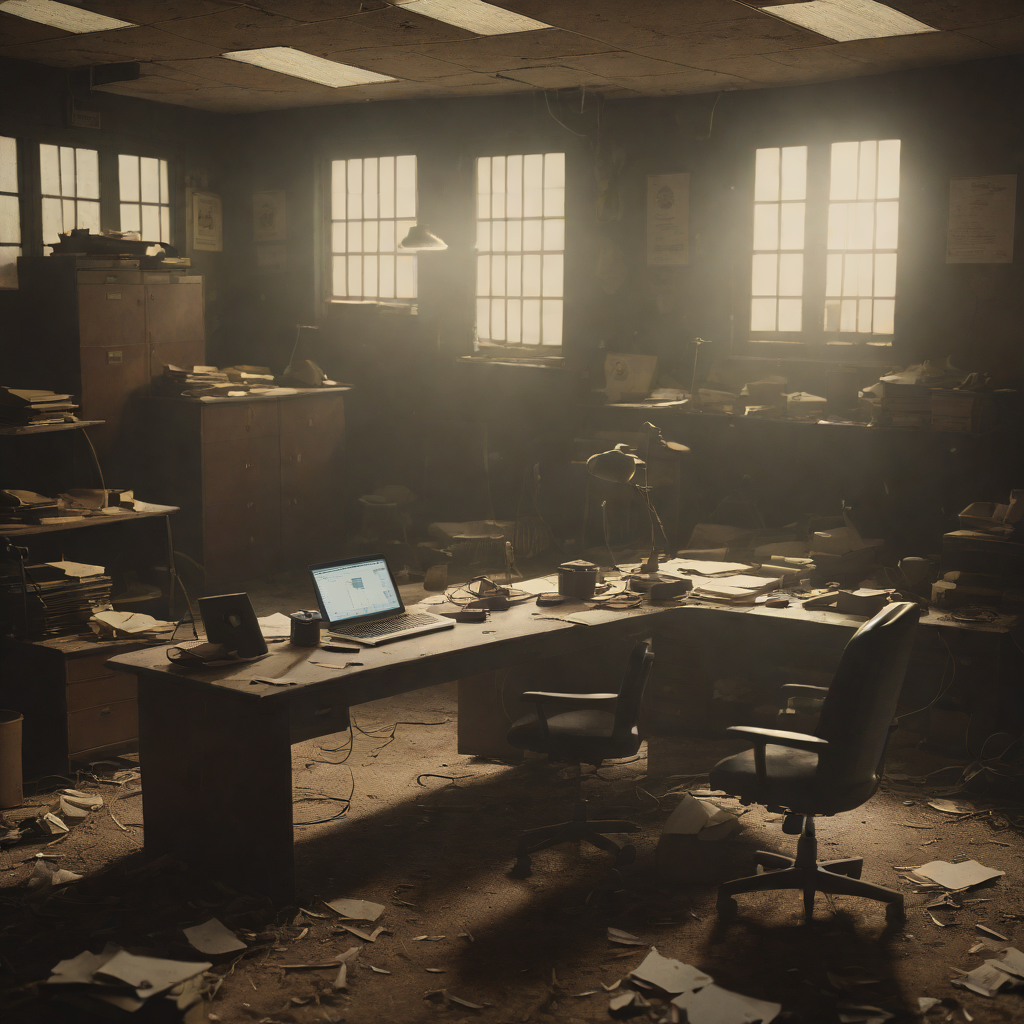
To understand the deafening silence choking America's heartland in 2026, one must first revisit the noise that shattered it three years ago in Idabel, Oklahoma. It was a sound that was never meant to be heard: the casual, bantering cruelty of local power unchecked by public scrutiny. In the small, claustrophobic commission room of McCurtain County, the machinery of governance had devolved into a feudal court, where the rule of law was treated as a nuisance rather than a mandate.
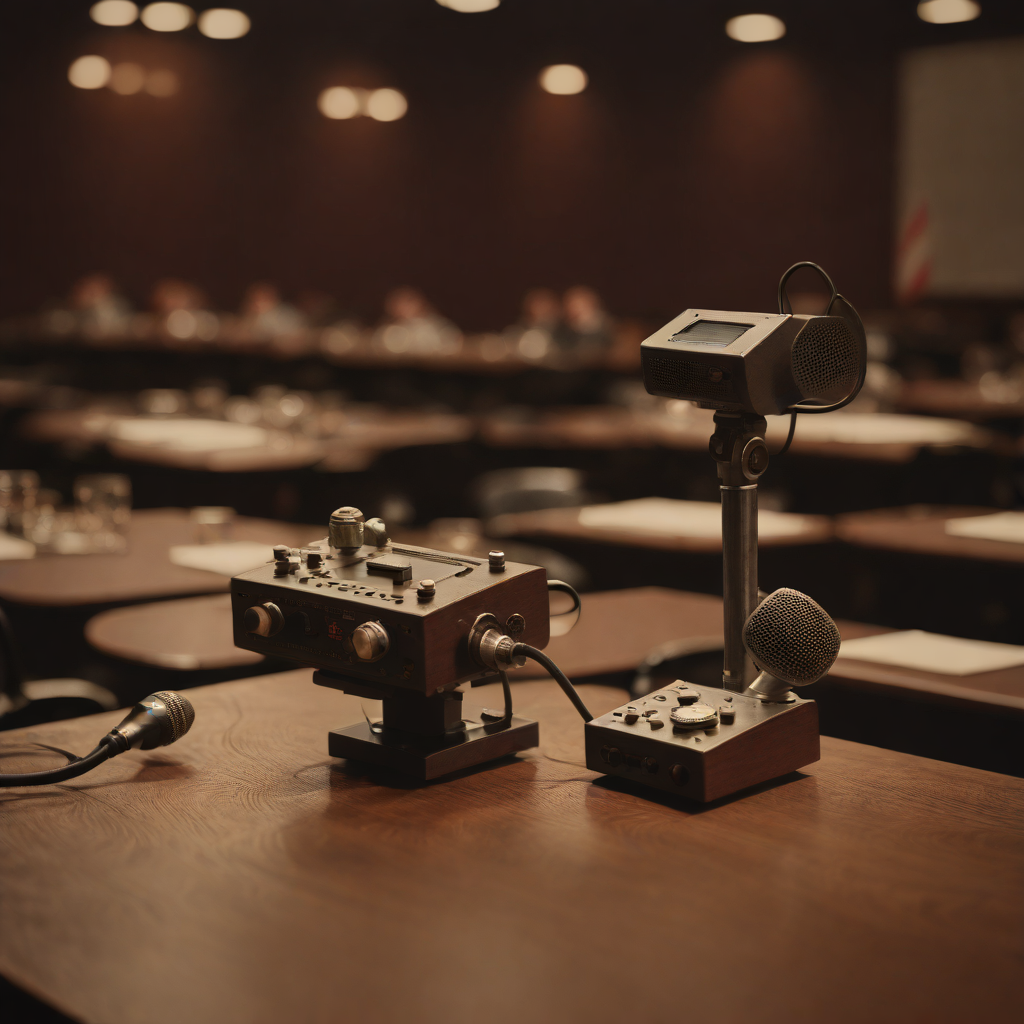
The incident, now studied in journalism schools as the "Idabel Revelation," began not with a grand investigation, but with a simple, desperate act of surveillance by one of the last watchdogs standing. Bruce Willingham, the longtime publisher of the McCurtain County Gazette-News, suspected that the county’s officials were conducting public business in violation of the Open Meeting Act. Leaving a voice-activated recorder behind after a meeting, Willingham expected to catch mundane corruption. Instead, he captured a conversation that peeled back the veneer of modern civility to reveal a darkness many thought had been buried in the mid-20th century.
On the recording, the voices of Sheriff Kevin Clardy, Commissioner Mark Jennings, and others were distinct and relaxed. They weren't whispering; they were lamenting the constraints of modern law enforcement. Jennings was heard expressing nostalgia for a time when they could take Black residents down to "Sophie Creek" and "hang them with a damn rope." The conversation drifted seamlessly from nostalgic racism to conspiracy, as they discussed the logistics of murdering Willingham and his son, Chris, simply for asking too many questions. "I've got two deep holes dug," one voice noted, a chilling metaphor for the accountability vacuum that defines the modern news desert.
The release of the audio triggered a seismic shockwave that traveled from the dusty streets of Idabel straight to the Governor's mansion in Oklahoma City. Governor Kevin Stitt found himself confronted with irrefutable evidence of autonomy festering into tyranny. "There is no place for such hatred in the great state of Oklahoma," Stitt declared, calling for resignations. Yet, the sheriff did not immediately step down. Instead, the county leadership dug in, issuing statements questioning the legality of the recording—a standoff that perfectly illustrated the depth of their perceived impunity. It was a "hot mic" moment that revealed what happens when the lights go out in American democracy.
Anatomy of a Fiefdom
In the quiet corners of rural America, where the digital highway often narrows to a crawl, a silence has settled over the county courthouses that serves as a breeding ground for a particularly American brand of feudalism. The "Good Ol' Boy" network has calcified in 2026 into a hardened governance structure. It is a system that thrives not on malice alone, but on the vacuum left by the collapse of local journalism. When the last reporter leaves town, the town council meeting does not stop; it merely goes dark.
This phenomenon explains why the Oklahoma recording resonates so disturbingly today. It is not a glitch in the democratic software but a feature of the "News Desert" crisis. Without the "annoying" presence of a beat reporter—that persistent figure in the back row with a notepad—local officials are left to construct their own reality. A 2025 report by the Medill School of Journalism vividly termed this "Ghost Democracy." In these jurisdictions, the line between public service and private rule blurs. The sheriff, the commissioner, and the judge are often not just colleagues but lifelong acquaintances, bound by a shared resentment of "outsider" scrutiny.
For residents like Sarah Miller (a pseudonym), a former municipal clerk in a town similar to the one in McCurtain County, the atmosphere is suffocating. "You learn quickly that there are two sets of laws," she explains, describing a culture where town business is conducted in text messages and hunting lodges rather than on the public record. Miller notes that in the absence of an independent press, the "official narrative" on the sheriff's Facebook page becomes the only history. Dissent isn't just debated; it is framed as a betrayal of the community itself. This insularity is emboldened by the current political climate, where local powerbrokers delegitimize oversight. State auditors or ethics commissions are easily dismissed as agents of a hostile "Deep State," granting local leaders a moral license to operate with impunity.
The structural reality of these fiefdoms is economic as much as it is political. In many news deserts, the local government is often the largest reliable employer. A 2026 analysis by the Brookings Institution suggests that in counties with high "civic opacity," public construction costs are estimated to be around 14% higher than in counties with robust local media. The corruption is rarely cinematic; it is mundane and bureaucratic—a zoning variance granted to a cousin, a bid overlooked for a donor. Yet, without the friction of accountability, these small transgressions metastasize into the kind of violent, unchecked hubris captured on the Oklahoma tape.
The Silence of the News Deserts
In the sprawling expanse of rural America, democracy is not dying in darkness; it is dying in silence. The audio recording from Oklahoma, capturing county officials casually discussing murder and lynching as if they were mundane administrative tasks, has shocked the national conscience. Yet, to treat this as a monstrous aberration is to miss the terrifying systemic reality: these officials felt safe to speak because they believed no one was listening. This is the direct, inevitable consequence of the "News Desert" crisis.
When the local newspaper folds, the town council meeting does not stop happening; it just stops being witnessed. For Sarah Miller (a pseudonym), a 64-year-old retired librarian in rural Georgia, this silence hit her mailbox last month. "I didn't know the county had approved a new chemical processing plant three miles from the elementary school until I saw the construction trucks," Miller explains, holding a tax assessment that has risen 18%. "There used to be a reporter from the Gazette at every Tuesday meeting. Now? The Gazette is a Facebook page that reposts press releases."
The correlation between the extinction of local journalism and the rise of corruption is strictly mathematical. A 2025 longitudinal study by the Medill School of Journalism projected that by the end of this year, the U.S. will have lost nearly 40% of the newspapers it possessed in 2005. The vacuum left behind is filled by what researchers call "pink slime" journalism—partisan algorithm-generated content masquerading as local reporting—and the unchecked power of local fiefdoms.
The Vanishing Watchdog: US Local Newspaper Count (2005-2026)
This erosion creates a "feudal" governance structure. Without a watchdog to file Freedom of Information Act requests or audit the sheriff's discretionary fund, local officials operate with the impunity of medieval lords. The Oklahoma recording was a rare moment where the veil was pierced by accidental transparency. But for every hot mic that catches a threat, there are thousands of quiet backroom deals that vanish into the ether.
Surveillance as the New Check and Balance
Consequently, we are witnessing a profound ironic turn in the mechanics of accountability. Technology, frequently criticized by privacy advocates as an instrument of state control, has become the primary tool of resistance for the governed. In the vacuum left by professional reporters, the "accidental whistleblower" has emerged. We see this dynamic playing out in the experience of people like James Carter (a pseudonym), a municipal clerk in a deregulated rural district in Ohio. When Carter suspected bid-rigging in a local infrastructure project, he did not call a reporter, because there were none left to call. Instead, he simply left his smartphone recording during a break in a zoning meeting.
"I didn't set out to be a spy," Carter noted in a deposition regarding the subsequent ethics investigation. "I just knew that if I wrote down what they said, they'd call me a liar. The audio file was the only witness I had."
This reliance on surveillance as a substitute for journalism marks a dangerous evolution in civic trust. Accountability now often hinges on luck—a forgotten recording device, a hot mic, or a leaked server log—rather than the systematic scrutiny of the Fourth Estate. As the Trump administration continues to devolve power to state and local levels under the banner of "New Federalism," the absence of local watchdogs becomes critical. We have traded the steady illumination of the printing press for the sporadic, chaotic lightning strikes of digital surveillance.
Polarization and the 'Deep State' Defense
In the era of 'Trump 2.0,' the political reflex to indisputable evidence of local corruption has shifted from contrition to a weaponized defense of victimhood. When the audio surfaced in 2023, the local officials involved did not apologize immediately. Instead, they invoked a defense that would become a prototype for the current era: claiming the recording was illegal or altered. While they did not have access to the sophisticated "AI deepfake" excuses prevalent in 2026, their strategy of denial laid the groundwork for today's "Deep State" defense, framing any accountability as a partisan attack.
As Michael Johnson (a pseudonym), a former city council staffer in the region, observes, "It used to be that if you were caught on tape talking about killing reporters, you resigned. Now, you claim the tape was doctored by AI or planted by the FBI, and you run for re-election." This rhetorical pivot signals that the immunity enjoyed by the executive branch has trickled down to the county seat.
The reaction from the state-level GOP in similar recent cases highlights the friction between the new populism and traditional governance. The hesitancy to forcefully remove or censure officials exposes a paralysis within the party: to attack a local sheriff who claims to be fighting the "Deep State" is to risk alienating the base. Consequently, the response is often a bureaucratic slow-walk, a stark contrast to the swift interventions seen in previous decades. This hesitation effectively sanctions a form of 'feudal' governance, where local lords can rule without constitutional restraint as long as they pledge fealty to the prevailing national culture war.
The Long Road to Reconstruction
The eventual resignations in McCurtain County—which came only after a protracted public standoff—removed the specific actors who fantasized about killing reporters, but it did not exorcise the ghost in the machine. For civic reform advocates and legal scholars observing from the vantage point of 2026, the terrifying reality is not that these officials were caught, but that they operated with impunity for so long, shielded by the silence of a "news desert."
Rebuilding trust in a community where the law enforcement leadership actively plotted against the First Amendment requires more than new faces in the courthouse; it demands a structural resurrection of accountability. The McCurtain County Gazette-News, a small, family-owned operation, stood as the sole check on power in a county of 30,000 people. As noted in the Medill School report, more than half of U.S. counties now have limited or no access to reliable local news, creating "accountability vacuums" where corruption festers unseen.
The path forward for Idabel, and for the fragmented nation watching it, lies in recognizing that local journalism is infrastructure as vital as the roads and bridges currently crumbling under the strain of the "Compound Crisis." Trust cannot be legislated; it must be earned, inch by inch, by reporters showing up to boring meetings, reading budget appendices, and asking the questions that make sheriffs uncomfortable. The Willinghams did not set out to be heroes; they simply refused to let their community vanish into the dark. If we are to prevent the next McCurtain County, we must accept that the cost of truth is high, but the cost of silence is the republic itself.