Shadows at Otterburn: The Lethal Price of Military Readiness

Nightfall at Otterburn
The wind at Otterburn does not merely blow; it scours. Located in the desolate expanse of Northumberland National Park, the Otterburn Training Area is a 58,000-acre theater of bog and basalt, chosen specifically for its hostility. On the night of Sunday, January 25, 2026, it was here—amidst the freezing darkness that defines the British winter—that the abstraction of "military readiness" collided violently with the fragility of human life.
The victim was Captain Philip "Gilbert" Muldowney, a 25-year-old officer of the 4th Regiment Royal Artillery. Described by the Ministry of Defence as possessing an "immensely enthusiastic" spirit, Muldowney had been forged in the fires of Sandhurst and sharpened on NATO’s eastern flank in Estonia. He was a soldier seemingly designed for the modern era, yet he fell in a training area designed to save lives by teaching soldiers how to fight.
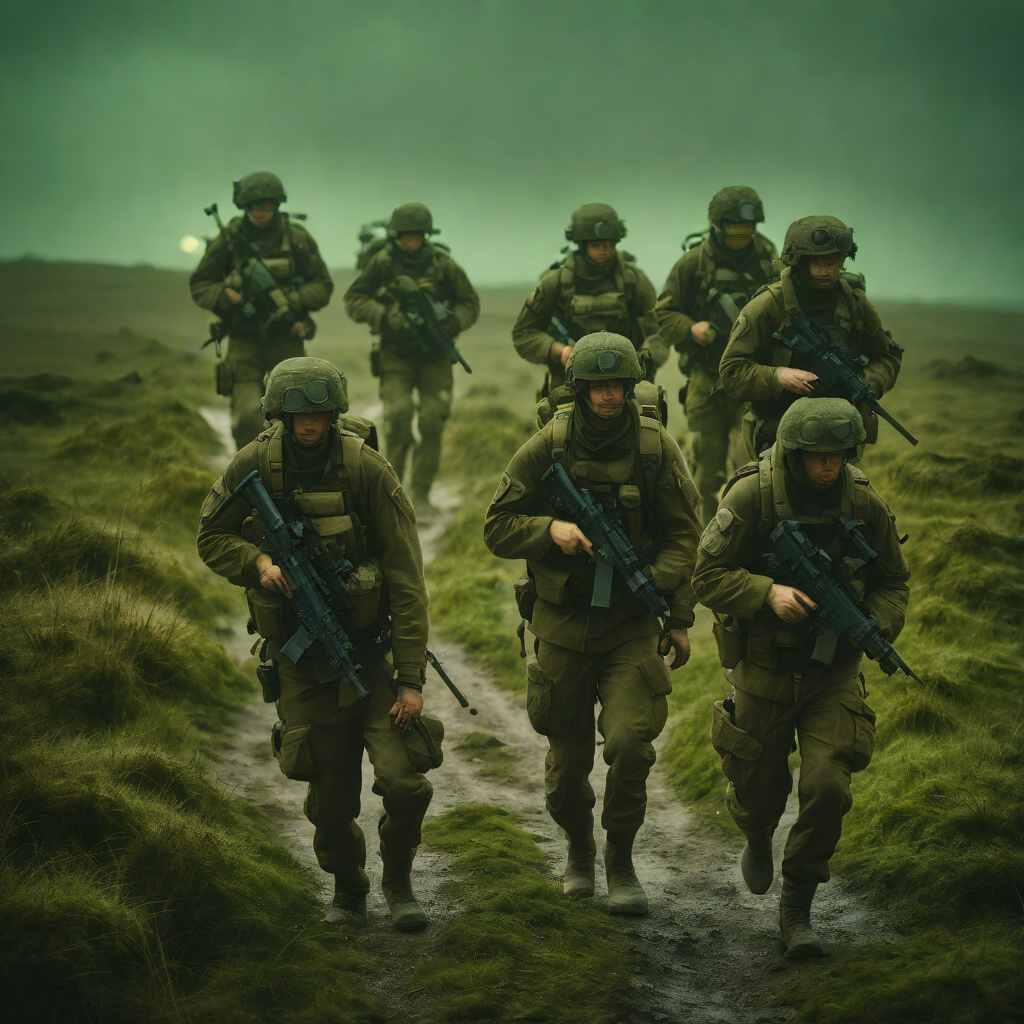
The exercise was intended to simulate the chaotic friction of modern combat: a live-fire maneuver under the cover of night, utilizing the kind of high-stakes variables that distinguish elite training from mere drill. Elements of the Scots Guards were moving through the terrain, their vision mediated by the green phosphor wash of night-vision goggles (NVGs). The objective involved engaging "pop-up targets"—mechanical enemies that appear without warning—in an artificially induced fog of war where the distinction between friend and foe is reduced to silhouettes and radio signals.
The Doctrine of Lethality
While official details remain under seal pending a full Service Inquiry, confirmed reports indicate that Captain Muldowney sustained a fatal wound during the live-fire component of the exercise. The tragedy illustrates the merciless paradox of modern military training: the very tools used to ensure soldier survival in war—rapid reflex shooting, aggressive maneuvering, and technological reliance—are the same variables that elevate the risk of fratricide in peace.
Defense analysts argue that this incident is less an anomaly than a statistical outcome of current operational tempos. The envelope of realism is being pushed because the geopolitical threat landscape—from Ukraine to the Pacific—demands it. When fatigue, complex terrain, and live ammunition intersect at night, the margin for error effectively vanishes.
This philosophy aligns with the prevailing Pentagon doctrine under the Trump administration, which has emphasized "unrestricted readiness" over what some officials have characterized as the precautionary constraints of previous years. While Otterburn is British soil, the tempo of NATO training is inextricably linked to American doctrine. The strategic logic posits that the only way to deter near-peer adversaries is to demonstrate a force capable of operating seamlessly in hyper-lethal environments. Consequently, allies like the UK are pressured to match these standards, often while managing tighter resource constraints.
This aggressive pivot suggests that rather than replacing live fire, technology is being used to qualify soldiers faster for the live ranges. This acceleration risks rushing officers into high-stakes environments before they have mastered the command-and-control nuances required to keep their troops safe—a risk that transcends borders.
Shadows of Doubt: The Friendly Fire Question
Amid the grief and official condolences, difficult questions have begun to circulate within the defense analysis community. While the Ministry of Defence (MoD) has maintained a disciplined silence to protect the integrity of the investigation and the privacy of the family, unverified discussions among service members have touched upon the possibility of "blue-on-blue," or friendly fire.
Compounding these fears are longstanding concerns regarding equipment adequacy. In an era where the "Battle of the Night" is a doctrinal cornerstone for Western militaries, defense insiders have warned that fiscal pressures in the UK armed forces have created gaps in modernization. If allegations emerge that officers are navigating complex live-fire zones without sufficient optical support or updated communications gear, the inquiry could pivot from individual error to systemic neglect.
The Geopolitical Imperative
The death of Captain Muldowney cannot be dissected as a mere localized failure of safety protocols. It is, largely, the kinetic byproduct of a fractured geopolitical architecture that has placed unprecedented strain on Western military alliances. Since the inauguration of President Donald Trump for his second term, the unspoken guarantee of automatic American intervention has been replaced by a transactional doctrine regarding NATO security. This shift has sent a clear signal to Whitehall: the British Army must be ready to fight tonight, potentially alone.
This strategic anxiety has accelerated the operational tempo to levels reminiscent of the Cold War. Commanding officers operate under significant directives to validate units for "high-intensity conflict" on compressed timelines. Recent evaluations of UK defense capabilities have highlighted the tension between meeting NATO’s new "Forward Defense" readiness targets and the physical limitations of training infrastructure. When the geopolitical mandate is speed and lethality, the safety buffers in live-fire exercises are inevitably compressed.
Ultimately, the shadow at Otterburn is cast not just by the specific circumstances of that night, but by the looming question of sustainability. If the price of sovereignty in the Trump 2.0 era is a military trained to the breaking point, the public must ask if the current safety mechanisms are robust enough to withstand the geopolitical G-force. We are witnessing the raw cost of a world where "readiness" is no longer a bureaucratic metric, but a frantic survival strategy.