The Isolated Giants: Meta and Google Face the Abyss Alone
The Eleventh-Hour Retreat
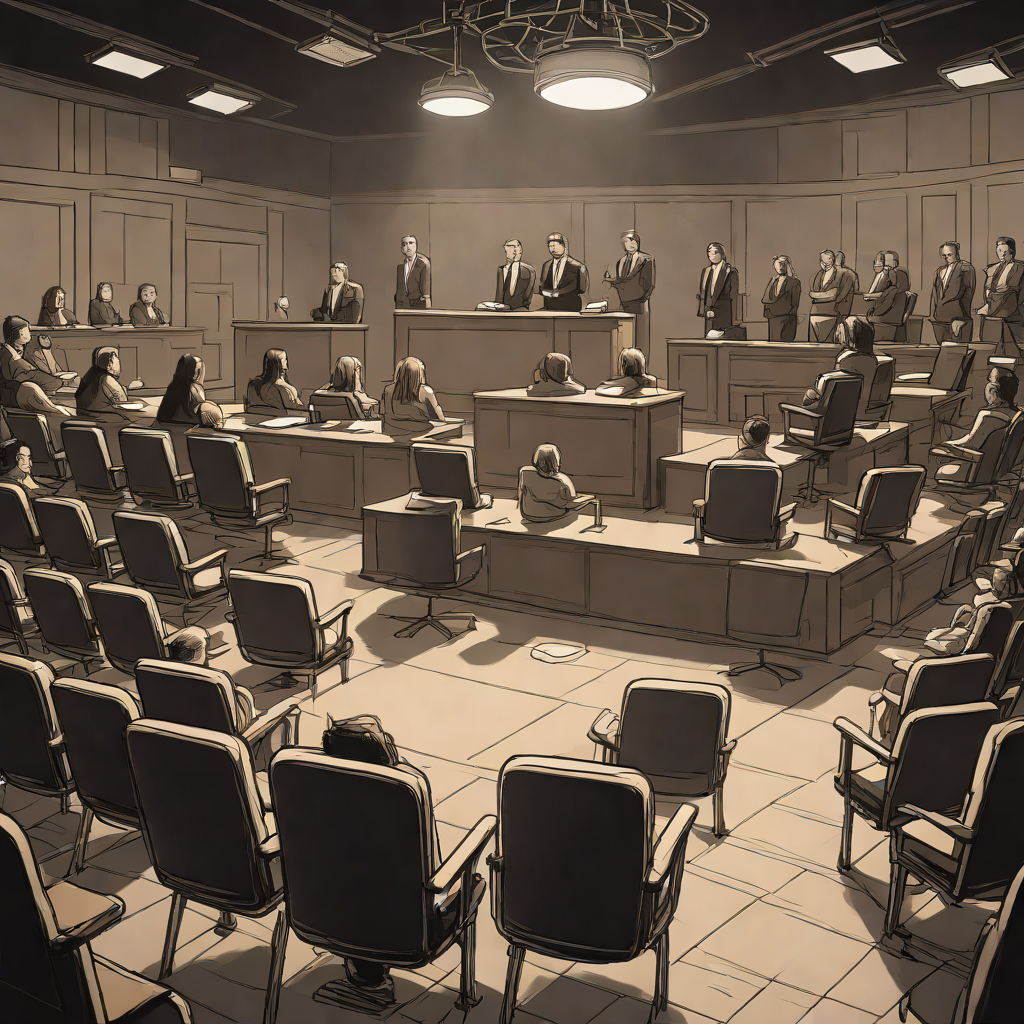
For more than three years, the defense table in the Northern District of California stood as a fortress of unified purpose. The four primary defendants—Meta, Google, TikTok, and Snap Inc.—moved in lockstep, filing joint motions and presenting a monolithic argument: that algorithmic feed construction is a protected editorial discretion under Section 230, not a product defect subject to tort liability. That unity shattered late Friday afternoon with a notification that stunned the docket.
With jury selection rescheduled for early February, TikTok and Snapchat formally announced they had reached a settlement with the plaintiffs' steering committee. While the financial terms remain sealed, legal analysts speculate the agreement likely includes binding commitments to implement "friction-based" design changes intended to break compulsive usage loops—concessions that are less damaging than a potential jury verdict on liability. This sudden exit is widely viewed as a tactical amputation; by settling, these platforms have successfully decoupled their specific design choices from the broader, systemic indictment of the attention economy.
A prominent litigation strategist in San Francisco advising institutional investors on tech regulation argues this move effectively weaponizes the trial against the remaining defendants. "It is a masterstroke of defensive severance," the strategist observes. "By leaving the field, TikTok and Snapchat have stripped Meta and Google of the 'industry standard' defense. When the jury looks at the defendants next month, they won't see a crowded marketplace facing a universal challenge. They will see the two most powerful American corporations standing alone, isolated and accused of knowingly engineering a mental health crisis."

Breaking the Silicon Phalanx
The joint statement from TikTok and Snapchat arrived not with a bang, but with the quiet precision of a corporate capitulation designed to save the war by losing the battle. For nearly a decade, Silicon Valley’s giants have stood shoulder-to-shoulder behind the shield of Section 230, the 1996 law that immunizes platforms from liability for user-generated content. This unified front—often dubbed the "Silicon Phalanx"—operated on a single, non-negotiable principle: an attack on one is an attack on all. By agreeing to a comprehensive settlement regarding the "addictive design" lawsuits, TikTok and Snapchat have effectively defected, leaving Meta and Google to face the full weight of the American judicial system alone.
For TikTok, the move is a masterclass in geopolitical survival. Under the scrutiny of the second Trump administration, which has oscillated between threats of a ban and demands for "Americanization," the settlement serves as a high-priced admission ticket to the US market. By settling, the Chinese-owned platform pivots the narrative from "national security threat" to "compliant corporate citizen," purchasing not just legal peace but political breathing room. Snapchat’s calculation is more existential; with a market cap a fraction of its competitors, it simply cannot afford the "forever war" of litigation that Meta and Google are prepared to wage.
The strategic implications for Meta and Google are profound. The plaintiffs can now frame the trial not as an attack on the internet itself, but as a specific prosecution of the Silicon Valley duopoly. Without the cover of their younger, viral-video competitors, the legacy giants face a stripped-down battlefield where their internal documents—memos debating the trade-offs between user safety and engagement metrics—will be scrutinized without the diluting context of a "universal" industry practice. The core of the plaintiffs' case has now narrowed to a dangerous singularity: the assertion that for these specific giants, addiction was a feature, not a bug.
The Product Defect Pivot
The core argument facing the remaining tech giants is no longer that they failed to moderate harmful content—a claim historically dismissed under Section 230—but that they knowingly designed a defective product. In this new legal framework, features like the infinite scroll, intermittent variable rewards (dopamine loops), and the absence of robust age-gating are not treated as editorial decisions protected by the First Amendment. Instead, they are characterized as "design defects" comparable to a car with faulty brakes or, more pointedly, the chemical additives used by Big Tobacco to enhance nicotine addiction.
This shift creates a profound vulnerability for Meta and Alphabet. "The industry can no longer hide behind the content," observes a senior legal analyst at the Institute for Digital Policy. "If the court accepts that 'addiction' is a functional output of the code rather than a user choice, the liability becomes existential." This distinction is critical for plaintiffs, including many parents involved in the litigation. As one representative plaintiff states, "I don't blame the app for the bullying my daughter saw. I blame the company for building a machine that was scientifically designed to ensure she couldn't put it down. The defect isn't the picture; it's the inability to look away."
Dependency on Ad Revenue (%)
Meta's Last Stand
For Mark Zuckerberg and Sundar Pichai, the decision to fight is not merely a matter of pride but of existential preservation. Unlike TikTok, which has aggressively diversified into e-commerce through TikTok Shop, or Snapchat, which relies heavily on hardware and subscription models, Meta and Google remain fundamentally tethered to the "Attention Economy." Senior equity researchers point out that admitting fault in the design of the "infinite scroll" or "variable reward schedules" would not just invite a fine; it would necessitate a complete dismantling of the behavioral engineering that underpins nearly 98% of Meta’s revenue.
The isolation of the two Silicon Valley giants also exposes a widening rift in the tech sector's political strategy under the second Trump administration. While the White House has pursued a broad agenda of deregulation, its populist wing has maintained a steady drumbeat of hostility toward what it terms "Big Tech censorship." By stripping away the cover provided by TikTok—a foreign-owned entity that was an easy political target—Meta and Google are now left to defend American corporate sovereignty against American families. This creates a volatile optical crisis.
The Privacy Calculus
For TikTok, the decision to settle was likely less about the monetary cost and more about the existential price of transparency. In the high-stakes theater of American civil litigation, the discovery process is the ultimate weapon; it grants plaintiffs the power to demand internal emails, engineering schematics, and algorithmic weighting data. For a company like ByteDance, operating under the intense scrutiny of the second Trump administration and its "America First" digital sovereignty mandate, the prospect of handing over the source code of its proprietary "For You" algorithm to a US court was a non-starter.
Now, legal historians recall the "Tobacco Master Settlement" of 1998, which began not with a single smoking gun, but with the crumbling of a unified front. When the smaller players settled, they handed over internal documents that incriminated the larger ones. With TikTok and Snapchat now cooperating with the plaintiffs as part of their settlement terms, Meta and Google face the prospect of their competitors' internal data being weaponized against them.

Regulation by Gavel
This judicial reckoning is occurring in a legislative vacuum. Despite years of bipartisan hearings and televised grillings of tech CEOs, Congress has remained paralyzed, unable to pass comprehensive federal privacy or child safety legislation. In the absence of legislative guardrails, the American judiciary is stepping in to fill the void. We are witnessing a shift toward "regulation by gavel," where significant questions of public health and digital safety are decided not by juries and judges in state and federal courts.
As the docket moves forward, the question is no longer whether social media will be regulated, but whether that regulation will come from the nuance of policy or the blunt force of a verdict. The settlement legitimizes the plaintiffs' framing: that social media addiction is not a failure of user willpower, but a predictable result of industrial engineering. As the docket clears of the smaller players, the focus narrows intensely on the trillion-dollar giants, forcing them to defend the very algorithmic architecture that built their empires.