Toxic Trust: The High Cost of Deregulating Infant Formula

The Midnight Alert
At 12:03 AM on Tuesday, the notification arrived with a silent, terrifying vibration on the nightstand of Sarah Miller's home in suburban Ohio. The 34-year-old marketing manager was midway through the late-night feeding routine, a bottle of "Nutri-Flow Advance" warm in her hand, when her phone’s screen lit up with the crimson banner of the National Safety Alert System. The message was clinically precise: URGENT RECALL: Batch #9X-2026-Alpha. Potential contamination detected. Do not consume. For Miller, and thousands of other parents across the Midwest, the midnight quiet shattered instantly. The formula in the bottle, certified "Safe & Expedited" under the new federal guidelines just forty-eight hours prior, had suddenly transformed from sustenance into a potential biological hazard.
The contaminant in question was not a new adversary, but a resilience-hardened strain of Cronobacter sakazakii, a pathogen that the FDA’s modernized "Smart-Grid" safety protocols were explicitly designed to eradicate. Yet, according to a preliminary incident report leaked from the agency’s internal server, the bacteria had bypassed three separate automated checkpoints. This failure strikes at the heart of the Trump administration’s aggressive push for "Efficiency-First" regulatory reform, a policy cornerstone launched in late 2025. The initiative, championed by the White House as the solution to supply chain bottlenecks, replaced mandatory 72-hour human-verified hold periods with real-time, AI-driven sensor audits—a system proponents argued would "unshackle American industry."
However, the "Midnight Alert" suggests that the shackles were perhaps the only thing holding the line. While Acting FDA Commissioner Steven Miller recently touted the new system's speed, citing a 40% reduction in time-to-market for essential goods, safety advocates see the recall as the inevitable cost of corner-cutting. The Institute for Safe Medication Practices noted in a briefing earlier this week that reliance on "predictive safety modeling" over physical batch testing introduces a statistical margin of error that, while acceptable in automotive manufacturing, becomes lethal in infant nutrition. When reached for comment, a Nutri-Flow spokesperson characterized the event as "an isolated data anomaly" and maintained that their facilities "exceed all current federal throughput standards."
The panic was compounded by the digital infrastructure itself. The "Safe-Scan" app, the consumer-facing pillar of the new safety grid, crashed within minutes of the alert due to server overload, leaving parents like Miller unable to verify if the cans in their pantries were part of the toxic lot. This digital blackout underscores a critical vulnerability in the digitized supply chain: when the algorithm fails, there is no analog backup. As David Chen, a frantic father in Chicago, told local news affiliates, "They told us the new system was fail-safe. But when the screen goes black and your baby is crying, 'efficiency' doesn't mean a thing." The incident has rapidly evolved from a localized quality control error into a referendum on whether the nation’s pursuit of friction-less commerce has eroded the fundamental firewall of public health.

Echoes of a Shortage
The panic is quiet this time, but the memory is loud. For parents walking down the formula aisles of Target and Walmart this week, the gaps on the shelves aren't just logistical failures; they are psychological triggers. The ghosts of 2022—when the Abbott Nutrition plant closure in Sturgis, Michigan, plunged the nation into a desperation that saw military planes airlifting powdered milk from Europe—have returned to haunt the nursery. Yet, the narrative driving this latest recall differs fundamentally from the last crisis. Four years ago, the failure was framed as a singular catastrophic breakdown of an aging monopoly. Today, it appears to be the calculated cost of the "American Acceleration" doctrine.
The political promise stamped on the 2024 campaign trail was definitive: "Never Again." The strategy to achieve this, however, has led the industry down a precarious path. Under the current administration’s aggressive deregulation initiatives, specifically the "Red Tape Reduction Order" signed early last year, the FDA shifted towards a "trusted partner" model for domestic manufacturers. The logic was seductive in its simplicity: to secure the supply chain against foreign reliance, American factories needed to run faster, unburdened by "excessive" federal oversight. The result was not a diversified market, but a hyper-consolidated one, where speed has effectively cannibalized safety protocols.
For Miller, the macroeconomic shifts feel intensely personal. "In 2022, I was driving three hours to find a single can for my firstborn," she says. "Now, with my second, I thought the 'America First' supply chain was supposed to fix this. Instead, I’m reading that the new 'super-plant' in the Midwest skipped three safety audits because they were 'fast-tracked.' It feels like we traded safety for a false sense of security."
Miller’s anxiety is grounded in hard data. The post-2022 reforms were intended to invite new players into the market to break the oligopoly. Paradoxically, the high capital requirements to meet the new "efficiency standards"—which incentivize massive, automated output over smaller, redundant facilities—have squeezed out the very startups that were supposed to save us. We are left with a market that is even more top-heavy than before. In 2021, four companies controlled roughly 90% of the U.S. formula supply. Today, following a wave of mergers approved under the guise of "national manufacturing champions," three conglomerates control nearly 94%.
US Infant Formula Market Share Concentration (2021 vs 2025)
This consolidation creates a system with zero fault tolerance. When the FDA, operating under its streamlined 2026 mandate, relies on manufacturer self-reporting for bacterial testing, a single lapse in a "mega-facility" doesn't just affect a batch; it threatens the entire national grid. The current recall, triggered by contamination in a facility responsible for 35% of the domestic specialized formula, is not a bug in the new system; it is a feature of a design that prioritized throughput over the inherent messiness of redundant inspections.
The Speed Trap
The genesis of the current crisis lies not in a single contaminated vat, but in the fine print of the "Supply Chain Acceleration Act," signed into law during the first hundred days of the second Trump administration. Proponents argued that the legacy regulatory framework, largely inherited from the pre-2020 era, was a "bottleneck on American vitality." The result was a pivot in the FDA’s operating philosophy: a shift from rigorous pre-market validation to a reliance on post-market surveillance and voluntary industry reporting. This "efficiency-first" doctrine was designed to prevent the shelf shortages that plagued previous years, but it effectively removed the guardrails that once forced manufacturers to pause and verify.
For those on the factory floor, this policy shift translated into immediate, tangible pressure. Elena Ross, a quality assurance manager at a major mid-western processing facility, describes a culture where the definition of "safe" became fluid. "Before 2025, a microbiological assay required a hard 48-hour hold. The line didn't move until the lab said go," Ross explains, reviewing shift logs that now show timestamps compressed into mere hours. Under the new "Rapid Release" protocols, manufacturers are permitted to ship products while final safety data is still pending, provided they have a history of compliance—a loophole that assumes past performance guarantees future safety.
The data corroborates Ross’s anecdotal evidence. A review of FDA enforcement actions shows a stark divergence between production volume and regulatory oversight. While domestic infant formula output has increased by 18% since the introduction of the new tariffs on European imports, the frequency of on-site federal inspections has dropped by nearly 40%. This inverse relationship suggests that the system is running faster than the mechanism designed to monitor it can track, creating a "speed trap" where defects are only caught after the product has reached the consumer.
Production Volume vs. Inspection Frequency (2023-2026)
Industry lobbyists, such as the American Nutrition Council, maintain that these reforms were necessary to secure "food sovereignty" and insulate American families from global supply shocks. They point to the stable prices of 2026 compared to the inflation spikes of the Biden years as proof that the model works. However, public health experts argue that this stability is built on a fragile foundation. A recent report by the Government Accountability Office (GAO) warned as early as last November that the reduction in unannounced audits had created "blind spots" in the domestic supply chain. The report highlighted that without the threat of random federal verification, the internal safety protocols of private companies—driven by shareholder demand for quarterly growth—inevitably degrade. The recall is thus not an accident, but the statistically probable outcome of removing the friction that once ensured safety.
The Algorithmic Blindspot
The quiet humming of the spectral analyzers at the Midwest processing facility was supposed to be the sound of safety. Under the Trump administration’s "American Supply Chain Independence" initiative, this plant was upgraded with state-of-the-art AI quality controls, designed to slash inspection times from days to milliseconds. For James Carter, a veteran shift manager who has spent twenty years watching formula powder fill aluminum cans, the green lights on his dashboard were absolute. "The system checks for 5,000 known pathogens and toxins in real-time," Carter explains, gesturing to the dormant sterile lab that once housed a team of twelve microbiologists. "We were told it’s safer than human eyes." But the machine was only looking for what it knew.
The algorithmic failure lies in the rigid definition of "contaminant." The recall was triggered not by a known bacteria like Cronobacter, which the AI is perfectly trained to spot, but by a degradation byproduct of a new, domestic-sourced lipid stabilizer. This stabilizer was rapidly approved last year to replace tariff-heavy imports, a move celebrated by the Department of Commerce as a win for "America First" manufacturing. The AI, trained on historical datasets predating this chemical substitute, categorized the toxic byproduct as a harmless protein variant. It was a "false negative" born of a data deficit—a blind spot in the machine learning model that no amount of processing speed could cure.
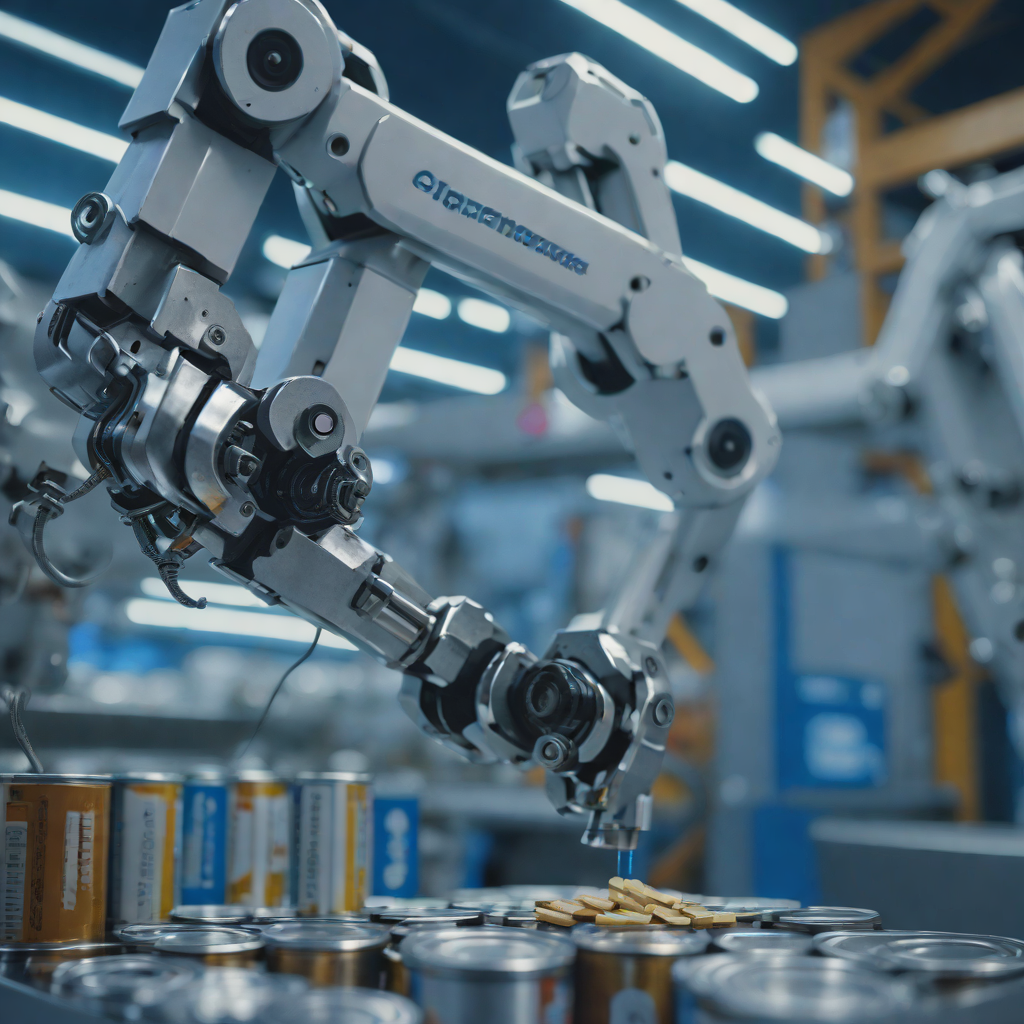
This incident exposes the fragility of the "Efficiency-First" FDA reforms. By shifting the burden of proof from pre-market rigorous human testing to post-market AI surveillance, the regulatory framework prioritized the velocity of commerce over the redundancy of safety. Public health officials are now grappling with a supply chain that moves faster than their ability to understand it. A confidential memo from the FDA’s Office of Regulatory Affairs, leaked earlier this week, admits that "purely digital oversight lacks the intuition to flag novel anomalies." The system worked exactly as designed: it maximized output and minimized friction, right up until the moment infants began falling ill.
The Human-AI Inversion: FDA Inspection Modalities (2022-2026)
The tragedy is that the "inefficiency" of the old system—the slow culture tests, the human technician pausing to question a slightly off-color batch—was also its primary failsafe. In stripping away these layers to streamline production, the industry removed the only chaotic variable capable of catching a chaotic threat. We have built a supply chain that is statistically perfect for a predictable world, yet catastrophically brittle in the face of the unknown.
A Fragile Sovereignty
When the White House signed the "Domestic Dairy Security" executive order in mid-2025, the logic was seductive in its simplicity: American babies should be fed by American farms. The administration argued that relying on Dutch or New Zealand imports—a lifeline established during the shortages of the early 2020s—constituted a national security vulnerability. Consequently, import tariffs were aggressively reinstated, and the expedited regulatory pathways for international brands were quietly allowed to expire. The result was a rapid consolidation of the domestic market, incentivized by tax breaks for "Mega-Facilities" designed to maximize output per square foot and minimize unit costs.
However, the catastrophic contamination event at the Great Lakes processing hub this week reveals the hidden cost of this consolidated sovereignty. By centralizing production to boost efficiency figures, the industry created single points of failure so massive that their temporary collapse creates a vacuum no domestic competitor can fill. We traded a resilient, messy web of global options for a streamlined, fragile domestic fortress.
Consider the reality facing Jessica Thorne, a 34-year-old paralegal in Naperville, Illinois. Under the previous market structure, a recall of one major brand might have necessitated a switch to a German or Australian alternative that was readily available on store shelves. Today, with European imports effectively priced out of the general market by the new protective tariffs, Thorne found herself driving to four different counties yesterday, chasing a rumor of available stock on a parenting forum. "They told us this was about security, about not being held hostage by foreign supply chains," Thorne says, standing before an empty aisle in a big-box retailer. "But how is my child secure if the only factory allowed to make his food is shut down and there is literally no Plan B?"
Supply chain economists have long warned that sovereignty without diversity is a liability. By walling off the US market to protect domestic producers, the administration removed the natural shock absorbers of global trade. When a gear breaks in a closed, highly optimized system, the machine doesn't just slow down; it stops. The current data is stark: while domestic capacity is theoretically sufficient to feed the nation, it operates at nearly 98% utilization to maintain profitability. There is no slack in the system. The "efficiency" prized by both Wall Street and the White House assumes a perfect world where machines do not break and pathogens do not evolve.
Restoring the Covenant
The shattered trust between American families and the guardians of their food supply cannot be repaired with a simple recall notice or a voucher for future purchases. The "covenant"—the unspoken agreement that the seal on a formula can guarantees the safety of the infant relying on it—has been fundamentally breached. This crisis was not an accident of chemistry, but a foreseeable casualty of the "efficiency-first" doctrine. While the aggressive deregulation of 2025 successfully accelerated industrial output and trimmed the deficit, the formula recall demonstrates the perilous fragility of stripping "redundant" oversight from biological supply chains.
The human cost of this efficiency is measured not in quarterly earnings, but in the quiet panic of parents like Sarah Miller. "You assume the system has layers," Miller says, describing the weeks spent rationing the last safe cans of hypoallergenic formula for her four-month-old. "When I read that the safety inspections were skipped to 'streamline production benchmarks,' I realized there were no layers left. It was just a straight line from the factory floor to my baby's bottle, with no one watching the middle."
Restoring this covenant requires a paradigm shift that views supply chain redundancy not as waste, but as a national security asset. The "Just-in-Time" logistics model must be decoupled from critical biological infrastructure. A report released this month by the Johns Hopkins Center for Health Security argues for the creation of a "Strategic Nutrition Reserve," modeled after the Strategic Petroleum Reserve. This would mandate that manufacturers maintain a "surge capacity" of safe, verified stock—a buffer paid for by a modest industry levy—to absorb shocks without compromising safety protocols during production ramp-ups.
Furthermore, the technological acceleration championed by the administration offers a solution, provided it is deployed for oversight rather than just speed. The implementation of "Digital Twin" technology—virtual replicas of the supply chain that simulate stress tests in real-time—could allow regulators to spot contamination risks before a single can leaves the warehouse. Industry lobbyists have historically resisted such transparency, but as noted by a 2026 analysis from the Brookings Institution, the economic damage of a single recall now far outweighs the cost of compliance.
Ultimately, the path forward demands a legislative firewall that protects the FDA’s inspection autonomy from political pressure to boost GDP figures. Efficiency is a virtue in commerce, but in public health, it is often a vice disguised as progress. We must accept that a safe supply chain is inherently inefficient because it requires the friction of double-checks, the pause of validation, and the expense of backup systems. Only then can parents look at a sealed can not as a gamble, but as a guarantee.