The Gavel and the Ghost: How a 2023 Senate Standoff Engineered Today's Judicial Crisis
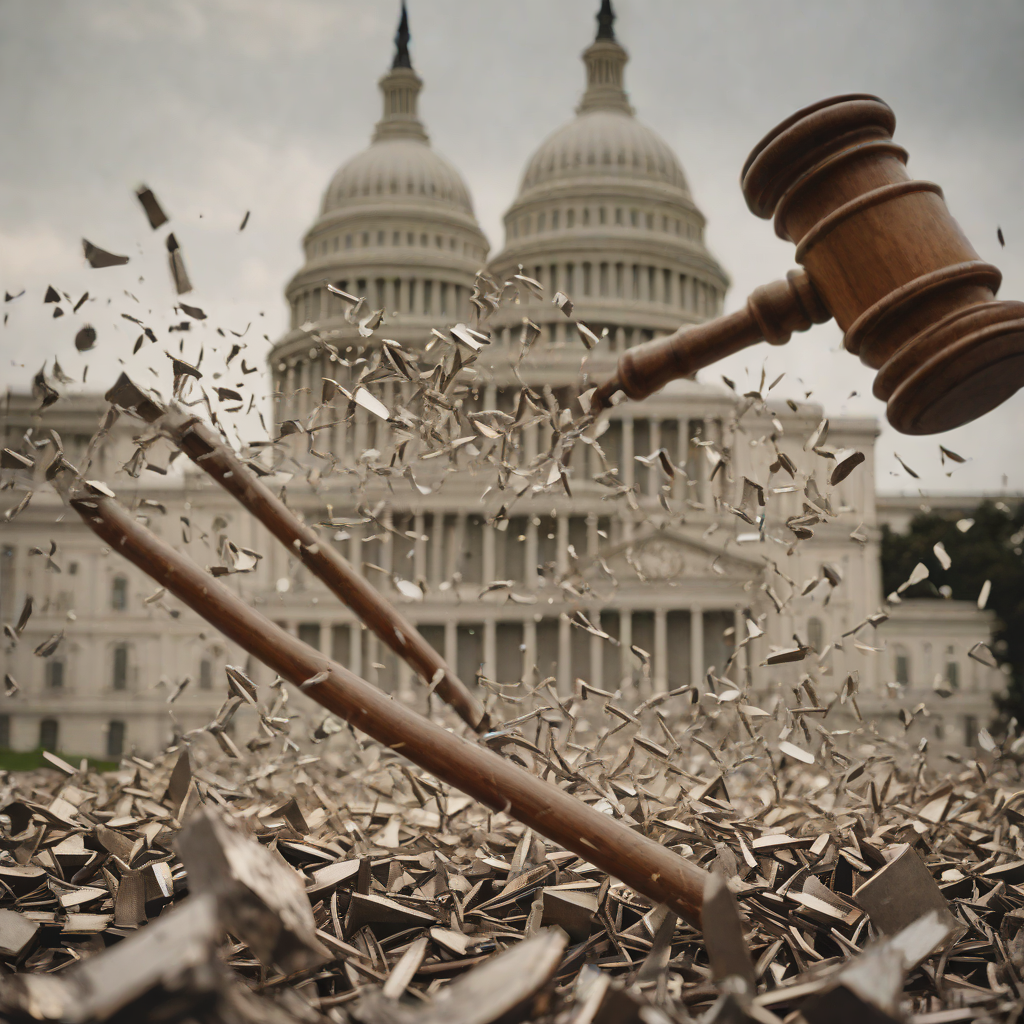
A Nation of Empty Benches
The docket in the Southern District of Texas has become a graveyard of ambition. For Maria Flores, an entrepreneur who filed a patent infringement lawsuit nearly two years ago, the delay is a death sentence for her startup. "We're burning through cash while our intellectual property is being used by a competitor," she explained via a video call, the strain evident in her voice. "The court keeps telling us the same thing: no judge available. How can there be justice without a judge?" Her case, one of thousands backlogged, sits in a judicial purgatory created not overnight, but by a political strategy honed years earlier. The root of this paralysis, which now plagues federal courts across the nation, can be traced directly back to a seemingly transient political skirmish in the spring of 2023 over the temporary replacement of an ailing Senator Dianne Feinstein on the Senate Judiciary Committee.
That moment was the crucible. When Democrats sought to temporarily substitute Feinstein to advance then-President Biden's judicial nominees, Republicans, then in the minority, refused to grant the necessary consent. It was a procedural masterstroke of obstruction, using the Senate's own rules, which prize comity and unanimous consent, as a weapon against it. This act, led by figures who now occupy key roles in the current administration's legislative coalition, transformed a once-routine courtesy into a high-stakes political battleground. It established a powerful precedent: a single party, even from a minority position, could effectively veto the entire judicial appointments process. The Feinstein blockade wasn't merely a delay tactic; it was a proof-of-concept for institutional gridlock, and its ghost now haunts the empty benches of 2026.
The Anatomy of a Weapon
To understand the judicial crisis of 2026, one must look back to that pivotal procedural battle. The Senate was precariously balanced, with Democrats holding a slim majority. The Judiciary Committee, the crucial gatekeeper for federal judicial nominations, reflected this tension with an 11-10 party-line split. Feinstein's illness created a de facto 10-10 tie, paralyzing the confirmation process. Democratic leadership sought what was historically a routine courtesy: a temporary replacement. This is where precedent was shattered. Led by Senator Lindsey Graham, the ranking Republican on the committee, the GOP unified in a strategic blockade. Their rationale, stated openly, was that they had no interest in helping Democrats confirm judges they deemed too activist. By simply saying "no," Republicans demonstrated that the gears of the Senate could be ground to a halt, transforming collegial norms into weapons.
This tactic was a direct descendant, and a dangerous evolution, of the 2016 blockade against then-President Obama's Supreme Court nominee, Merrick Garland. The refusal to even hold a hearing for Garland was a watershed moment, but the Feinstein maneuver refined this blunt instrument into a surgical tool. It demonstrated that a party no longer needed the dramatic stage of a Supreme Court fight to exercise a chokehold on the judiciary. "What we saw with Garland was a cannon aimed at a fortress," explains Professor Elias Vance, a constitutional scholar at Georgetown Law. "What we saw with the Feinstein episode was the realization that you didn't need a cannon. You could just throw sand in the gears, everywhere, all the time. It's less dramatic, but far more effective at paralyzing the entire system."
Justification was framed not as obstruction, but as a defense of institutional integrity. The argument was that allowing a temporary replacement would set a dangerous precedent, undermining the sacrosanct structure of the Senate. Yet this "principled" stand had an immediate and concrete effect: it froze the confirmation process. A 2024 report from the American Bar Association would later show a direct correlation between the 2023 slowdown and the subsequent spike in judicial vacancy emergencies. The weaponization of "principle" was complete.
Gridlock as the New Normal
Now, in the second year of the Trump 2.0 administration, that proof-of-concept has become the governing blueprint. With the White House pushing a wave of deregulation and "America First" judicial appointments, the Democratic minority in the Senate has adopted and perfected the 2023 playbook. The result is a constitutional crisis in slow motion. According to a grim report from the Brennan Center for Justice in late 2025, federal judicial vacancies have surged, leading to what the report calls a "systemic collapse of judicial throughput."
U.S. Federal Judicial Vacancies (Source: Brennan Center for Justice, 2025)
Proponents of the administration’s strategy argue that this level of obstruction is a necessary check on what they see as a politicized judiciary. They contend that decades of "activist judges" legislating from the bench necessitated a more aggressive, defensive posture on appointments. To them, the current gridlock is a painful but essential course correction.
Yet, critics, including a broad coalition of former judges and legal scholars, warn that this strategy has inflicted a grievous wound on the rule of law. The weaponization of Senate procedure, they argue, has transformed the judiciary from a co-equal branch of government into just another political spoil. The Feinstein episode demonstrated that norms, once broken, are incredibly difficult to restore. If the unwritten rules that govern an institution are shown to be merely suggestions, what compels anyone to follow them when victory is the only principle that matters?