Automated Anxiety: The Lethal Evolution of the Castle Doctrine
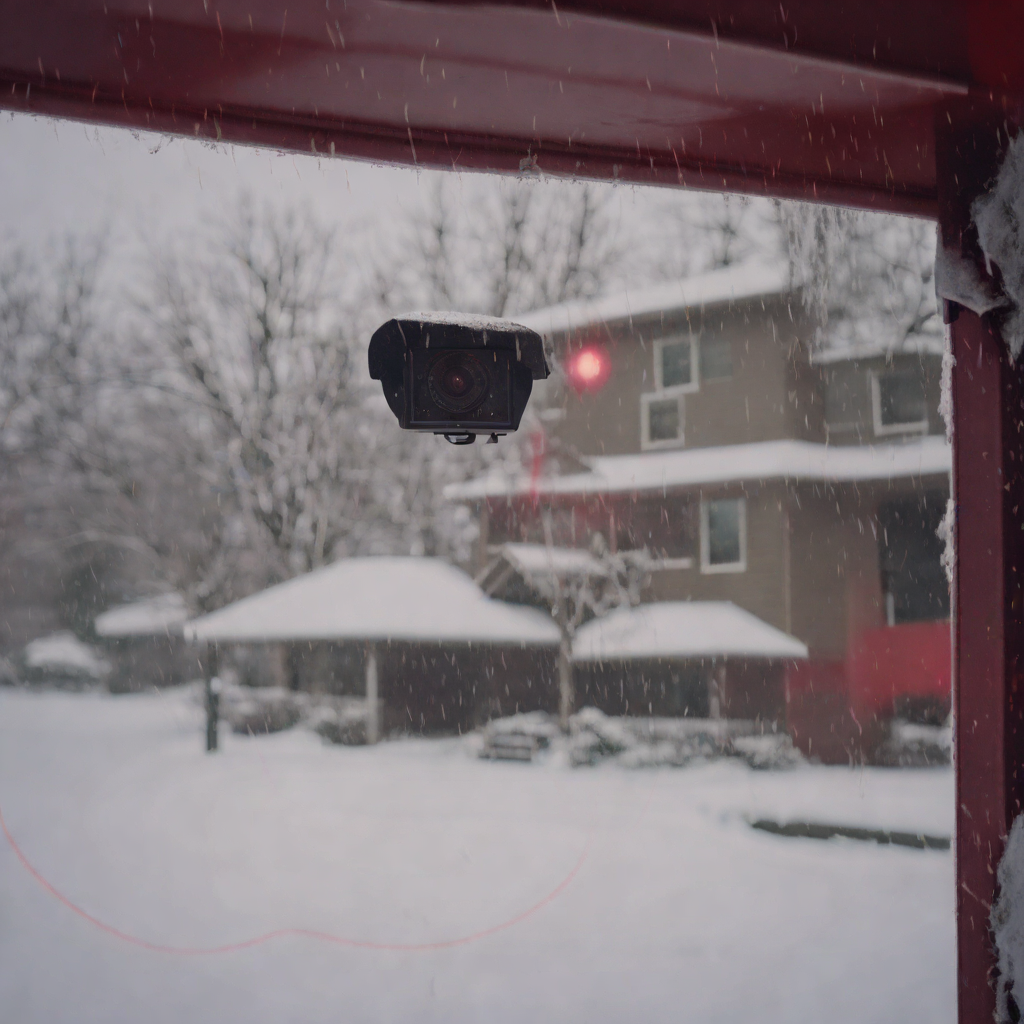
A Scalding Welcome in Longueuil
The quiet, snow-dusted streets of Longueuil, a suburban offshoot of Montreal, are rarely the backdrop for international debates on American jurisprudence. Yet, the events of last Tuesday have turned a modest bungalow on Rue Chambly into the latest flashpoint for a controversy that began nearly three years ago in Kansas City. When 15-year-old Jean-Luc Tremblay mistakenly rang the doorbell of a residence he believed to be his tutor’s, he was not met by a confused homeowner or even a firearm, as was the case with Ralph Yarl in 2023. Instead, he was greeted by the hiss of a pressurized nozzle.
Within seconds, an automated perimeter defense system—marketed in the United States as the "CastleKeeper Pro"—deployed a concentrated stream of heated, gel-based chemical irritant directly into the teenager's face. The substance, a proprietary blend of capsaicin and adhesive agents heated to 120°F (49°C), is designed to incapacitate intruders while "minimizing lethal liability," according to marketing materials from its Nevada-based manufacturer. Tremblay was found writhing in the snow by neighbors, suffering from second-degree chemical burns and potential permanent vision damage. The homeowner was not even near the door; they were reportedly in the basement, having set the system to "High Alert" mode via a smartphone app earlier that evening.
This incident marks a chilling evolution in the "Doorbell Defense." Where the shooting of Ralph Yarl was driven by the subjective, panicked split-second decision of an individual, the Longueuil scalding was the result of a pre-meditated, algorithmic delegation of force. The homeowner didn't need to feel fear in the moment; they simply needed to subscribe to a service that felt it for them.
The immediate aftermath has been a cacophony of legal confusion and public outrage that transcends the Canadian border. In Quebec, where self-defense laws are notoriously restrictive compared to the U.S., prosecutors are struggling to categorize the crime. However, for American observers, the implications are far more profound. The "CastleKeeper" system is a product of the current regulatory vacuum in Washington. Under the Trump administration's aggressive deregulation of "consumer safety technologies"—part of the broader "America First" initiative to dominate the global security market—devices like these face fewer federal hurdles than a standard toaster.
Civil rights groups are sounding the alarm that we are witnessing the automation of the "Stand Your Ground" doctrine. "We are moving from a legal standard of 'reasonable fear' to 'automated paranoia'," argues a report released this morning by the ACLU. The fear is no longer just about who owns a gun, but about who owns a sensor that can autonomously decide to maim a child. As these systems fly off the shelves in American suburbs—sales are up 200% since the inauguration—the Longueuil incident serves as a grim beta test for a society where the right to exclude is being hardcoded into the architecture of our homes, bypassing human judgment entirely.

The Ghost of Kansas City
On a quiet evening in April 2023, the simple act of ringing a doorbell in Kansas City shattered the illusion that the American front porch was a neutral ground. When sixteen-year-old Ralph Yarl stood on the threshold of Andrew Lester’s home, having mistaken the address for the location where he was to pick up his younger brothers, the subsequent gunfire reverberated far beyond Missouri. It forced a national reckoning with the "Castle Doctrine," testing the boundaries of self-defense when the perceived threat is born not of imminent danger, but of deep-seated, subjective fear.
Three years later, the legal coda to that tragedy offers a grim clarity. In early 2025, facing mounting pressure and declining health, the eighty-five-year-old Lester entered a guilty plea, avoiding a spectacle trial that threatened to further inflame racial tensions in the Midwest. His death in custody months later ended the criminal proceedings, but it cemented a critical legal baseline for the post-2025 judiciary: age and anxiety are not sufficient shields against culpability. The plea was widely interpreted by legal scholars as a concession that "fear" must have an objective anchor in reality, not merely a subjective projection of vulnerability.
Yet, the closure of the State of Missouri v. Lester file did not close the wound; it merely cauterized it. Civil rights advocates at the time hailed the outcome as a necessary correction to the expansionist interpretation of "Stand Your Ground" laws. They argued that the justice system had successfully drawn a line in the sand, distinguishing between genuine home invasion and tragic misunderstanding. However, a retrospective analysis of court filings from 2024 through late 2025 suggests that the "Yarl Standard"—as it came to be known in legal circles—did not deter the militarization of the American home. Instead, it arguably accelerated a shift in tactics.
If the Lester case proved that a homeowner’s human judgment could be legally fallible and criminally liable, the market response was to remove the human element from the initial assessment entirely. In the wake of the plea, sales of AI-integrated security systems surged, marketed under the premise of "objective threat detection." Homeowners, wary of making a life-altering mistake like Lester’s but terrified of surrendering their security, turned to algorithms to tell them who was at the door. The tragedy in Kansas City, rather than disarming the American psyche, drove it deeper behind a digital fortification, setting the stage for the algorithmic escalations we are now witnessing in jurisdictions as disparate as Quebec and Texas.
The Shift in 'Reasonable Fear'
The legal architecture of self-defense in North America is undergoing a seismic shift, moving from the visceral, split-second decisions of the early 2020s to the algorithmic, pre-meditated fortifications of 2026. Three years ago, the shooting of Ralph Yarl in Kansas City forced a national reckoning on the subjectivity of "reasonable fear"—whether a doorbell ring could legally justify lethal force. Today, the incident in Longueuil presents a colder, more calculated evolution of that doctrine: the claim that maiming an intruder with "less-lethal" automated chemical agents is not a crime, but a property right.
In 2023, the defense rested on the homeowner’s elderly frailty and subjective terror. In contrast, the Longueuil case—and similar emerging defenses in US jurisdictions like Florida and Texas—relies on objective, machine-generated data. The homeowner did not claim to "feel" threatened in the moment; they claimed their security system, updated with the latest predictive threat models, verified the threat before deploying a high-concentration capsaicin fog. This creates a dangerous legal loophole: the "Doorbell Defense" is no longer about human perception, but about deferring liability to a proprietary "threat score."
Michael Vance, a criminal defense attorney based in St. Louis who specializes in smart-home liability cases, argues that this shift fundamentally alters the intent requirement for attempted murder. "In the Yarl case, the gun was a tool of immediate, lethal intent. In these new cases, homeowners are arguing they specifically chose a non-lethal system to avoid killing," Vance explains. "They argue that blinding a delivery driver or a lost teenager with chemical agents is proof of restraint, not malice. It is a terrifying re-branding of brutality as 'responsible' defense."
This argument is gaining traction in a deregulated market where consumer safety standards for "active denial systems" have lagged behind innovation. Under the current administration’s rollback of "stifling" consumer protection rules, manufacturers of residential defense tech have been emboldened to market military-grade deterrents to suburban households. The marketing pitch is seductive: protect your castle without the legal baggage of a body bag. However, the medical reality contradicts the "non-lethal" label. The chemical agent used in the Longueuil incident resulted in permanent corneal scarring and 40% lung capacity loss for the victim—injuries that civil rights advocates argue constitute "slow-motion lethality."
The mutation of the "Castle Doctrine" now hinges on the reliability of the AI acting as the gatekeeper. When a system flags a hooded figure as "High Threat: 92%," it manufactures a presumption of guilt that the homeowner adopts. The fear is no longer reasonable; it is algorithmic. By offloading the "fear" component to a machine, homeowners attempt to sanitize their violence, presenting it as a rational, data-driven security protocol rather than a panic-induced shooting.
Home Defense System Sales vs. Firearm Sales (2023-2026)
Fortress Suburbia: The Tech Factor
The promise of the modern smart home was always serenity—a seamless integration of convenience and safety. Yet, in 2026, the quiet hum of suburbia is increasingly interrupted by the chime of algorithmic anxiety. The hardware on our front porches has evolved from passive recording devices into active "threat assessment" engines, fundamentally altering the psychology of the homeowner behind the door. We are no longer just watching; we are being directed on how to feel.
Take the case of Michael Johnson, a resident of a quiet subdivision outside of Atlanta. Like millions of Americans, Johnson installed a next-generation security system, marketed heavily during the last election cycle’s heightened focus on crime rates. The device doesn’t just stream video; it utilizes "predictive intent modeling"—a feature permitted under the recent federal rollback of consumer biometric restrictions. When a delivery driver approaches, Johnson’s phone doesn’t just buzz; it vibrates with a haptic urgency code. The screen outlines the visitor in a pulsing red box, tagged with a "Behavioral Anomaly: Loitering" warning simply because the driver paused to check an address. "By the time I get to the door," Johnson admits, "my heart is racing. I’m not greeting a person; I’m confronting a flagged threat."
This is the "tech factor" accelerating the Castle Doctrine into dangerous new territory. Security analysts warn that we have effectively commercialized a feedback loop of paranoia. A 2025 study by the Brookings Institution found that homeowners utilizing AI-enhanced perimeter defense systems were 40% more likely to perceive neutral interactions as hostile compared to those with standard cameras. The technology, trained on datasets that often skew towards identifying criminality, struggles to parse benign irregularity. A lost teenager looking for a house number or a neighbor retrieving a wayward dog is flattened by the algorithm into a binary risk assessment: safe or dangerous.
The regulatory environment of the Trump 2.0 era has poured gasoline on this fire. The push for "American Innovation Unchained" has seen the dismantling of previous FTC guidelines that required "human-in-the-loop" verification for consumer-grade threat tagging. Manufacturers are now free to deploy "military-grade situational awareness" to civilian hardware without the rigorous rules of engagement that govern actual military conduct. Consequently, the threshold for suspicion has been outsourced to black-box proprietary software. We are buying peace of mind but installing a mechanism that keeps us in a perpetual state of fight-or-flight.
Consumer Perception of Home Threat Levels (2023 vs 2026)
The tragedy in Longueuil, much like the Ralph Yarl shooting before it, underscores the fatal friction between this digital hyper-vigilance and analog reality. When the doorbell rings today, the homeowner isn't just hearing a chime; they are receiving a dossier of digitally manufactured suspicion. The "Doorbell Defense" argument relies on the homeowner’s reasonable fear of imminent harm. But legal scholars are beginning to ask: is that fear reasonable if it is artificially inflated by a machine designed to sell security by manufacturing insecurity?

The Algorithmic Castle Doctrine
If the Ralph Yarl case in 2023 was a reckoning on the racial biases inherent in human fear, the tragedy in Longueuil marks a terrifying transition to the era of automated paranoia. The homeowner in the Quebec incident is not merely arguing self-defense in the traditional sense; they are deploying a novel legal strategy that American observers are calling the "Black Box Alibi." The defense rests on a singular, chilling assertion: the homeowner did not judge the 16-year-old victim to be a threat based on their own intuition. Their AI-driven perimeter system, the widely exported "Sentinel-9," explicitly classified the minor as a "Level 4 Hostile" and pushed a notification to the owner’s smart glasses recommending immediate defensive action.
This creates a profound legal crisis that threatens to unravel the "Reasonable Person" standard, the bedrock of American self-defense law since the inception of the Castle Doctrine. In Kansas City, the question was whether a reasonable person in Andrew Lester’s position would have felt feared for their life. In the Longueuil paradigm, the question shifts: Is it reasonable for a human to trust an algorithm that claims to have superior situational awareness? With the Trump administration’s recent executive order relaxing liability standards for "defensive AI" technologies to spur domestic innovation, the US legal system is primed to accept this transfer of agency. We are witnessing the outsourcing of moral culpability to software that operates with proprietary, unexaminable logic.
For Sarah Miller, a tort law specialist based in Seattle, the Longueuil defense represents the ultimate shield for lethal negligence. "We are seeing a shift where homeowners treat their security AI like an officer on the scene," Miller argues. "If a human cop tells you 'that man has a gun,' and you react, the law protects you. The defense is trying to grant that same authority to a Ring camera running a beta-version threat detection model. But unlike a police officer, you cannot cross-examine an algorithm on the witness stand about its racial training data."
The data suggests that this reliance is outpacing the reliability of the technology. As affluent suburbs rush to install "active defense" systems—marketed aggressively since the 2025 rise in property crime rates—the definition of a threat has become increasingly mathematical and opaque. These systems, trained on historical crime data that often reflects systemic bias, are prone to flagging innocuous behaviors—a hood pulled up against the cold, a erratic walking pace—as precursors to violence.
AI Security Alerts: Verified Threats vs. False Positives (2024-2026)
The market dynamics exacerbating this "algorithmic anxiety" are visible on the ground. David Chen, who manages a home security installation firm in the Detroit metro area, has observed a distinct change in consumer psychology. "Two years ago, customers wanted to know if the camera could see faces clearly," Chen notes. "Now, under the new 'Stand Your Ground' expansions, they ask if the system can 'pre-detect' intent. They want a machine that tells them when to be afraid. And the manufacturers are obliging by tuning the sensitivity way up, because a missed intruder is a lawsuit, but a false alarm is just a notification."
Beyond the Doorstep
The psychological distance between Kansas City in 2023 and Longueuil in 2026 is measured not in miles, but in the rapid erosion of the presumption of innocence. When Ralph Yarl was shot for simply ringing a doorbell, the national conversation rightly focused on deep-seated racial biases and the trigger-happy interpretation of "Stand Your Ground" laws. Three years later, the incident in Longueuil suggests a terrifying evolution: our fears are no longer just internal prejudices, but are now validated, amplified, and operationalized by the very technology sold to protect us. We have moved from the "Doorbell Defense"—rooted in human error and fear—to the "Dashboard Defense," where homeowners abdicate moral responsibility to an algorithm.
Consider the case of David Miller, a software engineer living in a suburb of Columbus, Ohio. Like millions of Americans in the Trump 2.0 era, Miller invested in a "Guardian-grade" home security suite, a sector that has seen a 40% stock valuation surge since the deregulation of civilian surveillance tools in late 2025. "It doesn't just record video," Miller explains, showing an interface on his phone that tags passersby with threat percentages. "It analyzes gait, dwell time, and even cross-references neighborhood watch data. If someone stands on my porch for more than thirty seconds, the system labels them a 'Tier 2 Threat' and pre-dials private security."
This mechanization of suspicion fundamentally alters the social contract. In the Yarl case, the shooter’s fear was subjective and irrational, open to prosecutorial dismantling. In the emerging 2026 paradigm, exemplified by the Longueuil tragedy, the shooter points to a screen that flashed red. The defense shifts from "I was afraid" to "The system confirmed I should be afraid." This externalization of judgment creates a dangerous feedback loop where AI systems, trained on historical crime data that often reflects systemic bias, re-project those biases as objective "threat scores" onto delivery drivers, political canvassers, and lost teenagers.
The erosion of social trust is quantifiable. A recent study by the Pew Research Center highlights that neighborhoods with high concentrations of AI-integrated security systems report a 25% decrease in unannounced social interactions between neighbors compared to 2023 levels. We are engineering communities where the default status of a stranger is not "guest" or "neighbor," but "target." The Longueuil incident demonstrates that when we view the world through a lens of probabilistic threat detection, the threshold for lethal force lowers. The "Castle Doctrine" was conceived to protect the home from imminent, tangible danger, not to authorize preemptive strikes based on a statistical prediction of intent.
Legal scholars warn that our current statutes are woefully unprepared for this shift. "We are effectively deputizing beta-test software as the arbiter of reasonable force," notes a senior fellow at the Cato Institute. "If a homeowner fires a weapon because their smart home system falsely identified a clipboard as a firearm—a glitch we know happens—who is liable? The homeowner? The software developer? Or the legislator who allowed military-grade threat assessment tools into the suburbs without a regulatory framework?" As we stand on the precipice of this new norm, the lesson from Longueuil is clear: unless we update our laws to distinguish between human perception and algorithmic hallucination, the next tragedy will be defended not by a plea of self-defense, but by a Terms of Service agreement.