The Invisible Loop: Why Childhood OCD Remains Hidden for Decades
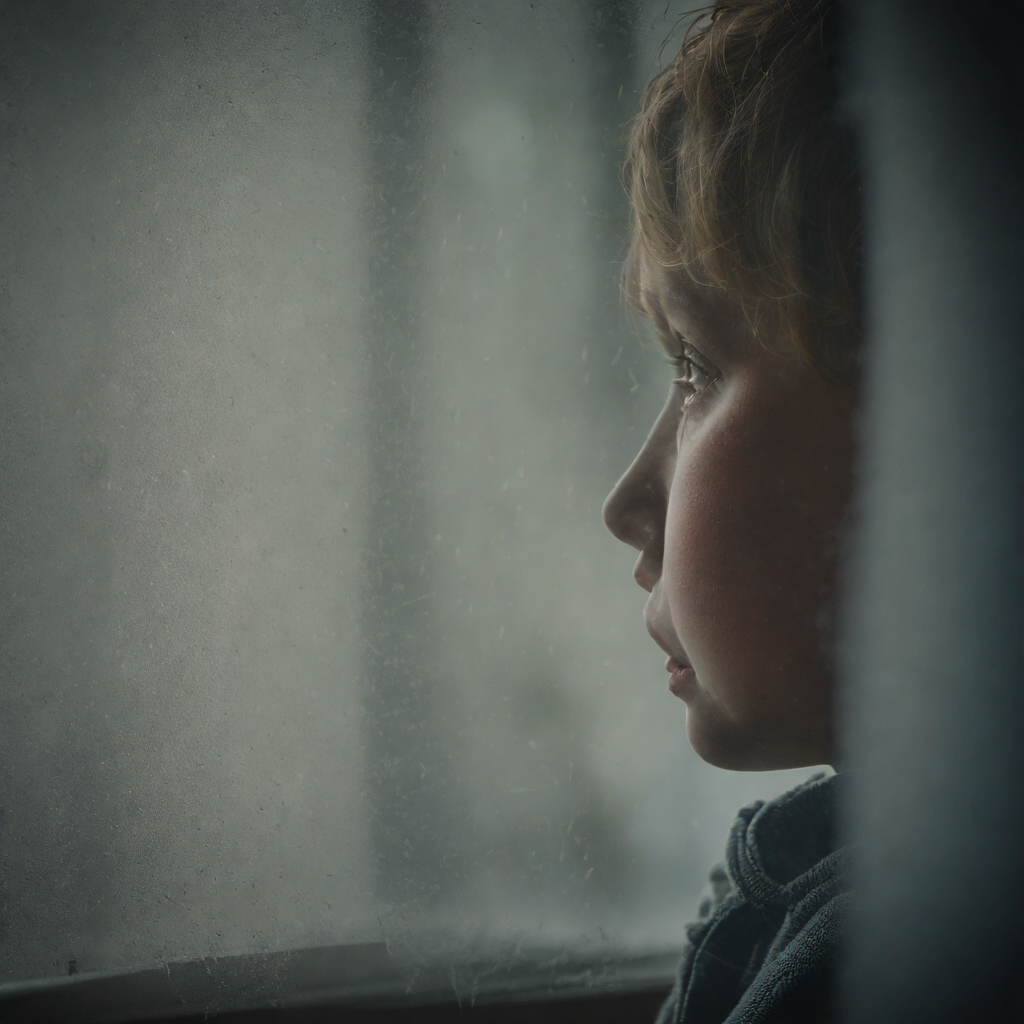
To the casual observer, a ten-year-old we might call James appears to be a model of resilience amidst the infrastructure freeze currently paralyzing Minneapolis. He sits quietly at the kitchen table, completing his homework by the light of a camping lantern as the power grid fluctuates. But beneath this veneer of discipline, a silent, paralyzed terror is unfolding. James is not just reading; he is—in his own mind—negotiating for his family's survival. If he does not tap his left foot exactly three times between each paragraph, he believes the roof collapsing under the weight of the snow becomes a certainty.
This is the secret world of the childhood OCD mind. It is not a desire for order, but a desperate, magical attempt to control catastrophic fear. While the nation focuses on the external crisis of the "Minneapolis Freeze" and the geopolitical realignment signaled by today's "Seoul Shock," a quieter crisis is taking place in the minds of America's youth. It is a crisis defined by invisibility, where the distance between the onset of symptoms and effective treatment spans nearly two decades.

The Anatomy of a Compulsion
Dr. Nina Higson-Sweeney, a clinical psychologist whose insights were recently highlighted by the BBC, notes that this "invisibility" is the condition's most complex trait. Unlike the cinematic portrayals of obsessive cleaning, the reality for many children is purely internal. The compulsion is often a mental act—a silent ritual performed to neutralize an intrusive thought that feels as real as a physical threat.
Consider the case of a child like Sarah, weathering the storm in St. Paul. To her parents, her repetitive touching of the window seal looks like a quirk of boredom. In reality, it is a high-stakes negotiation with catastrophe. In her mind, the blizzard is a sentient force waiting for a single lapse in her vigilance to destroy her home. This is the mechanism of the "Invisible Loop": a terrifying, intrusive thought—"If I don't check, they will die"—followed by a ritualistic compulsion designed to neutralize the threat.
While most children might step over cracks in the sidewalk for luck, the child with OCD is enslaved by a neurological imperative where the ritual is the only barrier against existential dread. A 2024 meta-analysis published in the Journal of Child Psychology and Psychiatry reinforced a statistic that has persisted for decades: the average delay between the onset of symptoms and the receipt of appropriate treatment remains between 14 and 17 years. This means a child developing symptoms today, in the second year of the Trump administration, might not receive specialized care until the early 2040s.
The 2026 Context: Parenting in an Age of Anxiety
The current political and economic landscape exacerbates this diagnostic blindness. In a US healthcare system increasingly focused on deregulation and efficiency under the current administration, the nuance of internal struggle risks being flattened into generic anxiety diagnoses. The "Minneapolis Freeze" serves as a metaphor for this internal landscape: a storm of white noise that obscures the distinct contours of individual distress.
For parents navigating the chaotic start to 2026, identifying the subtle signals of Obsessive-Compulsive Disorder (OCD) amidst global instability is akin to tuning a radio in a thunderstorm. When the news cycle is dominated by power grid failures and trade shifts, a child's catastrophic thinking can easily fly under the radar. A parent might dismiss a child's excessive checking of the weather app as a logical response to the "record lows," rather than recognizing it as a ritualistic compulsion.
This diagnostic failure has economic consequences that resonate with the administration's focus on workforce productivity. A child consumed by the loop is a student unable to focus, a future worker paralyzed by indecision. The "cost" is not merely the price of therapy, but the compound interest of lost potential—a loss of human capital that the market has yet to fully price in.

The Diagnostic Gap: Why We Miss the Signs
The diagnostic landscape for childhood OCD remains challenging. To a classroom teacher or a general practitioner, a child who is distracted, fidgety, or struggling to complete tasks often looks like a textbook case of ADHD. However, the internal driver is fundamentally different. A child with ADHD might be distracted by a bird outside the window; a child with OCD is often "distracted" by an intense, internal loop of intrusive thoughts.
"The reality is that these children often believe these thoughts define their character," notes Dr. Higson-Sweeney. "They don't know it's a misfiring neural circuit. They just think they are 'bad' kids." This shame fuels silence. Because the distress is internalized, the gap between symptom onset and appropriate treatment remains significant.
The cost of this confusion is developmental. When OCD is treated as behavioral defiance or simple anxiety, the cycle is inadvertently reinforced. Reassurance-seeking—a common compulsion where a child asks, "Are you sure I'm okay?"—is often met with comforting answers from well-meaning parents. Yet, in the logic of OCD, this validation acts as a temporary drug, strengthening the disorder's grip.
Breaking the Cycle: The Gold Standard
The path to recovery requires a counter-intuitive approach known as Exposure and Response Prevention (ERP). Unlike traditional talk therapy, which might seek to analyze the 'why' behind a fear, ERP is action-oriented. It involves gradually exposing the child to the source of their anxiety and strictly preventing the associated ritual. It requires the child to sit with discomfort until the anxiety naturally subsides.
For parents, this approach can be difficult. It demands suppressing the instinct to comfort and instead allowing the child to face their fears to learn safety. Access to this specialized care remains a primary bottleneck in 2026. Despite the expansion of telehealth, the supply of certified ERP therapists has not kept pace with the rising tide of pediatric anxiety disorders.
Early intervention changes the trajectory. When a child learns at age seven that they can tolerate uncertainty without performing a ritual, they build a resilience that serves them for a lifetime. The alternative—waiting the statistical average of 17 years—means the disorder is allowed to calcify, becoming a defining feature of their adult identity rather than a manageable challenge of their childhood.