The Hollow Harvest: Wall Street Booms While Iowa Bleeds
Cheers on the Ticker, Silence in the Silo
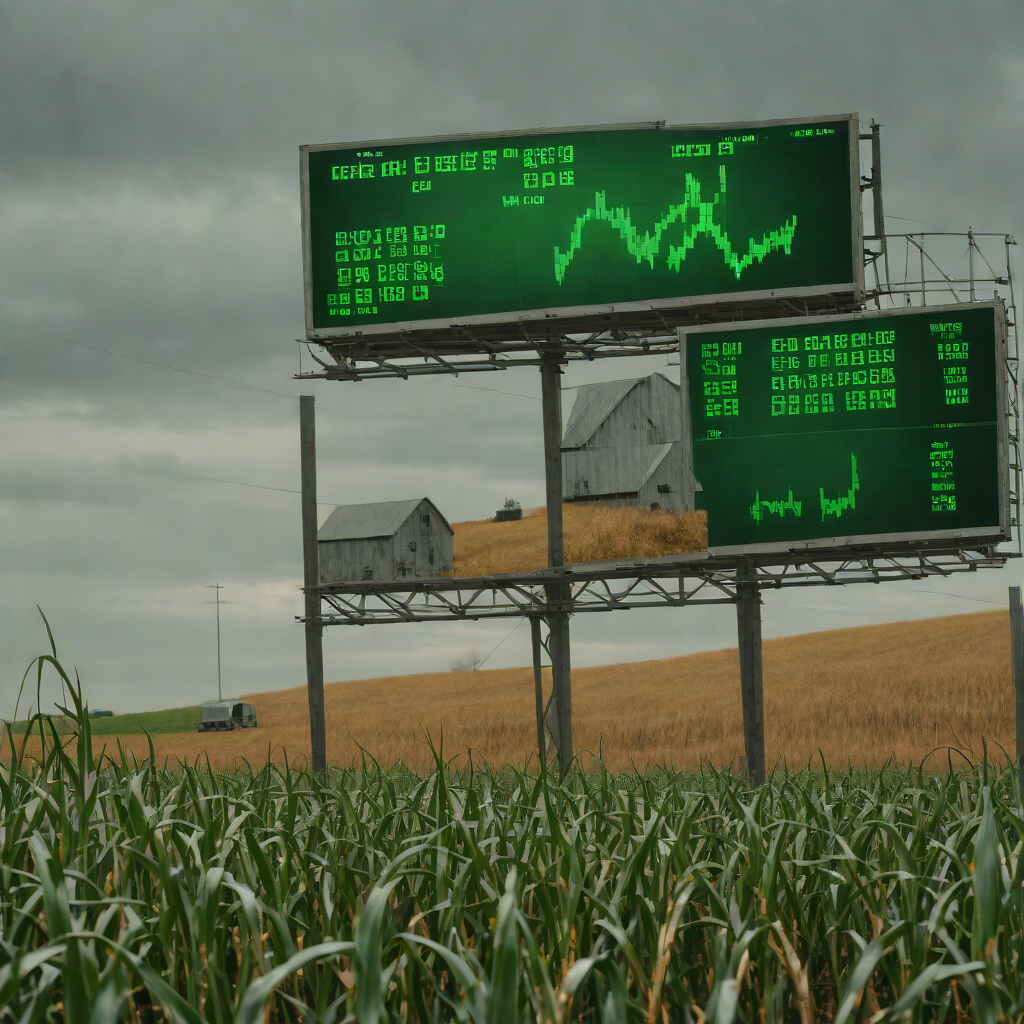
The applause was thunderous inside the Hy-Vee Hall in Des Moines this past Tuesday, where President Trump touted the latest GDP figures—a robust 3.8% annual growth rate fueled by Silicon Valley’s AI boom and the administration's aggressive deregulation of the energy sector. "We are bringing wealth back like never before," the President declared to a sea of supporters, citing the Dow Jones Industrial Average’s record-breaking run. Yet, less than an hour’s drive west, on a frozen gravel road in Dallas County, the atmosphere was starkly different. There, the only sound was the gavel of a court-appointed auctioneer dismantling the assets of a family-owned soy farm. This dissonance defines the American economy in early 2026: a macroeconomic masterclass on the tickers of New York masking a microeconomic crisis hollowing out the Heartland.
For observers on Wall Street, the "Trump Boom 2.0" is undeniable. The administration’s hands-off approach to SEC oversight and the rapid integration of autonomous logistics have sent corporate profit margins soaring. However, agricultural economists point to a widening chasm between asset prices and operational viability. According to data from the USDA’s Economic Research Service, while the S&P 500 rallied 18% following the implementation of the "Universal Baseline Tariff" in the fall of 2025, net farm income in the Midwest plummeted by nearly 14% in the same period. The tariffs, intended to shield American industry, triggered immediate retaliatory levies from key buyers in Asia and Europe, effectively locking Iowan grain out of its most lucrative markets just as harvest began.
The Divergence: S&P 500 vs. Net Farm Income (Indexed to Jan 2024)
The human toll of this policy paradox is visible in the ledger of community banks across the Corn Belt. Thomas Clark, a loan officer who has managed agricultural portfolios in central Iowa for two decades, describes a "silent liquidity crisis" that no amount of federal subsidies has been able to patch. "The price of diesel and fertilizer hasn't come down just because we're drilling more oil," Clark explains, referencing the sticky inflation in industrial inputs. "My clients are selling corn at 2020 prices while paying 2026 operational costs. The math simply doesn't work anymore." He notes that for the first time in his career, he is seeing solvent farms with perfect credit histories being forced to liquidate land merely to service operating lines of credit—land that is increasingly being snapped up not by neighbors, but by sovereign wealth funds and private equity firms hedging against inflation.
This trend of consolidation is accelerating the erasure of the mid-sized family farm, a demographic that formed the bedrock of the President's electoral coalition. While the administration argues that the pain is a temporary adjustment essential for long-term trade sovereignty, the reality on the ground suggests a permanent structural shift. Sarah Miller, who runs a heavy machinery dealership in Davenport, reports that equipment orders have stalled completely since December. "We’re not seeing a pause; we’re seeing an exit," Miller says. "When a family sells 500 acres to a holding company in Delaware, they don't buy new tractors from me. They contract it out to a corporate fleet managed by AI logistics. The capital leaves this town and never comes back."
The Price of 'America First' Protectionism
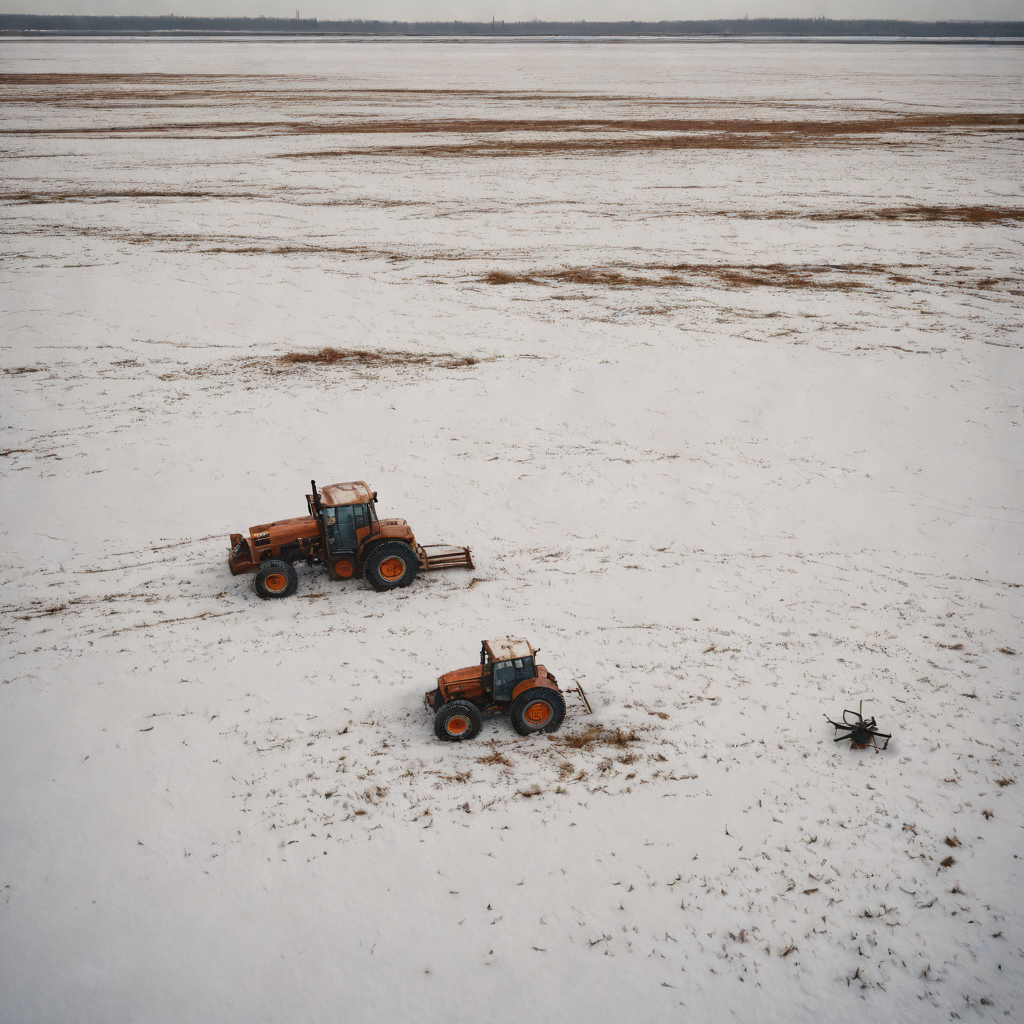
The promise of the "Universal Baseline Tariff," implemented with fanfare in the autumn of 2025, was simple: ring-fence the American economy to force a renaissance of domestic production. Yet, as the 2026 planting season approaches, the policy’s mechanism is grinding against the reality of global agricultural supply chains. For the corn and soybean growers of Iowa, the trade barriers intended to punish foreign competitors have instead acted as a financial burden on the very tools of their trade, creating an "ag-inflation" that outpaces the broader consumer price index.
The friction is most visible in the machinery sector, where the cost of steel and imported components has surged. William O’Connor, a parts procurement specialist based in Fort Dodge, notes that the price of replacement components for standard harvesters has jumped 18% since the tariffs took full effect. "We are seeing farmers patch up tractors that should have been retired five years ago," O’Connor explains. "They can't afford the new models because the tariffs on high-grade steel and electronic control units—mostly sourced from Asia and Europe—are being passed directly to the buyer. The administration promised protection, but my customers are paying a premium for it."
This squeeze on capital expenditure is compounded by a spike in variable input costs. Nitrogen-based fertilizers, heavily dependent on global ammonia markets, have seen price volatility not witnessed since the supply chain crises of the early 2020s. Thomas Reynolds, a third-generation soybean farmer near Ames, describes a balance sheet that no longer balances. "My break-even price used to be $4.50 a bushel. With the new tariff regime driving up the cost of potash and chemicals, that number is closer to $5.25. Yet, spot prices for crops are stagnant because our export partners are raising their own walls in retaliation. We are paying more to grow crops that fewer countries want to buy."
The 'Ag-Gap': Input Costs vs. Commodity Prices (2024-2026)
The Consolidation Engine
The auctioneer’s chant at the Johnson County Fairgrounds used to be a community ritual, a passing of the torch from one local family to another. Today, the rhythm is the same, but the faces in the crowd have changed. When the gavel fell on 300 acres of prime corn-belt loam yesterday, the winning bid didn’t come from a neighbor looking to expand operations for a son or daughter. It came from a representative of a Delaware-based Limited Liability Company, finalizing the transaction with a tablet and a silence that spoke louder than the wind rattling the metal roof.
"It’s a liquidation event, plain and simple," says William Henderson, a lifelong resident and former operator near Iowa City who recently leased his acreage to a Des Moines-based management firm. "We aren't selling to the guy down the road because the guy down the road can't get a loan at 8%. The only people buying are the ones who don't need a bank."
Iowa Farmland Buyer Demographics (2024 vs 2026)
This consolidation engine is efficiently converting independent proprietors into tenant farmers. The land is still worked, the harvest is still gathered, but the equity is being strip-mined. A report from the Iowa State University Extension released earlier this month highlights that the percentage of farmland operated by tenants has ticked up to levels not seen since the Great Depression. The "efficiency" touted by Wall Street analysts comes at the cost of rural autonomy.
The Automation Precipice
The silence settling over Iowa’s cornfields this winter is deceptive. It is not the quiet of dormancy, but the hush of structural transformation. As the Trump administration’s tightened immigration controls—enforced by updated ICE protocols—reduce the traditional supply of seasonal labor, a new mechanical workforce is rolling into the void. This transition, however, is not a tide that lifts all boats; it is a capital-intensive shift threatening to leave mid-sized family farms behind while corporate conglomerates capitalize on the "Adjustment Crisis."
The dichotomy drives the wedge deeper into the heart of the American Midwest. The technology that promises to save American agriculture—AI-driven precision farming, autonomous harvesters, and drone monitoring—is accelerating a consolidation of land ownership not seen since the 1980s. A Q4 2025 report by the USDA Economic Research Service highlights a stark divergence: while farm income for operations over 2,000 acres rose by 12% driven by tech-enabled yield optimization, income for farms under 500 acres plummeted by 15%, weighed down by debt service and labor scarcity.
The Automation Divide: Ag-Tech Adoption Rates by Farm Size (2025-2026)
As Wall Street investors pour money into Ag-Tech ETFs, betting on the "re-industrialization" of American farming, the human element is being priced out. The countryside is indeed becoming more efficient, contributing to the GDP growth figures touted by the White House, but it is also becoming emptier. The harvest may be bountiful, but for the communities that once thrived on the labor of the land, the yield is increasingly hollow.

Beyond the Ballot Box
The divergence between the S&P 500’s record-breaking rallies and the quiet foreclosure auctions in Boone County illustrates a defining fracture in the Trump 2.0 era. As the administration celebrates the "Silicon Renaissance"—fueled by unchecked AI integration and the deregulation of digital assets—the agricultural heartland is grappling with the tangible fallout of the Universal Baseline Tariff. The "Seoul Shock" of recent days has only hardened these geopolitical lines, turning temporary trade disputes into entrenched economic sieges.
For the rural economy, the crisis is no longer theoretical. The "Compound Crisis" currently paralyzing Minneapolis with catastrophic winter storms has spilled over into Iowa, exposing a logistics network so brittle that a single regional freeze can halt grain shipments for weeks. If this disparity continues unchecked, the political ramifications for the remainder of 2026 will be profound. The populist coalition that returned Donald Trump to the White House was built on the promise of restored industrial might and dignity. Yet, as Wall Street feasts on the liquidity provided by the Federal Reserve's stance toward the tech sector, the rural base is witnessing a reshaping of their identity—not into the masters of their own destiny, but into collateral damage of a trade war fought for digital hegemony.