The Jurisdictional Shadow: Federal Power in a Frozen Minneapolis
A Procedural Pause in a Frozen City
The announcement from the Department of Homeland Security this morning was terse, adhering strictly to the bureaucratic playbook: three Customs and Border Protection (CBP) agents involved in the fatal shooting of Alex Pretti have been placed on administrative leave pending an internal review. In Washington, this is a standard procedural interval. But in Minneapolis, where the wind chill pushes thirty below and the perimeter around the catastrophic "Railgate" derailment remains a jagged scar of razor wire, "administrative leave" signifies a retreat into a fog of jurisdictional ambiguity.
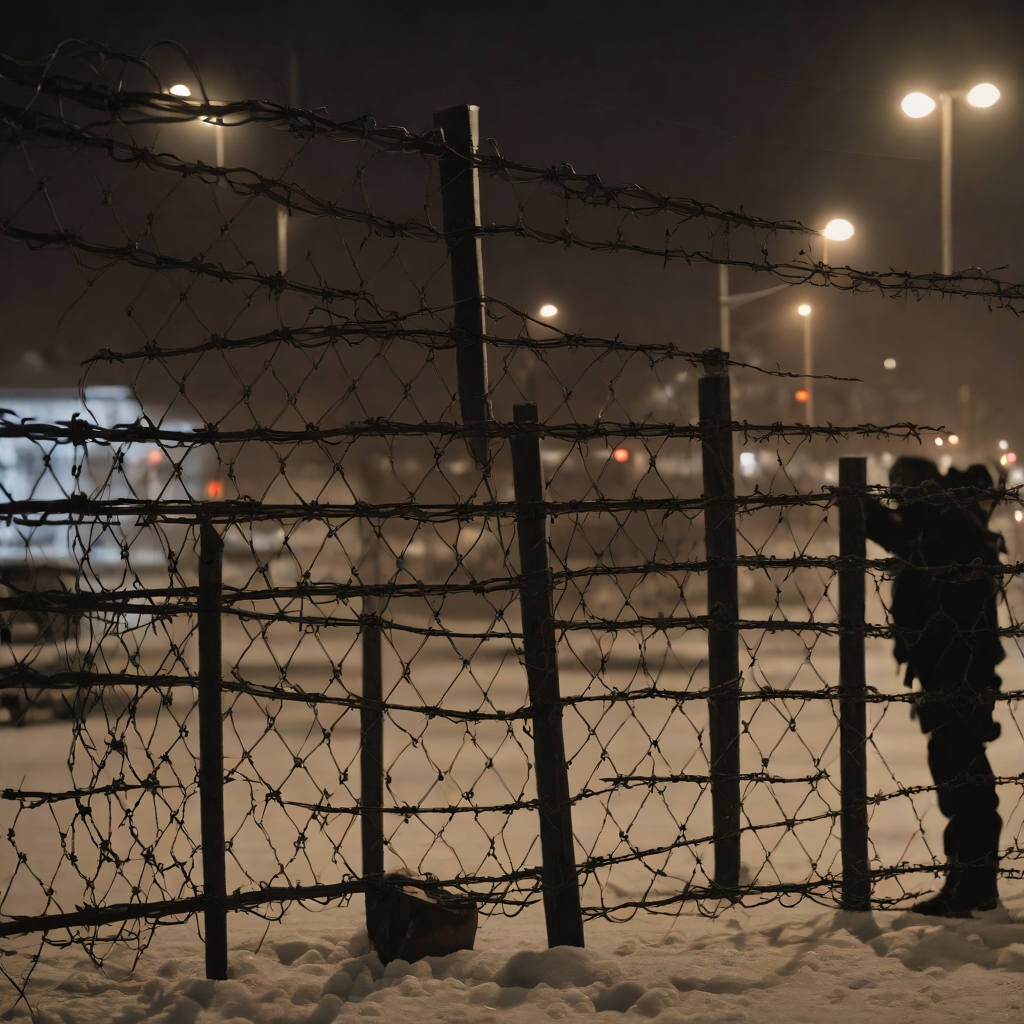
For residents of the Phillips neighborhood, currently navigating checkpoints that resemble a conflict zone rather than a recovery site, the distinction between a federal agent and a private contractor has become dangerously blurred. The presence of CBP—an agency theoretically tethered to the nation's borders—enforcing an exclusion zone in the Midwest raises constitutional questions that a personnel review cannot answer. Under the Trump administration’s expanded definition of "critical infrastructure defense," the operational map of the Department of Homeland Security has effectively been redrawn, turning a domestic rail disaster into a federalized security theater where standard rules of engagement appear suspended.
Michael Johnson (a pseudonym), a logistics coordinator living two blocks from the site, described the confusion on the ground. "You have local police who say they can't let you through, then you have guys in unmarked tactical gear telling you to turn back or be detained," Johnson stated near a barricade on Franklin Avenue. "If the lines of authority are this messy in the cold, what happens when the snow melts and we see what they’re actually guarding?"
The Railgate Perimeter
To understand why federal agents patrol a residential neighborhood in Minneapolis, one must look at the thermometer. The "Minneapolis Freeze" of January 2026 was a declared National Critical Infrastructure Emergency. When temperatures plummeted to -35°F, snapping aging rail welds, the derailment in the North Loop ceased to be a local transportation accident. Under the invocation of the Patriot Supply Chain Act—a cornerstone of the administration’s 2025 legislative push—the crash site was reclassified as a zone of federal sovereignty, effectively carving a hole in the jurisdiction of the Minneapolis Police Department.
The "Railgate" perimeter was established within hours of the initial chemical spill. While public focus remains on the payload—industrial solvents critical for semiconductor manufacturing—the operational footprint tells a different story regarding the erosion of civil boundaries. Residents like David Chen (a pseudonym), whose apartment complex borders the BNSF railway tracks, recount a scene resembling an occupation. "We didn't see local cops directing traffic," Chen explains. "We saw unmarked SUVs and agents in tactical gear with patches that didn't say 'Police'. They said 'Federal Protective Service' and 'ICE'."
This question cuts to the heart of the jurisdictional shadow now stretching across the Midwest. The administration’s definition of "border security" has aggressively expanded inward, encompassing "economic arteries" deemed vital to national interest. In this context, the freight line moving through Minneapolis was no longer just a track; it was a protected federal asset. Legal scholars argue that the "Minneapolis Freeze" provided the perfect storm to test these expanded powers. By declaring the weather event a threat to national economic stability, the White House effectively federalized the disaster response, bypassing standard request-for-assistance protocols usually initiated by a state governor.
The Expanding Border: Jurisdiction 100 Miles Inland
The map on the wall of the Fourth Precinct suggests that Minneapolis sits roughly 270 miles south of the Canadian border—well beyond the constitutionally gray "100-mile zone" where Fourth Amendment protections are traditionally relaxed. Yet, the deployment of CBP units to secure the "Railgate" perimeter has effectively detached the city’s legal status from its geography.
At the heart of this expansion is a novel interpretation of the "functional equivalent of the border" doctrine. Historically reserved for international airports, the Trump administration has arguably repurposed this mechanism to cover critical supply chain nodes during national emergencies. Under an executive order signed earlier this month, the Minneapolis rail hub was designated a "National Security Logistics Point." This theoretically grants federal agents the authority to conduct warrantless searches within the perimeter, mirroring powers wielded at a port of entry.
Federal vs. Local Enforcement Presence in Critical Infrastructure Zones (2020-2026)
For residents like Sarah Miller (a pseudonym), a legal observer, the shift was abrupt. "We went from local police enforcing a curfew to federal agents demanding proof of citizenship from people walking to the grocery store," she notes. The American Civil Liberties Union (ACLU) has filed emergency motions, arguing that extending border powers to domestic infrastructure sites erodes the Posse Comitatus Act. However, the Department of Homeland Security (DHS) counters that the crisis involves international trade flows and the threat of "foreign sabotage."
Badge or Contract? The Identity Gap
The chaos at the Minneapolis "Railgate" perimeter involves the freezing of constitutional accountability as much as infrastructure. When footage surfaced of an enforcement unit detaining residents, public outcry pivoted to standard expectations of administrative leave. However, this focus misses a legal sleight of hand. Witnesses describe a patchwork of authority that defies standard identification.
For Michael Johnson, attempting to record a badge number proved impossible. "The individual blocking the checkpoint didn't have a badge or a nameplate," Johnson noted. "He wore a tactical vest with a generic 'Federal Support' patch and a velcro ID that simply read 'Contractor-4.' When I asked for his unit, he told me he answered to the site manager."
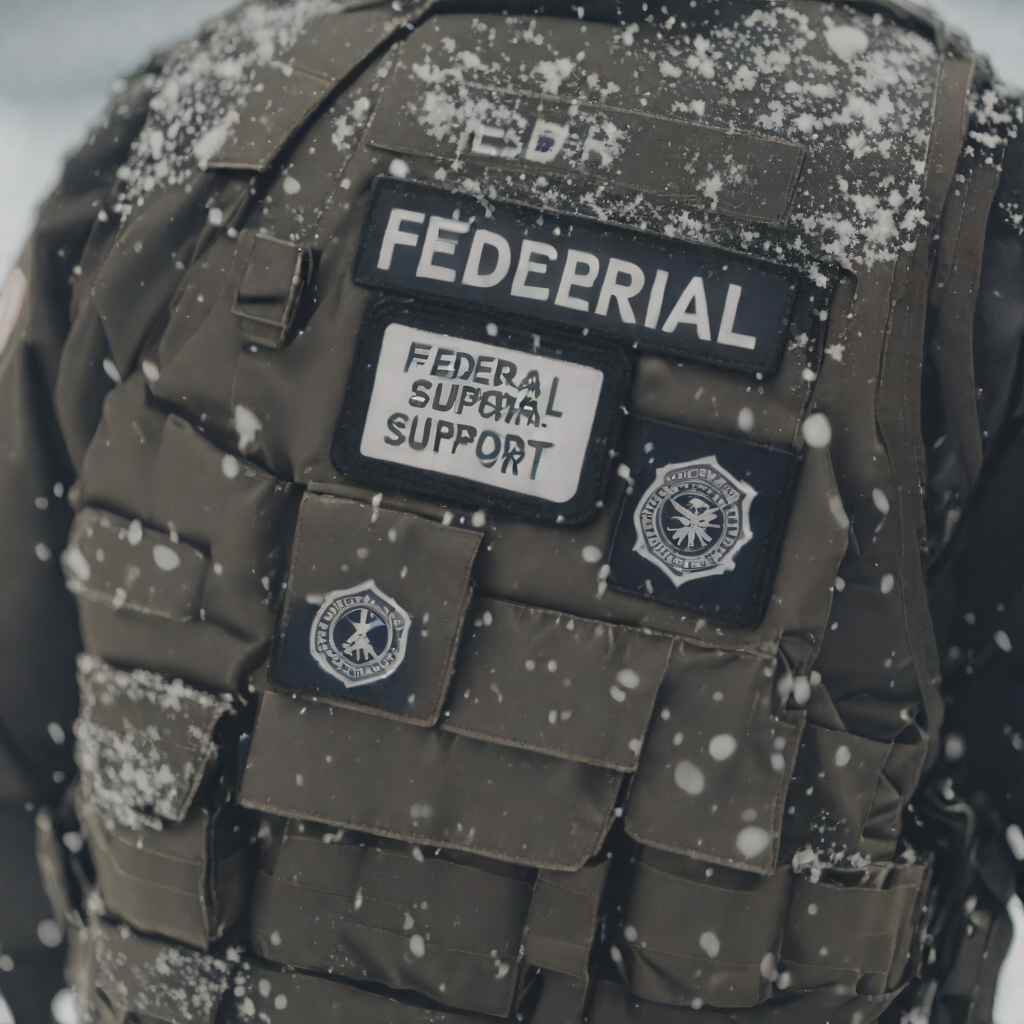
This "Identity Gap" is profound. While the Department of Justice outlines strict protocols for sworn federal agents, the deployment of private military contractors (PMCs) under emergency relief funds operates in murky waters. In the push for "cost-effective" crisis management, a hallmark of the current deregulation agenda, the lines between deputized authority and corporate security have dissolved. If a private contractor violates a citizen's rights, they are often not subject to "administrative leave" in the statutory sense, but merely a breach of contract termination—a private matter shielded by non-disclosure agreements.
Accountability in the Gray Zone
The DHS announcement regarding the paid administrative leave of the operative involved in the shooting was intended to signal order. Instead, it illuminated a legal vacuum. To constitutional scholars, it looks less like discipline and more like a strategic extraction—removing the shooter from the jurisdictional reach of Hennepin County prosecutors.
The shooting occurred inside a zone where standard municipal law enforcement has been displaced by a hybrid force. When 911 calls went out, Minneapolis Police were reportedly held at the perimeter because the rail depot had been designated a "Critical National Security Asset." This designation transformed a city block into a federal enclave. For "Sarah Jenkins" (a pseudonym), a public defender, the barrier is impenetrable. "We have a dead civilian and a shooter who technically answers to a corporate chain of command that loops back to a federal contract," she argues.
The Shift: Public vs. Private Enforcement Spending in Emergency Zones (2022-2026)
This operational reality defines the "Adjustment Crisis" of 2026. As extreme weather necessitates rapid infrastructure intervention, the federal government increasingly outsources enforcement to private firms. The "Railgate" perimeter serves as a prototype for a new jurisdiction where the Constitution implies one thing, but a federal service contract dictates another. The placement of one agent on leave is a procedural footnote; the substantive issue is the creation of zones where the question "Who is in charge?" has a contractual answer rather than a constitutional one.