The Poisoned Ledger: Inside Mamdani’s High-Stakes Audit of the Adams Era
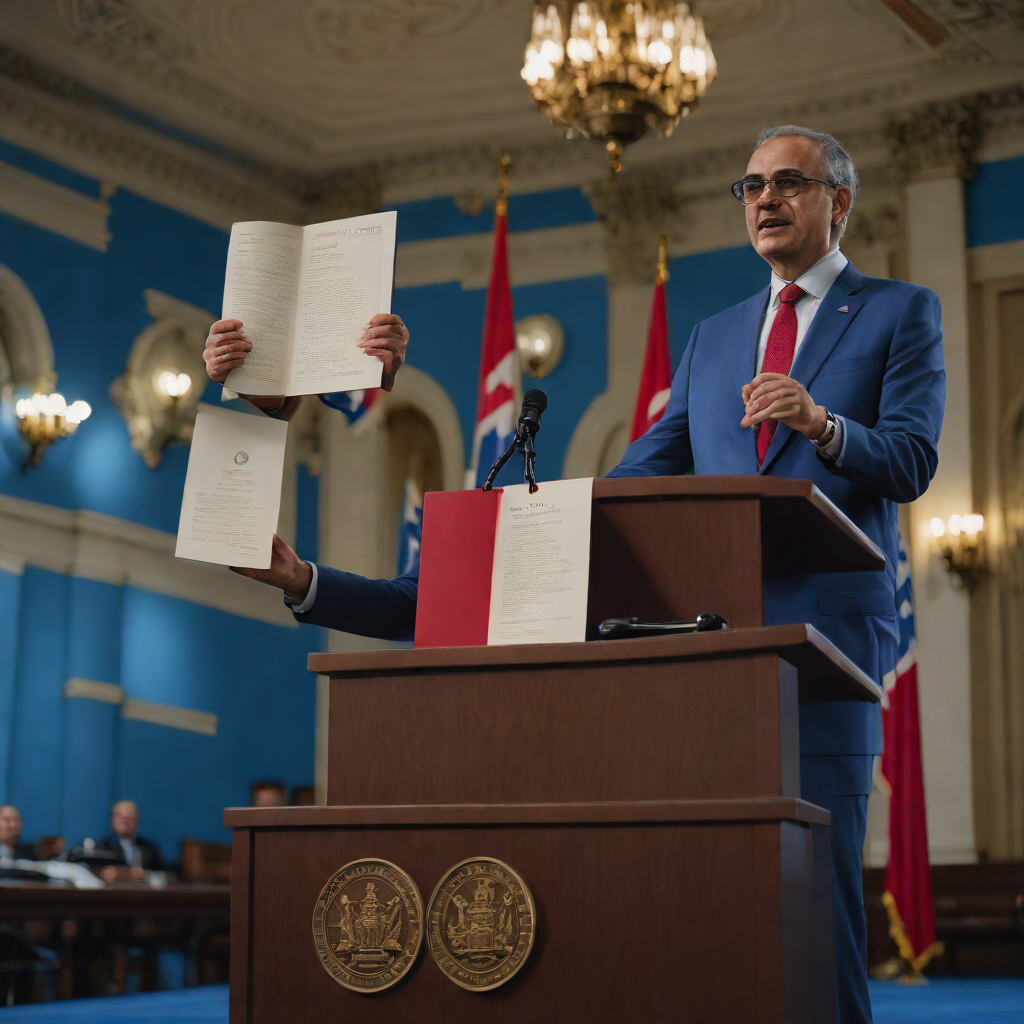
The spreadsheets released by City Hall on Tuesday morning were less a financial statement and more a political indictment. Standing before an austere backdrop in the Blue Room, Mayor Zohran Mamdani did not merely announce a budget shortfall; he declared a crime scene. The phrase "poisoned inheritance"—repeated three times during his thirty-minute address—was chosen with surgical precision, designed to transform a confirmed $6.2 billion deficit from a bureaucratic hurdle into a moral mandate.
For the new administration, this figure is not just an accounting discrepancy. It is presented as the forensic evidence of the Adams era's "hollow centrism"—a ledger bleed caused by unchecked police overtime, opaque consultancy contracts, and what Mamdani termed "performative austerity" that slashed libraries while bloating administrative overhead. By framing the deficit as an active injury inflicted on the city rather than a passive misfortune, Mamdani is attempting a high-wire political maneuver: insulating his own ambitious social programs from the inevitable criticism of fiscal irresponsibility.
"We are not looking at a budget gap; we are looking at a budget trap," Mamdani told the assembled press corps, holding up the audit report bound in stark red. "The previous administration didn't just spend money; they baked structural insolvency into the foundation of our public services to handcuff their successors. They poisoned the well."

The $6.2 Billion Gap: Reality vs. Rhetoric
The audit arrived on a Tuesday morning, landing on the desks of the City Council with a thud that resonated from City Hall to Albany. Mayor Mamdani’s release of the "Truth in Accounting" report—a scathing re-evaluation of the city’s books left behind by the Adams administration—reveals a projected deficit not of the managed $1.5 billion previously claimed, but a staggering $6.2 billion for Fiscal Year 2027. While the Adams camp has long touted its "Program to Eliminate the Gap" (PEG) as a success of centrist pragmatism, the new administration argues that those savings were largely illusory, built on one-time revenue infusions and the strategic deferral of labor costs that have now come due.
To the untrained eye, a budget gap in New York City is a perennial ritual, a dance of scarcity performed before the state legislature steps in. However, analysts at the Citizens Budget Commission (CBC) suggest this shortfall is structural, not theatrical. The $6 billion hole is primarily composed of three "ghosts" of the previous administration: the abrupt expiration of federal ARPA (American Rescue Plan Act) funds that were used to underpin permanent programs like 3-K; the ballooning, uncapped costs of the migrant crisis which have exceeded initial $4 billion estimates; and the retroactive pay structures from the 2024-2025 municipal labor contracts.
"We are not looking at a cash flow problem; we are looking at a solvency crisis masked as stability," notes a senior credit analyst at Moody’s, speaking on condition of anonymity regarding the city's bond rating. "The previous administration balanced the checkbook by paying the mortgage with a credit card. That card has now been declined."
Anatomy of a Deficit: NYC FY2027 Gap Drivers (Projected)
Taxing the Rich to Cure the Patient
For Mayor Mamdani, this red ink is political gold. By framing the deficit as a "moral failure" of the centrist establishment rather than a bureaucratic inevitability, he is attempting to construct a permission structure for his most controversial campaign promise: a radical overhaul of the city’s property tax system and new levies on high-net-worth transfers. The narrative being crafted by City Hall is precise: the Adams administration did not "save" the city; it merely hid the bill.
In a combative press conference at City Hall yesterday, Mamdani unveiled what is arguably the most aggressive municipal revenue package in New York City’s modern history, framed explicitly as the only viable antidote to the "fiscal poison" of the previous era. The proposal, dubbed the "Civic Restoration Levy," rejects the traditional austerity playbook of service cuts, opting instead for a targeted tax hike on corporations and personal incomes exceeding $400,000.
"We are not fixing a budget; we are fixing a broken social contract," Mamdani declared, flanked by charts showing the stark divergence between soaring corporate profits in the Financial District and the crumbling infrastructure of the outer boroughs. The plan proposes a 0.5% surcharge on gross receipts for businesses with over $50 million in annual revenue and a graduated increase in the city’s personal income tax rate for top earners.
Projected Revenue Impact: Mamdani's 'Civic Restoration Levy' (2026-2027)
The Capital Flight Gamble
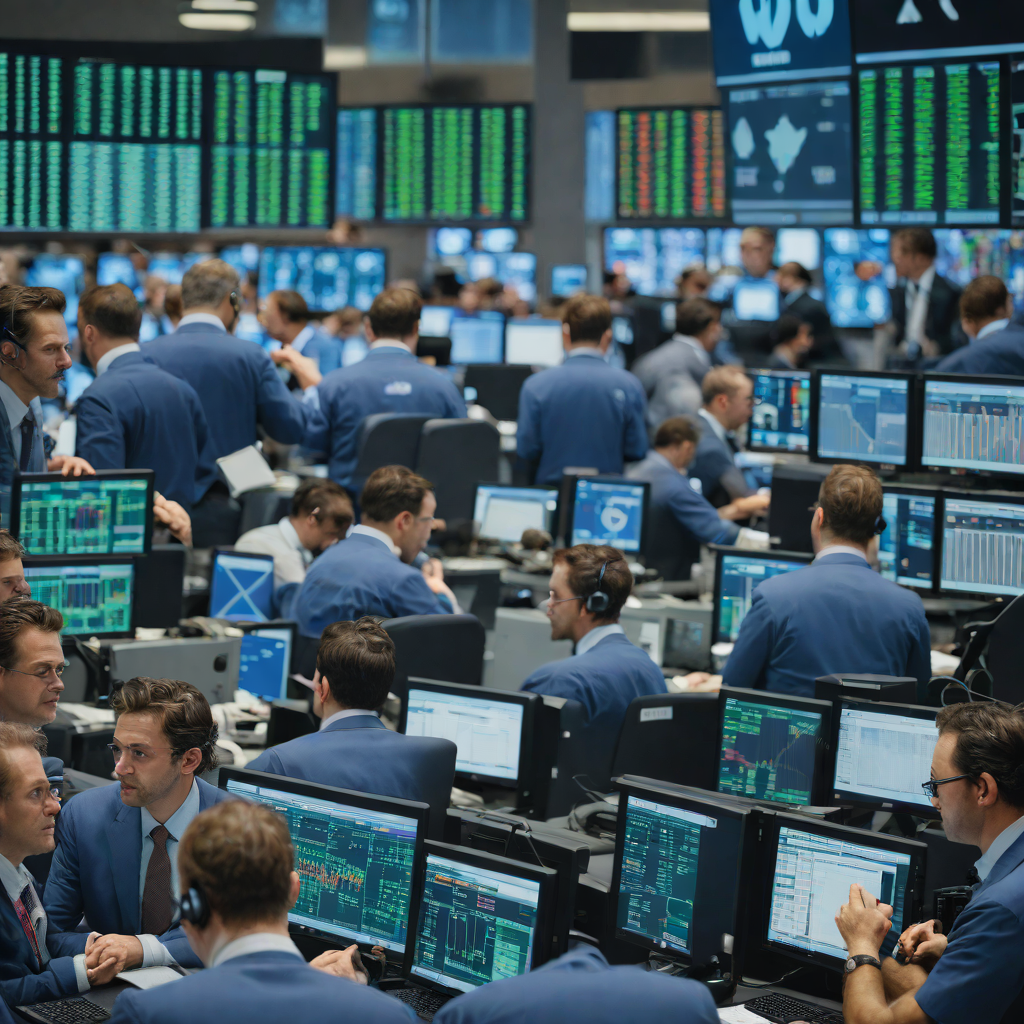
Mayor Mamdani’s strategy of weaponizing the books rests on a perilous assumption: that New York’s economic elite will tolerate being the primary financiers of his “repair” mandate. While the audit effectively paints the Adams administration as the architects of this fiscal ruin, the reaction on Wall Street has shifted from performative outrage to calculated logistics. In high-rise conference rooms, the conversation is no longer about lobbying City Hall, but about lease expirations and domicile changes.
For David Thorne (a pseudonym), a senior tax strategist at a Midtown hedge fund, the math doesn't add up to stability—it adds up to an exodus. "Clients aren't looking at the $6.2 billion deficit and thinking about civic duty," Thorne notes. "They are looking at the combined city, state, and federal tax burden. If Mamdani pushes this through while Washington is cutting corporate rates, the math for staying in Manhattan breaks. We aren't bluffing about relocation; the leases are already expiring."
The timing could not be more volatile. With the Trump administration doubling down on deregulation and incentivizing growth in "business-friendly" jurisdictions—primarily in the Sun Belt—the friction cost of leaving New York has never been lower. The federal environment effectively subsidizes the exodus Mamdani is betting against. Unlike the localized austerity measures of the past, the current proposal to uncap municipal income taxes hits exactly when federal tax shelters are being dismantled for blue-state residents.
Redefining the Social Contract
This strategy represents a fundamental redefinition of municipal governance in the Trump 2.0 era. While Washington pursues aggressive deregulation and tax cuts, New York is pivoting in the diametric opposite direction. Mamdani’s proposed "Civic Repair Tax" is being pitched not just as a revenue generator, but as a moral corrective. A report circulating among City Council leadership suggests the administration believes the deficit allows them to bypass moderate opposition; the logic is that the city is effectively in emergency status, requiring "wartime" economic measures.
Yet, for Mamdani’s base, the "poisoned ledger" is a vindication of years of activism. The deficit is viewed as the receipt for the previous administration’s priorities—excessive police overtime, no-bid contracts for donors, and subsidies for developers that failed to yield affordable housing. Maria Rodriguez (a pseudonym), a tenant organizer in Queens, argues that the fiscal crisis is the only thing forcing the city to look at the revenue side of the ledger truthfully. "We were told for four years that there was no money for libraries or 3-K, yet the deficit grew while luxury towers went up," Rodriguez says. "If fixing the books means breaking the developers' grip on the budget, then let it break."
The gamble is existential. If Mamdani fails to close the gap through his "tax-the-rich" strategy, the spectre of the Emergency Financial Control Board looms—a state takeover that would strip him of power, a scenario Governor Hochul has pointedly refused to rule out. But if he succeeds, he establishes a new template for American urbanism: a city that finances its social safety net by directly capturing the liquidity of its wealthiest sector, regardless of federal headwinds. The audit has stripped away the illusion of technocratic neutrality; the budget is now openly a battleground for the soul of the city.