The Frozen Gap: New York’s Ice Walls Are a Monument to Systemic Failure
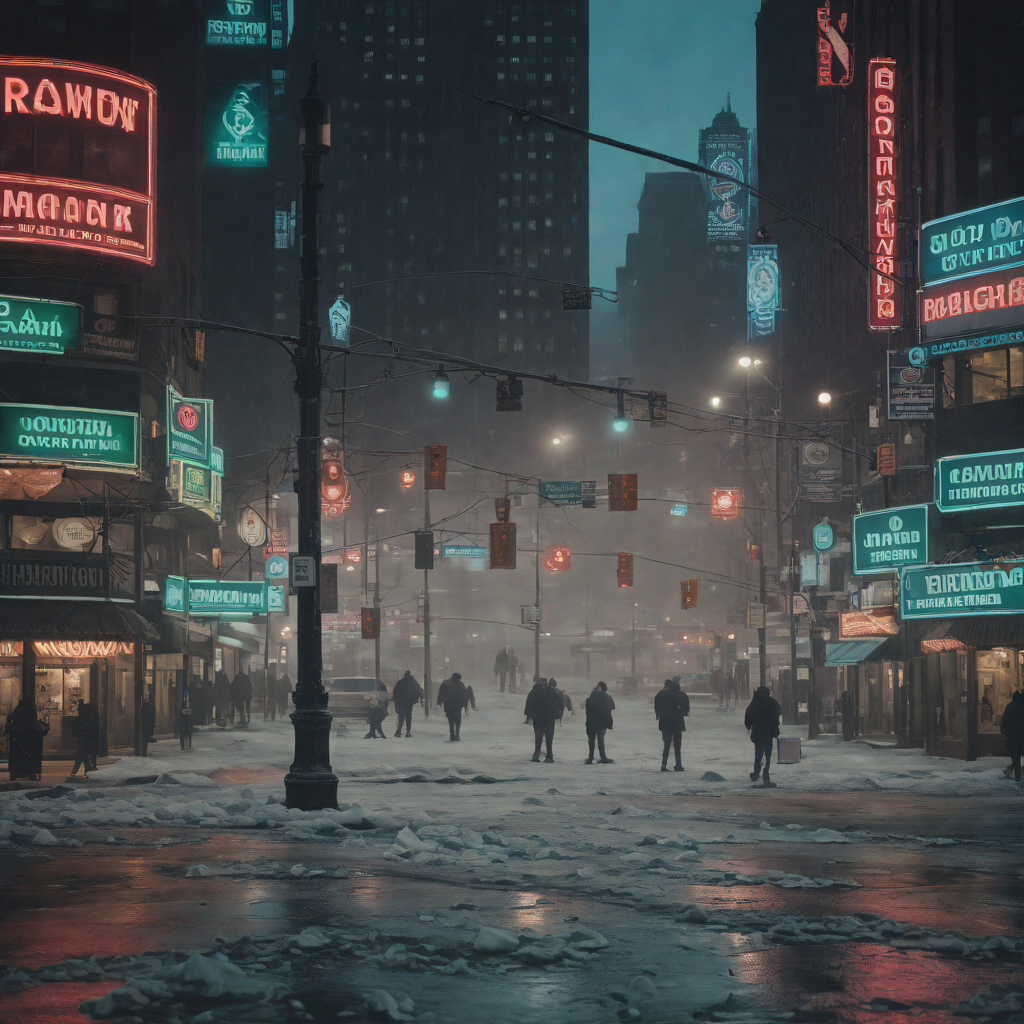
The Ice Wall on 42nd Street
On the corner of 42nd Street and Eighth Avenue, the wind chill hovers near minus 20 degrees, but the real hazard isn’t the temperature—it is the topography. While the avenue itself is a ribbon of black asphalt, scraped clean for the steady stream of delivery trucks and black SUVs, the pedestrian experience ends abruptly at the curb. Here, a three-foot ridge of hardened slush forms a physical barricade, a byproduct of the very plows meant to keep the city moving. This "ice wall" is not merely a weather event; it is the frozen architecture of a city that has prioritized the flow of capital over the movement of its citizens.
For James Carter, a 64-year-old Hell’s Kitchen resident recovering from hip surgery, the intersection has become impassable territory. "I can see the pharmacy across the street," he says, gesturing with a cane toward the flashing neon sign on the other side. "But to get there, I have to climb over a mountain of ice that the city pushed onto the sidewalk three days ago. The cars are fine. The delivery drones are fine. We are the ones trapped."
This disparity is visible across Midtown. The streetscape has been bisected into two distinct realities: a frictionless zone for vehicular traffic and a perilous obstacle course for pedestrians. As the Trump administration’s infrastructure deregulation policies filter down to municipal levels, the mandate for "economic continuity" has ensured that roadways remain pristine for logistics and commerce. Yet, the sidewalks—specifically the critical transition zones at crosswalks—have fallen into a jurisdictional gray area. Property owners are responsible for the pavement in front of their buildings, and the Department of Sanitation clears the streets, but the mounds of ice created where the plow meets the curb belong to no one.
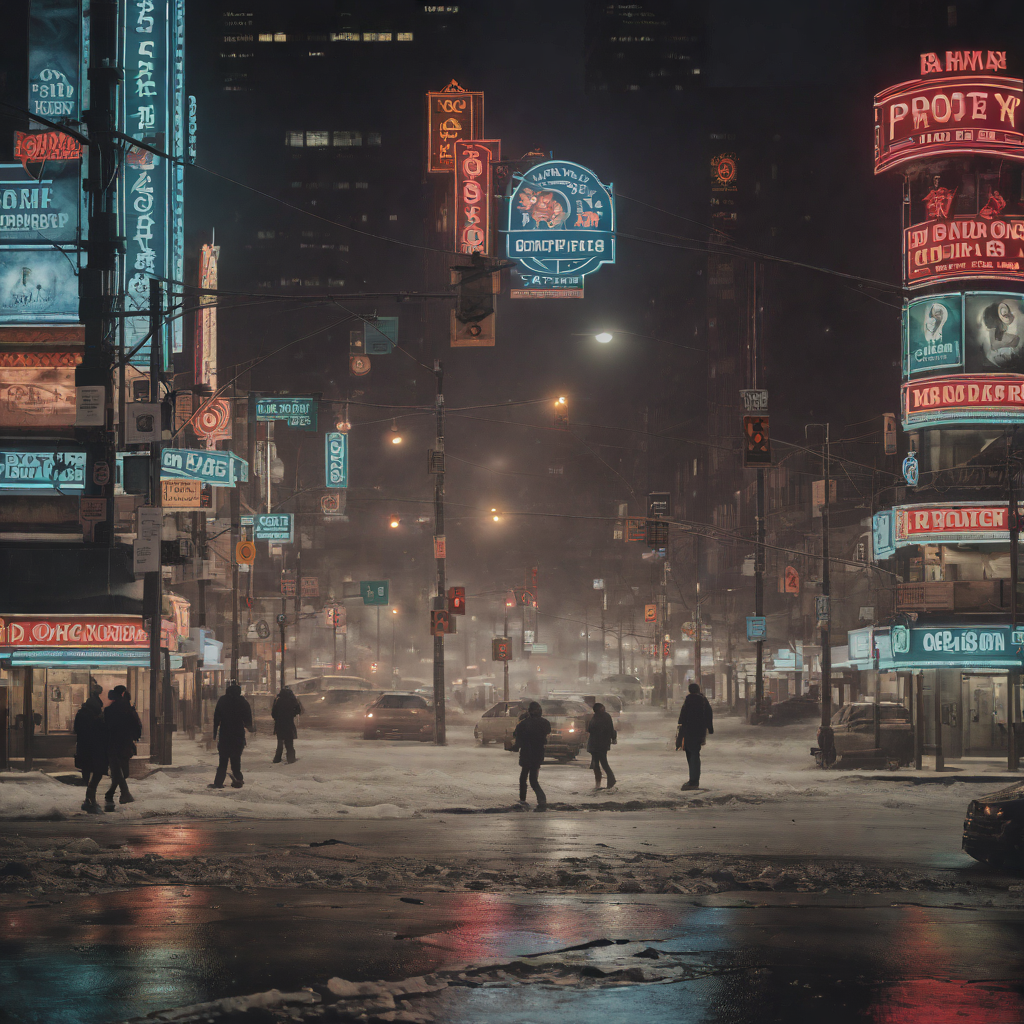
The result is a dangerous stalemate. Commuters in business attire can be seen awkwardly scaling these frozen berms, sliding onto the active roadway in a desperate bid to catch the light. Parents lift strollers over jagged ice chunks, exposing themselves to oncoming traffic that, empowered by the clear roads, shows little inclination to slow down. It is a visual manifestation of a broken social contract: the tax-paying pedestrian is left to navigate the debris of a system designed to serve the vehicle. The ice wall on 42nd Street is silent evidence that in the austerity-driven calculus of 2026 New York, the ability to walk safely is no longer a right, but a luxury subordinate to the speed of the commute.
The Bureaucratic No-Man's-Land
The pedestrian ramp at the corner of 57th and 8th Avenue is no longer a piece of transit infrastructure; it is a frozen monument to a liability stalemate. While the sidewalks stretching mid-block are pristine—scraped to the pavement by private doormen fearing the city’s aggressive ticketing algorithm—the corners remain encased in a jagged mix of slush and refrozen plow spray. This disparity is not accidental. It is the physical manifestation of a "bureaucratic no-man's-land," a regulatory void where the responsibilities of the private property owner end and the duties of the Department of Sanitation (DSNY) supposedly begin, yet neither truly takes ownership.
Under Section 16-123 of the New York City Administrative Code, property owners are mandated to clear snow from the sidewalk abutting their property within four hours of snowfall ending. However, the legal definition of where the "sidewalk" ends and the "street" begins blurs precisely where the curb cuts meet the asphalt. For decades, this ambiguity was managed by an informal social contract and manual labor "corner cap" crews funded by the city. But under the current fiscal landscape, shaped by the Trump administration’s sharp reductions in federal urban block grants to prioritize "hinterland industrialization," those auxiliary crews have been slashed. The result is what the Real Estate Board of New York (REBNY) has quietly termed the "plowback paradox": property owners clear a path, only for city plows—mandated to prioritize vehicle flow—to push a four-foot wall of sludge back onto the corner ramps minutes later.
Marcus Thorne, a superintendent for a residential co-op in Jackson Heights, describes the enforcement as a trap. "I spent three hours chipping ice off that corner ramp Tuesday morning," Thorne says, gesturing to a fresh citation from the Department of Consumer and Worker Protection. "By noon, the plow came by and buried it again. The inspector fined us for the plow’s mess. If I touch the street, the union says it’s not my jurisdiction. If I don't, the city fines the building. So now, we just pay the fine. It’s cheaper than breaking a back."
Thorne’s calculation is becoming standard operating procedure across the boroughs, effectively turning snow removal fines into a predictable tax rather than an incentive for safety. Legal experts argue that this stalemate is exacerbated by a rigid interpretation of tort liability that discourages good Samaritans. If a property owner attempts to clear the "street portion" of the ramp and leaves a patch of black ice, they open themselves to direct negligence lawsuits. If they leave it untouched, they can claim the hazard was created by the city’s plow operations, shifting the burden of defense.
"We have created a perverse incentive structure," notes a recent white paper from the Urban Justice Center. "The safest legal strategy for a landlord in 2026 is to clear the sidewalk perfectly, stop exactly at the curb line, and let the crosswalk become a glacier. The law protects the inactive property owner more than the imperfect volunteer."
NYC Snow Removal Citations vs. Cleared Corners (2022-2026)
The data underscores this retreat. As citations for uncleared snow have skyrocketed—driven by automated drone enforcement introduced in late 2025—the actual rate of passable corners has plummeted. The city’s attempt to automate accountability has failed to account for the physical reality of the plow operations. By treating the corner ramp as solely a property owner's burden, while simultaneously degrading the municipal services that keep those ramps clear of road spray, New York has effectively severed the continuity of its pedestrian network. The "frozen gap" is not just ice; it is a gap in governance, filled by cold, hard liability.
The Cost of Technical Debt
The intersection of Broadway and 79th Street is no longer a crossing; it is a fortification. For Margaret Vance, a 78-year-old resident of the Upper West Side who relies on a walker, the five-foot mound of calcified slush blocking the curb cut is not merely a nuisance—it is an impassable border wall erected by her own city. "I can see the pharmacy across the street," Vance says, gesturing with a trembling hand toward the medication she cannot reach. "But to get there, I would have to climb a glacier."
Vance’s isolation is the physical manifestation of a much colder administrative reality. The walls of ice sealing New York’s intersections are not accidents of nature, but the predictable output of a system that has aggressively prioritized vehicular velocity over pedestrian viability. This phenomenon, which urban planners are calling the "Frozen Gap," exposes the hidden cost of the technical debt accumulating under the Trump administration’s "America First" deregulation policies.
In late 2025, the federal "Efficiency in Infrastructure" initiative slashed grants for what it termed "redundant municipal labor," effectively forcing cities like New York to pivot entirely to automated solutions. The logic was sound on a spreadsheet: replace armies of temporary snow shovelers—the historic "snow battalions"—with larger, faster, AI-assisted plows. These machines, optimized for the relentless throughput of the avenue, clear traffic lanes with unprecedented speed. However, they achieve this efficiency by physically displacing the snow to the path of least resistance: the crosswalk.
The Department of Sanitation (DSNY), operating under a budget that has seen a 15% reduction in manual labor allocation since 2024, lacks the manpower to dig out what the machines bury. The result is a mechanized efficiency that serves the vehicle while besieging the pedestrian.
The Automation Gap: NYC Snow Removal vs. Accessibility Complaints (2020-2026)
For residents like David Chen, a gig-economy delivery worker attempting to navigate an e-bike through the slush, the economic impact is immediate. "I lose twenty minutes on every delivery just trying to find a safe place to mount the sidewalk," Chen explains. "The street is clear for cars, but the city ends where the pavement begins."
This technical debt is not just an inconvenience; it is a severing of the social contract. By automating the street for the primary benefit of the vehicle, the city has inadvertently enforced a lockdown on its most vulnerable populations—the elderly, the disabled, and the working poor who rely on foot traffic. The ice wall at the corner is a monument to a system that measures success in miles paved rather than citizens served.
A City Closed to the Vulnerable
For Martha Higgins, a 74-year-old retired librarian living on the Upper West Side, the city limits have effectively shrunk to the four walls of her apartment. The "Compound Crisis" of January 2026 has not just brought record-breaking low temperatures to New York; it has erected physical barricades at every intersection. While the avenues are plowed clear for delivery trucks and emergency vehicles—keeping the arterial flow of the city's commerce alive—the pedestrian curb cuts remain entombed in mounds of hardened slush, rapidly refreezing into granite-like obstacles.
"It’s not the cold that traps me, it’s the geometry of the neglect," Higgins says, gesturing to the three-foot ridge of ice blocking the crosswalk at 86th Street. "I can walk to the corner, but I cannot cross. The city plowed the snow from the street onto the ramp meant for my walker."
This physical barrier represents a profound fracture in the social contract. In the relentless drive for "efficiency" and the fiscal austerity that has characterized municipal budgets entering the mid-2020s, the delineation of responsibility has become a weapon against the vulnerable. The Department of Sanitation clears the road; property owners clear the sidewalk. But the curb cut—the vital connector between the two—has fallen into a liability grey zone. Under the current administrative logic, pushed by a federal ethos of deregulation that trickles down to local governance, this "frozen gap" is treated as a temporary inconvenience rather than a civil rights violation.
However, for the city's 900,000 residents with disabilities, this is a direct abrogation of the Americans with Disabilities Act (ADA). Legal experts argue that the systematic failure to clear curb cuts amounts to effective segregation, denying access to essential services like pharmacies and grocery stores. When the city prioritizes the flow of vehicular traffic over the safety of pedestrians, it makes a tacit value judgment: the movement of goods is critical infrastructure, while the movement of vulnerable citizens is discretionary.
The Gig Economy Shovel
On the corner of West 72nd and Broadway, Michael Rivera hacks away at a six-inch glacier of compacted slush. He isn't a Department of Sanitation employee, nor is he a super for the luxury condominium towering above him. He is a "freelance mobility facilitator," dispatched by a notification on his phone from ClearPath, one of the half-dozen 'snow-gig' apps that have surged to the top of the App Store charts in New York this week. "I get $15 to clear the corner so the residents can get to their Ubers," Rivera says, pausing to catch his breath in the biting wind. "The crosswalk across the street? That’s not in the contract. That stays frozen."
This scene represents the rapid privatization of what was, until recently, a non-negotiable municipal duty. As the city's infrastructure budget bleeds out under the pressure of federal austerity measures and the 'Seoul Shock' tariffs driving up the cost of salt and machinery parts, a shadow infrastructure has emerged to fill the void. The market has provided a solution, but it is a solution that functions with brutal selectivity. In wealthy enclaves like the Upper West Side and Tribeca, sidewalks are scraped clean by armies of gig workers within hours of a storm. In the outer boroughs, or even just blocks away in rent-stabilized zones, the ice remains, hardening into a geological layer that isolates the elderly and the disabled.
The Privatization of Pavement: NYC Sanitation Spending vs. Gig-Economy Snow Removal Requests (2022-2026)
The reliance on the gig economy to clear public rights-of-way has effectively turned a basic safety requirement into a luxury subscription service. Sarah Miller, a resident of the South Bronx who uses a wheelchair, describes the past week as a form of "weather-enforced house arrest." While Rivera clears the path for the wealthy to commute, Miller remains trapped. "I can't pay a surge price to cross the street," she told a local community board meeting on Tuesday. "When the city stops plowing, they are telling us that our freedom of movement is contingent on our ability to pay." This isn't just a service gap; it is a liability minefield. Legal experts warn that by implicitly offloading maintenance to ad-hoc private actors, the city is creating a grey zone where slip-and-fall responsibility is murky, potentially shielding both the municipality and the gig apps—who classify workers as independent contractors—from accountability.
Thawing the Administrative State
The persistent glaciers encasing New York City’s intersections are not merely a meteorological anomaly; they are physical manifestations of an administrative state that has chosen paralysis over public safety. As we have seen, the crisis is born from a toxic convergence of ambiguous liability laws and aggressive municipal austerity. The Department of Sanitation, shielded by sovereign immunity for "discretionary" functions, retreats behind budget cuts, while property owners point fingers at city plows that push slush back onto cleared ramps. In the middle stands the pedestrian, navigating a landscape that has become hostile by design.
This impasse reflects a broader erosion of the civic social contract in the Trump 2.0 era. While federal narratives emphasize deregulation and individual resilience, the reality on the ground—specifically on the corner of 57th and Lexington—is that individual resilience cannot melt a six-foot ridge of ice. The "every man for himself" philosophy falters when public infrastructure fails. As noted by a recent report from the Urban Design Forum, the city’s reliance on a patchwork of private enforcement for public right-of-way maintenance has created a "zone of impunity" where neither the state nor the private citizen is compelled to act until a lawsuit is filed.
For Maria Rodriguez, an emergency room nurse in Queens who has treated a record number of slip-and-fall fractures this January, the policy failure is measured in bone and wait times. Her experience underscores that the cost of this negligence is not theoretical; it is being transferred directly to an already strained healthcare system. The savings achieved by cutting Sanitation’s overtime budget are obliterated by the surge in emergency response costs and lost economic productivity, a metric the City Comptroller’s office estimates could exceed $400 million if the freeze persists through February.
The path forward requires more than just a thaw in temperature; it demands a thaw in regulatory rigidity. The City Council must close the "curb-cut loophole" that allows snow piled by city plows to remain the responsibility of overwhelmed property owners. Furthermore, treating sidewalk clearance as a luxury rather than a utility is a categorical error in a dense metropolis. Just as the city does not expect homeowners to pave their own streets, it cannot reasonably expect a seamless pedestrian network to emerge from voluntary compliance alone.