Resilience Debt: The Hidden Bill for America's Deregulated Grid
Forecasting the Compound Crisis
Meteorologists and infrastructure analysts are currently fixated on a developing low-pressure system forming over the Great Plains, projected to track rapidly northeastward toward the Great Lakes and New England between January 31 and February 1. Under normal circumstances, this winter storm would be categorized as a standard, manageable seasonal event. However, the context of 2026 transforms this forecast into a warning of systemic failure. This new system is set to collide with the paralyzed aftermath of the January 26 blizzard, which has already dumped nearly thirty inches of snow across parts of Minnesota, Wisconsin, and upstate New York, leaving a layer of "concrete ice" that crews have yet to clear.
The National Weather Service warns that this "Compound Crisis"—a meteorological one-two punch—will bring wind gusts exceeding 50 mph and fresh accumulation to regions where the structural load on roofs and power lines is already critical. Yet, the danger extends far beyond falling tree limbs. This impending storm represents the first major stress test for the US energy grid since the accelerated deregulation policies of the Trump 2.0 administration took full effect in late 2025.
By dismantling federal oversight on interstate transmission reliability and prioritizing rapid capacity expansion for AI data centers and cryptocurrency mining operations—sectors whose energy consumption has spiked 40% in the last eighteen months—the grid has been stripped of its safety margins. Energy analysts argue that the system is currently operating with a "Resilience Debt," where maintenance and winterization upgrades were deferred in favor of aggressive, short-term capacity gains to feed the tech sector's insatiable demand.
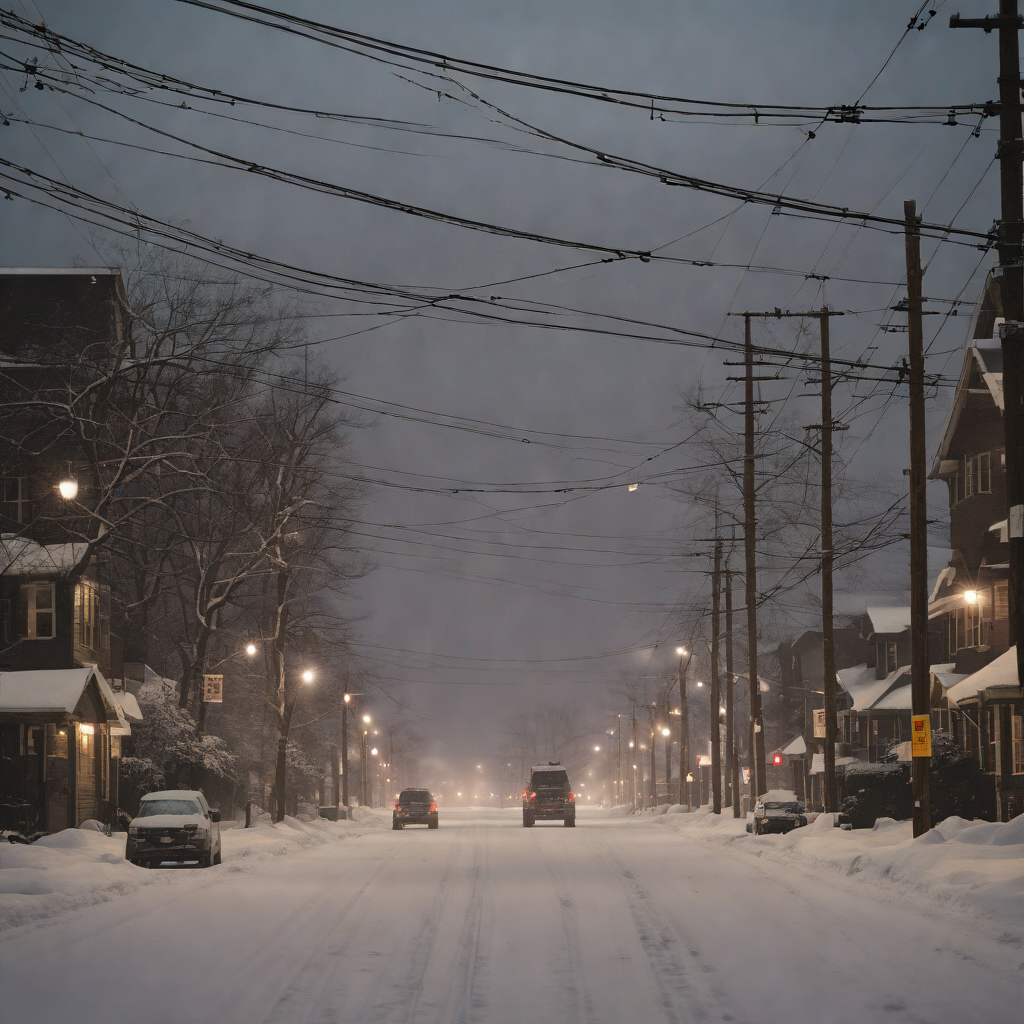
For residents on the ground, this policy shift has immediate, freezing consequences. In Minneapolis, Sarah Miller, a 42-year-old freelance graphic designer, represents the anxiety gripping the Midwest. "We haven't fully dug out from Tuesday," she notes, pointing to the unplowed streets that have trapped her neighborhood. "My power flickered three times this morning, and the temperature inside is dropping. If the grid goes down on Saturday, we aren't just cold; we are trapped." Her situation is backed by data from local utilities, which report that residential outage restoration times have increased by 25% year-over-year, largely due to a shortage of lineworkers who have been reassigned to prioritize industrial corridors critical to the administration's "AI Dominance" initiative.
The High Cost of Deferred Maintenance
The concept of "Resilience Debt" is rarely found on a utility company's balance sheet, but it is the invisible liability that is currently straining American infrastructure. For decades, the energy sector has operated on a calculated gamble: deferring preventative maintenance to maximize quarterly dividends, betting that the "hundred-year storm" would remain a statistical abstraction. In 2026, that gamble has failed. The catastrophic failure of the grid in Minneapolis and across the Midwest is not merely an act of nature; it is the direct result of a financial strategy that prioritized lean operations and high-load industrial contracts over the hardening of residential networks.
Under the current administration’s "Energy Freedom" executive orders, signed early in 2025, federal mandates for winterization—originally proposed following the Texas freeze of 2021—were rolled back as "regulatory overreach." This deregulation created a permissive environment where utility providers could legally bypass costly upgrades. Instead of replacing aging transmission lines or burying vulnerable cables, capital was diverted toward expanding capacity for high-revenue "Compute Zones." These deregulated energy pockets, designed to host the massive power demands of AI data centers and cryptocurrency mining operations, have become the grid’s priority clients, often contractually guaranteed uptime while suburban transformers remain dangerously exposed to the elements.
The Resilience Gap: AI Energy Demand vs. Maintenance Spend (2020-2025)
For Mike Kowalski, a veteran line technician working 16-hour shifts in the freezing outskirts of St. Paul, the consequences of this policy are tangible. "We aren't fixing the grid; we are applying bandaids to a hemorrhage," Kowalski explains, describing transformers that are decades past their rated lifespan. "Every time a new gigawatt-scale data center comes online nearby, we see the voltage sag in the neighborhoods. The system is being run at redline capacity to feed the algorithms, leaving zero margin for error when the temperature drops."
Watts for Machines, Shivers for Families
The biting chill of the January 2026 "Compound Crisis" has transformed the American electrical grid from a background utility into a frontline of social and economic conflict. As the Midwest and Northeast brace for the impending second blizzard, the structural cracks in the nation’s energy strategy are becoming impossible to ignore. The current crisis is not merely a product of extreme weather, but the maturation of "Resilience Debt"—the cumulative cost of a multi-year pivot toward deregulation.
For residents like David Chen, a logistics manager in Columbus, Ohio, the disparity is visible from his darkened living room. While his neighborhood underwent four hours of rolling blackouts during the last freeze, the massive data center complex three miles away remained a glowing island of stability. The facility, which processes Large Language Model (LLM) training for a major tech conglomerate, operates under "Tier 1 Priority" industrial contracts that effectively insulate it from the load-shedding protocols that govern residential blocks. According to recent estimates from the Federal Energy Regulatory Commission (FERC), data centers are projected to account for nearly 10% of total US electricity demand by the end of 2026, a surge that has outpaced grid upgrades by a factor of three to one.
US Winter Peak Load Growth: Data Centers vs. Residential (Source: EIA/IEA 2026 Projections)
Proponents of the Trump administration’s deregulation agenda argue that this prioritization is essential for national security and economic hegemony. They contend that any throttling of AI data centers would hand a decisive lead to global competitors, particularly China, which is moving aggressively with its own nuclear-powered computing hubs. From this perspective, the risks borne by American households are a calculated trade-off for technological "Escape Velocity." However, critics and infrastructure analysts point out that the "Resilience Debt" is now being paid in human safety and local economic paralysis. A 2025 study by the North American Electric Reliability Corporation (NERC) warned that the integration of massive, inflexible loads like crypto-mines into the grid makes it far more brittle during "Black Swan" weather events.
The Seoul Shock: Domestic Freeze, Global Chill
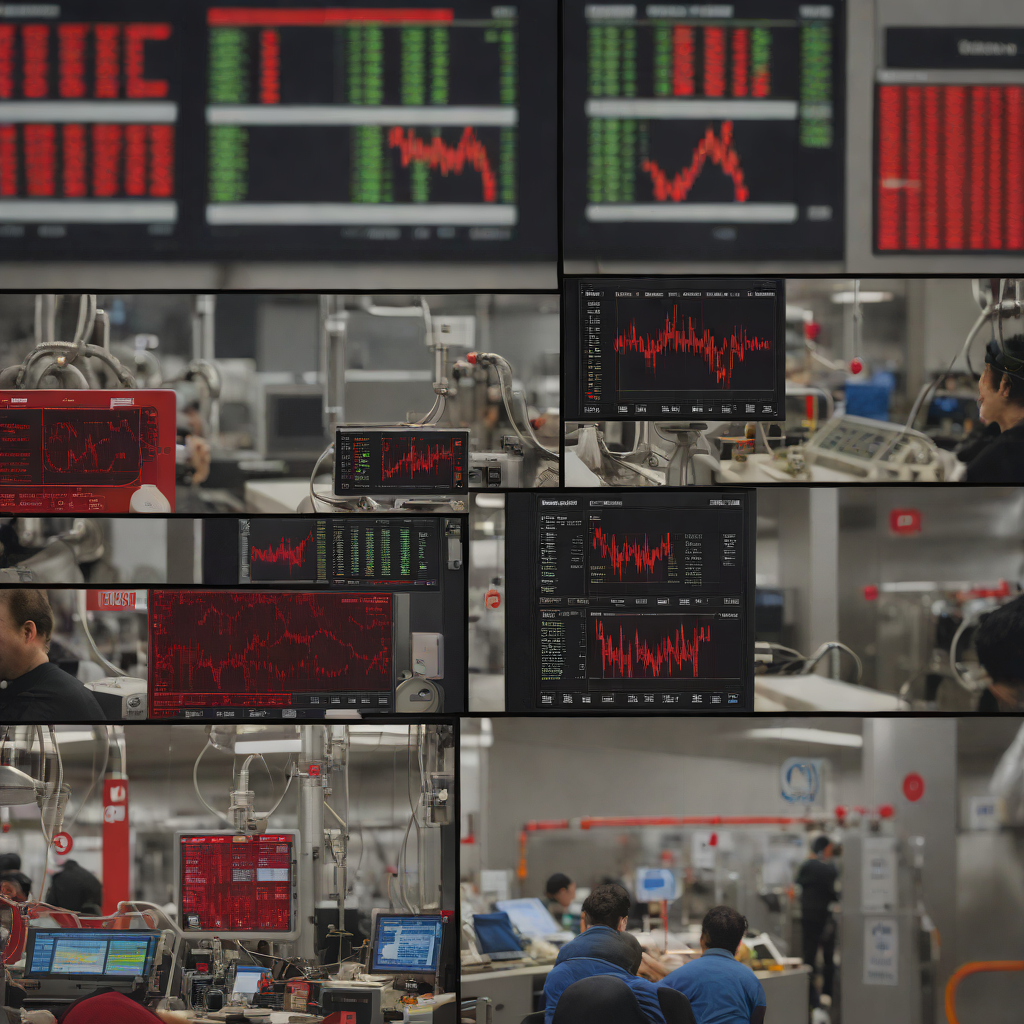
The butterfly effect of America’s failing infrastructure is no longer a theoretical construct found in climate models; it is a ticker symbol flashing red on the Korea Exchange. While the immediate victims of the Minneapolis freeze and the broader Midwest grid failures are the American households shivering in the dark, the economic tremors are being felt most acutely across the Pacific. This phenomenon, now dubbed the "Seoul Shock," illustrates a grim new reality of the Trump 2.0 era: domestic deregulation has not only eroded local resilience but has compromised the United States' standing as a reliable guarantor of global economic stability.
When pipelines servicing Gulf Coast export terminals depressurized due to power outages in feeder states earlier this week, the impact was instantaneous in East Asia. South Korea, heavily reliant on American Liquefied Natural Gas (LNG) to offset its own energy transition gaps, saw spot prices for industrial electricity surge 18% in a single trading session. This isn't merely a weather event; it is a structural failure of the "energy dominance" doctrine. By rolling back winterization mandates for gas infrastructure—dismissing them as "administrative state overreach"—the Department of Energy effectively removed the shock absorbers from the global supply chain.
The "Seoul Shock" is the direct financial consequence of this Resilience Debt. Analysts at the Brookings Institution have long warned that "deferred maintenance is a silent default," but the connection to foreign exchange volatility is a new development. As indicated by market data, the correlation between reported US infrastructure outages and the volatility index of the Korean Won (KRW) has tightened significantly since the start of the year. Investors are no longer looking at the Fed’s interest rates in isolation; they are watching the weather radar in Texas and the Dakotas, betting against the ability of the American grid to deliver on its export contracts.
Correlation: US Grid Outage Reports vs. KOSPI Volatility Index (Jan 2026)
A Weekend on the Brink
The National Weather Service’s latest bulletin is clinical in its precision, predicting wind chills of minus 30 degrees across the Upper Midwest and shifting toward the Eastern Seaboard by Friday night. But for millions of Americans preparing for this second wave, the forecast is less about meteorology and more about a gamble on critical infrastructure. We are witnessing the bill coming due for what energy economists are calling "Resilience Debt"—the cumulative result of years of deferred maintenance, aggressive deregulation, and a grid pushed to its limit by the insatiable energy appetite of the artificial intelligence and cryptocurrency sectors.
The White House has framed the upcoming weekend as a battle against "unprecedented natural forces," with the Press Secretary emphasizing yesterday that "no grid in history was built for 100-year storms happening every winter." This narrative aims to absolve the deregulation agenda of the past year. However, the data tells a different story. A 2025 report from NERC warned that the retirement of dispatchable generation capacity, without equivalent storage or transmission upgrades, created a "reliability gap" that extreme weather would inevitably exploit. We are standing in that gap now.
The stakes this weekend are compounded by the "Seoul Shock" radiating through global markets. The US energy grid is not just a utility; it is the physical substrate of the Western economic engine. If the lights go out in the Northeast corridor again—disrupting the very financial exchanges trying to stabilize after the Asian market tremors—the perception of American stability will take a hit that tariffs cannot fix. The "Resilience Debt" is no longer just about frozen pipes or spoiled food; it is about whether the world’s largest economy can keep its servers running when the wind blows.