The Billionaire Revolt: Sergey Brin’s $100 Million Bet Against California's Wealth Tax
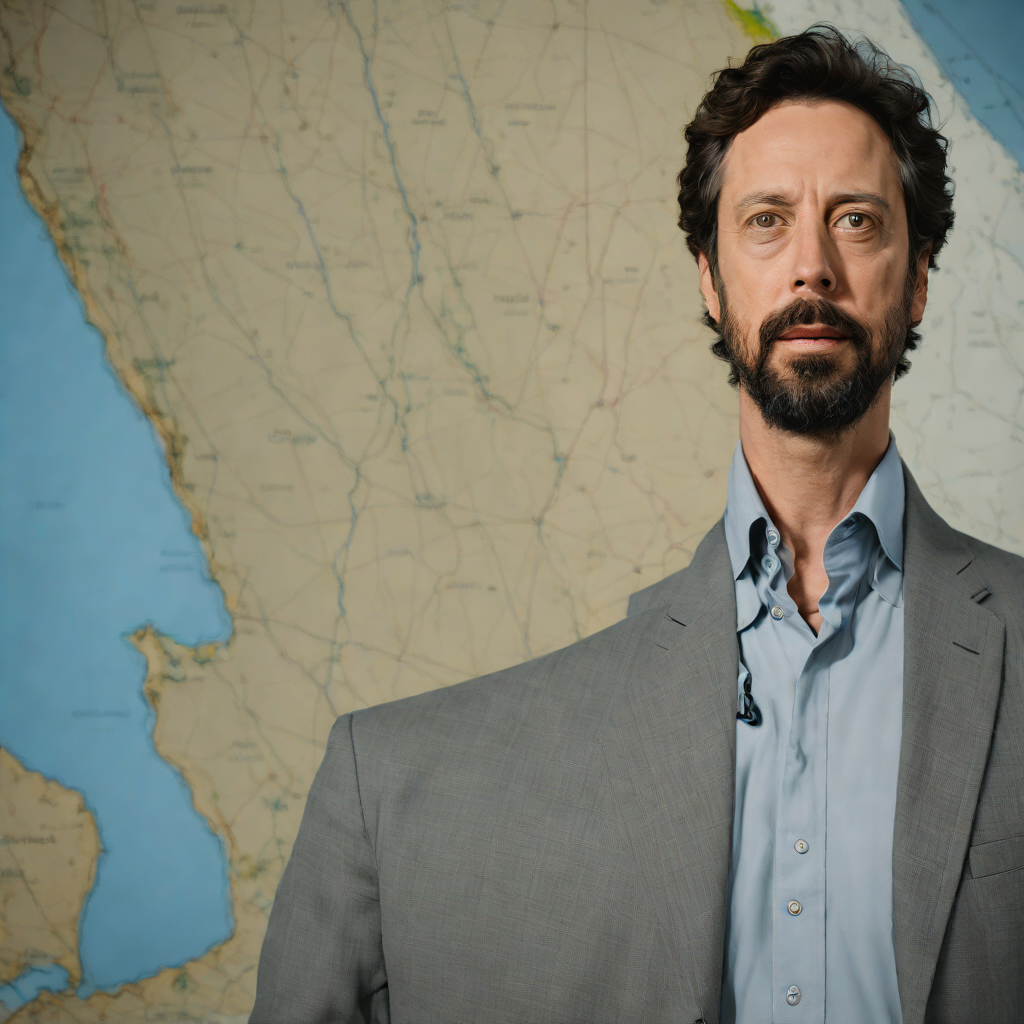
The Nine-Figure Signal
Silicon Valley has long operated on a tacit social contract: the state provides the ecosystem, and the tech elite provide the tax revenue, tolerating some of the highest marginal rates in the nation as the cost of doing business in the world’s premier innovation hub. That contract did not just fracture this week; it was incinerated by a nine-figure check. Sergey Brin, the Google co-founder notoriously allergic to the spectacle of political theater, has stepped out of the shadows with a $100 million donation to the "Building a Better California" initiative. This is not merely a campaign contribution; it is a capital strike.
For decades, Brin has remained a ghost in the machine of American politics, preferring to channel his influence through moonshot research and philanthropy rather than partisan warfare. His sudden, thunderous entry into the fray signals a profound shift in the calculus of the billionaire class. Unlike his peers who have loudly threatened exodus on social media only to quietly stay put, Brin’s maneuver is financial artillery. It transforms a localized fiscal debate into a national referendum on the viability of wealth taxation in a digital economy. The sheer scale of the donation—equaling the entire opposition budget of previous major ballot measures—suggests that for Brin, the proposed 5% tax on unrealized net worth is not a policy dispute, but an existential threat to the mechanics of founder-led capitalism.

The gravity of this revolt is amplified by the company Brin is keeping. In a rare convergence of ideologies, Peter Thiel, the venture capitalist and vocal architect of the "Make America Great Again" intellectual wing, bolstered the opposition with a $5 million contribution. While the financial disparity between the two donations is significant, the visual of Brin, a moderate technocrat, and Thiel, a conservative firebrand, aligning on a single ticket is a geopolitical signal that transcends party lines. It indicates that the proposed tax legislation has managed to unify the typically fractured Silicon Valley aristocracy against a common predator: the California State Legislature.
Anatomy of the 2026 Billionaire Tax Act
At the heart of the conflict lies California Assembly Bill 505—colloquially dubbed the "Billionaire Surcharge"—a piece of legislation that fundamentally rewrites the social contract between the Golden State and its wealthiest residents. Unlike traditional income taxes, which levy a percentage on the money earned within a fiscal year, AB 505 targets the static accumulation of assets. Specifically, it proposes an annual 5% levy on net worth exceeding $1 billion, applying a "mark-to-market" valuation on unrealized capital gains. This distinction is not merely semantic; it is the structural fault line that has turned Silicon Valley’s libertarian streak into a mobilized political insurgency.
To understand the panic in Palo Alto, one must look beyond the sticker shock of the rate and into the mechanics of liquidity. The vast majority of billionaire wealth in the technology sector is not held in liquid cash or yield-bearing bonds, but in highly volatile, illiquid founder stock. Under the current federal tax code—even with the adjustments made during the early days of the second Trump administration—founders are generally taxed only when they sell shares (a "realization event"). AB 505 ignores this trigger. It treats the paper value of a startup as taxable inventory.
Consider the hypothetical case of David Chen (a pseudonym), a founder of a Series D biotechnology firm in South San Francisco. His company is valued at $2 billion, and he retains a 50% stake, giving him a paper net worth of $1 billion. Under AB 505, Chen’s tax liability would be calculated on the assets exceeding the exemption threshold. In scenarios where valuations spike, he could owe the state of California tens of millions in cash. However, Chen’s actual liquidity—his cash on hand—might be significantly less, a common scenario for founders who reinvest everything into growth. To pay the tax, Chen is forced into a "liquidity trap": he must sell equity to cover the bill.
The Liquidity Gap: Cash vs. Tax Liability for a $1B Founder
This forced liquidation creates a cascade of corporate risks. For a founder like Sergey Brin or Elon Musk, selling hundreds of millions of dollars in stock annually to satisfy a state tax bill does more than just reduce personal wealth; it dilutes voting control. Over a decade, a 5% annual wealth tax could effectively strip a founder of their majority control, rendering them vulnerable to activist investors or hostile takeovers. This is the "poison pill" mechanism that legal scholars at the Stanford Institute for Economic Policy Research have warned about: the tax inadvertently penalizes the founder-led model that defines the American innovation economy.
From Exit to Voice: The Strategy Shift
For years, the defining narrative of Silicon Valley was one of departure. Between 2020 and 2024, the "Texodus" dominated headlines as titans like Oracle, Hewlett Packard Enterprise, and Elon Musk decamped for Austin and Miami, fleeing California’s regulatory thicket and lofty tax rates. But as 2026 dawns, the moving vans have been replaced by war chests. The logic of "Exit"—simply leaving the jurisdiction—has been superseded by the logic of "Voice"—staying to fight for the terrain. Sergey Brin’s unprecedented $100 million injection into the opposition campaign against the proposed legislation marks the definitive end of the exodus era and the beginning of the entrenchment.
The shift is rooted in a pragmatic calculation that has quietly taken hold across boardroom tables in Palo Alto. While the pandemic-era diaspora proved that software can be written from anywhere, the generative AI boom of the last two years demonstrated that the highest concentration of specialized intellectual capital remains stubbornly anchored in the Bay Area. For Chen, the cost of leaving has eclipsed the cost of staying—provided the rules of the game don't change drastically. "We tried opening a satellite office in Miami in 2024," Chen notes. "But the deep learning researchers we needed weren't there. They were here. We realized we can't leave the ecosystem, so we have to defend it."

The political landscape of 2026 amplifies this friction. With President Trump aggressively deregulating the federal economy and slashing corporate tax rates in his second term, the dissonance between Washington’s "America First" growth mandate and Sacramento’s redistributionist agenda has never been louder. Tech leaders are no longer hedging their bets. They are leveraging their capital to align state policy with the federal tailwinds, effectively betting that California’s electorate—weary from cost-of-living crises and terrified of losing the state's only remaining growth engine—is ready to side with the billionaires over the bureaucrats.
Data from the California Secretary of State’s office reveals this strategic pivot in stark terms. While the number of high-profile corporate relocations has leveled off, independent expenditure contributions from the technology sector have skyrocketed.
The Strategy Shift: Corporate Relocations vs. Political Spending (CA)
The Oligarchy Paradox
The sheer velocity of Sergey Brin’s financial intervention—a staggering $100 million funnelled into opposition research, ad buys, and lobbying in less than ninety days—has transformed a fiscal policy debate into a referendum on the nature of American democracy itself. For the architects of California’s proposed 5% net worth tax on unrealized gains, this war chest is not merely a defense of capital; it is a brazen display of the very wealth concentration they seek to curb. By deploying a fortune larger than the GDP of some island nations to defeat a single state proposition, Brin and his cohort may have inadvertently validated the opposition's most damning argument: that the ultra-wealthy exist in a sovereign sphere, immune to the legislative gravity that binds the rest of the citizenry.
This "Oligarchy Paradox"—where the act of defending one's fortune requires a display of power so immense it justifies the initial attack—is resonating painfully on the ground. For David Chen, the optics are disastrous. "My clients are terrified of the tax because their equity is illiquid," Chen explains. "But when they see Brin drop $100 million like it’s pocket change to kill a bill, they don't see a savior. They see a different set of rules. It makes it harder to argue that this tax is unfair to 'innovators' when the face of the opposition is a tycoon buying a veto."
The Scale of Influence: Brin's Donation vs. 2024 Avg. Campaign Costs
The political risk is that this aggressive defense will trigger a "Streisand Effect" for tax legislation. Political strategists in Sacramento privately admit that the tax, originally seen as a long shot with shaky constitutional footing, has gained a second wind purely as a symbol of resistance against bought governance. If the electorate perceives the ballot box as the only remaining check on unlimited financial power, the vote may cease to be about economic theory and become a purely punitive exercise.
Silicon Valley's Internal Civil War
The monolithic facade of Silicon Valley as a unified engine of progress has shattered. For decades, the region operated on a tacit agreement: engineers built the future, venture capitalists funded it, and everyone prospered under a relatively benign, if expensive, Californian sun. But the introduction of the proposed 5% wealth tax has exposed a deep class fracture that no amount of corporate retreat mixing can heal. What appears from the outside as a battle between "Tech and the State" is, upon closer inspection, a civil war between capital and labor within the technology sector itself.
While Sergey Brin and the cadre of "Techno-Optimists" view the tax as an existential mechanism of confiscation, the view from the cubicles and open-plan offices of Mountain View and Menlo Park is starkly different. For the thousands of software engineers, product managers, and data scientists who constitute the industry's middle class, the billionaires' revolt often reads less as a defense of innovation and more as a detachment from reality.
The Equity Divide: Support for CA Wealth Tax by Role (2026 Survey)
This sentiment is corroborated by internal polling data from major tech unions, which shows a significant divergence in policy priorities. While executive leadership is singularly focused on capital gains and wealth preservation, the rank-and-file are increasingly aligned with local progressive policies, viewing the tax revenue as essential for maintaining the quality of life that attracted them to the Bay Area in the first place.
California's High-Stakes Gamble
The standoff in Sacramento has evolved beyond a traditional lobbying effort; it has become a fundamental stress test for the American federalist experiment in the Trump 2.0 era. While the White House pursues an aggressive agenda of deregulation and tax slashing to repatriate overseas capital, California is moving in the diametrically opposite direction, attempting to capture the unrealized gains of its wealthiest residents. Sergey Brin’s unprecedented $100 million infusion into the opposition campaign transforms this from a fiscal debate into a referenda on the mobility of capital in a digitized economy. The question is no longer whether the tech elite can leave, but whether the state can afford to force their hand.
Projected 5-Year Fiscal Impact: Wealth Tax vs. Capital Migration Scenarios
Ultimately, the battle lines drawn by Brin and the coalition of Silicon Valley heavyweights signal a breakdown in the symbiotic relationship between the state and its most prosperous industry. For decades, the tech sector tolerated high taxes in exchange for a liberal cultural environment and world-class public amenities. But as the quality of life in San Francisco and Los Angeles struggles to rebound from the infrastructure crises of the mid-2020s, that social contract is fraying. If the measure passes, California risks becoming a cautionary tale of overreach—a jurisdiction that sought to harvest the golden eggs so aggressively it starved the goose. If it fails, the state is left with a gaping budget hole and an empowered oligarchy that knows it can buy its way out of legislative threats.