The Silicon Decoupling: Wall Street’s Bet on Tesla’s 'Iron Collar' Future

The Q4 2025 earnings call began with a familiar, metallic rasp—the sound of an automotive empire grinding its gears. By traditional metrics, the report was a bloodbath. Automotive gross margins, once the envy of the industry at over 25%, had compressed to a pedestrian 14.2%, a casualty of the relentless price wars initiated to fend off aggressively subsidized Chinese competitors like BYD in emerging markets. Inventory days had swelled, and the "delivery wave" that once defined quarter-ends had flattened into a stagnant pool of unallocated inventory.
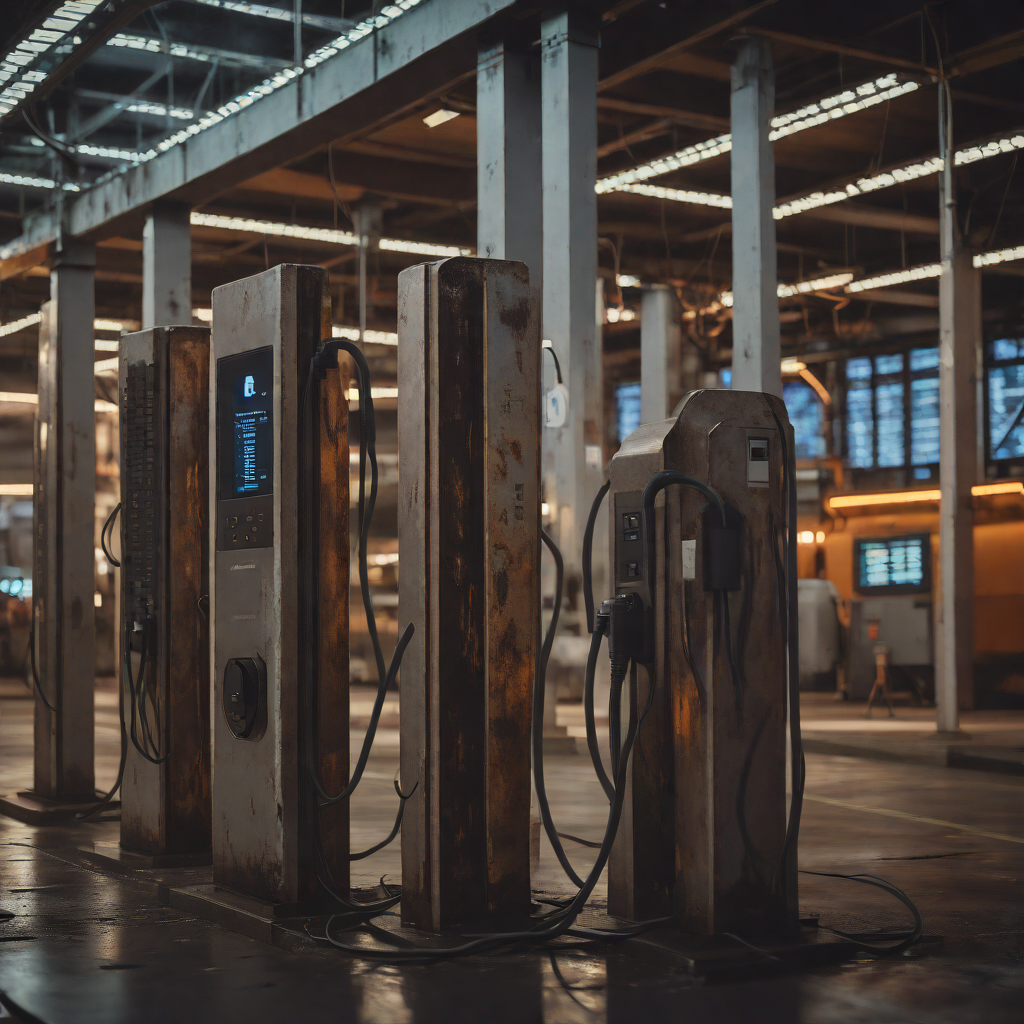
In a rational market governed by Graham-and-Dodd fundamentals, the ticker symbol TSLA should have cratered. Yet, as the closing bell rang on Wall Street, the stock defied gravity, closing up 3.4%. This divergence marks the definitive end of Tesla's identity as a car company in the eyes of the street. The phenomenon of early 2026 is not irrational exuberance; it is a calculated recalibration of what is actually being bought. Institutional capital has stopped pricing the Model Y’s fading demand curve and started pricing the "Iron Collar" workforce—the Optimus humanoid robot. For the first time, the rust on the fender is being ignored in favor of the silicon in the soul.
The Commodore Trap
The era of the electric vehicle as a status symbol has effectively ended. Walk onto any dealership lot in suburban Detroit or browse the inventory apps in Silicon Valley, and the reality is stark: the EV has become a toaster on wheels. It is a necessary appliance, a commodity where the only differentiating factors are price, cup holders, and financing terms. This is the "Commodity Trap" that Wall Street has finally acknowledged, a reality that was once unthinkable for a company that traded at multiples reserved for software monopolies.
For years, the bull case for Tesla rested on an unassailable hardware margin. In 2022, automotive gross margins hovered near 30%, a figure that made legacy manufacturers weep. By early 2026, however, those margins have compressed relentlessly, grinding down toward the industry average of 10-15%. The cause is not just the aggressive pricing strategies of Chinese competitors—stymied somewhat by the Trump administration's firewall of tariffs—but the sheer saturation of the domestic market. Ford, Rivian, and a revitalized GM have not just caught up; in many segments, they have saturated the demand for premium electric mobility.
David Miller, a software architect in Austin, Texas, illustrates this shift in consumer sentiment. A two-time Tesla owner, Miller recently traded his Model Y not for the latest "Juniper" refresh, but for a competitor's SUV offering better interior finish and physical buttons. "It used to be that buying anything else felt like buying a Blackberry in the iPhone era," Miller says. "Now? The batteries are all good enough. The charging networks are open to everyone. I’m shopping for comfort and price, not a mission statement." Miller’s indifference is the new norm. The "cool factor" that allowed Tesla to command pricing power has evaporated, leaving it exposed to the brutal arithmetic of manufacturing physics.
The Margin Compression: Tesla Auto Gross Margins (2022-2026)
This chart serves as the tombstone of the "Tesla is a car company" narrative. If one looks solely at the sheet metal, the story is one of decline. However, the stock price has not cratered in proportion to this automotive decay because the smart money has stopped looking at the fender and started looking at the brain. The market has priced in the death of the car manufacturer to make room for the birth of something entirely different. The vehicle is no longer the product; it is merely the first widely deployed robotic chassis.
Priced for the Iron Collar
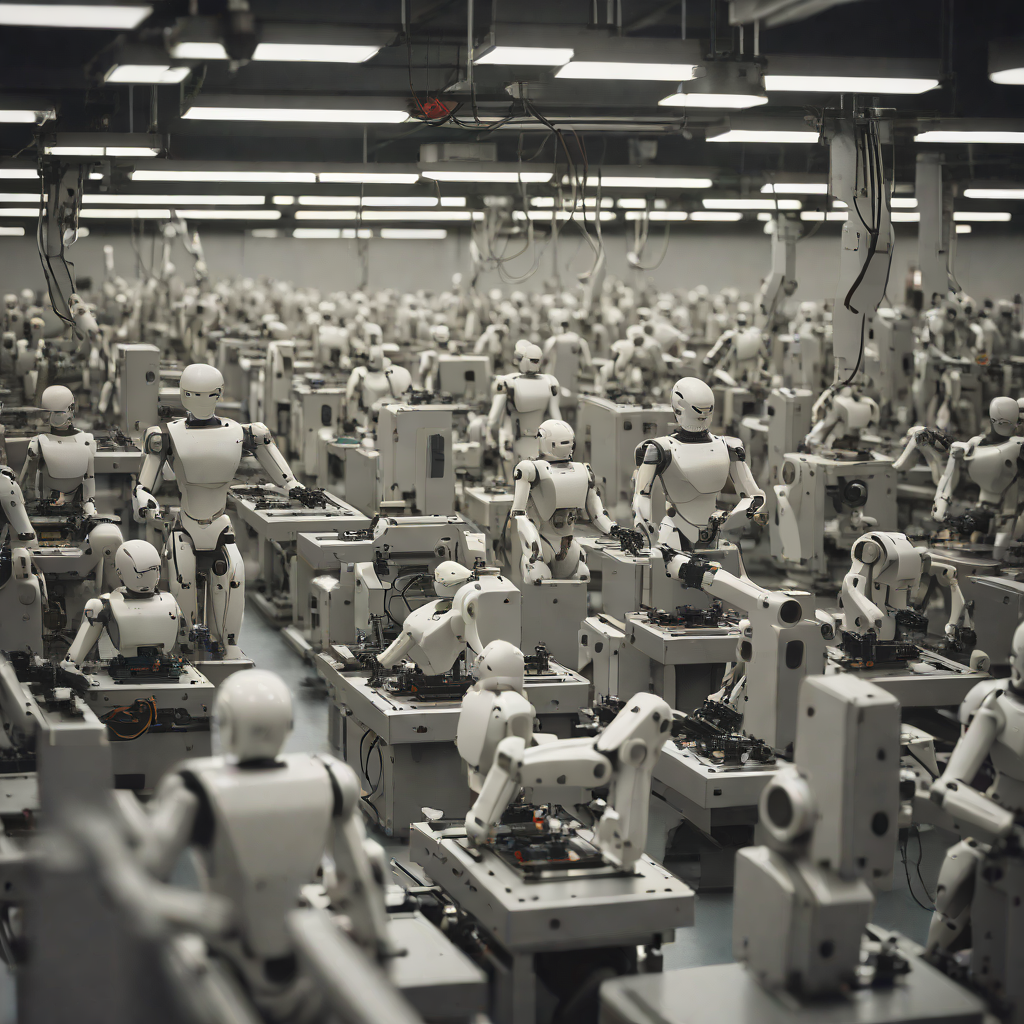
This divergence marks the official arrival of the "Iron Collar" valuation era. Wall Street has stopped pricing Tesla as a company that sells electric vehicles to consumers; it is now pricing the company as the primary supplier of autonomous labor to the industrial world. The vehicle fleet is no longer the end product—it is merely a decentralized, revenue-generating training array for the neural networks that will power Optimus.
"We aren't looking at 'units sold' anymore, we are looking at 'human hours displaced'," says James Carter, a senior strategist at a New York-based volatility fund who pivoted his firm’s allocation into robotics in late 2025. "When you look at the Q4 miss, you see a struggling car company. When we look at it, we see that the FSD (Full Self-Driving) miles driven doubled. That data isn't just for cars; it's the cognitive architecture for the robot that will stack boxes in an Amazon warehouse or pour concrete in a Lennar development."
The market’s indifference to the automotive slump is underpinned by the Trump administration’s aggressive deregulation stance in 2026. The executive orders signed earlier this month, which limit the liability of autonomous system operators and fast-track the deployment of "non-human industrial agents," have effectively de-risked the regulatory hurdles for the Optimus program. Investors are betting that the "Iron Collar"—the mechanical workforce—will enjoy a regulatory tailwind that the EV sector, now grappling with the removal of federal subsidies, does not.
The Cash Flow Tightrope
While the narrative on Wall Street has shifted to the "Iron Collar" revolution, the balance sheet tells a more precarious story. The bedrock of Tesla’s valuation has always been its ability to self-fund its wildest ambitions through the formidable cash generation of its automotive unit. But in early 2026, that engine is sputtering. The fourth-quarter earnings miss wasn't merely a function of high interest rates or supply chain whispers; it was a clear signal that the era of hyper-growth in vehicle deliveries has likely concluded.
For the first time, investors are staring at a divergence that defies traditional financial gravity. Automotive gross margins have compressed significantly, yet capital expenditures are skyrocketing. The build-out of the "Dojo" supercomputing clusters and the rapid scaling of the Optimus humanoid robot production lines are not cheap. This creates a classic cash flow tightrope: the "Cash Cow" (cars) is yielding less milk just as the "Star" (AI/Robotics) requires more feed.
The Divergence: Auto Margins vs. AI R&D Intensity (2022-2026)
The macroeconomic backdrop of the second Trump administration adds a complex layer to this equation. On one hand, the aggressive deregulation push has cleared the runway for autonomous deployment. On the other, the isolationist trade policies that define the current "America First" agenda have bitten back at the supply chain. The renewed tariffs on rare earth minerals and specialized microchips have raised the cost of goods sold (COGS) for every unit rolling off the line. While deregulation lowers the barrier to entry for AI products, protectionism raises the cost of building them.
The Trillion Dollar Option
In this light, holding Tesla in 2026 is no longer an investment in transportation. It is a wager on the infrastructure of the next industrial age. The rust on the fender—the slowing growth of the EV market—is real, but it is increasingly irrelevant to the thesis. The market has moved on to a far more volatile, yet potentially lucrative question: Can a car company solve the labor crisis?
The "hold" rating, therefore, is not a sign of stability, but of suspension. Investors are holding their breath, waiting for the silicon soul to finally animate the machine. If the answer is yes, the current valuation will look cheap. If the answer is no, the correction will be historic.