Judicial Headwinds: Federal Court Reboots Vineyard Wind, Challenging Trump's Energy Blockade
The Injunction That Saved a Billion Dollars
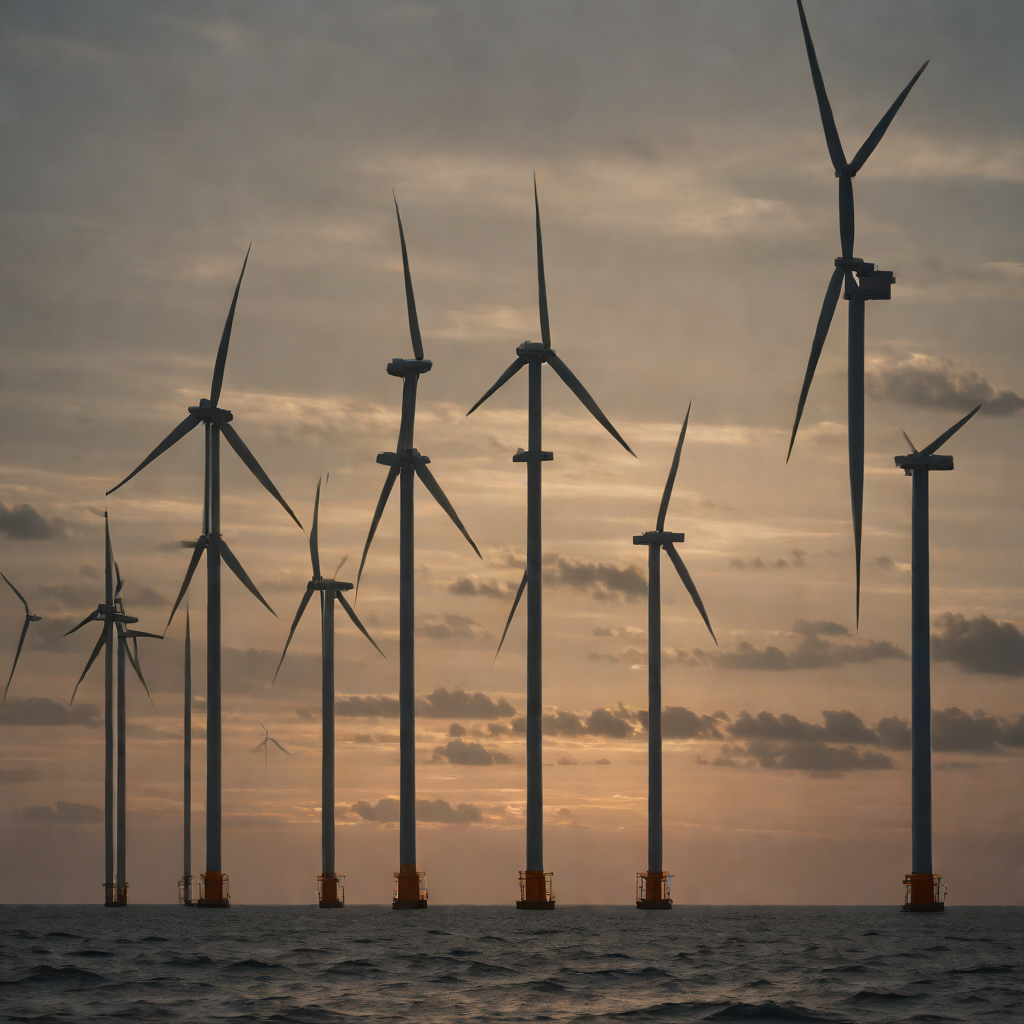
The silence that had descended over the waters south of Martha’s Vineyard in late December was broken not by a gale, but by a gavel. For weeks, the massive GE Haliade-X turbines—icons of the nascent American offshore wind industry—had stood as static steel monoliths, frozen by an Executive Order from the Trump administration that sought to review "national security risks" in coastal infrastructure. On Tuesday morning, however, the heavy lift vessels Orion and Sea Installer roared back to life. The hydraulic hum of cranes resuming the installation of the final array cables signaled more than just a return to construction; it marked the first significant legal check on the White House's "Energy Sovereignty" doctrine in 2026.
The catalyst for this sudden thaw was a blistering 48-page opinion issued by Federal District Judge Murphy on Tuesday. In granting the preliminary injunction sought by Vineyard Wind’s developers, the court dismantled the administration's justification for the halt, characterizing the retroactive freeze as "arbitrary, capricious, and untethered from demonstrated security threats." The ruling addressed the timing of the executive intervention directly. "To pause a project at the concept stage is a policy prerogative," Judge Murphy wrote. "To paralyze a capital asset that is 95% physically complete, stranding billions in private investment under the guise of vague security concerns, borders on regulatory expropriation."
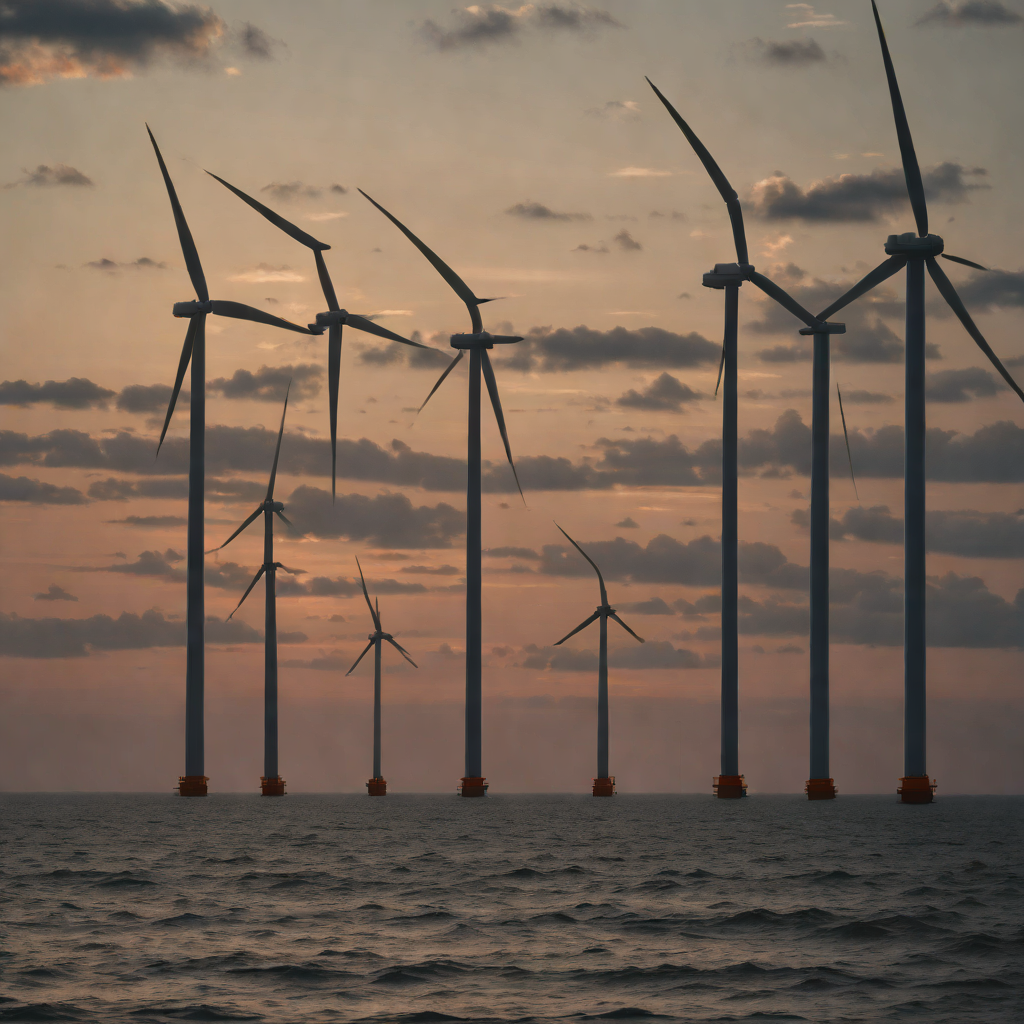
This figure—95% completion—became the fulcrum of the legal battle. While government attorneys argued that the final 5% of grid integration posed a "unique cyber-vulnerability" requiring a total pause, the court found this disproportionate. Legal analysts are already terming this the "Sunk Cost Shield," a precedent that could ripple far beyond the energy sector. By emphasizing the sheer scale of the completed infrastructure, the court effectively drew a line in the sand: the executive branch's power to pivot on policy diminishes as private reliance on previous approvals solidifies into steel and concrete.
For investors, the injunction is a temporary salve on a deep wound. The message from the bench is clear—contracts still matter—but the volatility remains. Market strategists at leading Boston-based infrastructure firms note the uneasy relief washing over the sector. Analysts warn that while the turbines are turning today, the risk premium on US green infrastructure has effectively doubled. If a permit can be threatened at 95% completion, even if a judge intervenes later, the appetite to fund the groundbreaking of the next project diminishes significantly. The court may have saved the current billion-dollar investment, but the "Trump 2.0" regulatory uncertainty has effectively frozen the pipeline for future capital.
Radar Shadows vs. Economic Realities
The crux of Judge Murphy’s opinion lies not in the denial of executive authority to protect national security, but in the temporal application of that authority. For the Department of Justice, representing the Trump administration, the argument was technical and urgent: the rotating blades of Vineyard Wind’s 62 turbines create "doppler clutter," essentially blinding radar systems monitoring the Atlantic approach to the Eastern Seaboard. In a sealed affidavit partially referenced in court, Pentagon officials argued that the "threat landscape has evolved," rendering the 2023 mitigation agreements obsolete. Under normal circumstances, deference to national defense is the judiciary’s default setting. However, the court found the timing—coming a full year into the administration's second term and contradicting five years of prior Navy clearances—to be the definition of "arbitrary and capricious."
Against these spectral radar shadows, the court weighed the concrete reality of steel and capital. The decisive factor was the sheer maturity of the project. Unlike the halted projects in the Gulf of Mexico, Vineyard Wind 1 is effectively a fait accompli. As noted in the ruling, the facility is 95% physically complete, with turbines already generating power for the New England grid. The developer, Avangrid, successfully argued that the revocation of the Final Environmental Impact Statement (FEIS) constituted an unconstitutional taking of property. The "Sunk Cost Shield" suggests that there is a financial point of no return for deregulation. When an entity has invested over $3 billion in direct reliance on federal permits, the government cannot retroactively declare the infrastructure illegal without satisfying a strict scrutiny standard that the administration failed to meet.

This creates a complex friction point for the "Trump 2.0" energy doctrine. While the White House has successfully frozen new leases using the "Energy Independence Executive Order," undoing the legacy of the Biden era proves far more difficult when the concrete is already poured. Judge Murphy’s injunction implies that while the President can steer the ship of state toward fossil fuels, he cannot easily scuttle the vessels already launched by his predecessor. For infrastructure investors, this offers a fragile but vital reassurance: the rule of law may still protect capital deployment from the whiplash of political oscillations, provided the project has crossed the threshold from "planned" to "built."
The Bifurcated Market: A Fragile Truce
Industry observers warn against interpreting this victory as a broad safety net for the entire renewables sector. The protection afforded to Vineyard Wind is inextricably linked to its maturity. As one energy policy veteran noted, "This is a lifeboat for the drowning, not a bridge for those yet to cross." If a developer holds nothing but a lease and a PowerPoint presentation, this ruling offers virtually zero protection. The Trump administration retains the leverage to stifle new entrants; the judicial firewall primarily protects the "adults" in the room—those with assets in the water.
This creates a bifurcated market for 2026. On one side are the "Legacy Projects"—those that broke ground before the inauguration and can now claim significant reliance interests. On the other are the "Paper Pipelines"—gigawatts of proposed capacity that have yet to secure final investment decisions. For the latter, the regulatory environment remains hostile. The Department of Energy has already signaled that future permitting will face "enhanced scrutiny" regarding grid reliability and maritime impact, a euphemism widely understood to mean indefinite delays.
The Resilience Gap: Project Maturity vs. Revocation Risk (2026 Estimate)
Judge Murphy’s injunction may have halted the immediate revocation of Vineyard Wind’s operating license, but legal analysts warn that the victory in the courtroom merely shifts the battlefield from the judiciary to the bureaucracy. In what insiders are terming "regulatory guerrilla warfare," the Trump administration is pivoting to a strategy of attrition. The 48-page opinion issued by the court explicitly protected the project from arbitrary "capricious reversal," yet it left the door ajar for "necessary safety reviews"—a loophole the Department of the Interior is reportedly already exploiting.
While the turbines stand tall off the coast of Massachusetts, the final 5%—the "electron flow" certification—remains trapped in a labyrinth of newfound compliance checks. Sources close to the Bureau of Ocean Energy Management (BOEM) indicate that new directives have been issued to re-evaluate "radar interference patterns" and "migratory anomalies," concerns that were ostensibly settled years ago. This tactical delay does not require a formal ban, which would trigger another immediate court showdown; it simply requires inaction. A permit application sits on a desk, a signature is withheld pending "further review," and the calendar bleeds capital.

Ultimately, the dispute over the continental shelf has evolved from a legislative policy debate into a high-stakes litigation trench war. For institutional investors, the message is ambiguous: the American market remains open, but the risk premium for infrastructure projects dependent on federal goodwill has spiked. The turbines off Martha's Vineyard may spin for now, protected by the sheer weight of the capital already sunk into the seabed, but the regulatory winds for future ventures remain profoundly unpredictable.