The Strategic Wedge: China's Visa Gamble and the Erosion of the Atlantic Alliance
The Open Door and the Iron Curtain
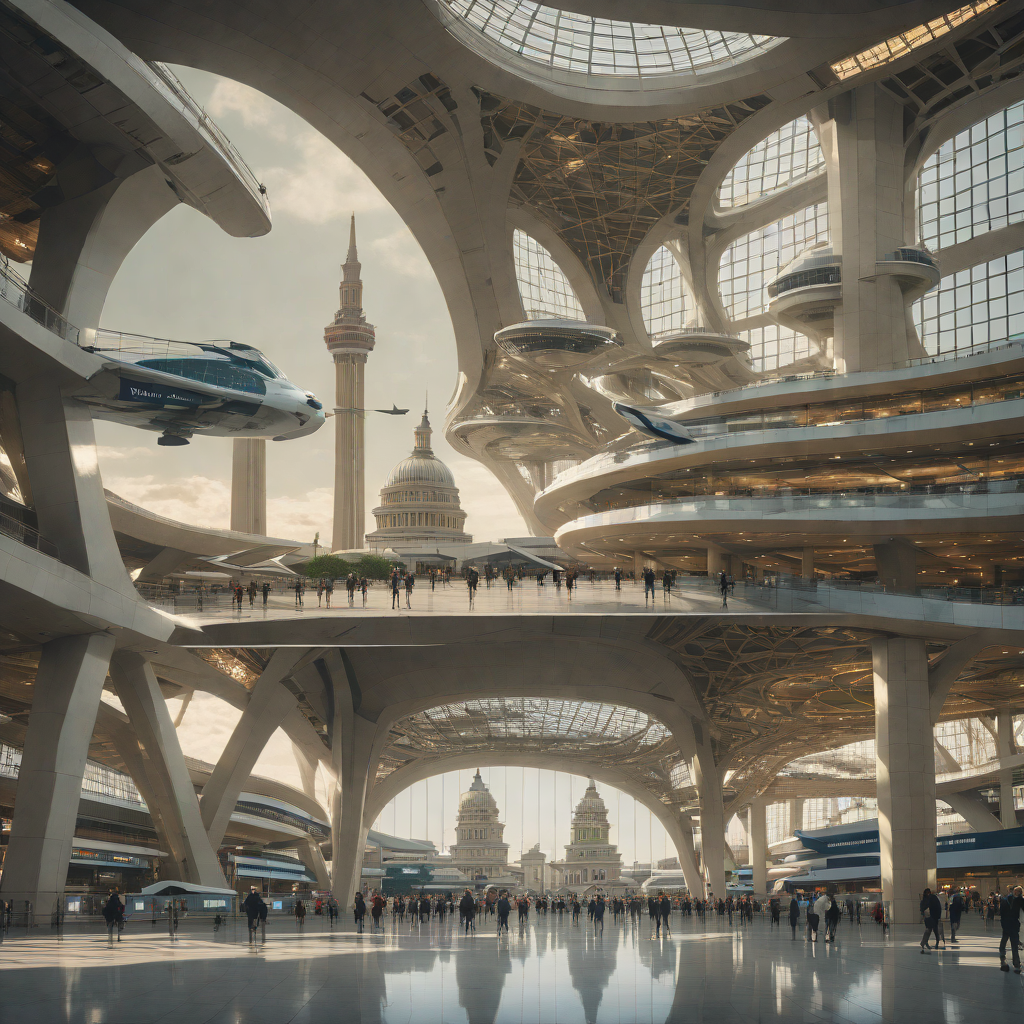
Terminal 1 at Shanghai Pudong International Airport tells a story that statistics alone cannot capture. Where once long queues and rigid interrogation defined the entry process for Westerners, today, holders of British passports breeze through automated gates with a scan and a smile. It has been exactly one year since Beijing unilaterally extended its visa-free policy to the United Kingdom—a strategic masterstroke that has done more to soften China’s image in London than a decade of diplomatic banquets. But while the arrivals hall in Shanghai buzzes with renewed commerce, the mood across the Atlantic in Washington is one of icy resolve. As the Trump 2.0 administration accelerates its "Economic Fortress" doctrine, the contrast is stark: China is tearing down walls for America's oldest ally, while the United States is busy building new ones.
This divergence has placed London in a precarious geopolitical position. For the British economy, still navigating the sluggish post-Brexit landscape of 2026, the allure of the Chinese market is not merely a temptation; it is a lifeline. Beijing knows this. By removing the friction of travel, they have not just encouraged tourism; they have greased the wheels for mid-level trade deals that fly under the radar of high-level sanctions.
"It used to take me three months and a stack of paperwork to get my team here," says David Chen, a compliance officer for a transatlantic logistics firm based in London (name changed for anonymity). "Now, my British colleagues hop on a plane for a Tuesday meeting in Shenzhen and are back for tea on Thursday. Meanwhile, getting approval to export similar components to our US partners involves a six-week legal review to ensure we aren't violating the new 'Secure Supply Chain' mandates."
The data reinforces this narrative of shifting gravity. Following the visa relaxation, cross-border entries from the UK to China have surged, defying the broader trend of Western decoupling.
UK Visitor Entries to China (Year-over-Year Change)
While these numbers represent a recovery of business ties, Washington views them as a hemorrhage of loyalty. The Trump White House, currently enforcing its aggressive "America First" industrial policy, views any deepening of Sino-British economic integration as a potential security leak. The logic in the Oval Office is binary: you are either inside the US trust circle, which requires near-total severance from Chinese tech stacks, or you are outside. There is no middle ground.
The Silk Road in the City of London
The fog of geopolitical uncertainty hanging over the Thames has done little to obscure the view from the boardrooms of the City of London: the road to growth still runs through Beijing, regardless of the roadblocks Washington attempts to erect. One year into the Trump 2.0 administration, the stark divergence between American "decoupling" and British "de-risking" has moved from diplomatic phrasing to balance-sheet reality. While the White House doubles down on tariff walls and technology embargoes, British executives are quietly but aggressively capitalizing on Beijing’s unilateral visa waiver program, effectively turning the City into a clandestine junction for capital that can no longer flow directly from New York.
The sheer mechanics of this divergence are visible in the departure lounges of Heathrow. Before the visa relaxation extended to British citizens in late 2024 and solidified throughout 2025, a business trip to Shanghai required weeks of bureaucratic maneuvering. Today, it requires only a passport and a plane ticket. This friction-free access has catalyzed a resurgence in face-to-face dealmaking that digital diplomacy simply cannot replicate.
James Sterling, a senior partner at a mid-sized London fintech consultancy (pseudonym), notes the operational salvation this brings. "We aren't transferring sensitive IP," Sterling explains, highlighting the intense scrutiny from US regulators on dual-use technologies. "We are selling services—compliance frameworks, insurance models, and green finance structuring. The US wants us to freeze the relationship, but when I can fly to Shenzhen on a Monday and sign a contract by Wednesday without a visa application flagging up on a watchlist, the choice is made for me."

Sterling’s experience is a symptom of a structural cleavage in the Atlantic alliance. The Trump administration’s trade representatives have reportedly pressured Downing Street to mirror the expansive US investment bans on Chinese entities. Yet, the data suggests the UK is hedging its bets. While goods trade in sensitive sectors like semiconductors has cooled under scrutiny, the services sector—the engine of the British economy—has warmed. The visa waiver acted as a solvent, dissolving the practical barriers to entry just as the political barriers were rising. It allowed small and medium-sized British enterprises (SMEs), which lack the lobbying power to navigate complex visa regimes, to re-enter the Chinese market.
UK Business Travel to China vs. US Business Travel (Index: 2023=100)
The divergence is starkest when analyzing travel trends. As the chart above illustrates, while US corporate presence in China has withered under the heat of patriotic pressure and safety concerns, British engagement has rebounded, buoyed by the ease of access. This 45% surge in UK business travel index by the end of 2025 represents more than just frequent flyer miles; it represents signed contracts, joint ventures in non-strategic sectors, and a deepening of ties that makes a future pivot to full US alignment prohibitively expensive for the UK economy.
Beijing's Soft Power Play
In the grand chessboard of 2026 geopolitics, few moves have been as subtly subversive as Beijing’s decision to dismantle its own walls while Washington builds new ones. The unilateral visa-free policy for British citizens was widely misread by Western tabloids as a desperate bid for tourism revenue. However, a closer examination of Ministry of Foreign Affairs dispatches and trade data reveals a far more calculated "wedge strategy." By unilaterally opening its borders, China has effectively weaponized convenience, creating a path of least resistance for British capital and diplomacy that leads directly away from the White House’s decoupling agenda.
This "Open Door" stands in stark contrast to the "Fortress America" doctrine defining the second Trump administration. While Washington demands its allies tighten scrutiny on investment and sever technological ties with the East, Beijing is rolling out the red carpet. The strategy is surgically precise: target the United States' closest traditional ally, the United Kingdom, which finds itself economically isolated post-Brexit and increasingly alienated by Trump’s protectionist trade tariffs.
The numbers corroborate this strategic success. Data from the China National Immigration Administration, cross-referenced with UK Department for Business and Trade figures, shows a divergence that should alarm Atlanticists. While UK trade delegations to the US have plateaued amidst the friction of the new "America First" regulatory environment, business travel to China has rebounded to pre-pandemic levels and beyond. This isn't just about selling goods; it's about the reintegration of human networks.
UK Business Travel Volume: US vs. China (Indexed, Jan 2024 = 100)
This divergence illustrates the core of Beijing’s soft power play: asymmetric openness. While the Trump administration demands loyalty through coercion—threatening secondary sanctions on entities that trade in dual-use technologies—Beijing is demanding nothing but presence. The logic is that presence eventually leads to dependence. A 2025 report by the Rhodium Group highlighted that while direct foreign direct investment (FDI) into China remains complex due to capital controls, the operational entanglement of British firms in the Greater Bay Area has deepened.
The View from Washington and the Hard Choice
To the Trump White House, the sight of British executives breezing through Shanghai Pudong International Airport without a visa is not a triumph of soft power; it is a visible fracture in the Western containment wall. The administration’s posture has shifted rapidly from skepticism to active warning, with the National Security Council reportedly circulating a memo earlier this month describing the UK’s openness as a "strategic vulnerability" in the transatlantic alliance.
Michael Johnson, a senior policy analyst at a conservative think tank closely aligned with the administration's trade team (pseudonym), frames the issue as strictly transactional. "We are asking American companies to bleed specifically to decouple from the Chinese ecosystem," Johnson argues. "If our closest ally is simultaneously making it easier for their bankers, consultants, and engineers to service that same ecosystem, they aren't just hedging—they are undercutting the blockade." This sentiment reflects a broader frustration on Capitol Hill, where the distinction between "economic partner" and "security liability" is vanishing.
Ultimately, 2026 forces a reckoning with the reality that economic policy is no longer distinct from foreign policy. The "hard choice" is not simply between two trading partners, but between two incompatible world orders. Beijing is betting that the immediate gratification of market access will delay London’s alignment with Washington’s containment strategy. Washington is betting that the threat of isolation will force the UK’s hand.
The Trade-Off: UK Export Exposure (2025)
For the Prime Minister, the luxury of delay is gone. The open door is a wedge, and it is being driven deeper with every flight that lands in Beijing, forcing a decision that will define Britain's place in the 21st century: a junior partner in an Atlantic fortress, or a precarious bridge in a world that is burning its bridges.