The 2026 Boycott: Europe Weaponizes Football Against Trump's Greenland Play
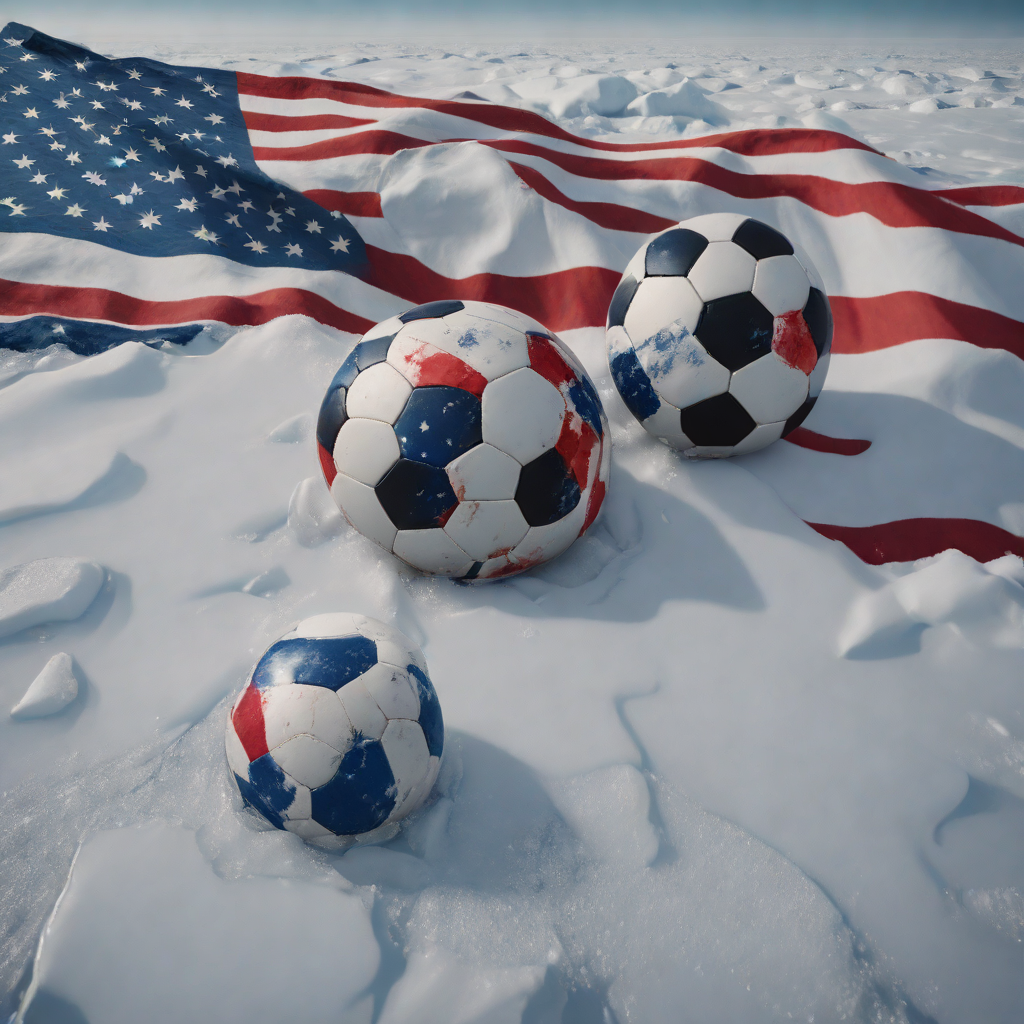
The Pitch Becomes a Battlefield
The roar of the crowd usually drowns out the noise of politics, but in January 2026, the silence echoing from Brussels is deafening. The 2026 World Cup, intended to be a crowning jewel of North American logistical prowess and a celebration of global unity, has abruptly transformed into a geopolitical hostage. The catalyst was not a foul on the field, but a pen stroke in the Oval Office: the Trump administration’s formalization of "resource sovereignty" over Greenland, a move effectively attempting to bypass Danish custodial rights to secure rare earth minerals critical for the American tech sector.
This week, the reaction in European capitals shifted from diplomatic notes of concern to a tangible, coordinated threat. In the European Parliament, a coalition of Nordic and Green party representatives introduced a formal recommendation for European Union member states to suspend participation in the upcoming World Cup if the United States does not reverse its unilateral claim on Arctic resources. High-ranking officials in Berlin and Paris have signaled that they are treating the proposal with "extreme seriousness," viewing the tournament not merely as a sporting event, but as a massive injection of tourism revenue and prestige for a US administration they believe is actively dismantling international norms.

"We are witnessing the weaponization of joy," argues Dr. Elena Vasquez, a senior fellow at the Trans-Atlantic Policy Institute in Washington. "The EU recognizes that while a trade war with the US hurts everyone, a boycott of the World Cup strikes specifically at American prestige and the soft power narrative of the 'return of the host.' It is a calculated, asymmetric strike designed to embarrass the White House on the global stage without immediately severing critical supply chains."
For the Trump administration, the strategy is a direct challenge to the "America First" doctrine. The White House has framed the Greenland initiative as a matter of national security, essential for breaking reliance on Chinese supply chains for the components powering everything from 6G infrastructure to advanced autonomous weaponry. To Washington, Europe’s threat looks less like a moral stand and more like a desperate attempt to retain relevance in a resource-scramble where they have fallen behind. Administration insiders have already begun dismissing the boycott talk as "Old World theater," betting that the financial pressure from FIFA and European sponsors will crush the political resolve of EU leaders.
Macron's Gamble: Soft Power with Hard Edges
French President Emmanuel Macron has never been one to shy away from symbolic gestures, but his latest maneuver moves beyond diplomatic theater into the realm of cultural warfare. By spearheading a potential UEFA-led boycott of the 2026 World Cup hosted in North America, Macron is testing a provocative thesis: that in an era of American hard power dominance, Europe’s strongest leverage lies in its ability to deny legitimacy to American spectacle. This is no longer just about tariffs or NATO dues; it is a calculated strike at the prestige of the Trump administration.
The timing is surgical. With the tournament mere months away, the logistical and financial machinery is already in motion across host cities from Atlanta to Los Angeles. A withdrawal of European powerhouses—France, Germany, Spain, England—would not merely dilute the competitive integrity of the event; it would cataclysmically undercut its commercial viability. For the Trump White House, which has touted the 2026 games as a "Victory Lap for American Greatness," a boycott would transform a global celebration into a glaring symbol of Western fracture. Macron’s gamble relies on the premise that while Washington can absorb trade shocks, it cannot easily weather the humiliation of hosting a "World" Cup that the rest of the democratic world refuses to attend.
The Euro-Centric Economy of the World Cup: Projected Revenue Contribution (2026)
However, the "hard edges" of this soft power strategy are sharp enough to cut both ways. Critics in Brussels warn that politicizing football risks alienating the very populist base Macron hopes to insulate from American influence. The European public, while broadly critical of President Trump’s isolationist policies, treats football with a reverence that transcends politics. Depriving fans of a World Cup cycle is a domestic political risk that few leaders other than Macron—currently secure in his second term and looking toward his legacy—would dare to court.
FIFA's Financial Nightmare
The math behind the 2026 World Cup was supposed to be simple: bigger is better. Expanded to 48 teams and hosted across the vast expanse of North America, the tournament was projected by FIFA to generate a record-shattering $11 billion in revenue. However, the looming threat of a boycott by UEFA member nations has turned those projections into a balance sheet liability. For FIFA, a World Cup without Europe is not merely a diplomatic headache; it is an existential financial crisis that exposes the fragility of global sports governance in an era of renewed American isolationism.
The leverage held by the Union of European Football Associations (UEFA) is quantifiable and devastating. While the tournament is hosted on American soil, the economic engine of global soccer remains firmly in Europe. Broadcasting rights account for more than half of FIFA's World Cup revenue, and the European market represents the single most lucrative slice of that pie. Media analysts estimate that a withdrawal of the "Big Five" nations—France, Germany, England, Spain, and Italy—along with the rest of the UEFA bloc, could slash global viewership by up to 40%.

Projected FIFA Revenue Impact: Full vs. Boycotted Tournament (2026)
This potential devaluation has sent shockwaves through the boardrooms of the tournament’s top-tier partners. Major US-based sponsors, who committed hundreds of millions of dollars to align their brands with a global celebration of unity, are now staring at a fractured asset. For David Miller, a senior strategist at a global advertising firm representing two top-tier FIFA partners, the uncertainty is already freezing capital. "We didn't buy ad space for a 'Copa América Plus'," Miller says. "We paid for the World Cup. If Mbappé, Bellingham, and Yamal aren't on the pitch because of a trade dispute over rare earth minerals in Greenland, the contract value is effectively null."
Echoes of 1980: When Politics Bench Athletes
History rarely repeats without modification, but the current diplomatic standoff between Brussels and Washington bears a striking, discordant resemblance to the ghost of 1980. Forty-six years ago, President Jimmy Carter issued an ultimatum to the Soviet Union: withdraw from Afghanistan or face a hollow Olympiad. Today, the dynamic has inverted. It is the United States, under the second Trump administration, that finds itself the target of a potential sporting quarantine.
The parallel is not merely symbolic; it is structural, yet the stakes have evolved from Cold War ideology to hard-nosed economic sovereignty. In 1980, the boycott was a tool of containment against communism. In 2026, the threat of a UEFA-led absence is a calculated weaponization of "soft power" targeting the prestige of the Trump presidency. However, the efficacy of such sanctions remains the subject of fierce debate among historians and economists. The 1980 boycott failed to force a Soviet withdrawal from Afghanistan. Critics argue that we are sleepwalking into a similar trap.
Projected 2026 World Cup Revenue Impact: Full vs. Partial EU Boycott
The 'America First' Defense
Far from viewing the potential European absence from the 2026 World Cup as a diplomatic failure, the West Wing appears to be treating the threat as a potent political asset. In the calculus of the Trump administration, a boycott by nations like France, Germany, and Spain is not a rebuke of American policy, but a confirmation of it—tangible proof that the "America First" doctrine is working effectively enough to rattle the traditional guardians of the global order. For a White House that has built its mandate on dismantling multilateral entanglements, being shunned by Brussels is less a penalty and more a badge of honor, easily repackaged for the domestic base as evidence that the United States is finally asserting its sovereignty against a "meddling" Europe.
The narrative emerging from Pennsylvania Avenue is swift and unyielding: the European Union is weaponizing sport to dictate American energy policy. With the dispute centering on the administration's aggressive "resource sovereignty" claims over Greenland and the subsequent tariffs on EU luxury goods, Trump’s strategists are framing the boycott as a desperate attempt by "declining economies" to interfere with US domestic growth.
Projected 2026 World Cup Revenue Share: North America vs. Europe
Beyond the Boycott: The Fracture of Global Culture
The silence currently threatening the 2026 World Cup venues is not merely an administrative standoff; it is the resounding crash of the "apolitical sphere" myth. For decades, international sport functioned as a diplomatic demilitarized zone, a suspension of geopolitical reality where rival nations competed under a unified set of rules. The coordinate threat from UEFA nations to withdraw from the tournament dismantles this illusion, revealing a stark new reality of 2026: in the era of Trump’s "America First" resource annexation and the resulting transatlantic rift, there is no such thing as neutral ground.
This standoff signals the final dissolution of the post-Cold War order, mirroring the digital fragmentation seen in the "Splinternet." Just as the EU’s Digital Services Act created a regulatory firewall against American tech giants, this boycott erects a cultural firewall against American diplomatic unilateralism. We are witnessing the end of the era where American hegemony could coexist seamlessly with global institutionalism. The playing field has not just been tilted; it has been fenced off.