The Exile of the Heir Apparent: How Han Dong-hoon's Purge Fractures the Korean Right
The Thursday Night Purge
The fluorescent lights of the People Power Party headquarters in Yeouido burned long past midnight, casting a clinical glow over an event likely to be recorded as a pivotal fracture in South Korean modern political history: the 'Thursday Night Purge.' In a move that sent immediate shockwaves from the Presidential Office in Yongsan to the halls of the US State Department, the party’s ethics committee finalized the expulsion of Han Dong-hoon, the former justice minister once hailed as the "Crown Prince" of the South Korean right.
The decision, triggered by a murky controversy involving anonymous criticisms on a party bulletin board, feels disproportionate to the point of absurdity. In the sophisticated world of democratic party dynamics, this was not merely a disciplinary measure; it was a clinical extraction of a perceived internal rival, executed with the ruthless efficiency of a hostile corporate takeover.
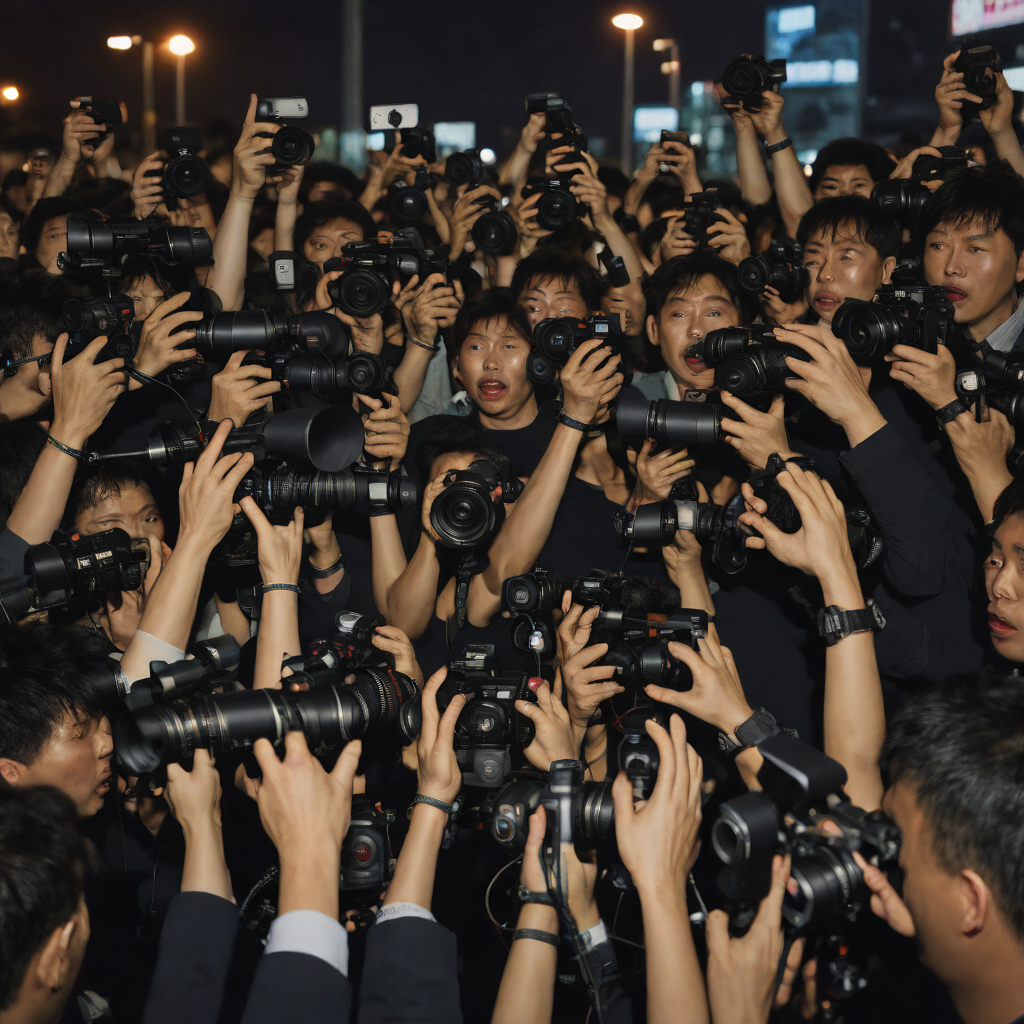
Shortly after the announcement, Han appeared before a hastily assembled press scrum. He did not bear the look of a man whose political career had just been terminated. Instead, his demeanor suggested a calculated, even relieved, pivot. "The party has chosen to protect a shadow rather than face the light," Han stated, his voice steady despite the surrounding cacophony of camera shutters.
This rupture marks a definitive shift in the landscape of a key Northeast Asian ally. For observers in Washington, where the Trump administration’s aggressive pivot toward deregulation and transactional diplomacy demands stable, predictable partners for regional security, the fracturing of Korea's conservative core introduces a volatile variable into an already tense geopolitical equation.
The 'Bulletin Board' Pretext
In the high-stakes theater of South Korean politics, where corruption scandals and prosecutorial warfare are standard weapons of attrition, the mechanism of Han Dong-hoon’s demise appears jarringly trivial. The man who once embodied the "Rule of Law" as Justice Minister was not felled by a bribery indictment or a constitutional crisis, but by a digital audit of the People Power Party’s (PPP) internal bulletin board.
The controversy centers on a series of anonymous posts critical of President Yoon Suk-yeol and the First Lady, which surfaced on the party’s intranet in late 2025. When party auditors revealed that these posts were authored under names matching Han’s immediate family members, the pro-Yoon faction—the so-called "Chin-Yoon"—mobilized with swift precision. Han’s defense, claiming identity theft and demanding a verified police investigation, was drowned out by a chorus demanding his resignation for "harming the party's dignity."
For external observers, particularly those monitoring the stability of US-ROK relations under the second Trump administration, the disparity between the alleged offense and the punishment is glaring. As "David Chen" (pseudonym), a senior risk analyst at a DC-based think tank focusing on Northeast Asia, notes, "In the US, political rivals might be attacked for policy failures. In Seoul, the weapon is often procedural extremism. They didn't need to prove he committed a crime; they only needed a violation of internal code sufficient to strip his eligibility."
A House Divided: The Yoon-Han Schism
The political landscape in Seoul has reached a point of irrevocable fracture. The expulsion signals the end of the "crown prince" era and the beginning of a volatile new chapter for South Korean conservatism. The schism between President Yoon Suk-yeol and his former protégé has transitioned from a whispered rivalry into an open, scorched-earth political war.
This internal hemorrhaging occurs at a moment when South Korea can least afford it. With the Trump administration pushing for increased defense cost-sharing and aggressive trade re-negotiations, a unified and decisive leadership in Seoul is paramount for maintaining leverage. Instead, the focus has shifted inward, toward what many describe as a "circle of vengeance" politics.
Voter Perception of Han Dong-hoon's Expulsion (Jan 2026)
Critics suggest that by forcing Han into the political wilderness, the administration has inadvertently created an "unrestrained outsider" capable of leading a third-party movement that could permanently split the right-wing vote. Data from recent internal polling suggests that nearly a third of conservative-leaning voters would consider supporting a Han-led splinter group, a figure that would effectively hand the legislative agenda to the opposition for the remainder of the decade.
The Calculus of Martyrdom
In the ruthless arithmetic of Seoul’s political ecosystem, subtraction often yields addition. By casting Han out, the "Pro-Yoon" faction has inadvertently handed him the one strategic asset he could not manufacture for himself: total independence from an administration burdened by stagnant approval ratings.
"This is a decoupling event, not a disciplinary one," argues "Michael Johnson" (pseudonym), a senior emerging markets strategist based in New York. "Investors hate uncertainty, and the Yoon administration just introduced a massive variable. They have effectively created an opposition leader from within their own ranks."
This "martyrdom" strategy allows Han to bypass the traditional "lame duck" curse. With President Yoon facing the difficult task of navigating President Trump’s "America First" trade tariffs, the incumbent brand is a heavy liability. Han is now free to critique the administration’s handling of these geopolitical pressures without the constraints of party loyalty, positioning himself as the "Reform Conservative"—a modernized, rational alternative to the establishment.

The Phantom Third Party
The risk for the PPP is a "structural divorce" from the younger, urbanized base that propelled them to power. If Han Dong-hoon leans into his role as the "unrestrained outsider," he could consolidate a coalition of "Never-Yoon" conservatives and centrist defectors. This "Phantom Third Party" exists nowhere on paper but everywhere in the polls.
A mid-January 2026 aggregate poll shows that 38% of self-identified conservative voters would "definitely consider" supporting a new party led by Han. This schism relies on a calculated bet: that the PPP has become a "hollowed-out brand." However, the "Free Market of Politics" is unforgiving. Without a formal platform, Han’s movement risks being a temporary personality cult rather than a durable ideological home.
Conservative Voter Loyalty vs. Shift to New Party (Source: 2026 East Asia Institute Survey)
Washington's Watchful Eye
In the calculating corridors of Washington, where the "Trump 2.0" doctrine prizes transactional clarity above diplomatic pleasantries, the chaotic fracturing of South Korea’s ruling party is being viewed with deepening unease. A unified partner in Seoul is non-negotiable for a White House that has aggressively pivoted toward isolationism while demanding higher premiums for security guarantees.
Defense analysts warn that a schism in the South Korean right dilutes the administration's ability to negotiate effectively on key 2026 priorities: the renegotiated Special Measures Agreement regarding the cost of hosting US troops and the coordination of semiconductor export controls targeted at China. If the PPP is consumed by internecine warfare, President Yoon Suk-yeol’s administration risks becoming a lame duck prematurely, stripped of the legislative leverage needed to ratify complex bilateral agreements.
The "bulletin board" incident may be local politics, but the resulting power vacuum sends tremors directly to the Potomac. It raises the question of whether Seoul can remain the steady, junior partner the Trump administration demands, or if it is sliding into a period of paralyzed introspection just as regional tensions reach a boiling point.