The Judicial Rebellion: Why a Bush Appointee Is Threatening ICE With Contempt
Order in the Frozen Court
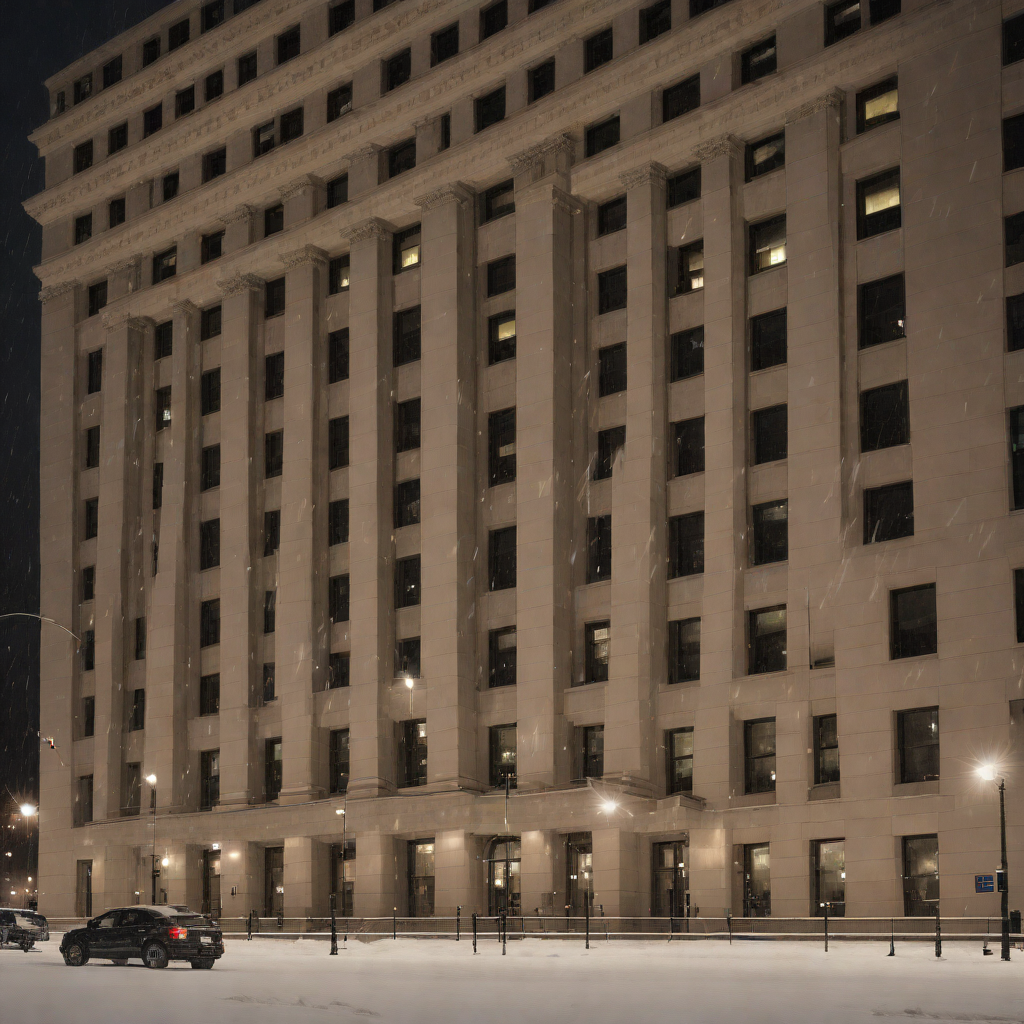
The wind chill outside the Diana E. Murphy United States Courthouse in downtown Minneapolis hovered at thirty degrees below zero, a physical manifestation of the paralysis gripping the city. While the National Guard patrolled the darkening streets to enforce the blizzard curfews and quell the unrest sparked by the grid failure, the generators inside the federal building hummed with a defiant, artificial stability. Here, amidst the "Compound Crisis" that has come to define January 2026, the battle lines of the Trump administration's second term are being redrawn—not by opposition protests, but by the very institutions designed to uphold conservative legal orthodoxy.
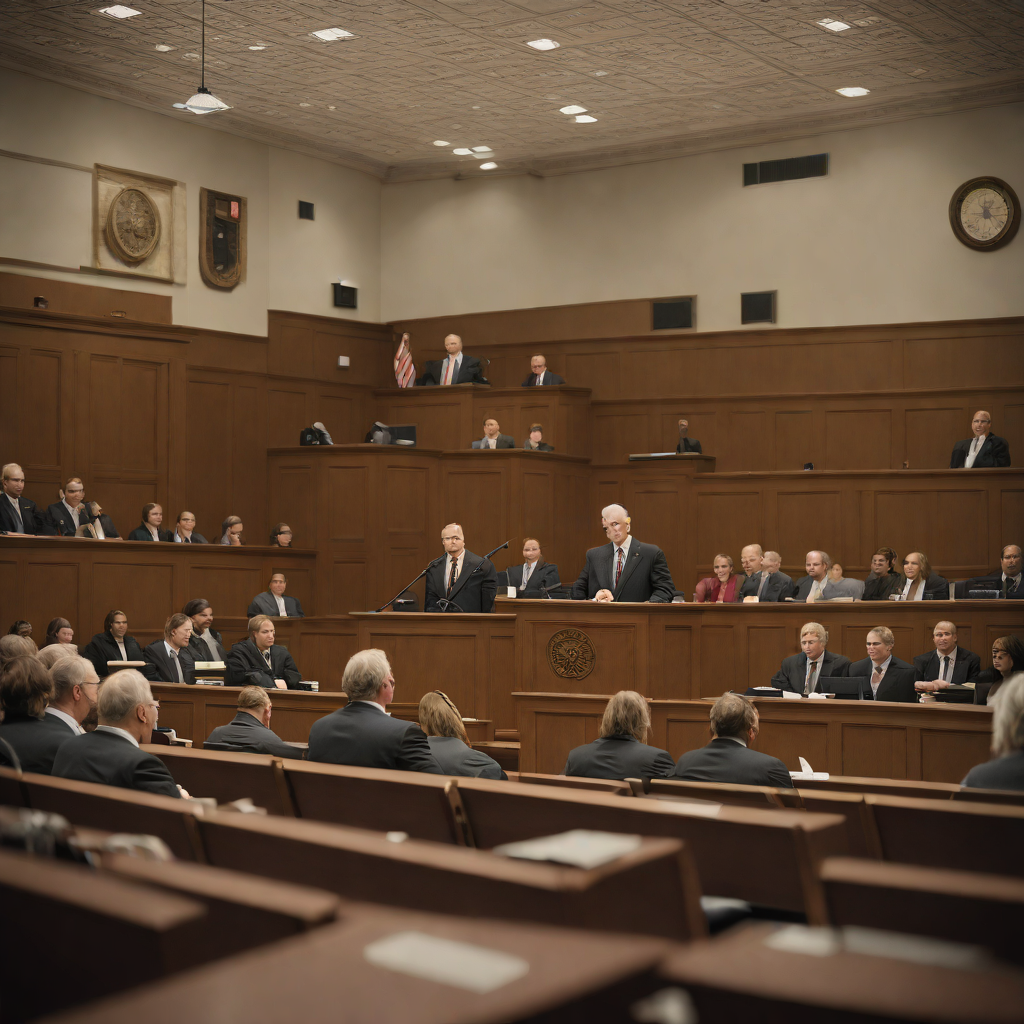
Inside Courtroom 14E, the atmosphere was pressurized. Attorneys for the Department of Justice, representing Immigration and Customs Enforcement (ICE), stood before Chief Judge Patrick J. Schiltz. The issue at hand was technically procedural: the whereabouts of seventeen detainees moved from the Sherburne County Jail during the onset of the blizzard, ostensibly for their safety, but who had since effectively vanished into the federal holding system without access to counsel. The government’s argument was one of necessity—that the "state of emergency" declared by the White House superseded standard habeas corpus protocols.
Judge Schiltz, however, remained unimpressed by the exigencies of the storm. Appointed by President George W. Bush in 2006, Schiltz is no liberal firebrand. He is a former law professor at the University of St. Thomas, a scholar of religious liberty, and a jurist whose career has been defined by a rigorous, text-based interpretation of the law. For two decades, he has been a pillar of the precise kind of judicial conservatism that prioritizes order and adherence to the written rule. Yet, as the DOJ attorney invoked the "extraordinary discretion" granted to the executive branch under the new 2025 border enforcement mandates, Schiltz’s demeanor shifted from inquisitorial to icy.
"Counsel, does the blizzard outside suspend the United States Constitution inside this room?" Schiltz asked, his voice low but cutting through the hushed gallery. When the government lawyer attempted to pivot back to the logistical nightmare of the power outages, Schiltz interrupted with a warning that sent a shockwave through the legal observers present. He did not merely overrule the objection; he placed the acting field director of ICE’s St. Paul office on notice for contempt of court.
This moment represents a seismic fracture in the traditional "Law and Order" coalition. For years, the conservative legal movement has walked in lockstep with executive enforcement agencies, united by a philosophy of strong borders and strict policing. But the aggressiveness of the Trump 2.0 deregulation and enforcement agenda has begun to cannibalize the very legal norms it claims to protect. By threatening to jail a senior federal official for ignoring a court order, Schiltz signaled that for the judiciary's institutionalists, the "Law" still outranks the "Order."
The Scalia Clerk's Gavel
To label Judge Patrick Schiltz a "rogue activist"—a term frequently deployed by the White House press office to dismiss judicial roadblocks—is to fundamentally misunderstand the genealogy of modern American conservatism. Schiltz does not hail from the Ivy League liberal tradition that the current administration views with such disdain. His legal pedigree is rooted in the bedrock of textualism, forged in the chambers of Justice Antonin Scalia, for whom he clerked in the late 1980s. To understand why a George W. Bush appointee is now threatening the Department of Homeland Security with contempt, one must first understand that for Schiltz, the "rule of law" is not a political slogan. It is a rigid, often tedious, mechanical constraint.
Schiltz’s career has been defined less by ideological crusades and more by an almost obsession with the machinery of the judiciary. Before taking the bench in Minnesota, strict adherence to procedure was his professional signature. He served as the Reporter for the Advisory Committee on Federal Rules of Civil Procedure—a role that requires a mind capable of agonizing over the placement of a comma or the specific timeline for filing a motion. This is the background of the man now staring down Immigration and Customs Enforcement. When he issues an order requiring specific documentation or the presence of a detainee, he is not making a suggestion; he is applying the Federal Rules as written.
The administration’s current strategy, characterized by rapid-fire executive orders and a reliance on "acting" officials to bypass Senate confirmation, relies on a judiciary that is either sympathetic or overwhelmed. Schiltz is neither. In 2026, the friction between the White House’s "America First" enforcement agenda and the federal bench is often framed as a partisan battle. However, the Minneapolis standoff reveals a deeper, more dangerous fracture for the administration: the alienation of the institutionalist conservative.
Ninety-Six Breaks in the Chain
The statistic is stark, almost clinical in its precision, yet it represents a profound disintegration of the separation of powers: ninety-six confirmed violations of court orders across seventy-four separate detention cases in the District of Minnesota alone. This is not a backlog. This is not the friction of a bureaucracy adjusting to new aggressive deportation targets under the Trump 2.0 administration. It is, as described by federal prosecutors and defense attorneys alike, a "systemic refusal to recognize judicial authority."
For legal scholars and institutionalists, the number 96 is terrifying not because of the volume, but because of the nature of the breaches. We are not talking about typos in filing briefs or delays caused by snowstorms. The violations cited by Chief U.S. District Judge Patrick Schiltz involve the fundamental habeas corpus rights of individuals. Detainees scheduled for mandatory release hearings simply do not appear. Court orders demanding justification for continued incarceration go unanswered for weeks, sometimes months, past statutory deadlines. In one particularly egregious instance last month, ICE agents reportedly transferred a detainee out of the jurisdiction three days after a federal judge had explicitly ordered they remain in the state for a hearing.
Breakdown of Cited ICE Violations (Minnesota District)
To understand the gravity of Judge Schiltz’s threat of contempt, one must understand the man himself. Schiltz is no activist judge appointed by a progressive administration to wage lawfare against the White House. He is a George W. Bush appointee, a legal conservative who has spent his career defending the strict interpretation of the law and the prerogatives of the executive branch to enforce it. For Schiltz to reach the point of threatening to jail senior ICE officials is indicative of a fracture that goes far beyond partisan politics. It signals that the "Law and Order" coalition—the alliance between tough policing and strict judicial adherence—is breaking under the weight of an executive agency that increasingly operates as if it is exempt from the oversight of Article III courts.
The Weaponization of 'Activist'
When the Department of Homeland Security responded to the looming threat of contempt charges in Minneapolis, the press release followed a familiar, calcified script used throughout the first year of the second Trump administration. The statement decried "judicial overreach" and hinted at "activist impediments" to national security. In the polarized landscape of 2026, where the executive branch has aggressively moved to deregulate enforcement mechanisms, labeling a judge as an "activist" is usually a political kill shot, designed to rally the base against a perceived liberal resistance. However, against Chief Judge Patrick Schiltz, this rhetorical weapon has not only misfired; it has exploded in the hands of the Justice Department.

The conflict in courtroom 14E is therefore not a battle between Left and Right, but a far more dangerous schism for the White House: a battle between "Law" and "Order." The Trump administration’s 2026 mandate rests on a platform of "Order"—the swift, visible, and often unilateral exercise of executive power to secure the border and domestic tranquility. Schiltz, however, represents the "Law"—the tedious, bureaucratic, and absolute requirement that the government must obey its own statutes and court directives. By threatening to hold ICE leadership in contempt, Schiltz is effectively stating that the executive branch’s demand for operational speed does not grant it immunity from the truth.
This distinction is critical for the legal observers watching the Minneapolis crisis. An "activist" judge might block a deportation order based on a novel reading of due process or human rights treaties, inviting a swift appeal to the Supreme Court. Schiltz, conversely, is threatening sanctions because the agency allegedly lied to the court or ignored a direct order. This is not a matter of policy interpretation, but of institutional integrity. It places the Department of Justice in the indefensible position of arguing that federal agents are above the procedural rules that bind every other litigant.
The Last Line of Defense
In the frozen silence of downtown Minneapolis, where temperatures have hovered near twenty below zero for a week, the only heat emanating from the federal courthouse is the friction between two pillars of conservative governance. The "Minneapolis Freeze" has become more than a meteorological catastrophe; it is now the defining metaphor for the paralyzed dialogue between the Executive and Judicial branches. When Judge Patrick Schiltz, a George W. Bush appointee and a legal mind widely respected for his textualist rigor, threatened to hold Immigration and Customs Enforcement (ICE) officials in contempt, the tremor was felt far beyond the icy streets of the Twin Cities.
Ultimately, Judge Schiltz's ultimatum is not about immigration policy, nor is it really about the specific individuals in ICE custody. It is a defense of the judiciary's existential relevance. If an agency can cite "logistical hurdles" or "chain of command issues" to ignore a federal judge's command, the separation of powers is reduced to a gentleman's agreement—one that the current enforcement apparatus seems all too willing to break. As the snow continues to pile up against the limestone walls of the courthouse, the message from the bench is clear: The law does not freeze just because the city has.