The Paris Bypass: Beijing's Wedge Strategy in a Fractured West

A Phone Call in the Shadow of Trade Wars
The diplomatic cables exchanged this week between Beijing and Paris were quiet, routine in their formatting, yet their content reverberates with the seismic shifting of the post-1945 order. While the White House remains embroiled in the domestic fallout of the Minneapolis infrastructure collapse and the international furor over the Greenland annexation strategy, a critical conversation took place that threatens to undo years of trans-Atlantic cohesion. The call between Chinese Foreign Minister Wang Yi and Emmanuel Bonne, the diplomatic advisor to President Macron, was not merely a courtesy; it was a stress test of the European Union’s resolve in the face of a disengaged America.
For observers in Washington, the timing is unmistakable. As the Trump administration doubles down on "America First" protectionism—effectively signaling that European allies can no longer count on the U.S. economic umbrella—Beijing has identified a fracture point. The conversation reportedly centered on "pragmatic cooperation" and "strategic autonomy," diplomatic euphemisms for a transactional detente. Beijing’s strategy is surgically precise: by offering France bilateral concessions—likely easing threatened retaliatory tariffs on French cognac and luxury goods—China aims to peel Paris away from the hawkish consensus in Brussels.

This maneuver, which analysts are calling the "Paris Bypass," exploits a fundamental vulnerability in the Western alliance. The European Commission, under pressure to align with U.S. tech restrictions and protect its own industries from a flood of subsidized Chinese imports, has attempted to build a "Brussels Wall" of regulation. However, that wall requires unanimity. By directly engaging Macron, who has long championed a European path independent of Washington and Beijing, China is offering a tempting off-ramp. For the French industrialist class, the choice is increasingly existential: caught between American indifference and Chinese leverage, the path of least resistance is becoming harder to ignore.
The implications for the United States are profound. A bilateral rapprochement between France and China would effectively paralyze the EU’s ability to act as a unified economic bloc. Without French backing, the European Commission’s aggressive stance on Chinese state subsidies loses its political engine. This potential neutralization of Europe serves Beijing’s ultimate goal: preventing the formation of a unified Western economic blockade. As the Trump administration pivots inward, dismantling the multilateral trade frameworks that once constrained Chinese expansion, the irony is stark. The very isolationism intended to strengthen American sovereignty may be granting Beijing the space to dismantle the Western alliance from within.
Targeting the Cognac Belt
The tactical heart of Beijing’s strategy to fracture the Trans-Atlantic alliance is not found in the silicon wafers of Shenzhen, but in the ancient limestone soil of the Charente region. By launching surgical anti-dumping investigations into European brandy—specifically targeting French cognac—China is utilizing a refined "economic wedge" designed to exploit the growing chasm between a protectionist Washington and a desperate Paris. With the Trump 2.0 administration’s Universal Baseline Tariff now a permanent fixture of US trade policy, French President Emmanuel Macron finds himself caught between an American wall and a Chinese carrot.
The logic behind the "Cognac Probe" is purely political. France was the primary architect of the European Commission’s 2024 decision to impose definitive duties on Chinese electric vehicles (EVs), a move Beijing viewed as an act of economic war. However, unlike the broad-brush tariffs of the US, China’s retaliation is hyper-localized. By threatening the $1.7 billion cognac export market, which accounts for nearly 99% of all brandy imported into China, Beijing is forcing the French luxury lobby to become an internal advocate for Chinese interests within the halls of Brussels.
Trade War Echoes: French Brandy Exports to China (Source: LVMH/Pernod Ricard 2026 Forecast)
The impact of this pressure is already visible in the supply chain. Logistics consultants for high-end spirits distributors in New York observe that while clients once feared US-EU trade disputes, they are now terrified of being collateral damage in a bilateral deal between Paris and Beijing. Several boutique French distilleries have begun "pre-emptively" pausing their lobbying for EU-wide digital service taxes on Chinese tech firms, fearing that such stances will result in their labels being permanently blacklisted from the lucrative Shanghai and Beijing markets.
This economic squeeze is amplified by the Trump administration’s "Reciprocal Trade Act" and the shift toward isolationism. Since Washington no longer offers the "security umbrella" of trade protection for its European allies—preferring instead to squeeze them with 20% baseline tariffs on luxury goods—France has little incentive to maintain a unified front with a US that views them as a competitor rather than a partner. A 2025 report from the Peterson Institute for International Economics suggests that for every 1% increase in US tariffs on French wine, the probability of Paris vetoing EU-wide sanctions against Chinese tech firms increases by 4%.
The Allure of Strategic Autonomy
For the strategists in Zhongnanhai, the path to Brussels has always run through Paris, but in the volatile landscape of 2026, that route has become a geopolitical superhighway. The concept of "Strategic Autonomy"—long the darling of French foreign policy rhetoric—is being effectively weaponized by Beijing to pry open a fractured Western alliance. While the European Union struggles to forge a consensus on Electric Vehicle (EV) subsidies and data sovereignty, President Macron’s insistence that Europe must not become a "vassal" to American hegemony offers Chinese diplomats precisely the wedge they need to dismantle the containment strategies drafted in Washington.
This alignment is not accidental; it is a calculated response to the economic shockwaves emanating from the Trump White House. The reimposition of aggressive tariffs on European steel and luxury goods earlier this year has soured the transatlantic mood, creating a vacuum that Beijing is eager to fill. Veteran trade lobbyists on K Street representing mid-Atlantic manufacturing interests observe that the mood in D.C. is one of belated realization. The consensus is that the US spent 2025 slamming the door on traditional allies in the name of 'America First,' and cannot feign surprise now that Paris is checking to see if the back door is unlocked.
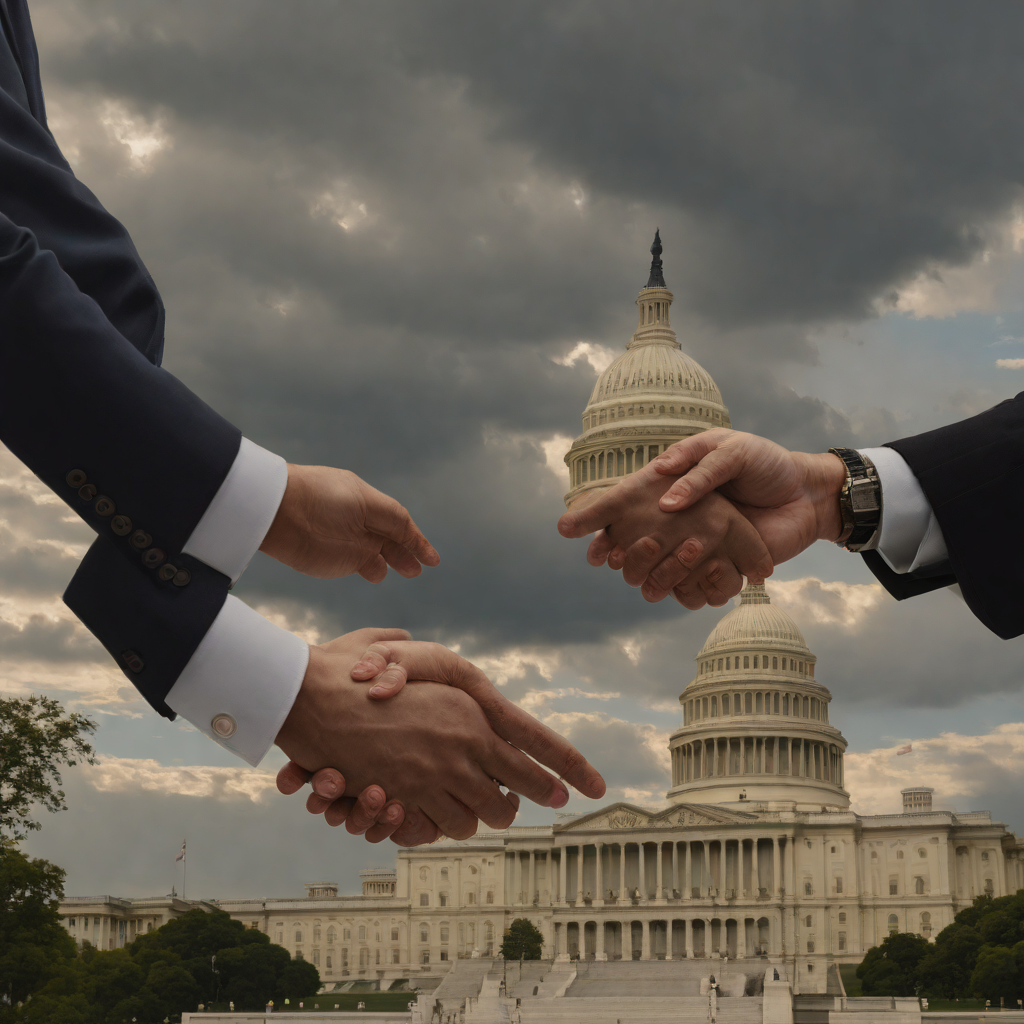
The allure for Paris is rooted in the Gaullist tradition of independent power projection. Beijing understands that unlike Berlin, whose economy is fundamentally entwined with the American security umbrella, or London, which remains politically adrift post-Brexit, Paris actively seeks a "Third Way." Chinese state media has amplified this narrative, consistently praising Macron’s resistance to "bloc confrontation." By offering preferential market access to French agriculture and aerospace—sectors deeply sensitive to US protectionism—Beijing is effectively purchasing a veto over EU-wide sanctions.
The Trump 2.0 Pressure Cooker
The view from Washington is distinctively transactional in 2026. If the first Trump term was a shock to the transatlantic system, the second has been a sustained, high-pressure siege. The administration’s aggressive expansion of "America First" protectionism—manifesting in blanket 15% tariffs on European luxury goods and a rigid enforcement of digital sovereignty laws—has effectively dismantled the trade truce that once held the Western alliance together. For the French economy, already grappling with sluggish Eurozone growth, this American pivot isn't just a diplomatic slight; it is an existential economic threat.
Supply chain strategists in Charleston, South Carolina, witness this friction daily. The unpredictability of the White House’s tariff schedule has turned long-standing trade relationships into liabilities, with American businesses beginning to treat European partners with the same caution usually reserved for adversarial markets. This economic alienation provides the perfect context for Beijing’s strategic maneuver. While the State Department demands that Europe align with its blockade on Chinese technology, the Department of Commerce is simultaneously erecting walls against European exports. It is a contradictory foreign policy that demands loyalty while punishing the loyal.
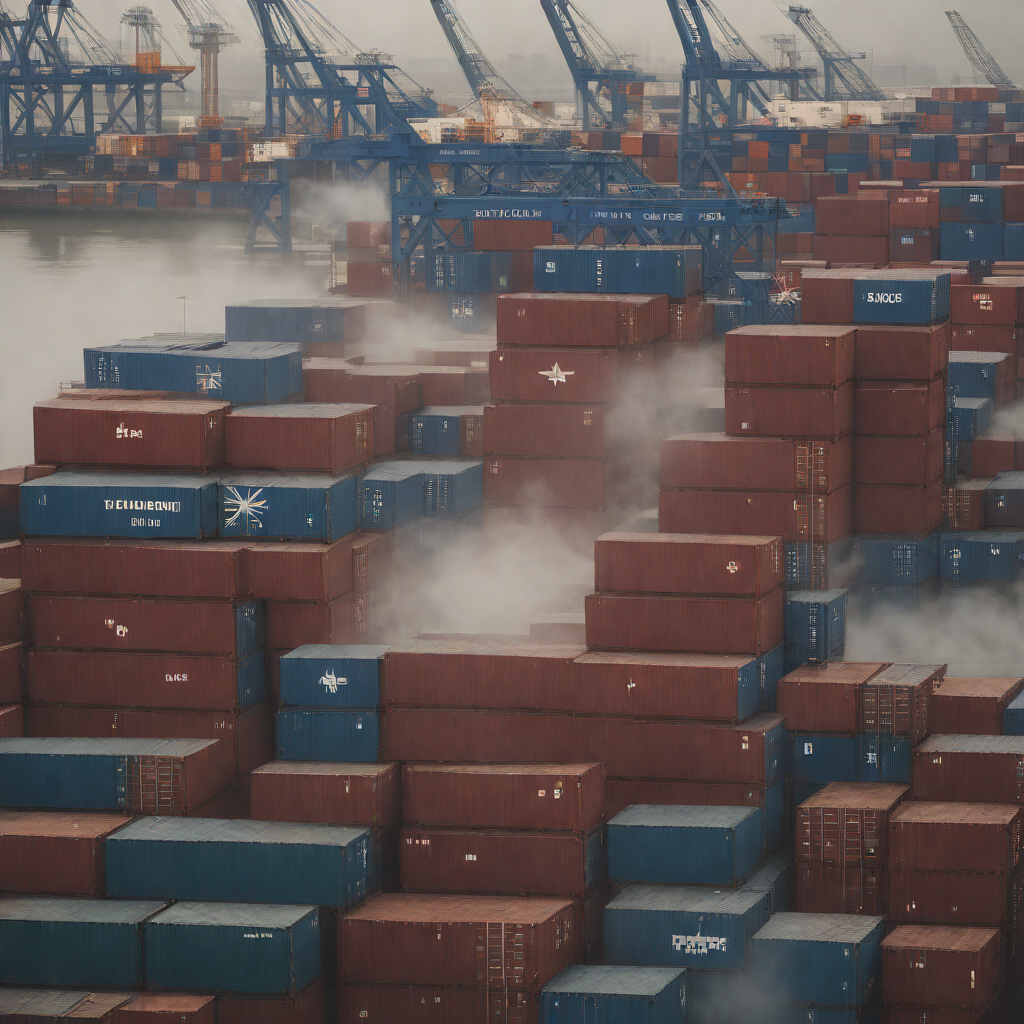
It is into this vacuum of American leadership that China has stepped, not with threats, but with a checkbook. By offering preferential market access to French agriculture and luxury brands—sectors specifically targeted by Washington's new levies—Beijing is positioning itself as the stabilizer of the French economy. A 2025 report by the Rhodium Group noted that Chinese direct investment in France has shifted from predatory acquisitions of infrastructure to "cooperative partnerships" in consumer goods and energy, a deliberate rebranding designed to bypass EU-wide screening mechanisms.
Bypassing Brussels
The architecture of the European Union was designed to speak with one voice on trade, channeling the collective economic weight of twenty-seven nations through the corridors of the Berlaymont in Brussels. Yet, in the opening weeks of 2026, that voice is being drowned out by the bilateral dialogues in Paris. Beijing’s strategy is no longer to confront the EU head-on but to render its federal regulatory machinery obsolete by courting its most restless power broker. The "Paris Bypass" is not merely a diplomatic detour; it is a calculated dismantling of the European Commission’s supranational authority, effectively turning the Single Market into a patchwork of bilateral side deals that leaves Brussels paralyzed.
For the Trump administration, this fracturing confirms the "America First" hypothesis that multilateral alliances are fragile constructs, yet the economic fallout for American interests is severe. As Washington withdraws behind its own tariff walls, Beijing is offering Paris a "sovereignty partnership"—preferential market access for French luxury conglomerates and nuclear engineering firms in exchange for French vetoes on EU-wide anti-subsidy probes into Chinese electric vehicles. A confidential memo from the Directorate-General for Trade, leaked earlier this month, describes the situation as an "existential hollowing out" of the Commission's trade defense instruments.
Diverging Trade Flows: EU Reliance on China vs. US (2024-2026)
The danger for the West lies in the precedence this sets. By successfully peeling France away from the collective bargaining block, Beijing has provided a blueprint for other member states facing economic stagnation. The result is a "Hub-and-Spoke" Europe where Beijing sits at the center of various bilateral spokes, while the hub in Brussels spins idly. For the global investor, the risk premium on European assets has shifted; the stability of EU regulation is now contingent on the whims of national capitals, replacing the predictable, rule-based order of the Single Market with a volatile bazaar of sovereign horse-trading.
Conclusion: The Fragile Western Front
The diplomatic cables vibrating between Washington, Brussels, and Paris tell a story of a shattered alliance. With the White House formally moving to annex Greenland—a unilateral action that has drawn swift condemnation from Copenhagen and icy silence from the rest of the EU—the notion of a cohesive "Western Front" against Chinese economic expansion has effectively collapsed. The transatlantic bridge, already weakened by the administration's aggressive deregulation and the universal tariff baseline introduced last year, is now structurally unsound.
This geopolitical fragmentation has created a vacuum that Beijing is exploiting with surgical precision. The strategy is no longer about confronting the European Union as a bloc; it is about rendering the bloc irrelevant by engaging its key power brokers individually. The "Paris Bypass" is not a trade route, but a diplomatic circumvention of the European Commission’s authority. While Brussels bureaucrats draft comprehensive anti-subsidy regulations intended to fence off the Single Market from cheap Chinese green tech, Beijing is offering Paris a separate peace.
For US policymakers, this creates a paradox. The Trump administration’s isolationist "America First" doctrine was designed to protect domestic industry, but by alienating European allies, it is dismantling the very coalition needed to check China's global influence. The result is a fractured West where standards for privacy, AI safety, and green technology are increasingly dictated not by a consensus of democracies, but by the strategic necessities of a divided Europe and the economic statecraft of Beijing. As Washington turns inward, it may wake up to find that the trans-Atlantic partnership has been bypassed entirely, leaving the rules of the global market to be written in Mandarin.