The Rojava Siege: Resource Wars and the End of Kurdish Autonomy
The February Ultimatum
On the dusty, cratered streets of Qamishli, the calendar has become as formidable a weapon as the artillery massing across the Euphrates. With the February 8 ceasefire deadline looming, the fragile peace that has held Northeast Syria together is rapidly disintegrating. This is not merely a pause in fighting; it is a calculated suffocating hold applied by Damascus, designed to turn the Autonomous Administration’s greatest strength—its resource wealth—into its fatal liability.
The ultimatum delivered by the Syrian government is stark: full reintegration under the central state's authority or a resumption of hostilities that the Syrian Democratic Forces (SDF) are ill-equipped to sustain. Unlike previous years, where US special forces acted as a credible tripwire against aggression, the Trump administration’s accelerated pivot to isolationism has left a vacuum. The White House’s signal is clear: the era of indefinite American guardianship in the Levant is over, and local actors are recalibrating with brutal speed.
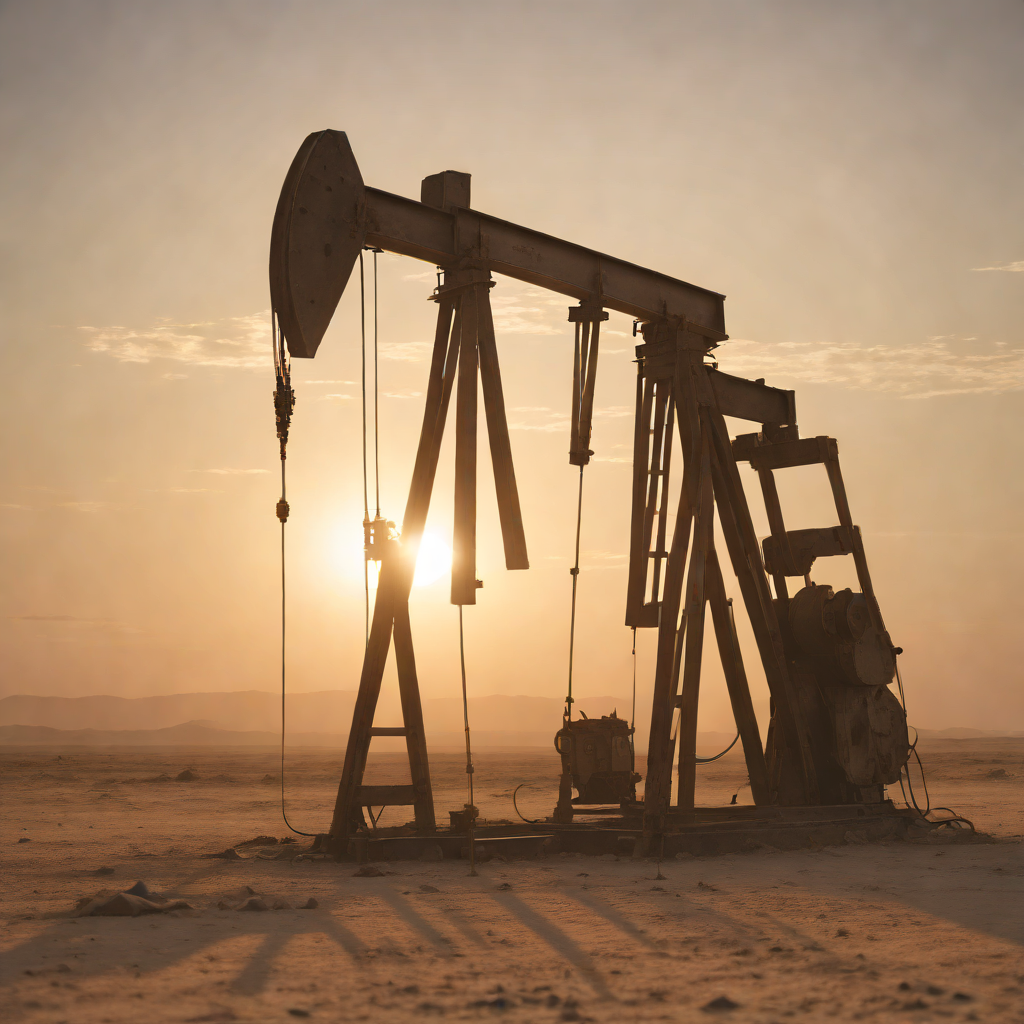
This shift is most visible in the resource-rich provinces of Deir ez-Zor and Raqqa, where the war has transitioned from military stalemate to economic strangulation. The SDF’s control over these territories, which once provided the economic backbone of the semi-autonomous region through oil and wheat revenues, is fracturing from within. Intelligence reports from the region indicate a cascade of defections among key Arab tribal leaders, who are pragmatically realigning with Damascus. For tribal sheikhs, the calculation is simple survival; with the American security guarantee evaporating, the Syrian state offers the only remaining path to stability, however authoritarian.
For residents on the ground, geopolitical maneuvering translates into an immediate crisis of survival. Ahmed al-Jassem, a former engineer at the Conoco gas plant, describes a systematic dismantling of the local economy. "We aren't dying from airstrikes yet," he notes. "We are dying because the salaries have stopped, the flour shipments are blocked, and the tribes controlling the roads have switched flags." This internal erosion is far more dangerous to Kurdish autonomy than a frontal assault. By cutting off the flow of oil revenue and grain, Damascus is effectively forcing the SDF to choose between fighting a multi-front war with dwindling ammunition or accepting a "unification" deal that amounts to total political capitulation.
Black Gold and The Economic Stranglehold
For years, the grim calculus of the Autonomous Administration of North and East Syria (AANES) relied on a single, volatile variable: the Al-Omar oil field. It was never just a resource; it was the de facto central bank of a stateless democracy. However, the events of early 2026 have shattered this precarious economic foundation, marking a transition from a frozen military conflict to a hot economic siege. The loss of key territories in Deir Az-Zour and Raqqa is not merely a tactical setback on a map; it is the severance of the very artery that kept the experiment in Rojava alive.
The strategic collapse began in the oil-rich expanses of Deir Az-Zour, where the SDF’s grip has always been tenuous, reliant on a delicate patchwork of alliances with local Arab tribes. The Trump administration’s accelerated disengagement policy, prioritizing "America First" resource independence over foreign stability operations, created a power vacuum that Damascus and its backers were quick to exploit. Unlike the frontal assaults of previous years, the 2026 offensive utilized tribal discontent as a wedge. Major tribal confederations, seeing the American security umbrella fold, have pragmatically defected, handing over control of critical extraction infrastructure to Syrian government loyalists.
This transfer of control is catastrophic for the Kurdish-led administration. Estimates from regional energy analysts suggest that the fields in Deir Az-Zour and Raqqa accounted for nearly 70% of the AANES’s total revenue. This was the capital used to fund everything from the fight against ISIS sleeper cells to the subsidization of bread in Qamishli. Without this "black gold," the administration’s budget has effectively evaporated. Ahmed Al-Sayed, a former logistical coordinator at the Conoco gas plant who fled north last week, describes the scene as an operational disintegration: "It wasn't a battle of guns, but of payroll. When the Administration could no longer guarantee wages in dollars because the tanker trucks stopped running, the local security forces simply went home or changed uniforms."
The Tribal Tipping Point
The intricate tapestry of alliances that once held the AANES together is unraveling, not on the battlefield, but in the diwans of Deir Az-Zour. The recent wave of defections among the Al-Ugaydat and Baggara tribal confederations marks a critical turning point—a "tribal tipping point" that Damascus has astutely weaponized. Regional analysts note that the transactional nature of these alliances has always been the SDF's Achilles' heel.
"Loyalty in the Euphrates Valley flows with the oil," notes a January briefing from the Washington Institute for Near East Policy. With the Trump administration signaling a renewed skepticism toward open-ended deployments—focusing strictly on counter-terrorism rather than nation-building—tribal leaders are hedging their bets. They perceive a waning American security guarantee and are increasingly receptive to overtures from Damascus and its Russian backers. The regime offers what the Kurdish-led administration currently cannot: direct integration into the national economic grid and a promise of local administrative autonomy free from "foreign" Kurdish oversight.
Estimated Control of Syrian Oil Revenue (2024-2026 Projections)
The economic implications of this realignment are catastrophic. The territories in question—stretching from the outskirts of Raqqa to the Iraqi border—contain the vast majority of Syria's hydrocarbon resources. By courting the tribes that physically sit atop these resources, the regime is effectively turning off the tap. Reports from local monitors indicate that tribal militias, previously aligned with the SDF, have begun dismantling checkpoints and facilitating the movement of government-aligned commercial traffic, effectively breaking the SDF’s monopoly on resource transit. This is economic strangulation by proxy.
Integration or Erasure?
The term "unification" is often deployed in Damascus as a euphemism for capitulation, a linguistic sleight of hand that masks the total dismantling of the autonomous structures built in northeast Syria over the last decade. For the SDF, the current negotiations—taking place under the shadow of the renewed 2026 offensive—are less a dialogue about federalism and more a dictation of surrender terms.
The divergence in end goals is absolute. The AANES has long sought a political settlement modeled loosely on the Iraqi Kurdistan region. However, sources close to the palace in Damascus indicate that the government’s stance has hardened significantly since the US signaled a hastened withdrawal. The demand is no longer integration, but dissolution: the complete absorption of the SDF into the Syrian Arab Army (SAA) as individual units and the replacement of the autonomous bureaucracy with state-appointed governors.
This shift represents a catastrophic failure of the American security guarantee, a cornerstone of stability in the region since the defeat of ISIS. For years, the US presence acted as a physical and political buffer. With Washington now prioritizing domestic deregulation and uncoupling from "forever wars," that buffer has evaporated. David Chen, a former policy analyst for the State Department who now consults on Levant security, notes the stark change in tone: "In 2024, there was ambiguity. In 2026, the message from the White House is clear: these are not our resources, and this is not our fight. Damascus heard that signal loud and clear."
The Silence of the West
The roar of Coalition jets, once the omnipresent soundtrack to security in northeastern Syria, has been replaced by a deafening diplomatic silence. As the SDF faces its most existential threat since the height of the ISIS caliphate, Washington’s response signals a profound recalibration of American power in the Middle East under the second Trump administration. The skies over Deir Az-Zour remain clear of American air support, and the State Department’s briefing rooms offer only boilerplate calls for de-escalation.
The absence of Western intervention appears to be a calculated feature of the current foreign policy architecture. Analysts suggest that the White House views the legacy commitments in Syria as a liability—a remnant of "endless wars" that yields no tangible dividend for the American taxpayer. By withholding the military and diplomatic cover that previously insulated the Autonomous Administration from the Assad regime and Turkish incursions, the administration has effectively greenlit the current offensive. The message being received in Damascus, Ankara, and Tehran is unambiguous: the security guarantee that underpinned the Rojava experiment has expired.
Endgame for the Administration
The dust settling over the Conoco gas plant in Deir Az-Zour signals more than a pause in the fighting; it marks the beginning of a suffocation strategy that Washington seems increasingly willing to tolerate. For the AANES, the military stalemate following the January offensive has morphed into an existential economic crisis. The loss of critical hydrocarbon revenue streams has stripped the SDF of their primary leverage in negotiations with Damascus. This is no longer a battle for territory; it is a battle for the payroll of the administration’s civil servants.
Consequently, the "unification" talks scheduled for mid-February in Damascus appear less like a negotiation and more like a surrender ceremony. The terms being floated are draconian. Yet, with the Turkish military continuing its drone campaign against infrastructure in the north and the US refusing to guarantee protection against NATO ally Ankara, the AANES has no good options. If the ceasefire collapses after February 8, the trajectory is clear: a rapid economic implosion followed by a chaotic fragmentation. The 2026 offensive has proven that in the new Middle East, autonomy is a luxury that requires either a superpower patron or a functional economy, and the Kurds are rapidly losing both.